The pump is the heart of a pressure washer. It is the part that takes ordinary water at household pressure and forces it out at thousands of PSI, and it is also the part most likely to end a machine’s life when it fails. That is why understanding the components inside a pump matters so much. When something goes wrong, a loss of pressure, a pulsing spray, water in the oil, knowing the parts of pressure washer pump assemblies turns a confusing breakdown into a diagnosable problem. You do not need to be a mechanic, but knowing what each part does, and how it fails, can save you from replacing an entire machine over a part that costs a few dollars.
This guide walks through the anatomy of a pressure washer pump. We will cover what the pump does, the main types, each internal component and its role, how they work together, common failure points, maintenance, and troubleshooting. By the end, you will understand your pump well enough to care for it and recognize problems early.
What the Pump Does
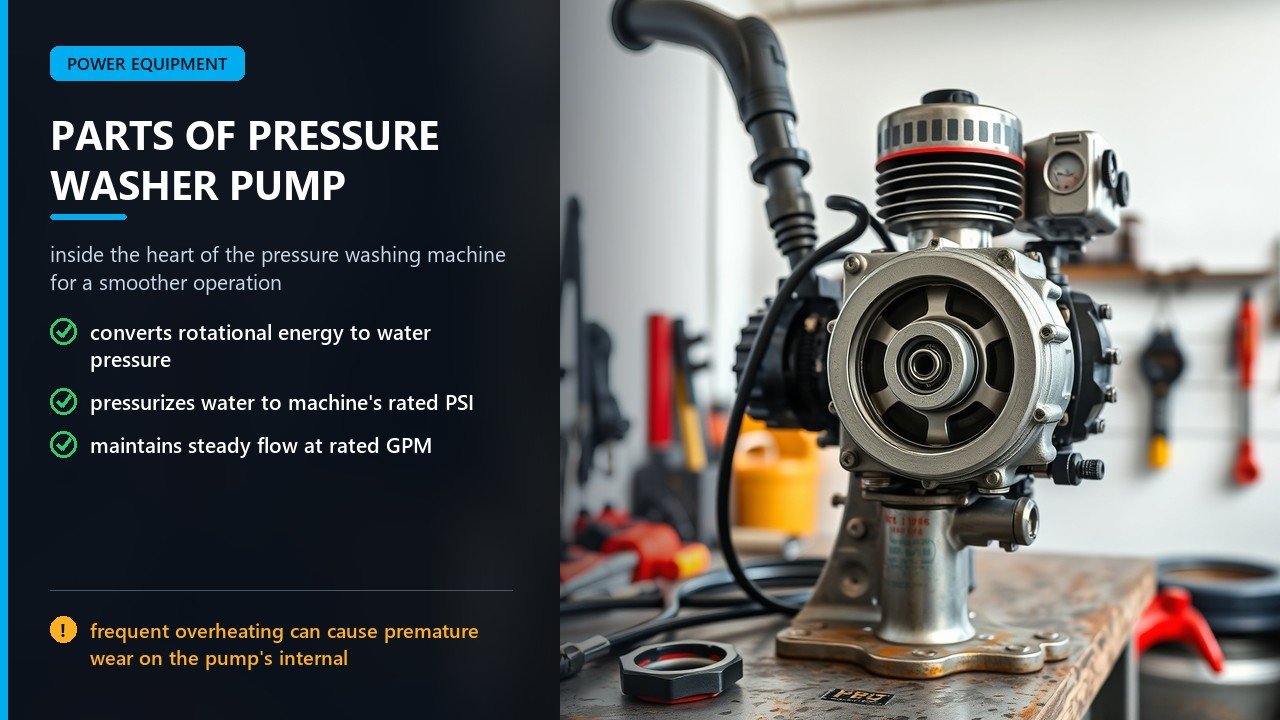
The pump converts the rotational energy of the engine or motor into water pressure.
- Draws water in from the supply or tank.
- Pressurizes it to the machine’s rated PSI.
- Delivers a steady flow at the rated GPM.
- Maintains pressure against the nozzle’s restriction.
Everything upstream supplies water and power, and everything downstream depends on the pump doing its job.
Main Pump Types
| Type | Design | Durability | Common In |
|---|---|---|---|
| Axial cam | Wobble plate moves pistons | Lower | Light electric machines |
| Triplex (plunger) | Three plungers on a crankshaft | High, rebuildable | Gas and commercial machines |
Triplex pumps are the standard for serious equipment because they last longer and can be rebuilt.
The Parts of a Pump
While designs vary, most pumps share these core components.
| Part | Function |
|---|---|
| Inlet (suction) port | Where water enters the pump |
| Outlet (discharge) port | Where pressurized water leaves |
| Valves (inlet and outlet) | Control water flow direction |
| Plungers or pistons | Create the pumping action |
| Crankshaft / wobble plate | Converts rotation into plunger motion |
| Seals and packing | Prevent water leaks around plungers |
| O-rings and gaskets | Seal the pump body joints |
| Manifold | Houses valves and directs water |
| Crankcase | Holds oil and lubricates the mechanism |
| Unloader valve | Bypasses water when the trigger is released |
| Thermal relief valve | Releases water if it overheats |
| Oil sight glass | Shows lubricant level |
How the Parts Work Together
- Water enters the inlet port.
- Inlet valves open to admit water as plungers retract.
- Plungers push forward, pressurizing the water.
- Outlet valves open, sending water to the outlet.
- Seals contain water within the pump.
- The unloader bypasses flow when the trigger is released.
- The crankcase lubricates the moving mechanism.
Every part depends on the others. A single failed valve or seal can disrupt the entire process.
Common Failure Points
- Valves: Wear, debris, or cracks cause pulsation and pressure loss.
- Seals and packing: Wear leads to water leaks and, eventually, water in the oil.
- O-rings and gaskets: Deteriorate and leak at joints.
- Unloader valve: Sticks or fails, causing pressure or bypass problems.
- Plungers: Wear or scoring reduce pumping efficiency.
- Oil seals: Failure lets water into the crankcase, turning oil milky.
What Each Part Failure Looks Like
| Symptom | Likely Culprit |
|---|---|
| Pulsing or surging spray | Valves or air in the system |
| Gradual pressure loss | Worn valves, seals, or plungers |
| Water dripping from pump | Worn seals, O-rings, or packing |
| Milky pump oil | Failed oil seals letting water in |
| No pressure at all | Severe valve failure or blockage |
| Pressure spikes | Faulty unloader |
Maintenance
- Check pump oil regularly via the sight glass.
- Change pump oil at the recommended interval, and after break-in.
- Keep the inlet filter clean.
- Never run the pump dry.
- Flush after chemicals.
- Winterize to prevent freeze damage.
- Watch for leaks and address them early.
Troubleshooting Basics
- Check the water supply first. Low inlet flow causes pressure problems.
- Inspect the unloader if pressure is erratic or bypassing.
- Look for leaks that point to seal problems.
- Check oil condition for water intrusion.
- Repair or rebuild with a kit, or replace the pump if beyond repair.
- Use rated parts for any repair.
Frequently Asked Questions
What are the main parts of a pressure washer pump?
The main parts include the inlet and outlet ports, valves, plungers or pistons, crankshaft or wobble plate, seals and packing, O-rings and gaskets, manifold, crankcase, unloader valve, and thermal relief valve.
What is the most common part to fail?
Valves and seals fail most often. Worn valves cause pressure loss and pulsation, while worn seals cause leaks and can let water into the oil.
What is the unloader valve?
It bypasses water when the trigger is released, protecting the pump from pressure buildup. A faulty unloader causes pressure and bypass problems.
Can I rebuild a pressure washer pump?
Yes, especially triplex pumps, which are designed to be rebuilt with seal and valve kits. If the pump is badly damaged, replacement may be more economical.
How do I know if my pump is failing?
Signs include pulsation, pressure loss, leaks, milky oil, and pressure spikes. Check the water supply and unloader first, then inspect valves and seals.
Final Thoughts
Knowing the parts of pressure washer pump assemblies turns pump problems from mysteries into solvable puzzles. The inlet and outlet, valves, plungers, seals, manifold, crankcase, and unloader each play a role, and each can fail in a recognizable way.
Check the water supply and unloader first, watch for leaks and milky oil, keep the pump oil clean, and never run dry. Care for your pump with these basics, and you will catch problems early, repair instead of replace, and get far more life from the machine.