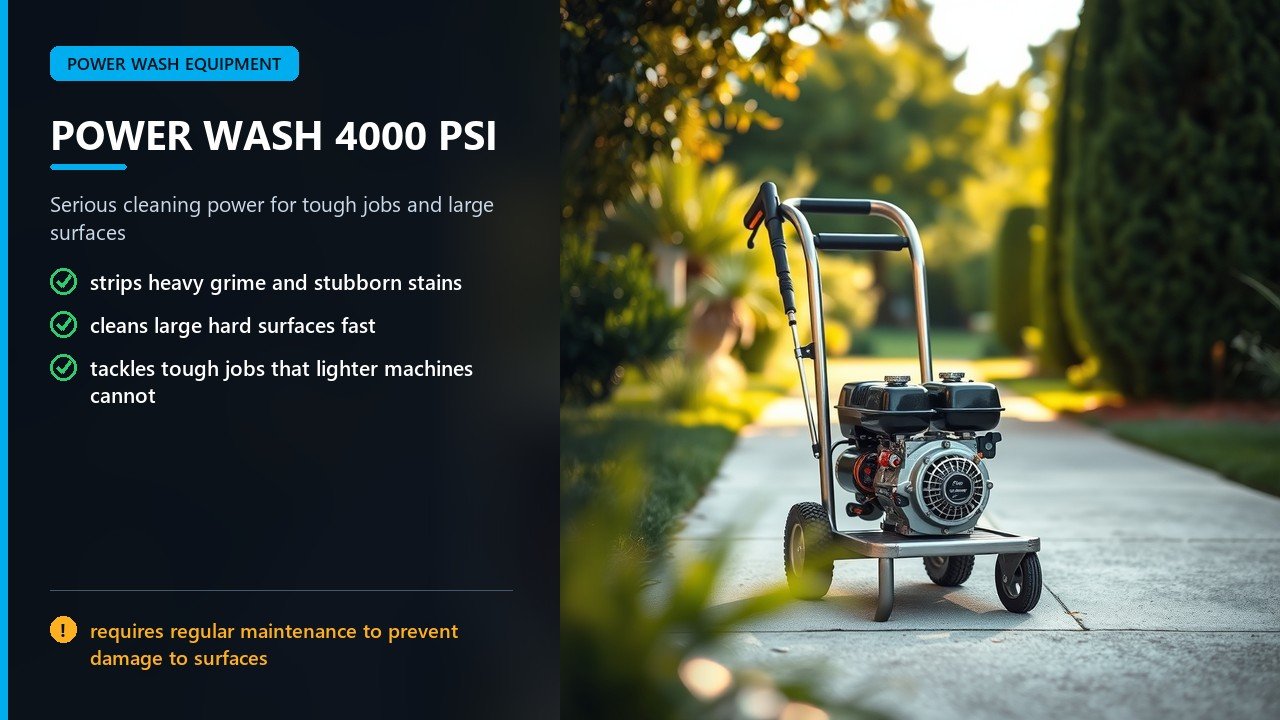
A power wash at 4000 PSI is serious cleaning power. This is the upper end of the consumer range and the entry point to professional-class pressure, strong enough to strip heavy grime, clean large hard surfaces fast, and take on jobs that lighter machines cannot. Where a 4000 PSI machine goes, much lighter washers simply follow.
This guide explains what 4000 PSI means, what kind of machine delivers it, and what it can do, along with the care and caution it demands.
What 4000 PSI Means
PSI measures pressure, the force of the water as it leaves the nozzle. At 4000 PSI, that force is high, well above the typical 1800 to 2500 PSI of home electric washers and above the mid-range gas machines around 3000 to 3200 PSI. It sits near the top of what most portable pressure washers deliver, and it targets heavy, stubborn cleaning.
Pressure is only part of the story, though. Cleaning power comes from pressure and flow together, as cleaning units, so a 4000 PSI machine is most useful when it also flows well. At about 3.5 to 4 gallons per minute, a 4000 PSI washer produces roughly 14,000 to 16,000 cleaning units, enough to clean big, dirty areas quickly and thoroughly.
What this level buys you is speed and capability. A 4000 PSI machine strips caked mud, heavy grime, and stubborn stains that would defeat a lighter washer, and it covers large areas faster because of its flow. It is the kind of machine used for concrete, driveways, and serious outdoor cleaning, and by trades who need to get large jobs done.
The Machine Behind 4000 PSI
Machines at this level are almost always gas-powered, because producing 4000 PSI and 3.5 to 4 GPM takes more power than a standard household electricity supply can provide. A gas engine, typically around 270 to 390 cc depending on the pump and flow, drives a robust pump to reach these figures.
4000 PSI Compared With Other Levels
Placed against other pressures, 4000 PSI sits near the top of the portable range. Light electric washers run around 1300 to 1900 PSI, good for cars and small patios but slow and gentle on heavy dirt. Mid-range gas machines around 3000 to 3200 PSI add meaningful power for home and light commercial work, while 3500 PSI steps up again.
At 4000 PSI, the machine enters professional territory, matching or exceeding the pressure of many commercial units and pairing it with strong flow. Above this, portable machines climb toward 4200 PSI and beyond, but the gains become smaller relative to the extra cost, weight, and demand on the water supply.
The practical message is that 4000 PSI is a high but sensible ceiling for a portable washer. It delivers the power needed for heavy, large cleaning without pushing into the extremes, making it a popular target for serious users who want professional capability in a machine they can still move and feed.
The pump is usually a triplex, with three plungers and an oil-bathed crankcase, because it must handle high pressure and flow with durability. Many 4000 PSI machines are belt-driven, which runs cooler and smoother than direct drive and absorbs shock loads, suiting the heavy duty these machines see. A thermal relief valve and unloader protect the pump during use.
Because these machines consume a lot of water, they also need a strong supply. A 4000 PSI washer at 3.5 to 4 GPM needs a water source that can deliver at least that flow continuously, or the pump will starve and cavitate. Many users at this level use a buffer tank or a high-flow supply to keep the machine fed.
What 4000 PSI Can Clean
A 4000 PSI power washer is built for heavy, large-scale cleaning. It strips years of grime from concrete driveways and paths, removes mud and dirt from vehicles and machinery, prepares surfaces for painting by cleaning them deeply, and handles commercial and industrial cleaning where an ordinary washer would be too slow. It is also capable of tough jobs like removing loose paint, cleaning brick and stone, and washing down large buildings.
Its flow adds to the capability. At 3.5 to 4 GPM, the machine rinses as well as it cleans, so loosened dirt is swept away rather than left behind, and big areas are covered quickly. This combination of high pressure and good flow is what makes 4000 PSI a professional-level tool rather than just a high number.
It is more machine than most domestic users need. For cleaning a car, patio furniture, or a small path, a lighter washer is easier and safer. The value of 4000 PSI shows on large, tough, frequent jobs, where its power saves significant time and effort, and where a smaller machine would be out of its depth.
The Damage Risk
With high pressure comes high risk of damage, and 4000 PSI demands respect. At this level, the jet can etch concrete, gouge wood, strip paint, and drive water into places it should not go. Holding the nozzle too close or too long in one spot causes damage quickly, so control and distance matter more than ever on a machine this powerful.
Surface choice is critical. Use a wide, appropriate nozzle and a sensible distance on softer surfaces, and keep the jet moving. Avoid aiming at joints, seams, and fragile materials, and test on an inconspicuous area first. On a 4000 PSI machine, small technique errors have big consequences.
For large flat surfaces like concrete, a surface cleaner is the safer tool, because it spreads the pressure and cleans evenly, reducing the risk of striping and damage while making the job faster. Matching the accessory to the machine and the surface is how you use 4000 PSI safely and well.
Safety and Supply
The safety rules are the same as any pressure washer, but more important at this power. Never point the jet at people or animals, keep hands clear of the nozzle, and wear eye protection, gloves, and sensible footwear. The jet at 4000 PSI can cut skin and cause serious injury, and it can fling debris hard enough to hurt.
Feed the machine properly. Confirm the water supply delivers at least the machine’s flow before running it, and use a filter to keep grit out of the pump. Running a 4000 PSI machine on a weak supply causes cavitation, which damages the pump quickly, and it wastes the machine’s capability. A buffer tank or a strong supply keeps it fed.
The table below summarises what 4000 PSI delivers.
| Aspect | Typical at 4000 PSI |
|---|---|
| Power source | Gas engine, around 270 to 390 cc |
| Flow | About 3.5 to 4 GPM |
| Cleaning units | Roughly 14,000 to 16,000 |
| Pump | Triplex, often belt-driven |
| Best for | Large, heavy, frequent cleaning; concrete and trade work |
At this level, capability and responsibility go hand in hand.
Choosing a 4000 PSI Machine
If your work calls for this level, choose a machine with the right balance of pressure, flow, and quality. Look for a reputable engine sized to the pump, a triplex pump, and preferably belt drive for cooler, smoother running. Check the cleaning units rather than PSI alone, and confirm the water supply arrangement you will need.
Accessories matter at 4000 PSI. Hoses, guns, wands, and fittings must all be rated well above the working pressure, with margin, and their flow capacity must suit 3.5 to 4 GPM. A surface cleaner is almost essential for flatwork at this level, and good nozzles sized to the flow keep the machine running at its design point.
Buy from a seller who can support the machine with parts and service, because a 4000 PSI washer is a serious tool that will need maintenance over its life. A well-built machine from a reputable brand, matched to your work, will outlast and outperform a cheap high-pressure unit that skimps on the pump and engine.
Maintenance and Long Life
Look after the engine as you would any small engine: oil, air filter, spark plug, and fresh fuel, and respect the low-oil protection. Stale fuel is the leading cause of starting trouble, so treat or drain fuel before storage, and follow the maker’s service schedule closely on a machine that works hard.
Care for the pump with equal attention. Keep the oil at the correct level and change it on schedule, including an early change during break-in, and keep the inlet filter clean. Protect the machine from freezing, never run it dry, and keep the unloader and thermal relief valve working. Because a triplex pump is serviceable, worn valves, seals, and plungers can be replaced, extending the machine’s life for years.
Inspect the whole system regularly and store it covered and frost-free. A 4000 PSI washer is an investment, and its power and longevity depend on feeding it well and maintaining engine, pump, and accessories. Cared for properly, it delivers professional-level cleaning for many years.
Frequently Asked Questions
Is 4000 PSI good for power washing? Yes, it is near the top of the portable range and suits heavy, large-scale cleaning. For light home tasks it is more than needed, and a lighter washer is safer and easier.
What can a 4000 PSI washer clean? Concrete driveways and paths, vehicles and machinery, brick and stone, and large areas that need deep, heavy cleaning. It also prepares surfaces for painting and handles commercial work.
Is 4000 PSI gas or electric? Almost always gas, because reaching that pressure and flow needs more power than a standard household supply provides.
What flow comes with 4000 PSI? Usually around 3.5 to 4 GPM, giving roughly 14,000 to 16,000 cleaning units. Flow and pressure together decide cleaning power.
Can 4000 PSI damage surfaces? Yes. At this level, the jet can etch concrete, gouge wood, and strip paint. Use the right nozzle, keep a sensible distance, and keep the jet moving.
What water supply does it need? At least its rated flow, around 3.5 to 4 GPM, continuously. A weak supply causes cavitation and pump damage, so a buffer tank may be needed.
What pump should it have? A triplex pump, often belt-driven, for durability and serviceability under high pressure and flow.
Is it worth it for home use? Only if you have large, heavy, or frequent jobs. For light cleaning, a smaller washer is cheaper, safer, and easier to handle.
Final Thoughts
A power wash at 4000 PSI is genuinely powerful, combining high pressure with strong flow to deliver professional-level cleaning. It strips heavy grime, cleans large hard surfaces fast, and handles jobs that lighter machines cannot, making it the right tool for serious outdoor and trade work.
That power demands care. Feed the machine enough water, use rated accessories, keep the nozzle at a safe distance, and respect the damage the jet can do. Choose a machine with a good engine and triplex pump, and maintain both faithfully. Used well, a 4000 PSI washer delivers speed and capability that transform the toughest cleaning jobs. For related reading, see our guides on a power washer at 4000 PSI and 4200 PSI pressure washers.