Using a power washer for gutter cleaning can save you a ladder climb and a dirty, back-breaking job, but it can also do damage if it is done carelessly. The right approach uses the correct attachment, keeps the pressure responsible, and works from the ground or from a safe position, protecting both the gutters and you.
This guide covers the tools, the pressure settings, and the method for cleaning gutters with a power washer, plus the safety points that matter most.
Why Gutters Need Cleaning
Gutters collect leaves, twigs, moss, and grit, which build up and block the flow of rainwater. When a gutter is blocked, water overflows down the walls, soaks into the foundations, and can cause damp, rot, and staining. Blocked downpipes make it worse, sending water cascading down the building rather than away from it.
Cleaning gutters by hand from a ladder is slow and risky, and it means climbing at height with tools. A power washer with the right attachment lets you flush the gutters and downpipes from the ground, using water to lift and wash the debris away. This is faster and far safer than the traditional approach.
It works because the water carries the debris with it. A suitably aimed jet lifts the leaves and muck and flushes them along the gutter and down the pipe, clearing the whole run rather than just the part you can reach. Done properly, it is one of the neatest ways to clear a gutter.
The Right Tools for the Job
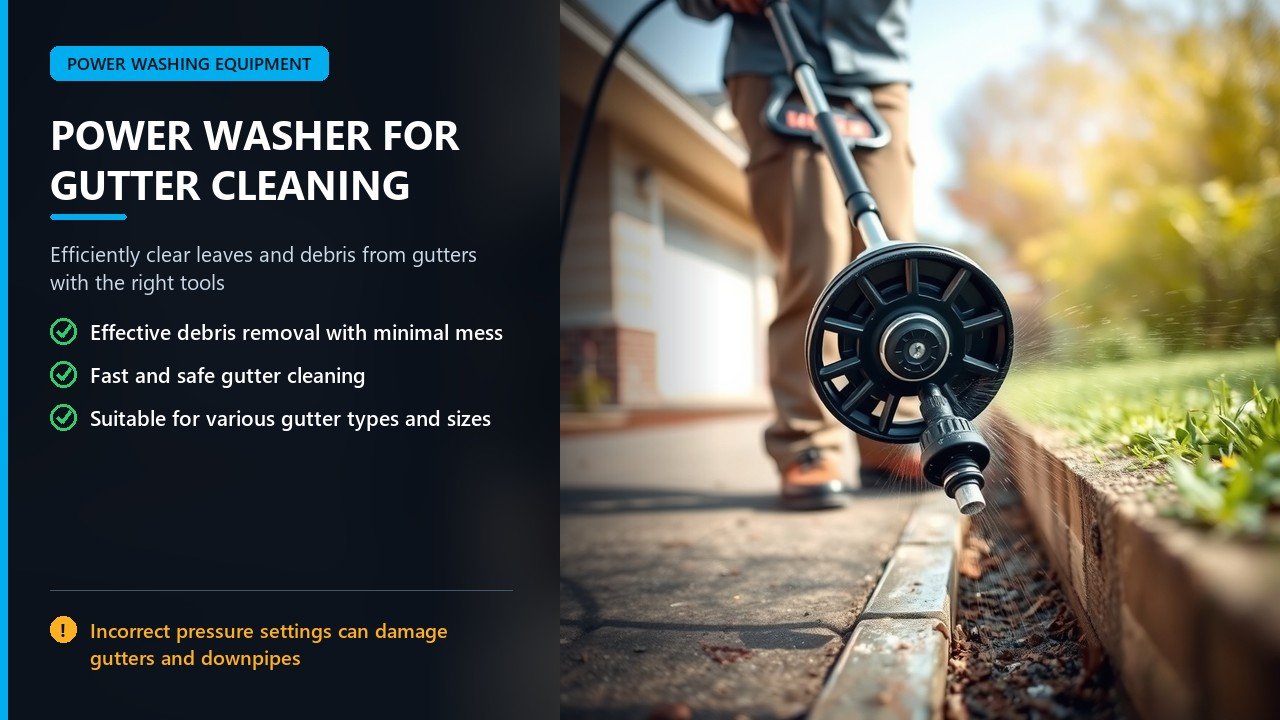
The key tool is a gutter cleaning attachment, usually a kit that fits onto a pressure washer wand and directs water along the gutter. Many kits include a telescoping pole that extends far enough to reach first-floor and some higher gutters from the ground, so you avoid the ladder entirely. The attachment is shaped to sit in the gutter and wash it out as you move it along.
Nozzle choice matters. A focused jet cleans and flushes well, but an overly narrow, aggressive nozzle at high pressure can damage guttering, especially plastic or aging metal. Many gutter tools use a controlled spray pattern inside a guard for this reason. Adjustable pressure or a lower-pressure setting gives more control, and some machines and attachments offer a softer rinse mode.
You will also need enough hose to reach, and a water supply that keeps up with the machine. Check that the hose and gun connections match the machine and the attachment, and use the right nozzle for the task. A little planning of nozzles, hose, and reach avoids mid-job problems while you are at height or reaching up.
Gutter Cleaning Attachments
The centre of a good gutter-cleaning setup is the attachment that turns an ordinary pressure washer into a gutter tool. These usually consist of a curved or angled nozzle head that fits into the gutter, often on a telescoping pole. Some use a rotating or multi-jet action, and some include a shield to contain splashing and protect surfaces.
Telescoping wands extend your reach so you can work from the ground. They come in different lengths, and the length determines how high you can reach, so match it to your property. A long wand is heavier and harder to control, so buy the shortest that comfortably reaches your gutters, since a very long pole is tiring to use accurately.
Some kits also include a downpipe cleaning attachment or a flexible hose for flushing the pipe itself. A blocked downpipe is a common cause of overflow, so a way to clear it is useful. Check that the kit’s connections match your pressure washer, since these attachments come with a range of fitting types and will not always fit without an adapter.
Water Supply and Reach
Gutter cleaning needs a steady water supply, because a washer that runs dry does nothing useful and can damage its pump. If the work is far from a tap, you may need a longer hose or a buffer tank and pump, especially on higher-flow machines. Plan the water before the job, not during it.
Reach is the other constraint. The washer must sit close enough that the hose and wand comfortably reach the gutters, which may mean moving the machine around the building as you work. A longer high pressure hose helps, but remember that extra length costs some pressure, so balance reach against performance.
For high or awkward gutters, a telescoping attachment makes the task possible from ground level, while the machine stays safely down below. Working from the ground removes the ladder risk entirely, which is the single biggest safety gain of using a power washer for this job. The whole method is built around keeping you on solid ground.
When to Call a Professional
Some gutter jobs are beyond a power washer and a telescoping pole. Gutters on very tall buildings, high roofs, or steep pitches are not safe to attempt from the ground with a pole, and leaning out to reach them risks a fall. In those cases, a professional with proper access equipment is the safe choice.
Jobs involving electrical fittings, downlights, or damaged wiring near the gutters should also be left to a professional, since water and electricity are a dangerous mix. If a gutter is cracked, sagging, or has pulled away from the fascia, cleaning it will not fix the underlying problem, and a roofer or guttering specialist is needed.
Heavy, longstanding blockages, flooded downpipes, or gutters that overflow even when clean point to a deeper drainage or structural issue. A power washer can clear debris, but it cannot repair a broken gutter or a blocked underground drain. Knowing the limits of the tool keeps you safe and saves wasted effort.
Step by Step
Start safely by checking the weather and the area below. Clear anything breakable or delicate from beneath the gutters, since water and debris will fall, and warn anyone nearby. Wear eye protection and gloves, and never use a pressure washer on or near electrical fittings, downlights, or cabling in the gutter line. If wiring is involved, keep well clear and call a professional.
Set the machine up with the correct attachment and a sensible pressure. Begin at one end of the gutter and work along, aiming the jet to lift debris in the direction you want it to travel, usually towards a downpipe or the open end. Move steadily rather than dwelling in one spot, letting the water carry the muck away instead of blasting it into the gutter run.
Flush the downpipes as well, using a suitable attachment, and watch how the water drains at the bottom. A clear flow means success; a slow or blocked flow means the pipe needs more work. When you finish, check the gutters and downpipes drain freely, and clear any debris you washed out before it can block drains.
Pressure, Damage, and Safety
Gutter cleaning is not a job for maximum pressure. Too much pressure can bend or split plastic gutters, force water behind the fascia, strip protective coatings, and drive debris into the downpipe where it blocks. Use the lowest pressure that clears the debris, keep the nozzle a sensible distance from the gutter, and never hold the jet on one spot.
Seams, joints, and brackets are the weak points. Aim along the gutter rather than straight at a joint, and ease off near fixings, since a direct hit can open a joint or loosen a bracket. On older or fragile gutters, be especially gentle, or consider traditional clearing for that section.
The table below summarises the main do’s and don’ts.
| Do | Don’t |
|---|---|
| Work from the ground where possible | Don’t spray near electrical fittings or wiring |
| Use low pressure and a suitable attachment | Don’t use maximum pressure on gutters |
| Keep the nozzle moving along the run | Don’t hold the jet on one spot or a joint |
| Clear below and flush the downpipes | Don’t blast debris into the downpipe |
Follow these and the job is quick, effective, and safe.
After the Job
Once the gutters are clear, tidy up. Hose down any mess on walls and paths, and clear the debris you washed out so it does not block drains or stain paving. Check the gutters and downpipes flow freely in the next rain, and note any joints that now drip, since flushing can reveal a seal that needs attention.
Clean and store your attachment and hoses properly, check the inlet filter for grit, and protect the machine from frost. Repeat the job seasonally, especially after autumn leaf fall and before winter, to keep gutters clear.
Frequently Asked Questions
Can you use a power washer to clean gutters? Yes, with a suitable gutter-cleaning attachment and responsible pressure. The water lifts and flushes debris away, usually from the ground, which is safer than climbing a ladder.
What attachment do I need? A gutter-cleaning kit, often with a telescoping wand that lets you work from the ground and a nozzle designed to flush without damaging the gutter. Some kits include a downpipe cleaner.
What pressure is safe for gutters? Use the lowest pressure that clears the debris. High pressure can bend or split gutters and force water behind the fascia, so keep it gentle and keep the nozzle moving.
Can I clean gutters from the ground? Yes. A telescoping attachment makes it possible for most single-storey and some two-storey gutters, which removes the ladder risk that makes the job dangerous.
Will it damage my gutters? Not if you use sensible pressure and technique. Avoid direct hits on joints and brackets, and be extra gentle on older or plastic gutters.
What about downpipes? Flush them with a suitable attachment and check the water drains freely at the bottom. A blocked downpipe is a common cause of gutter overflow.
Is it safe around electrics? No. Never spray a power washer near electrical fittings, wiring, or downlights in the gutter line. Keep well clear and call a professional if wiring is involved.
How often should gutters be cleaned? At least once or twice a year, and after autumn leaf fall. Regular flushing keeps water flowing and prevents damp and overflow damage.
Final Thoughts
A power washer makes gutter cleaning faster and far safer, provided you use it well. The right attachment lets you flush debris from the ground, removing the ladder risk, and sensible pressure protects the gutters from damage.
Work from the ground where possible, use the lowest effective pressure, keep the jet moving, and stay clear of electrical fittings. Flush the downpipes, clear the debris you wash out, and repeat seasonally. Done with care, cleaning gutters with a power washer turns a dreaded chore into a quick, safe task that keeps rainwater flowing away from your home. For related reading, see our guides on a high pressure hose pressure washer and pressure washer connections.