The power washer jet is the end result of everything the machine does, the stream of water that actually hits the surface and does the cleaning. It is shaped by the nozzle, and the nozzle you fit changes the jet from a gentle fan to a cutting point. Understanding the jet is the key to cleaning effectively and avoiding damage.
This guide explains how the jet is formed, what the different nozzle types do, and how to choose and maintain them for the best results.
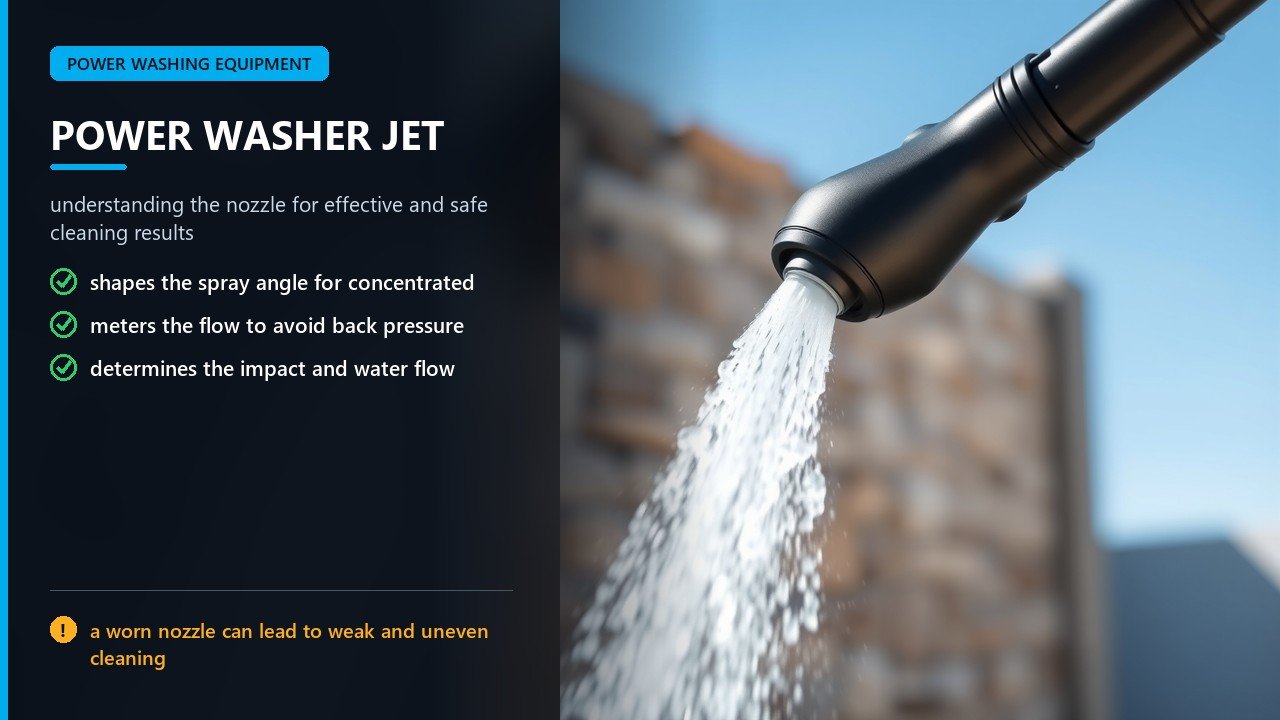
How the Jet Is Formed
Water enters the pump at low pressure, is pressurised, and travels through the hose to the gun and wand. At the tip of the wand sits the nozzle, a small, precisely machined opening that converts the pressurised water into a controlled jet. The size and shape of that opening decide the spray angle, the impact, and how much water flows.
The nozzle has two jobs: to shape the spray and to meter the flow. The spray angle sets how concentrated or spread the jet is, from a narrow, high-impact stream to a wide, gentle fan. The nozzle’s orifice size must match the machine’s flow, because a nozzle that is too small restricts the water and creates back pressure, while one too large lets the pressure drop.
This is why the jet is only as good as the nozzle. A powerful pump feeding the wrong nozzle produces either a weak, wrong-shaped spray or harmful back pressure. The pump provides the energy; the nozzle turns it into the jet, and matching the two is what makes a pressure washer clean well and last.
Nozzle Types and Spray Angles
Standard nozzles are colour-coded by spray angle. A zero-degree nozzle produces a concentrated point jet with maximum impact, used sparingly for the toughest spots. A fifteen-degree nozzle gives a narrow, aggressive fan for stripping and heavy cleaning, and a twenty-five-degree nozzle is a general-purpose middle ground for many surfaces.
A forty-degree nozzle produces a wide, gentle fan for delicate surfaces, rinsing, and light cleaning, while a soap nozzle produces a low-pressure spray for applying detergent. A turbo or rotary nozzle is different again: it spins a zero-degree jet in a circle, combining the cutting power of a point jet with the coverage of a fan, and it cleans hard surfaces faster.
Colour coding varies by maker, so always check the chart rather than assuming. The angle, not the colour, is what governs the jet, and using the wrong angle is the most common cause of either poor cleaning or surface damage. Matching the nozzle to the surface and the job is the core skill of pressure washing.
Choosing the Right Jet
To choose a jet, start with the surface. For concrete and other tough, hard surfaces, a narrow fan or a turbo nozzle delivers the impact to strip dirt efficiently. For vehicles, painted surfaces, and wood, a wide fan and lower impact protect the finish. For rinsing and applying soap, use a wide spray or the dedicated soap nozzle.
Then match the nozzle to the machine’s flow. Nozzles are sized by orifice, often quoted as a nozzle size number, and the right one depends on the machine’s pressure and flow. A machine running with the correct nozzle reaches its rated performance, while a mismatched nozzle either starves the jet or overworks the pump. Nozzle size charts make this match straightforward.
In practice, a good set of nozzles covers most jobs: a zero or fifteen-degree for tough spots, a twenty-five-degree for general cleaning, a forty-degree for delicate work and rinsing, and a soap nozzle for detergent. Keep them organised and switch as the job changes, rather than forcing one nozzle to do everything.
A Worn Jet and Weak Cleaning
Nozzles wear out. The high-pressure water slowly erodes the orifice, enlarging it over time, which lets flow increase and pressure drop. The result is a jet that gradually becomes weaker and less defined, and the machine seems to lose power even though nothing is broken. A worn nozzle is a common and often overlooked cause of poor performance.
If cleaning power slowly fades, compare a nozzle you use often with a fresh one, or simply replace the main nozzles periodically. Because nozzles are inexpensive, replacing them is far cheaper than chasing a phantom pump fault. A crisp, well-defined jet is the sign of a good nozzle; a fuzzy or weak one suggests wear.
If cleaning power suddenly drops, suspect a blockage rather than wear. Grit in the water can lodge in the orifice and choke the jet, so clean the nozzle from the back with water or a soft tool, never a hard pin that could deform it, and fit a filter to keep grit out.
Turbo Nozzles
A turbo, or rotary, nozzle spins a concentrated zero-degree jet in a circle, combining the cutting power of a point jet with the coverage of a fan. This makes it one of the fastest tools for hard-surface cleaning, stripping dirt from concrete and brick quickly and evenly.
It is also aggressive. Because the jet is concentrated, a turbo nozzle can damage soft, painted, or delicate surfaces, so reserve it for tough materials. Keep it moving at a sensible distance, and never hold it on one spot, since its concentrated impact etches and gouges easily.
Like any nozzle, a turbo nozzle must match the machine’s flow and be kept clean. Used on the right surface with good technique, it cleans hard flatwork faster than any standard nozzle and reduces the passes needed to get a surface clean.
Caring for Nozzles
Nozzle care is simple but worthwhile. Keep the nozzles clean and free of grit, store them where they will not be damaged or lost, and never poke the orifice with a hard object. A distorted orifice ruins the jet, so clean from the back with water or a soft tool, and keep a filter on the inlet to stop grit reaching the nozzles at all.
Inspect nozzles for wear periodically, especially with heavy use, and replace them when the jet loses definition. Because a set is inexpensive relative to the machine, keeping fresh spares on hand maintains full cleaning power and lets you rule out the nozzle when troubleshooting a weak jet.
The table below pairs surfaces with suitable jets.
| Surface | Suitable Jet |
|---|---|
| Concrete, brick, heavy grime | Narrow fan (15 degree) or turbo nozzle |
| General cleaning | Medium fan (25 degree) |
| Cars, paint, wood, delicate | Wide fan (40 degree), lower impact |
| Detergent application | Soap nozzle (low pressure) |
Matching the jet to the surface is what makes pressure washing both effective and safe.
Nozzle Size and Flow
Beyond spray angle, nozzle size matters for flow. Nozzles are given size numbers, such as 2.5 or 3.5, that correspond to the orifice diameter and therefore the flow at a given pressure. The right size lets the machine run at its rated pressure and flow; the wrong size throws the balance off and can damage the pump.
A nozzle that is too small restricts the water, raising pressure above the machine’s rating and straining the pump, seals, and hoses. A nozzle that is too large lets water through too freely, so pressure drops and the jet loses its force. Either way, the machine underperforms and wears faster, which is why matching nozzle size to flow and pressure is essential.
Every machine has a recommended nozzle size for its pressure and flow, often given in a chart in the manual or on the nozzle packaging. Use it. If you change the pressure or flow, or fit a larger machine, recheck the nozzle size, because a nozzle matched to one setup is not correct for another. This small detail protects the pump and keeps the jet strong.
Troubleshooting a Weak Jet
When the jet is weak, work through the likely causes in order. First check the nozzle: a worn or partially blocked nozzle is the most common cause. Next check the water supply, since an inadequate supply starves the pump and weakens the jet, and confirm the inlet filter is clean. Then check for air leaks on the inlet side, which let air into the pump and reduce pressure.
If those are fine, look at the pump and unloader. Worn valves, worn seals, or a faulty unloader reduce pressure and produce a weak or surging jet, and these are pump-level faults rather than nozzle problems. Diagnosing from the simplest, cheapest cause upward saves time and avoids replacing parts unnecessarily.
Remember that a jet can also seem weak simply because of technique. Holding the nozzle too far from the surface, using too wide an angle, or working too fast all make cleaning feel weak without anything being wrong. Before assuming a fault, confirm the nozzle, distance, and technique are right, then look to the machine.
Safety Around the Jet
The jet is powerful and dangerous at pressure-washer levels. Never point it at people or animals, keep hands and feet clear of the nozzle, and wear eye protection, gloves, and sensible footwear. The stream can cut skin and cause serious injury, and it can fling debris that hurts, so treat the jet with the same respect as any cutting tool.
Never use the jet to clean yourself or others, and be careful when starting the machine, since the initial burst can catch you off guard. Keep children and pets away from the work area, and switch the machine off when adjusting nozzles or clearing blockages. A few simple habits prevent the most common pressure washer injuries.
On delicate or unfamiliar surfaces, test the jet on a hidden area first and start with a wide, gentle nozzle. This lets you judge how the surface responds before committing, and it is far easier to increase pressure than to repair damage. Control, not maximum force, is what produces good, safe cleaning.
Frequently Asked Questions
What is a power washer jet? The stream of water that leaves the nozzle and does the cleaning. Its shape, impact, and flow are set by the nozzle, which turns the pump’s pressure into a controlled jet.
What do the nozzle colours mean? They indicate spray angle: narrow for high-impact cleaning, wider for gentle work and rinsing. Colour coding varies by maker, so check the chart rather than assuming.
What is a turbo nozzle? A rotary nozzle that spins a zero-degree jet in a circle, combining point-jet power with fan coverage. It cleans hard surfaces fast but is too aggressive for delicate ones.
Why is my jet weak? Often a worn or blocked nozzle, a poor water supply, or a pump problem. Check the nozzle first, then the supply and filter, then the pump and unloader.
How do I size a nozzle? Match the nozzle size number to the machine’s pressure and flow, using the maker’s chart. A wrong size either strains the pump or drops the pressure.
Do nozzles wear out? Yes. High-pressure water enlarges the orifice over time, weakening the jet. They are inexpensive, so replace them when performance fades.
Can I use one nozzle for everything? No. Different surfaces need different jets. A set covering narrow, medium, wide, and soap spray handles most jobs safely.
Is the jet dangerous? Yes. It can cut skin and fling debris, so never point it at people or animals, keep clear of the nozzle, and wear protective gear.
Final Thoughts
The power washer jet is where all the machine’s effort is delivered, and the nozzle is what turns pressure into a useful, controlled stream. Getting the jet right means matching the spray angle and the nozzle size to both the surface and the machine.
Use a narrow or turbo jet for tough hard surfaces, a wide jet for delicate work and rinsing, and the correct size for your machine’s flow. Keep nozzles clean, replace them when they wear, and treat the jet with respect. Do these things and the machine cleans effectively, protects the surfaces it touches, and runs safely. For related reading, see our guides on a high pressure power washer gun and pressure washer gun parts.