A power washer on trailer is a pressure washing setup that mounts the pressure washer on a trailer for mobility, storage, and professional capability. Trailers let you carry the washer, a water tank, hoses, and accessories to any job site, making them essential for mobile pressure washing businesses and handy for homeowners with large properties. This guide explains the benefits of a power washer on trailer, the components, how to choose the right setup, and how to maintain it.
What Is a Power Washer on Trailer
Mobile pressure washing made easy.
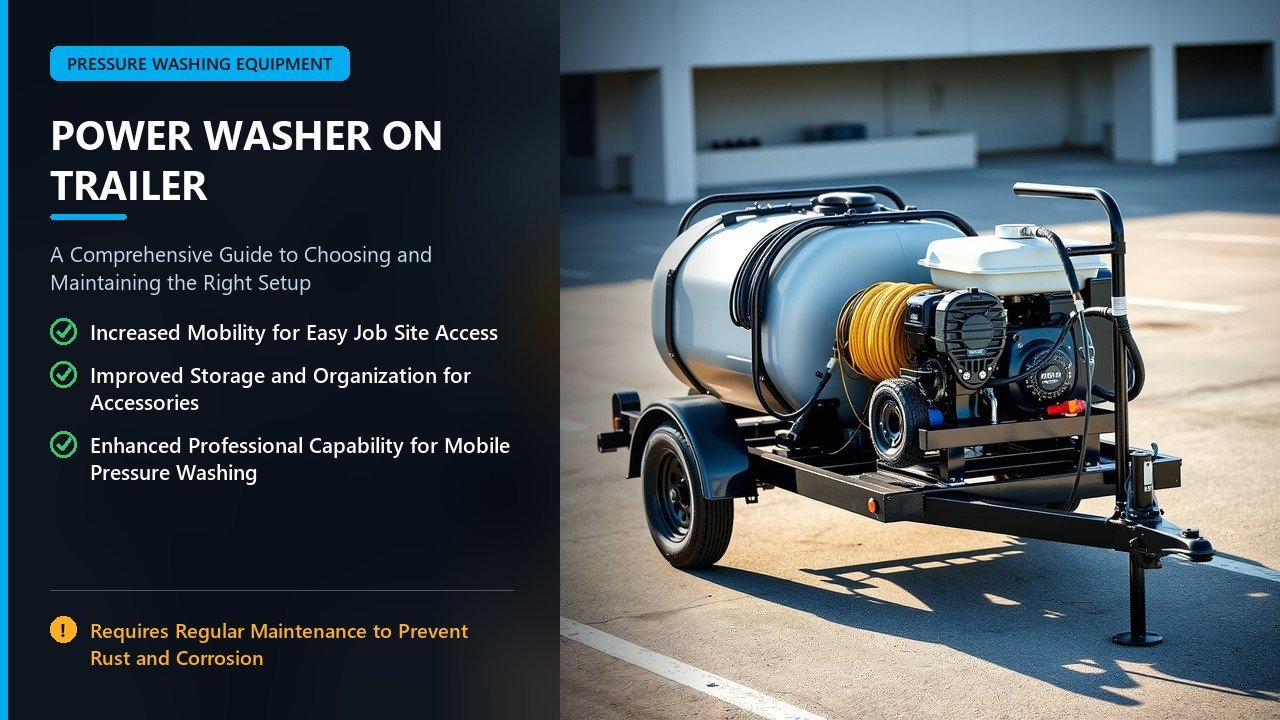
A power washer on trailer is a trailer-mounted system that carries a pressure washer and its supporting equipment, allowing you to tow it wherever you need to clean. Instead of moving a heavy, standalone washer and its accessories by hand, the trailer keeps everything together on wheels. This makes it ideal for cleaning multiple locations, remote job sites, and any scenario where water and power aren’t readily available in one spot.
These setups are common in the mobile pressure washing industry, where contractors need professional, self-contained equipment. They range from simple trailers carrying a single gas pressure washer to full enclosed units with hot water burners, large water tanks, and multiple hose reels. For homeowners with large properties or frequent cleaning needs, a small trailer setup can also improve convenience and organization.
Everything in one place. Because the trailer holds the washer, water, and accessories, you avoid repeated trips and setup hassle. This makes mobile cleaning far more efficient. With a trailer, you’re a self-contained wash unit. Our guide to power washer with trailer covers related setups.
Benefits of Mounting a Power Washer on a Trailer
Mobility, storage, and professionalism.
The biggest benefit of a power washer on trailer is mobility. You can tow the entire system to any job, whether it’s a customer’s driveway, a commercial lot, or a remote property, without loading and unloading individual components. The trailer also provides secure storage for hoses, nozzles, chemicals, and tools, protecting them from weather and theft on enclosed models.
Carrying your own water supply in an onboard tank means you can work where no spigot exists, which is a major advantage for commercial and rural jobs. A trailer setup also looks professional, an important factor for winning clients in the pressure washing business. Finally, trailers can accommodate hot water pressure washers for grease and oil removal or cold water units for general cleaning, giving flexibility across job types.
Practical and professional. Because a trailer keeps everything together and ready, setup time drops and capability rises. This boosts efficiency and earnings for business use. With a mobile setup, you’re prepared for more jobs. Our guide to pressure washer for mobile detailing covers mobile cleaning setups.
Components of a Trailer-Mounted Power Washer
Washer, water, and accessories.
A power washer on trailer typically includes the pressure washer itself, which may be gas, diesel, or electric, and can be cold or hot water. A water tank (from 50 to 500+ gallons) supplies water when no hookup is available. Hose reels hold high-pressure hoses and sometimes garden hoses, keeping them organized and ready. Storage compartments or racks carry nozzles, guns, wands, chemicals, and tools.
Other components may include a chemical injection system for applying detergents, a battery for starting or auxiliary power, lights and safety equipment for road use, and the trailer frame, axles, wheels, and hitch. Enclosed trailers add walls, doors, and a roof for protection. Understanding these components helps you evaluate or build a setup that matches your cleaning jobs and budget.
Components define capability. Because the water tank, reels, and storage determine how you work, choosing the right components shapes your efficiency. This makes the component list important. With the right setup, jobs run smoothly. Our guide to hot water pressure washing trailer covers hot water components.
| Component | Purpose |
|---|---|
| Pressure washer (gas/diesel/electric) | Provides pressure and flow for cleaning |
| Water tank (50-500+ gal) | Supplies water where no hookup exists |
| Hose reels | Stores high-pressure hose for quick deployment |
| Chemical injection system | Applies detergents and cleaners |
| Storage racks/compartments | Holds nozzles, guns, tools, chemicals |
| Trailer frame & running gear | Carries and transports the system safely |
This table lists the main components of a power washer on trailer, from the pressure washer and water tank to hose reels, chemical injection, storage, and the trailer itself. Together, these make a self-contained mobile cleaning system.
Choosing the Right Power Washer on Trailer
Match specs to your jobs.
When choosing a power washer on trailer, start with the pressure washer’s PSI and GPM. For light commercial or residential work, 2000-3000 PSI with 2-3 GPM is often enough. For heavy commercial or industrial cleaning, 3000-4000+ PSI and 3-4+ GPM is better. Decide between cold and hot water: hot water excels at grease and oil, while cold water handles general dirt and mildew at lower cost.
Next, evaluate water tank capacity based on your run time and whether you’ll have a water source on site. Larger tanks mean longer cleaning time between refills but add weight you must tow. Confirm your vehicle’s towing capacity matches the loaded trailer. Consider the trailer type (open or enclosed), reels, chemical injection, and storage. Matching these to your expected workload ensures efficiency and avoids over- or under-buying.
Right specs, right results. Because PSI, GPM, water capacity, and trailer type determine what jobs you can take, choosing carefully pays off. This ensures your setup fits your work. With the right configuration, you clean efficiently. Our guide to diesel high pressure washer covers powerful options often trailer-mounted.
Safety and Legal Considerations
Towing safely and legally.
When you put a power washer on trailer, safety and legality matter. Ensure the trailer is properly rated for the total loaded weight, including the washer, water tank, and equipment. Water is heavy, so a full tank significantly increases weight. Check your vehicle’s tow rating and use appropriate hitch, safety chains, lights, and brakes as required. Secure all equipment so nothing shifts during transport.
Follow local regulations for trailer registration, lighting, and weight limits. For the pressure washer itself, follow all safety guidelines, including proper fuel handling for gas and diesel units and electrical safety for electric models. For hot water units, be aware of burner and fuel safety. Following these considerations keeps your mobile setup safe and street-legal.
Safety on the road and job site. Because trailers carry heavy loads and high-pressure equipment, proper towing and handling are essential. This prevents accidents and legal issues. With safe practices, mobile cleaning is dependable. Our guide to is pressure washing a car safe covers job-site safety.
Maintaining a Trailer-Mounted Power Washer
Care for washer and trailer.
Maintain the pressure washer as you would a standalone unit: change engine oil, clean or replace air filters, check spark plugs, inspect the pump and seals, and winterize in freezing climates. For hot water units, service the burner and fuel system. For the trailer, check tire pressure and condition, wheel bearings, lights, and brakes regularly, and keep the frame free of rust by cleaning and touching up paint.
Inspect hoses, reels, and fittings for leaks or damage, and keep the water tank clean. Lubricate moving parts and secure loose items. Storing the trailer under cover or in a garage protects both the equipment and the trailer from the elements. Regular maintenance keeps your power washer on trailer ready to work and extends the life of your investment.
Two systems, one routine. Because the washer and the trailer both need attention, a combined maintenance routine keeps everything reliable. This prevents breakdowns on the job. With good care, your setup performs for years. Our guide to winterizing a pressure washer covers seasonal protection.
Frequently Asked Questions About a Power Washer on Trailer
What is a power washer on trailer? It’s a pressure washer mounted on a trailer, often with a water tank, hose reels, and storage, so you can tow the entire cleaning system to different job sites.
Do I need a special license to tow a pressure washer trailer? Usually a standard license suffices if the trailer is within your state’s weight limits. Check local regulations and your vehicle’s tow rating, as heavier setups may require additional endorsements.
How big a water tank do I need on a pressure washer trailer? Tank size depends on your GPM and run time. Small jobs may need 50-100 gallons; commercial work often uses 200-500+ gallons. Larger tanks mean longer run time but more weight.
Cold water or hot water for a trailer setup? Cold water suits general cleaning like dirt and mildew. Hot water is much better for grease, oil, and heavy grime. Choose based on your typical jobs.
How much does a power washer on trailer cost? Prices range from a few thousand dollars for a basic cold water setup to $10,000+ for fully equipped hot water enclosed trailers, depending on the washer specs, tank size, and accessories.
Can I build my own pressure washer trailer? Yes, if you have the skills, but pre-built packages are safer and properly configured. Ensure all parts are pressure- and weight-rated and the trailer meets legal requirements.
Final Verdict on a Power Washer on Trailer
A power washer on trailer is a smart investment for anyone who needs mobile cleaning capability. It combines a pressure washer with a trailer, water tank, and accessories to create a self-contained system you can tow to any job, making it ideal for contractors and convenient for homeowners with large properties.
By choosing the right pressure washer specs, water capacity, and trailer type for your needs, and by maintaining both the equipment and the trailer, you’ll gain efficiency, professionalism, and flexibility. A well-built power washer on trailer helps you take on bigger jobs and work more productively.