A power washer with trailer is a mobile pressure washing setup that combines a pressure washer with a trailer for easy transport and storage. This setup is popular for contractors, mobile detailing businesses, and homeowners who need to clean large areas or move their equipment between job sites. Understanding the benefits, types, and considerations of a power washer with trailer helps you choose the right setup for your needs.
What Is a Power Washer with Trailer
Mobile pressure washing on wheels.
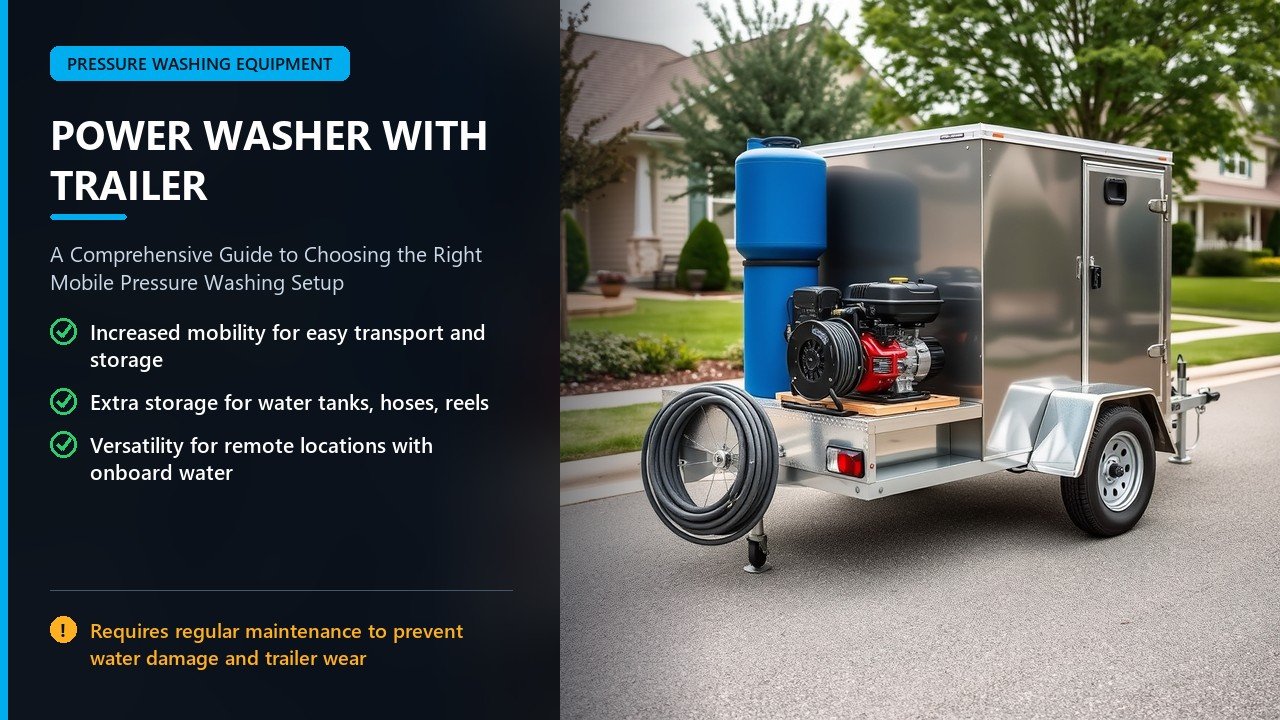
A power washer with trailer is a pressure washing system mounted on a trailer, allowing you to tow it to different locations for cleaning. The trailer typically carries the pressure washer, a water tank, a hose reel, and storage for nozzles, detergents, and other accessories. This setup is ideal for mobile businesses like pressure washing contractors, fleet washing, or homeowners with large properties who need portability.
Trailers can be custom-built or purchased as pre-configured packages with gas or diesel pressure washers. They come in various sizes, from small utility trailers for residential use to larger enclosed trailers for commercial operations. Having a power washer with trailer means you can bring your own water supply if there’s no water source on-site, making it versatile for remote locations.
Mobility adds flexibility. Because you can tow the entire system, you’re not limited to locations with easy access to water and power in the same spot. This is especially useful for job sites, commercial properties, and rural areas. With a trailer setup, you’re fully equipped to handle a wide range of cleaning jobs. Our guide to pressure washer for mobile detailing covers mobile setups in detail.
Benefits of a Power Washer with Trailer
Portability, storage, and professionalism.
The main benefit of a power washer with trailer is mobility. You can easily transport your equipment to multiple job sites without loading and unloading heavy components each time. Trailers also provide ample storage space for water tanks, hoses, reels, chemicals, and tools, keeping everything organized and protected from the elements.
A trailer setup also looks professional, which is important for commercial pressure washing businesses. It allows you to carry your own water supply with a built-in tank, so you can work in locations without a nearby water hookup. Additionally, trailers can be equipped with hot water pressure washers, which are more effective for grease and oil removal, or cold water units for general cleaning. The added capacity and organization improve efficiency and allow you to take on larger jobs.
Efficiency and versatility. Because everything is in one mobile unit, setup and teardown times are reduced, and you can handle jobs in remote locations. This increases your earning potential for business use and convenience for personal use. With a well-equipped trailer, you’re ready for almost any pressure washing job. Our guide to hot water pressure washing trailer covers hot water trailer setups.
Types of Power Washer Trailers
Choose based on your needs.
Power washer trailers come in different configurations. Open utility trailers are affordable and easy to access, making them popular for smaller setups. Enclosed trailers offer better protection from weather and theft, with space for storing chemicals and equipment securely. Skid-mounted pressure washers can be placed on a trailer and removed if needed, offering flexibility.
You can also choose between cold water and hot water setups. Cold water power washer trailers are simpler and less expensive, suitable for general cleaning like siding, decks, and driveways. Hot water trailers use a burner to heat water, making them much more effective for removing grease, oil, and heavy grime, commonly used in commercial and industrial applications. The size of the water tank, from 50 gallons to 500+ gallons, depends on how long you need to run without refilling.
Configuration matters. Because different jobs require different capabilities, choosing between cold/hot water and open/enclosed trailers is important. This ensures your setup matches your workload. With the right type, you’ll be more efficient and profitable. Our guide to diesel high pressure washer covers powerful options often used on trailers.
| Trailer Type | Best For | Notes |
|---|---|---|
| Open utility trailer (cold water) | Homeowners, light commercial | Affordable, easy access, less protection |
| Open utility trailer (hot water) | Commercial, grease/oil removal | More effective, higher cost, needs fuel for burner |
| Enclosed trailer | Professional contractors | Secure storage, weather protection, higher cost |
| Skid-mounted on trailer | Flexible use | Can remove washer from trailer when needed |
This table compares common power washer trailer types, showing their best uses and key notes. Whether you’re a homeowner looking for a simple setup or a contractor needing a fully equipped enclosed trailer, choosing the right configuration ensures your investment meets your needs.
Key Considerations When Buying a Power Washer with Trailer
Match specs to your work.
When purchasing a power washer with trailer, consider the pressure washer’s PSI and GPM ratings. Higher PSI removes stubborn grime, while higher GPM means faster cleaning. For most residential work, 2000-3000 PSI with 2-3 GPM is sufficient. For commercial jobs, 3000-4000+ PSI with 3-4+ GPM is better. Also decide between gas, diesel, or electric power based on your job sites and power availability.
Water tank capacity is crucial if you won’t have a water hookup. A larger tank means longer run times, but adds weight. Trailer size and towing capacity of your vehicle must be compatible, so check your vehicle’s tow rating before buying. Other features to consider include a hose reel, chemical injection system, hot water burner (if needed), and storage compartments. Choosing a setup that matches your typical jobs ensures efficiency and avoids over- or under-buying.
Specs must fit your needs and vehicle. Because towing capacity and water needs vary, planning ahead prevents problems. This ensures your setup is practical for the jobs you take on. With the right combination, you’ll work efficiently. Our guide to pressure washer with trailer covers more details on trailer setups.
Maintenance for a Power Washer Trailer Setup
Protect your investment.
Maintaining a power washer with trailer involves caring for both the pressure washer and the trailer. For the pressure washer, follow regular maintenance: change engine oil (for gas/diesel), clean air filters, check spark plugs, inspect the pump, and winterize it in freezing climates. For hot water units, maintain the burner and fuel system as recommended.
For the trailer, check tire pressure, bearings, lights, and brakes regularly, especially if used often. Keep the trailer clean and dry to prevent rust, and lubricate moving parts. Inspect hoses, fittings, and water tanks for leaks or damage. Proper maintenance ensures your setup stays safe, reliable, and ready for work, extending the life of both the pressure washer and the trailer.
Two systems to maintain. Because you have both mechanical equipment and a trailer, consistent upkeep is important for safety and longevity. This prevents breakdowns and costly repairs. With regular maintenance, your mobile setup stays dependable. Our guide to winterizing a pressure washer covers winter protection for your equipment.
Frequently Asked Questions About Power Washer with Trailer
What is a power washer with trailer used for? A power washer with trailer is used for mobile pressure washing, allowing you to transport your pressure washer, water tank, hoses, and accessories to different job sites for cleaning driveways, buildings, vehicles, and more.
Do I need a special license to tow a power washer trailer? In most cases, a standard driver’s license is enough if the trailer’s gross weight is within your state’s limits. Check your local towing regulations and your vehicle’s tow rating, as larger trailers may require additional endorsements.
Should I get a cold water or hot water trailer setup? Cold water is sufficient for general cleaning like dirt, mildew, and dust. Hot water is much better for grease, oil, and heavy industrial grime. Choose based on the types of jobs you’ll be doing.
How big of a water tank do I need? Tank size depends on your GPM and run time needs. For small jobs, 50-100 gallons may suffice. For commercial work, 200-500+ gallons is common. Larger tanks mean longer run times but add weight to the trailer.
Can I build my own power washer trailer? Yes, you can build your own if you have the skills, but pre-built packages are often safer and come properly configured. Ensure all components are rated for pressure and weight, and that the trailer meets safety requirements.
How much does a power washer with trailer cost? Costs vary widely, from a few thousand dollars for a basic cold water setup to $10,000+ for a fully equipped hot water enclosed trailer. Price depends on pressure washer specs, trailer size, water tank, and accessories.
Final Verdict on Power Washer with Trailer
A power washer with trailer is an excellent investment for anyone needing mobile cleaning capability. Whether you’re a homeowner tackling large projects or a contractor running a pressure washing business, a trailer setup provides mobility, storage, and the ability to work in locations without water hookups.
By choosing the right combination of pressure washer, trailer type, water tank size, and features for your needs, you’ll gain efficiency and versatility. With proper maintenance of both the equipment and trailer, your power washer with trailer will serve you reliably for years, helping you take on bigger jobs and work more professionally.