The power washing gun is the trigger you hold to control the jet, and it is one of the most-used parts of any pressure washer. It opens and closes the flow of high-pressure water, connects to the wand and hose, and shapes how comfortable, controlled, and safe the machine feels in use. When a gun wears out or does not suit you, replacing it can transform the whole experience.
This guide explains what a power washing gun is, the types available, and how to choose a replacement that matches your machine.
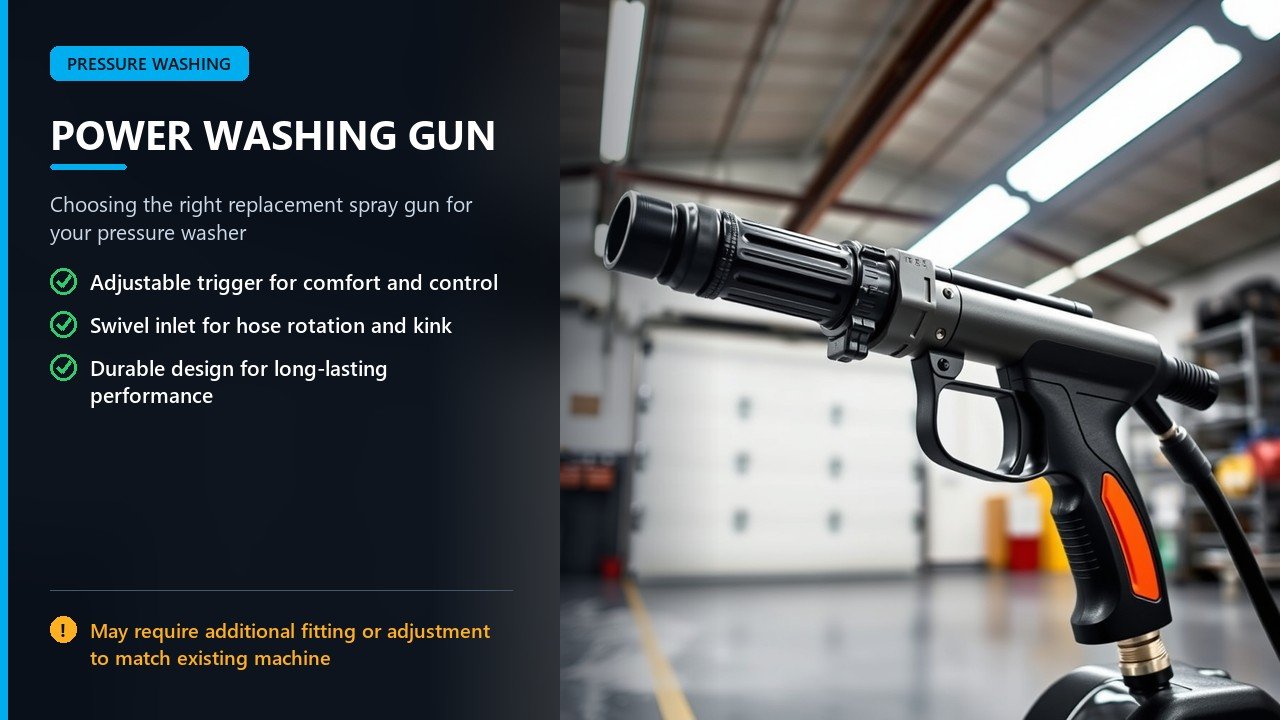
What the Gun Does
The gun is the valve between the hose and the wand. Pull the trigger and a valve inside opens, letting high-pressure water flow to the nozzle; release it and the valve closes, stopping the flow. The gun also carries the safety lock that prevents accidental spraying and, on many models, a swivel inlet that lets the hose rotate freely and stops it kinking.
Because the gun is held for the whole job, its design affects comfort and control. Trigger feel, grip shape, balance, and the position of the inlet all determine how tiring or pleasant the machine is to use, and a gun that suits your hand makes a long session far easier.
The gun is also a common wear point. Its internal seals, valve, and trigger spring take repeated stress under full pressure, and over time a worn gun leaks, drips when released, or becomes stiff. When that happens, a replacement gun restores performance, and an upgrade can improve comfort at the same time.
Gun vs Wand
People sometimes confuse the gun and the wand, but they are separate parts. The gun is the trigger assembly you hold, with the inlet for the hose and the outlet for the wand. The wand is the tube that extends from the gun to carry the water to the nozzle, and the nozzle fits on its end. The gun controls the flow; the wand only delivers it.
Because they are separate, either can be replaced. A short or damaged wand can be swapped without changing the gun, and a worn gun can be replaced while keeping the wand. Many kits combine gun and wand, but understanding the split helps when buying replacements or diagnosing a problem.
Some machines use a one-piece gun and wand, especially compact or cheap models, which must be replaced as a unit if either part fails. Before buying, check whether your machine uses separate or combined parts, since that decides how you maintain and upgrade it.
Types of Gun
Guns come in several styles. The pistol grip, the most familiar, has a vertical grip and a trigger, and suits most work. A rear-handle gun places the handle behind the barrel, which some users find steadier for long reaches. A stubby gun is short and compact, handy for close work and confined spaces, and a swivel-inlet gun adds the rotating hose connection that improves comfort.
Guns differ in connection type as well. Threaded guns use screw-on M22 or BSP/NPT fittings, while quick-connect guns use push-and-click fittings for fast changes. The best choice matches the rest of your equipment, so the gun connects to your wand and hose without leaky adapters.
There are also differences in build. A sturdy gun with brass or stainless internals and replaceable seals outlasts a cheap plastic one, and a serviceable gun, whose seals can be renewed, lasts longer still. For regular use, choosing a gun built for pressure-washer duty is worth the small extra cost.
Ratings and Matching
The first rule of choosing a gun is to match its ratings. The gun must be rated for at least your machine’s pressure and flow, and for the water temperature if you use hot water. A gun rated below the machine’s output may leak, fail, or, at worst, burst, so never fit an under-rated gun to a powerful machine.
Match the connection type too. The gun inlet and outlet must suit your hose and wand fittings, whether threaded or quick-connect, and the thread type, such as M22 or BSP, must be correct. Adapters add joints that can leak and reduce flow, so matching the gun to your existing fittings is best.
Consider the temperature if you use a hot water machine. Not all guns and seals cope with hot water, so choose a gun rated for the temperature with heat-resistant seals. A cold-water gun may fail quickly under hot water, so this matters whenever heat is involved.
Choosing for Comfort
Beyond ratings, choose a gun that feels right. Grip the trigger and judge the size and shape of the handle, the reach of the trigger, and the balance of the gun in your hand. A grip that suits your hand and a trigger that is easy to pull reduce fatigue, especially on long jobs.
A swivel inlet is a small feature with a big payoff. It lets the high-pressure hose rotate as you move, so the hose does not twist, kink, or fight you. For anyone working around a car or across a large area, a swivel inlet makes the gun noticeably more comfortable and the hose longer-lived.
Weight and build also matter. A heavy gun tires the arm, while a flimsy one feels insecure and wears quickly, so aim for a balance: light enough to hold comfortably, solid enough to last. Ergonomic grips, sometimes with a rubberised surface, help when your hands are wet, and a clear safety lock is essential on any gun.
Safety With the Gun
The gun is where the machine’s power is released, so safe handling starts there. Never point the gun at people, animals, or yourself, even briefly, since a high-pressure jet can cause serious injury, including injection injuries that need urgent medical care. Treat the jet with the respect you would give any powerful tool, and keep the safety lock engaged whenever you set the gun down.
Keep your hands away from the nozzle and never use the jet to clean clothing, shoes, or skin; the pressure that strips dirt can also cut flesh. When checking for a blockage, switch off the machine, release the trigger to relieve pressure, and remove the nozzle before inspecting it, rather than looking into the jet.
Finally, use the right nozzle and technique for the surface. A narrow jet concentrates the danger and the cleaning force, so choose the widest angle that works and keep the wand moving. Never disable the trigger lock or modify the gun, and stop using a gun whose body, trigger, or fittings are damaged. Safe habits on the gun keep both the operator and the surface out of harm.
Care and Common Problems
Gun care is mostly about its seals. Keep them clean and renew them when they wear, since worn seals cause the classic problems: a leak from the trigger area, water spraying when the trigger is released, and a gradual loss of pressure. On a serviceable gun, a seal kit or rebuild kit restores it cheaply.
Common gun faults point to specific parts. A drip when the trigger is released is usually worn trigger-valve seals. A leak at the inlet suggests the inlet seal or a loose connection. A trigger that sticks or is hard to pull indicates the internal valve, spring, or mechanism needs attention. In each case, a seal or rebuild fixes it.
A seized or badly worn gun, or one with a cracked body, is usually replaced rather than repaired. Since guns are relatively inexpensive and a leaking one wastes water and pressure, replacement is often the sensible choice once a gun is beyond a straightforward seal change.
Upgrading the Gun
Upgrading a gun is one of the easiest ways to improve a pressure washer. Moving from a cheap plastic gun to a well-built one with a swivel inlet and replaceable seals improves comfort, reliability, and hose life, often for a modest cost. It is a genuine upgrade that you feel on every job.
An upgraded gun also lets you standardise. Switching to quick-connect fittings across gun, wand, and hose makes changing attachments fast, and choosing a gun with common fittings ensures you can find nozzles, wands, and spares easily. Standardising pays off whenever something needs replacing.
The table below sums up the main points about a power washing gun.
| Point | Detail |
|---|---|
| Ratings | Match pressure, flow, and temperature |
| Connections | Threaded or quick-connect, matching your kit |
| Comfort | Grip, trigger, balance, swivel inlet |
| Build | Brass or stainless internals; serviceable seals |
| Safety | Working trigger lock-off, never disabled |
Choose on these and the gun serves comfortably and safely.
When you replace a gun, keep the old one for spares if it still shares fittings, and check the O-rings and seals on the new gun’s connections before first use. A minute spent confirming the fit saves a leak later, and with the right gun in place the whole machine feels better in the hand.
Frequently Asked Questions
What is a power washing gun? The trigger assembly you hold to control the jet. It opens and closes the flow of high-pressure water, connects to the wand and hose, and carries the safety lock.
Can I replace my pressure washer gun? Yes. Guns are replaceable and often use standard fittings, so you can fit a new or upgraded gun that matches your machine’s ratings and connections.
How do I match a gun to my machine? Check the pressure, flow, and temperature ratings, and the connection type and thread, so the gun suits your machine, hose, and wand without leaky adapters.
Why does my gun leak when I release the trigger? Usually worn trigger-valve seals inside the gun. A seal kit or rebuild restores a serviceable gun; otherwise replace the gun.
What is a swivel inlet? A rotating hose connection on the gun that lets the high-pressure hose turn freely, preventing twisting and kinking. It improves comfort considerably.
Which style should I choose? A pistol grip suits most work, a rear-handle gun can be steadier for long reaches, and a stubby gun is handy in tight spaces. Pick what feels comfortable.
Can I use my gun with hot water? Only if it is rated for the temperature, with heat-resistant seals. A cold-water gun may fail under hot water.
Is it worth upgrading the gun? Often, yes. A well-built gun with a swivel inlet and replaceable seals improves comfort and reliability, and is a low-cost upgrade.
Final Thoughts
The power washing gun is the part you hold and the valve you control, and it shapes both the performance and the comfort of the whole machine. A gun that suits your hand, matches your equipment, and seals reliably makes pressure washing easier, while a worn or under-rated one leaks, tires you, and holds the machine back.
Choose a gun rated for your machine’s pressure, flow, and temperature, with matching connections, a comfortable grip, a swivel inlet, and serviceable seals. Keep it maintained or replace it when worn, and the gun does its job quietly and well. For related reading, see our guides on a high pressure power washer gun and on pressure washer gun parts.