Watch a professional pressure washing crew set up, and you notice something almost invisible: not one of them spends a single minute untangling a hose. A cart rolls out, one worker pulls the hose off a reel, and the job starts. A homeowner, by contrast, often begins by wrestling a coiled snake of high-pressure hose off the ground, stepping over it while working, and then re-coiling it by hand at the end – a routine that wastes time, kinks the hose, and adds a trip hazard to a wet surface. The difference is a power water hose reel: a small piece of hardware that quietly transforms the entire workflow.
A hose reel is not glamorous, and that is exactly why it gets overlooked. People spend hours comparing pressure washers and minutes thinking about storage. Yet the hose is the component most likely to fail, the work area hazard most likely to cause a slip, and the part of setup that eats the most time. A reel addresses all three simultaneously, and the return on the investment shows up on the very first job.
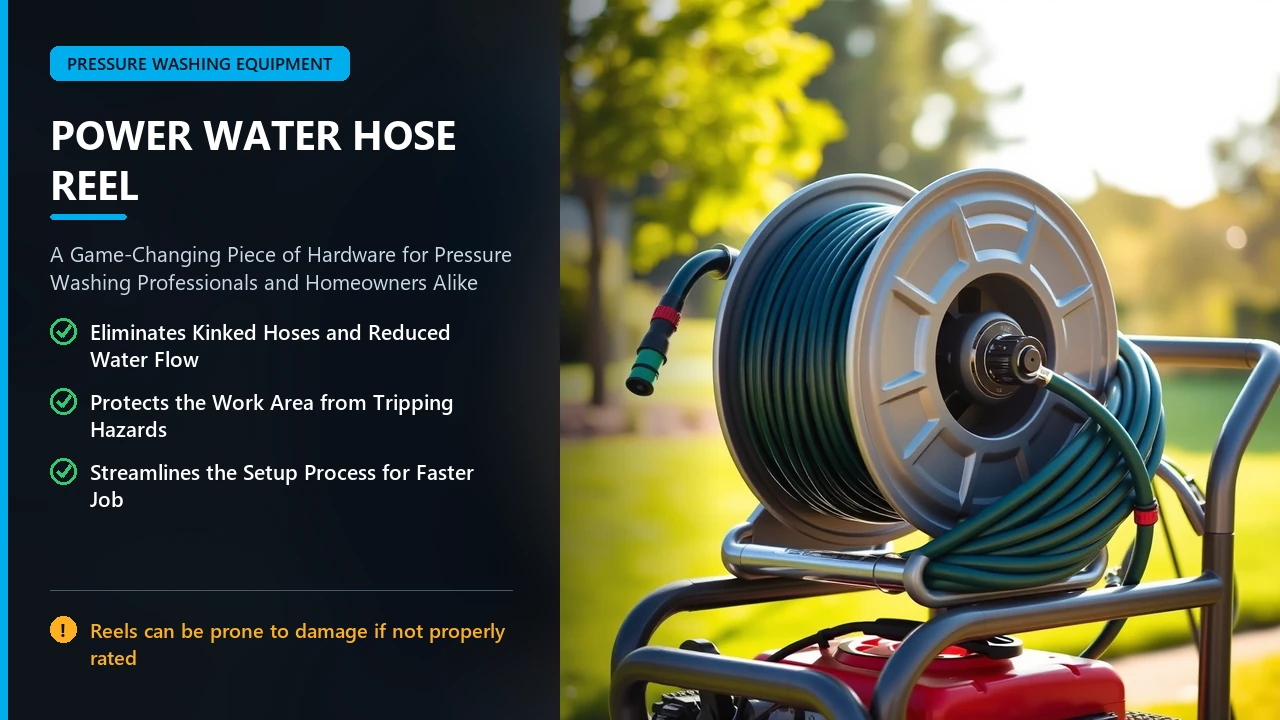
Why a Hose Reel Changes the Work
The benefits stack, and they compound over a season. Individually each one sounds minor; together they change how the job feels.
- No kinks. A reel lays the hose in smooth, uniform loops. Kinks pinch the inner core, reduce flow, and permanently weaken the hose at the bend point.
- Ground protection. The hose sits on the drum instead of dragging over concrete, gravel, and lawn edges – the surfaces that abrade covers fastest.
- Fast setup and teardown. Pull out the length you need, work, retract. The ten minutes of untangling at the start and the ten at the end both disappear.
- Safer job site. Loose high-pressure hose lying across a wet driveway is a genuine fall hazard, and it can snag on vehicles and equipment. A reel keeps it contained.
- Organized storage. Everything lives in one place, which matters on a cart or trailer where space and order both count.
A homeowner who washes two vehicles a month saves a few minutes each time. A contractor running jobs five days a week saves hours every week. The math is the same; only the scale changes.
Types of Hose Reels
| Type | How It Works | Best For | Reliability |
|---|---|---|---|
| Manual crank | Hand crank winds the hose | Homeowners, budget setups, light duty | Highest – fewest parts |
| Spring-return (auto-rewind) | Internal spring pulls the hose back | Frequent users who value speed | High – spring can weaken over years |
| Motorized electric | Motor rewinds at the press of a switch | Long hoses, commercial trailers, fleets | Good – more components to service |
Manual reels are the workhorses. Fewer moving parts means less to fail, and a crank reel will outlast the hose it holds several times over. For most homeowners and light commercial users, this is the correct, most dependable choice.
Spring-return reels trade a bit of reliability for real convenience. Cleanup becomes a one-handed motion, which matters when you are finishing a job in fading light. The spring mechanism needs occasional adjustment and will eventually wear, but for regular users the time saved justifies it.
Motorized reels exist for one reason: long, heavy hose that is miserable to wind by hand. A 200-foot high-pressure hose can weigh 40 pounds or more, and doing that repeatedly across a day of jobs is a fast route to back strain. On a commercial trailer, a motorized reel is a labor-saving investment.
Matching the Reel to Your Hose and Machine
The reel, the hose, and the machine must be sized together. Mismatches cause leaks, damaged hose, and pressure loss.
| Consideration | What to Match | Why It Matters |
|---|---|---|
| Pressure rating (psi) | Reel and swivel at or above machine max | Under-rated reels and swivels fail under load |
| Hose capacity (length) | Reel holds your full hose length | Overloading damages hose and stresses the swivel |
| Hose diameter (1/4″, 5/16″, 3/8″) | Drum sized for the diameter | Wrong size crushes the hose or lets it slip |
| Mount type | Wall, cart, trailer, or floor stand | Must fit your workspace and anchor points |
| Swivel quality | Serviceable seals, correct rating | The swivel is the pressure-limiting junction |
Two mistakes appear again and again. The first is capacity: buying a reel for a 50-foot hose and then forcing 100 feet onto the drum. The hose will not lay flat, it strains the swivel, and it wears faster. The second is the swivel rating – often overlooked while the bracket looks heavy-duty. The swivel, not the bracket, is what carries the pressure and what leaks first.
Hose diameter also matters for performance. A 1/4-inch hose loses more pressure over distance than a 3/8-inch hose at the same flow. For runs over 100 feet, 3/8-inch is standard, and many reel capacities are built for it.
Mounting Options
- Wall mount. Ideal for a fixed wash bay or garage. Position it close to where the hose exits toward the work area. Anchor into studs, steel, or concrete – never drywall alone.
- Cart mount. Pairs with a portable washer so the reel and machine move together. Great for homeowners and mobile detailing.
- Trailer or skid mount. Standard on commercial setups. Mounting high and forward keeps hose clear of wheels and the walking path.
- Floor stand. Freestanding base for bays without a suitable wall.
Wherever you mount it, plan the hose path to run straight away from the reel. A reel placed so the hose must drag around a corner wears the cover on every pass and eventually cuts into the reinforcement.
Installation Step by Step
- Verify ratings. Reel, swivel, and hose rated above your machine’s maximum psi and matched to its flow.
- Choose the location. Straight hose path, solid anchor points, comfortable height.
- Secure the reel. Lag bolts or machine screws into structural framing.
- Connect the inlet. A short feeder hose runs from the machine to the reel inlet. Keep this run short and free of kinks.
- Feed the hose on evenly. Guide the first few turns by hand so it lies flat and does not cross over itself.
- Test under pressure. Run the machine, check every connection and the swivel for drips, and tighten or replace seals as needed.
Maintenance and Long-Term Care
A reel is simple, but the swivel and mechanism need attention to stay leak-free and smooth.
- Inspect the swivel monthly. Weeping at the rotating joint is the first sign of seal wear. Replace seals before it becomes a pressure loss.
- Lubricate the bearing or crank. A drop of lubricant annually keeps a manual reel turning freely and prevents pivot corrosion.
- Rinse the hose before winding. Grit dragged onto the drum abrades the cover on every movement.
- Check for kinks and damage. Any cut, blister, or soft spot is a failure point under pressure – replace the hose.
- Winterize the reel. Water trapped in the swivel freezes and cracks it. Drain and protect before freezing weather.
Common Mistakes to Avoid
- Overloading the drum. More hose than the reel is rated for damages the hose and stresses the swivel.
- Ignoring psi ratings. A reel or swivel rated below your machine is a failure waiting to happen.
- Mounting into drywall. A loaded high-pressure hose is far heavier than it looks and will pull anchors out.
- Winding under pressure. Strains the mechanism and can loosen fittings.
- Routing around sharp edges. Every edge the hose rubs shortens its life.
- Buying a sealed, throwaway swivel. Serviceable swivels last far longer for a small price difference.
Frequently Asked Questions
What is a power water hose reel?
A reel designed to hold and manage a high-pressure hose for a power or pressure washer. It stores the hose on a drum, deploys it smoothly, and protects it from kinks and ground abrasion. High-pressure reels are rated for the pressure and flow of pressure washer systems.
Can I use any hose reel with my pressure washer?
No. The reel and its swivel must be rated at or above your machine’s maximum psi and support your hose’s length and diameter. Garden hose reels and low-pressure reels will fail under pressure washer loads.
What size reel do I need for a 100-foot hose?
Choose a reel with a stated capacity of at least 100 feet at your hose diameter – commonly 3/8-inch for high-pressure work. Confirm the psi and swivel ratings match your machine, and avoid a drum sized only for 50 feet.
Does a longer hose reduce my pressure?
Yes. Friction inside the hose drops pressure over distance, and smaller diameters lose more. For long runs, choose a larger inner diameter and account for the drop at the nozzle.
Is a manual or motorized reel better?
Manual reels are the most reliable and cost-effective for most users. Spring-return reels add convenience, and motorized reels suit long, heavy commercial hoses. Choose based on hose length, frequency of use, and physical effort you want to avoid.
How do I keep my hose from kinking on the reel?
Feed it on evenly by hand the first few turns, avoid overlapping layers, and use a swivel at the inlet so the hose does not twist as it spools. Kink-resistant hose styles help, but careful winding matters most.
The Bottom Line
A power water hose reel is the upgrade that makes every part of pressure washing easier. It protects the hose you would otherwise replace, removes a fall hazard from the work area, and cuts setup and teardown time on every job. Match the reel’s pressure rating, capacity, and swivel quality to your machine, mount it where the hose runs straight, and always relieve pressure before winding it up.
Manual reels deliver the most reliability per dollar, spring-return reels save effort, and motorized reels handle the long, heavy hoses of commercial work. Pick the one that matches how often you work, keep the swivel sealed and the bearing lubricated, and the reel will outlast several of the hoses it was bought to protect – all while quietly turning a daily chore into a one-second habit.