A homeowner I know bought a Powerhorse pressure washer from Northern Tool and ran it hard for three seasons, cleaning his driveway, siding, and truck without complaint. Then, predictably, it began losing pressure and leaking from the pump. He assumed the machine was finished, but a quick search of the manual and a call to Powerhorse support had replacement parts, a pump seal kit and a few o-rings, on the way for a modest sum. The machine ran like new again. Powerhorse pressure washers are popular for their value, and understanding what parts they use, how to identify them, and where to get replacements keeps them running for years. This guide covers Powerhorse pressure washer parts in detail, so you can maintain and repair your machine with confidence.
What Powerhorse Pressure Washers Are
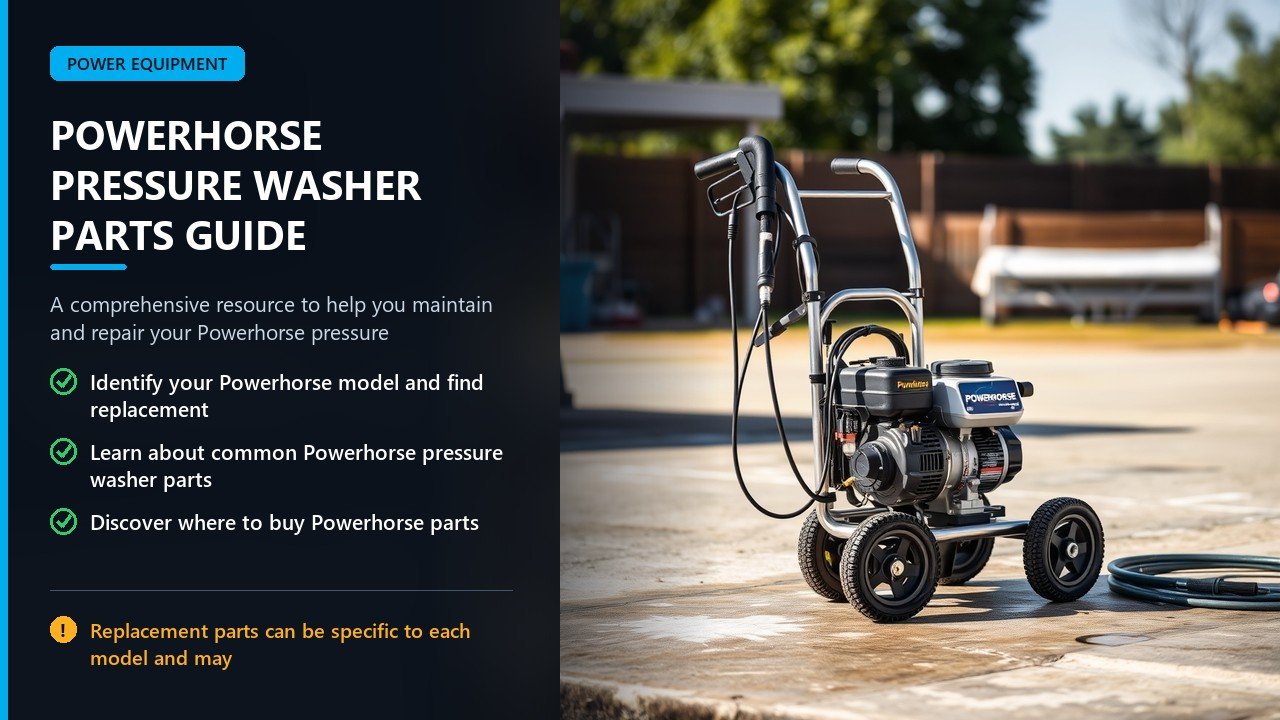
Powerhorse is a brand of outdoor power equipment distributed exclusively by Northern Tool and Equipment. Under the Powerhorse name, the company sells a range of gas and electric pressure washers, along with generators, engines, water pumps, and other equipment, positioned as a value alternative to more expensive name brands.
Powerhorse pressure washers commonly use Powerhorse-branded OHV gasoline engines, with displacement sizes such as 208cc, 212cc, and 420cc depending on the model, and features like cast-iron cylinder sleeves and low oil shutdown for durability. They typically use direct-drive axial pumps, with some models offering adjustable pressure and an adjustable unloader, and they include a downstream chemical injector for detergent application. The machines are sold at various price points, from light homeowner units to more powerful models, and they are supported by Northern Tool stores and Powerhorse product support.
Because Powerhorse pressure washers are assembled from commonly available components and sold by a large retailer, replacement parts are generally obtainable, which is important for maintenance and repair. The brand’s value proposition rests on delivering dependable performance at a lower cost, and like any pressure washer, the machine will eventually need parts, so knowing how to source them is key to getting long service from your Powerhorse. Support is available through Powerhorse product support and Northern Tool, and the manuals, available for each model, are the essential reference for parts.
How to Identify Your Model and Find Parts
Finding the correct parts begins with identifying your exact model.
The most important identifier is the machine’s model or item number, which appears on the unit, on its label or plate, and in the owner’s manual. Powerhorse pressure washers are sold under item numbers, and parts are organized by model, so knowing your item number lets you look up the exact parts for your machine. The owner’s manual, available for each model, includes a detailed parts list and exploded diagrams showing each component and its part number, which is the definitive guide to what fits your machine.
With the model or item number and the manual’s parts list, you can identify the precise part you need, whether a seal, an o-ring, a nozzle, a hose, a gun, a pump, or an engine component. Then you can obtain it through Northern Tool stores or online, or by contacting Powerhorse product support directly, who can help identify and order parts. Because parts are model-specific, matching them by model number prevents ordering the wrong item, which is the most common frustration in pressure washer repair.
If the manual is lost, Northern Tool’s website and Powerhorse support can provide the correct manual and parts information for your item number. Keeping the manual on hand, or at least recording your model and item numbers, makes every future repair easier. This identification step is the foundation of successful parts sourcing, and skipping it leads to wrong parts, wasted money, and the warranty or fit problems that frustrate owners. Our guide to pressure washer components explains the parts you will be looking up, so you know what to search for.
Pump and Pump Parts
The pump is the component most likely to need parts over the life of a Powerhorse pressure washer.
Powerhorse machines commonly use direct-drive axial pumps, and some models offer adjustable pressure through an adjustable unloader. The pump’s parts that wear and require replacement include its seals and o-rings, valves, and, where equipped, the unloader components. When a pump leaks from its body or loses pressure from worn seals, a pump seal kit or the specific seals restore it, and these are among the most common Powerhorse parts ordered.
The pump also uses oil, with pump oil capacity and the correct oil type specified in the manual, and maintaining the pump oil is essential for pump life. A worn shaft seal, pump bolt, or shaft key are other pump-related parts that may be needed during repair or when replacing a pump. Where a pump is beyond repairing, Powerhorse offers replacement pumps, including easy bolt-on direct-drive replacement pumps designed to fit common engine mounting patterns, which simplifies replacement. Because pump failures cause the most common symptoms, losing pressure and leaking, pump parts and replacement pumps are central to Powerhorse maintenance and repair.
Seals, o-rings, and the small springs and holders inside the pump are available individually or as kits, so a leaking or weak pump can often be rebuilt rather than replaced. Our guide to pressure washer o-rings explains the seals that prevent leaks throughout the machine. Matching these parts to your pump model ensures a proper repair, and because pump parts are relatively inexpensive, rebuilding a worn Powerhorse pump is usually far cheaper than replacing the machine, delivering excellent value for the effort.
Engine Parts
Powerhorse pressure washers use Powerhorse-branded OHV gasoline engines, and engine parts follow the engine model.
The engine is a standard small gasoline engine with the components any such engine has: spark plug, air filter, fuel filter, carburetor, recoil starter, and various gaskets and seals. These parts wear or degrade with use and require periodic replacement, and they are the key to keeping the machine starting and running reliably. Following the engine’s service schedule, replacing the spark plug, cleaning or replacing the air filter, and servicing the carburetor, prevents most engine problems.
Engine parts are matched to the engine model, which the manual specifies, and many are common across small engines of similar design, making them obtainable from Powerhorse and often from general small-engine suppliers. Some Powerhorse machines use engines from other manufacturers, so identification matters. When an engine problem arises, such as difficulty starting or rough running, the usual suspects are fuel, spark, and air, and the corresponding parts are the fuel system, spark plug, and air filter. Our guide to a Kohler pressure washer covers engine-brand considerations, since some pressure washers use Kohler engines.
For engine repair, it helps to reference the engine manufacturer’s model and manual, since the pressure washer manual may treat the engine separately. Keeping the engine maintained is essential for a gas pressure washer, because the engine’s health determines whether the machine runs at all, and engine parts are widely available, so repairs are usually practical. When engine repair exceeds basic maintenance, such as a full carburetor rebuild or internal work, a small-engine service technician can handle it, and parts sourced by engine model make the job straightforward.
Water System Parts
The water-side components of a Powerhorse pressure washer include several parts that need attention.
Inlet filter. A filter protects the pump from debris, and its element or screen needs cleaning and periodic replacement. A clogged or damaged inlet filter causes pressure loss and pump wear, and replacing it is cheap and important. Our guide to a pressure washer inlet water filter explains its role.
Thermal protector or relief valve. A thermal protector, sometimes called a thermal relief valve, protects the pump from overheating during bypass, and it is a replaceable part that can fail or leak.
Chemical or detergent injector. Powerhorse machines use a downstream chemical injector to draw detergent, and the injector, its hose, and its strainer are parts that clog or wear and are available as replacements. A chemical hose with strainer is a common part.
Water inlet and outlet connections. The inlet where the garden hose attaches and the outlet where the high-pressure hose connects can wear or leak, and the fittings, o-rings, and copper seals involved are replaceable.
These water-system parts maintain the machine’s flow and protection functions, and because they are exposed to water, they wear over time. Keeping them in good condition prevents pressure loss, leaks, and damage to the pump. Most are inexpensive and easy to replace, making them worthwhile to keep on hand, and matching them to your model ensures a proper fit. Our guide to a high pressure washer nozzle covers the spray-end parts that complete the water path.
Spray System Parts
The spray system includes the parts that deliver water to the surface.
High-pressure hose. Powerhorse hoses are available as replacements in standard lengths and coupler sizes, commonly 3/8 inch. A damaged or leaking hose is a common replacement, and matching the length, pressure rating, and coupler size to your machine ensures compatibility.
Spray gun. The trigger gun can leak or jam with use, and replacement guns, with the correct fitting for your machine, are available.
Lance or wand. The wand with quick coupler connects the gun to the nozzle, and it can be replaced if damaged. The gun inlet fitting and its seal are also replaceable parts.
Nozzles. Powerhorse machines include a set of nozzles, typically red, yellow, green, white, and black, and these wear out and require replacement. Nozzles are among the most frequently replaced parts and are inexpensive.
Nozzle cleaning tool and holders. Small accessories like the nozzle cleaning tool and its holder are also available as parts.
These spray system parts are the user-facing components, and they take the most wear from handling, chemicals, and pressure. Replacing a worn nozzle or a leaking gun restores performance and safety, and because these parts are standard, they are easy to source. Matching coupler sizes and fittings to your Powerhorse machine ensures they connect properly, and keeping spare nozzles and an extra hose on hand prevents downtime from the most common wear failures. The spray system is where the machine meets the work, so maintaining it keeps the results consistent. Our guide to a pressure wash hose connector covers the fittings that join these parts.
Where to Buy Powerhorse Parts
Powerhorse parts are obtainable through several channels, which makes sourcing them straightforward.
Northern Tool stores and website. Because Powerhorse is Northern Tool’s house brand, the company sells and supports the parts, both in stores and online. This is the primary and most reliable source for Powerhorse-specific parts.
Powerhorse product support. Powerhorse maintains product support to help customers identify and order parts for their models, which is especially useful when a part is not listed online or when you are unsure of the correct item. Contacting support with your model and item number is a direct route to the right parts.
Owner’s manual parts lists. The manual’s parts list and diagrams give part numbers, which you can use to order from Northern Tool or support, and which ensure the correct part.
Aftermarket and general suppliers. Many Powerhorse parts are standard components, such as o-rings, nozzles, hoses, and small-engine parts, that are available from aftermarket suppliers and general pressure washer and small-engine vendors. For these common items, aftermarket options often cost less, though quality varies and matching matters.
Having multiple sources is an advantage, because it means parts are rarely unobtainable. Using the model and item number to match parts ensures fit, and for brand-specific parts, Northern Tool and Powerhorse support are the surest sources. For widely used components, aftermarket supply keeps costs down and availability high. This accessibility is part of what makes Powerhorse a practical brand to own, since a machine is only as good as the availability of the parts that keep it running.
Common Powerhorse Repairs and Replacements
Several repairs cover the typical lifespan of a Powerhorse pressure washer.
Loss of pressure. Often worn pump seals or a clogged inlet filter, a worn nozzle, or an unloader issue. Start with the cheap fixes, filter and nozzle, then address pump seals. Our guide to pressure washer repair kits covers the seal repairs.
Pump leaking. Worn seals, replaced with a seal kit or individual seals.
Leaks at connections. Worn o-rings at the hose, gun, wand, or machine connections, replaced with new o-rings.
No detergent draw. A clogged chemical injector or hose, cleaned or replaced.
Engine will not start. Fuel, spark, or air problems, addressed by fuel system, spark plug, and air filter service or parts.
Damaged hose or worn nozzle. Replaced directly, as these are wear items.
Worn pump beyond repair. A replacement pump, including easy bolt-on options, restores the machine.
These repairs are typical of pressure washers generally, and because Powerhorse parts are available, they are practical to perform. Diagnosing systematically, cheap and easy checks first, then addressing the likely failing part, keeps repairs economical. For each, matching the part to your model ensures success, and the manual provides the reference. Most Powerhorse repairs are within reach of a competent owner, and for more complex work, such as internal engine service, a technician can complete the job with parts sourced by model.
Maintaining a Powerhorse Pressure Washer
Maintenance is cheaper than repair and keeps a Powerhorse machine reliable.
Protect the pump with clean water and a functioning inlet filter, and never run the machine dry or in prolonged bypass, relying on the thermal protector only as a backup. Check and change pump oil on schedule, using the correct type specified in the manual, and change engine oil and service the air filter and spark plug per the engine schedule. Inspect and replace worn o-rings, keep nozzles clean, and replace them when worn. Use fresh fuel and stabilizer, and winterize thoroughly, draining all water, because freezing cracks pumps and fittings. Store the machine properly and run it periodically to keep seals lubricated.
This routine prevents most of the failures that require parts, extending the machine’s life and preserving its performance. When maintenance does let something slip, or a part simply wears out, having the manual and model number ready makes sourcing the fix quick. The value of a Powerhorse pressure washer comes from its combination of affordability and parts support, and diligent maintenance maximizes that value. A well-maintained machine, kept supplied with the occasional inexpensive part, can serve for many years, which is exactly what the homeowner I know discovered when a seal kit revived the machine he thought was finished. With the right parts and a little care, Powerhorse pressure washers deliver dependable service far beyond their modest price.
Powerhorse Parts at a Glance
For quick reference, the following table summarizes the common Powerhorse pressure washer parts, what they do, and when they typically need replacement.
| Part | Function | Replace When |
|---|---|---|
| Pump seals and o-rings | Seal water inside the pump | Pump leaks or loses pressure |
| Unloader | Regulates and relieves pressure | Pressure is erratic or stuck |
| Inlet filter | Protects pump from debris | Clogged, damaged, or pressure drops |
| Thermal protector | Prevents pump overheating | Leaks or fails to protect |
| Chemical injector and hose | Draws detergent | No detergent draw, clogged, or damaged |
| High-pressure hose | Carries water to the gun | Leaks, kinks, or bursts |
| Spray gun and lance | Control and aim the spray | Leaks, jams, or damages |
| Nozzles | Shape and force the spray | Worn, clogged, or distorted spray |
| Spark plug, air filter, fuel filter | Keep the engine running | Starting or running problems |
| Pump (complete) | Pressurizes the water | Pump is beyond repair |
This reference helps you quickly match a symptom to the likely part, which speeds diagnosis and prevents ordering the wrong item. Because Powerhorse parts are model-specific, always confirm against your manual before ordering, but knowing the common parts and their roles makes the process far easier. Keeping a few of the inexpensive wear items, such as o-rings, nozzles, and an inlet filter, on hand means the most common issues never halt your work, and for larger failures, the model number in hand makes sourcing the correct part a simple matter. With this overview and your manual, Powerhorse owners have everything needed to keep their machines in top condition.
Frequently Asked Questions About Powerhorse Pressure Washer Parts
Where can I buy Powerhorse pressure washer parts? Through Northern Tool stores and website, which distribute the brand, or by contacting Powerhorse product support. Many common parts are also available from aftermarket suppliers.
How do I find the right part for my Powerhorse? Identify your model or item number from the machine’s label and the owner’s manual, then use the manual’s parts list and diagrams to find the correct part number.
Are Powerhorse parts expensive? Many common parts, like o-rings, nozzles, and seals, are inexpensive. Larger parts like pumps cost more, but rebuilding with a seal kit is usually far cheaper than replacing the machine.
Can I rebuild the pump on a Powerhorse pressure washer? Often yes. Pump seal kits and individual seals, o-rings, and valves are available, so a worn pump can frequently be repaired rather than replaced.
What engine do Powerhorse pressure washers use? Many use Powerhorse-branded OHV gasoline engines in various sizes, such as 208cc, 212cc, or 420cc. The manual specifies the engine for your model.
Is it worth repairing a Powerhorse pressure washer? Usually yes for seal, o-ring, nozzle, hose, and similar repairs, which are cheap and restore performance. For catastrophic failures or heavily worn machines, replacement may be considered.
Final Verdict on Powerhorse Pressure Washer Parts
Powerhorse pressure washers offer good value, and their parts are obtainable, which makes them practical to own and maintain. The key to any repair is identifying your exact model or item number, consulting the manual’s parts list, and matching parts precisely, then sourcing them from Northern Tool, Powerhorse support, or aftermarket suppliers for common components. The parts that fail most, pump seals, o-rings, nozzles, hoses, and engine consumables, are inexpensive and widely available, so most repairs are economical.
Maintain the machine diligently, protect the pump with clean water and regular oil changes, winterize carefully, and address wear promptly, and a Powerhorse pressure washer will deliver years of dependable service. When a part does fail, the combination of parts availability and reasonable cost means the machine is rarely beyond saving. The homeowner whose “dead” Powerhorse came back to life with a seal kit learned that lesson, and it applies to any owner: know your model, get the right part, and keep your machine running. Powerhorse’s parts support is a big part of why these machines earn their value.