Predator pressure washers have earned a following for offering solid performance at a budget price, sold through Harbor Freight and used by homeowners and small crews alike. Like any machine, they eventually need parts, whether because something wears out, breaks, or simply needs replacing as part of maintenance. The good news is that Predator parts are widely available, often at reasonable prices, and many are common components shared with other machines. The challenge is knowing which parts fail, where to find replacements, and how to match them to your specific model. This guide covers Predator power washer parts, the parts that commonly need attention, where to buy them, and how to keep your machine running without overpaying.
Understanding Predator Pressure Washers
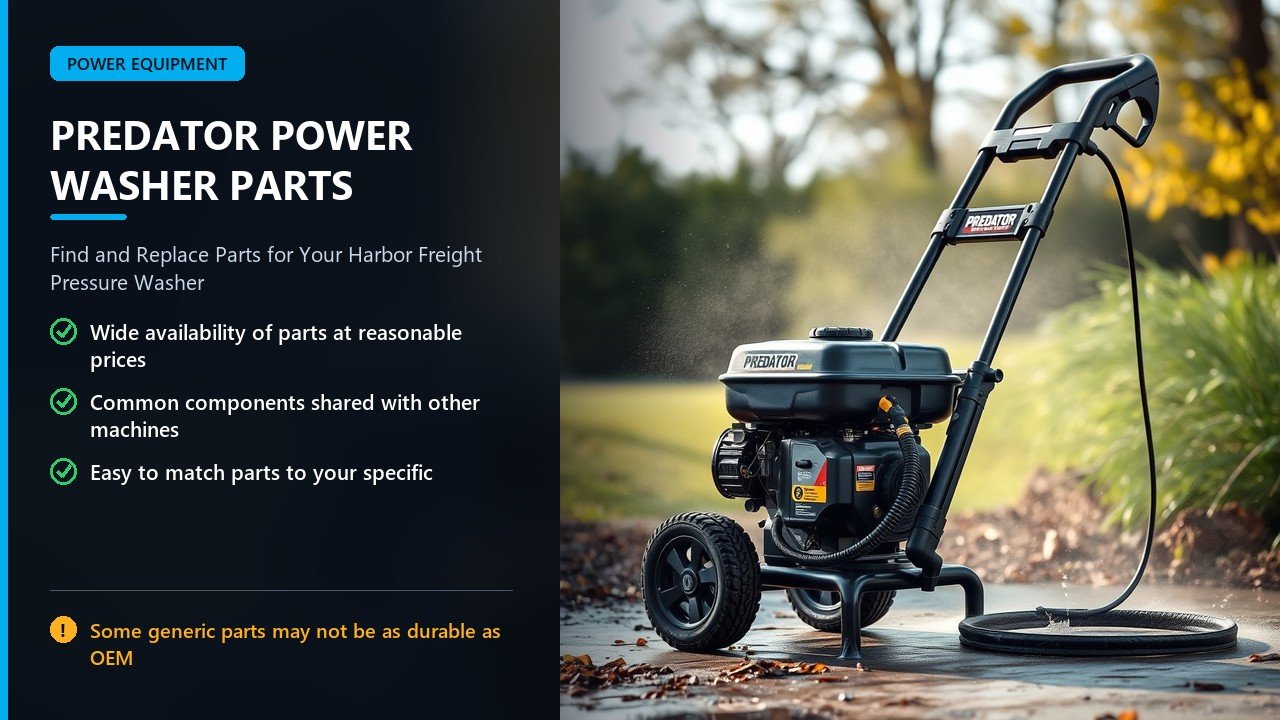
Predator is Harbor Freight’s house brand, covering engines, generators, and pressure washers, and the pressure washers use Predator or similar engines paired with various pumps.
Predator pressure washers come in gas and electric models at various pressure and flow ratings, with the gas models using Predator engines and pumps from common manufacturers. Because the components, especially the engine and pump, are often standard, many parts are shared with other machines or available as generics, which helps with sourcing. The brand’s value proposition is good performance for the price, and part of that value is the availability of affordable replacement parts. Understanding that Predator machines use common components is key, since it opens up sourcing options beyond the brand’s own parts.
Owners appreciate Predator machines for their cost, but they sometimes worry about parts availability. In practice, the parts are generally obtainable, whether through Harbor Freight, which carries many common parts and can order others, or through aftermarket suppliers and online marketplaces selling generic components. Because the pumps, in particular, are often sourced from established pump makers, parts like o-rings, unloader valves, and even whole pumps can be found. Knowing your model number and the specifics of your engine and pump makes finding parts straightforward. This guide helps you navigate the process so a worn part becomes a simple replacement rather than a dead end. Our guide to pressure washer components explains the parts that make up the machine.
Parts That Commonly Need Replacing
Certain parts wear or fail more often than others.
Nozzles and nozzle tips. Nozzle tips wear, clog, or get lost, and they are inexpensive and easy to replace. A full set of color-coded tips keeps the machine versatile.
O-rings and seals. The small o-rings at hose, gun, wand, and pump connections dry out, crack, or wear, causing leaks. They are cheap and among the most frequently replaced parts.
Spray guns and wands. Triggers, guns, and wands wear or break with use, and replacements or repairs are common. Guns and wands are often available as complete assemblies.
High-pressure hoses. Hoses wear, kink, or develop leaks, especially at the fittings, and eventually need replacement. Match the hose’s pressure rating and fittings to your machine.
Unloader valve. The unloader valve regulates pressure and can fail, causing pressure problems. It is a common repair part on gas pressure washers.
Pump. The pump is the most expensive wear item and may eventually need repair or replacement, especially if oil was neglected. Pumps or pump parts are available from several sources.
Water inlet filter and detergent injector. The inlet filter clogs and needs cleaning or replacement, and the detergent injector or soap system can clog or fail.
Engine parts. For gas models, engine parts such as air filters, spark plugs, and fuel components wear and need replacement like any small engine.
These parts represent the common maintenance and repair needs of a Predator pressure washer. Knowing which parts fail helps owners stock spares and anticipate repairs, reducing downtime. Because most of these parts are inexpensive and widely available, owners can maintain and repair Predator machines affordably, extending their useful life. Our guide to a pressure washer repair kit covers the parts and tools that handle many common fixes.
Where to Buy Predator Parts
Predator parts come from several sources, each with advantages.
Harbor Freight. Since Predator is Harbor Freight’s brand, the store carries many common parts and accessories and can often order others, and its website lists parts and accessories. This is the most direct source for brand parts and accessories, and the store’s support can help identify the right part for your model.
Aftermarket and generic parts. Because Predator machines use common components, many aftermarket and generic parts fit, often at lower prices. Nozzles, o-rings, hoses, guns, wands, unloader valves, and even pumps are available generically, provided they match the specifications. This is often the most economical route.
Online marketplaces and specialty suppliers. Online retailers and pump or engine specialists carry a wide range of parts, including pumps and engine components, and can supply replacements for the common components Predator uses.
Manufacturer documentation. The machine’s manual and parts diagrams, sometimes available from Harbor Freight or online, identify the parts and their numbers, guiding your search.
Combining these sources gives access to nearly any part a Predator machine needs. For simple wear items like o-rings and nozzles, generic parts are easy and cheap; for major components like pumps or engine parts, a specialty supplier or Harbor Freight is appropriate. The key is matching the part to your machine’s specifications, which the model number and manual provide. Because the components are common, buyers are not locked into a single source, which keeps costs down and availability high. Knowing your options prevents the frustration of thinking a part is unavailable when it is simply a matter of finding the right match. Our guide to a pump for power washer covers pump selection and replacement, a common major repair.
Matching Parts to Your Model
Matching parts correctly ensures they fit and perform.
Start with the model number, found on the machine’s label or plate, which identifies the exact model and its components. The manual and parts diagram, if available, list the specifications and part numbers. For the engine, identify the engine model, which determines engine parts like filters and plugs. For the pump, identify the pump’s make and model, stamped on the pump, which determines pump parts and oil. For connections, note the fitting types and sizes, since a hose, gun, or wand must match the machine’s connectors.
For generic parts, match the specifications, such as pressure rating, flow, fitting size, and physical dimensions, rather than relying on the brand name alone. A hose rated for the machine’s pressure and with the right fittings works regardless of brand, and a generic nozzle tip fits if the coupler matches. When in doubt, compare the part’s specifications to the original, or ask the supplier for a compatible replacement, providing your model details.
| Part | How to Match |
|---|---|
| Nozzles and tips | Coupler type and pressure rating |
| O-rings and seals | Size and fitting type |
| Hoses | Pressure rating, flow, and fittings |
| Guns and wands | Connection type and pressure rating |
| Unloader valve | Pump model and pressure rating |
| Pump | Flow, pressure, shaft, and mounting |
Matching by model and specification, rather than guesswork, ensures parts fit and work. Since Predator machines use common components, matching specifications is usually straightforward, and the correct part is often available generically. This approach also lets owners choose quality replacements that may outlast the originals, such as stainless steel nozzle tips or a durable hose. When a part is uncertain, consulting the manual, the model number, or a knowledgeable supplier resolves the question. Careful matching prevents the wasted time and money of a part that does not fit. Our guide to a high pressure washer nozzle covers the nozzle specifications to match.
Common Repairs and Maintenance
Many Predator repairs are simple, and maintenance prevents many of them.
Leaks are among the most common issues, usually caused by worn o-rings or loose fittings, and replacing the o-rings or tightening the connections fixes them. Nozzle problems are resolved by cleaning or replacing the tip. A machine that loses pressure may have a clogged nozzle, a failing unloader valve, a worn pump, or an air leak, and troubleshooting these in order identifies the cause. A pump that fails often reflects neglected oil, so changing pump oil on schedule, if the pump is serviceable, prevents this major repair. Engine issues on gas models follow small-engine maintenance: air filter, spark plug, and fuel care.
Preventive maintenance reduces part failures and extends the machine’s life. Check and change pump oil if applicable, clean the water inlet filter, inspect and replace worn o-rings, flush the system, and winterize to prevent freeze damage. Check the hose, gun, and wand for wear, and replace parts before they fail. Keep the engine maintained on gas models. These habits keep the machine running and parts lasting, avoiding the repairs that neglect causes.
Combining awareness of common repairs with a maintenance routine lets owners keep Predator machines running well for years at low cost. Because the parts are affordable and available, repairs are rarely expensive, and most are simple enough for owners to perform. A machine that is maintained needs fewer repairs, and when repairs are needed, the parts are within reach. This makes ownership of a Predator pressure washer economical and sustainable, as long as the owner knows the parts and maintains the machine. Our guide to a changing pressure washer pump oil explains the pump maintenance that prevents the costliest failure.
Caring for the Engine and Pump
The engine and pump are the two most valuable components, and their care prevents the most expensive repairs.
On gas Predator models, the engine is a small gasoline engine that needs the same care as any small engine: clean or replace the air filter, check and replace the spark plug as needed, use fresh fuel, and change the engine oil on schedule, including the break-in change. Fuel problems, often from old or ethanol-blended fuel left to sit, are a common cause of engine trouble, so using fresh fuel and a fuel stabilizer, or draining the fuel before storage, prevents many issues. Following the engine’s maintenance schedule keeps it reliable and avoids the repairs that neglect causes.
The pump, whether on a gas or electric model, benefits from clean water, a clean inlet filter, and proper oil care if the pump is serviceable. Many consumer pumps are sealed and need no oil changes, while serviceable pumps need their oil checked and changed on schedule using the correct non-detergent or dedicated pump oil. Running a serviceable pump on old, low, or wrong oil is the leading cause of pump failure, and it is entirely preventable. Keeping the inlet filter clean protects the pump from debris, and winterizing prevents freeze damage. These simple steps keep the pump healthy.
Because the engine and pump are the costliest parts to repair or replace, maintaining them is the highest-value care an owner can give. A well-maintained engine starts easily and runs dependably, and a well-maintained pump delivers pressure for years; both avoid the repairs that lead to frustration and expense. Owners who care for these components find their Predator machines reliable and long-lasting, while those who neglect them face premature failures. Since the care is simple and inexpensive, and the consequences of neglect are costly, maintaining the engine and pump is the smartest approach to Predator ownership. Our guide to Kohler pressure washers covers engine care for machines using those engines, an example of the value of engine maintenance.
Repairing Versus Replacing Parts
When a component fails, deciding whether to repair or replace it depends on cost, effort, and the part.
For inexpensive wear items like o-rings, nozzles, and filters, replacement is always the answer, since they are cheap and simple. For hoses, guns, and wands, replacement is usually easier and often comparable in cost to repair, so replacement is the norm. For the unloader valve and similar pump components, replacement of the part is typical, since these parts are affordable and repairing internal components is impractical. For the pump itself, the decision is more significant: a pump can sometimes be repaired with seals or valves, but when a pump is badly worn or damaged, replacement may be more economical than a rebuild.
Weigh the cost of a repair against the cost of replacement and the value of the machine. If a repair part is inexpensive and the fix is straightforward, repair makes sense; if the repair is costly or complex relative to a replacement part, or if the machine is already worn, replacement or upgrading may be better. For a major failure on a budget machine, consider whether investing in a quality replacement part, such as a better pump or hose, improves the machine. Sometimes an upgrade is worthwhile, turning a repair into an improvement.
Making this decision thoughtfully avoids throwing money at a machine that is not worth it, while also avoiding replacing something that a cheap part would fix. Because Predator parts are affordable, repair is often the economical choice, but for major components on an aging machine, judgment is needed. Considering the cost, the effort, and the machine’s overall condition points to the right decision, and the relatively low cost of Predator parts makes repair viable in most cases. When in doubt, the modest price of parts often favors repair, keeping the machine in service rather than replacing it. Our guide to a pressure washer o ring kit covers the inexpensive seals that resolve many leaks.
Saving Money on Parts
Because Predator uses common components, owners can save significantly on parts.
The largest savings come from buying generic equivalents for common parts. Nozzles, o-rings, hoses, guns, wands, and unloader valves are standard items, and generic versions often cost far less than brand-labeled parts while performing identically, provided they match the specifications. Since these machines use common engines and pumps, the compatible parts are plentiful. Buying generic for these items stretches the value of a budget machine even further.
Stocking common spares prevents small problems from becoming downtime. Keeping spare o-rings, a nozzle set, and perhaps a spare hose or gun on hand means a worn or failed part can be replaced immediately, and these inexpensive spares save a trip and a delay. For a machine used regularly or for work, spare parts are a sound investment. Comparing prices across Harbor Freight, online suppliers, and marketplaces also ensures a fair price, since the same part or its equivalent may be available more cheaply from one source.
Buying quality where it matters is also a form of saving, since a durable part that lasts longer costs less over time than a cheap one that fails repeatedly. Stainless steel nozzle tips, a quality hose, and a good pump oil pay off in longevity. Balancing low-cost generics for simple items with quality for critical components gives the best value. Because Predator machines are common and their parts widely available, owners have both options, and using them wisely keeps the machine running affordably. Smart sourcing and stocking keep ownership costs low, which is part of the appeal of these budget machines. Our guide to a pressure washer hose connector types is a reminder that inexpensive, compatible fittings keep the whole setup working.
When to Call a Professional
While most Predator repairs are DIY-friendly, some situations warrant professional help.
Simple repairs, replacing o-rings, nozzles, hoses, guns, wands, filters, and even pumps, are within reach of most owners with basic tools and the machine’s manual. For these, doing it yourself saves money and is straightforward. However, complex engine repairs, internal pump rebuilding, and issues that require specialized tools or knowledge may be better handled by a professional. If a repair involves disassembling an engine, rebuilding a pump’s internals, or troubleshooting a persistent problem that resists diagnosis, a service technician can save time and prevent further damage.
Warranty considerations also matter. If the machine or a component is under warranty, having a professional or the seller handle the repair may be required to preserve coverage, so check before attempting a repair yourself. For a machine still under warranty, using authorized service avoids voiding it. As a machine ages and its value declines, the calculus changes, and DIY repairs on simple parts become even more attractive, while major repairs may not be worth it.
Knowing when to tackle a repair and when to seek help prevents frustration, damage, and wasted money. Most Predator maintenance and common repairs are DIY, which is part of the brand’s appeal, but recognizing the limits of DIY, especially with complex engine or pump internals, avoids making a problem worse. For everything from routine part replacement to major repairs, having a plan and knowing your own comfort level guides the decision. Most owners find that Predator machines are easy to maintain and repair, and professional help is rarely needed except for the most complex issues. Our guide to a pressure washer repair kit covers the tools and parts for handling common repairs yourself.
Frequently Asked Questions About Predator Power Washer Parts
Where can I buy Predator pressure washer parts? Harbor Freight, the brand’s seller, carries many parts and accessories and can order others. Generic aftermarket parts and online suppliers also fit, since Predator uses common components.
Are Predator pressure washer parts hard to find? Generally no. Because the pumps and engines are common, parts like nozzles, o-rings, hoses, guns, and pumps are widely available, often generically and affordably.
How do I know which part fits my Predator? Use your model number and the manual’s parts diagram, and match specifications such as pressure, flow, fittings, and dimensions. Identify the engine and pump models for their parts.
What parts fail most often on a Predator pressure washer? Nozzles and tips, o-rings and seals, hoses, guns and wands, and unloader valves are common wear items. Pumps fail if their oil is neglected.
Can I use generic parts on a Predator pressure washer? Yes, if they match the specifications. Generic nozzles, o-rings, hoses, and even pumps work when they fit the machine’s pressure rating and connections.
How do I prevent part failures? Maintain the machine: change pump oil if serviceable, clean the inlet filter, replace worn o-rings, maintain the engine, and winterize. Preventive care greatly reduces failures.
Final Verdict on Predator Power Washer Parts
Predator power washer parts are generally easy to find and affordable, which helps make these budget machines economical to own and repair. The parts that commonly need attention, nozzles, o-rings, hoses, guns, wands, unloader valves, and pumps, are available through Harbor Freight or as generic aftermarket components, since Predator machines use common engines and pumps. Matching parts to your model number and specifications ensures a proper fit.
Understand your machine’s components, know which parts wear, source replacements through the most economical route, and maintain the machine to prevent failures, especially by caring for the pump oil and the water system. With this approach, a Predator pressure washer delivers budget performance with manageable maintenance and repair costs, and parts are never a barrier. Whether you are replacing a worn o-ring or a failing pump, the parts are within reach, and with a little knowledge you can keep your Predator running strong for years.