The first pressure washer I ever owned sprayed water everywhere except at the concrete, and for a week I blamed the machine. It turned out the problem was a single missing o-ring in a fitting I had connected without thinking. That humbling week taught me something that every pressure washer owner eventually learns: the fittings that join your hose, gun, wand, and machine are small parts that cause a disproportionate share of the frustration people blame on their equipment. If you have ever dealt with a leak, a hose that pops off, or an accessory that will not thread on, this guide to pressure cleaner hose fittings will save you time, money, and a great deal of swearing.
We will cover the fittings you will actually encounter, the thread standards that trip people up, how quick-connects work, how to diagnose leaks, and how to assemble connections that hold under pressure. By the end you should be able to walk into any hardware store and buy exactly the right part the first time.
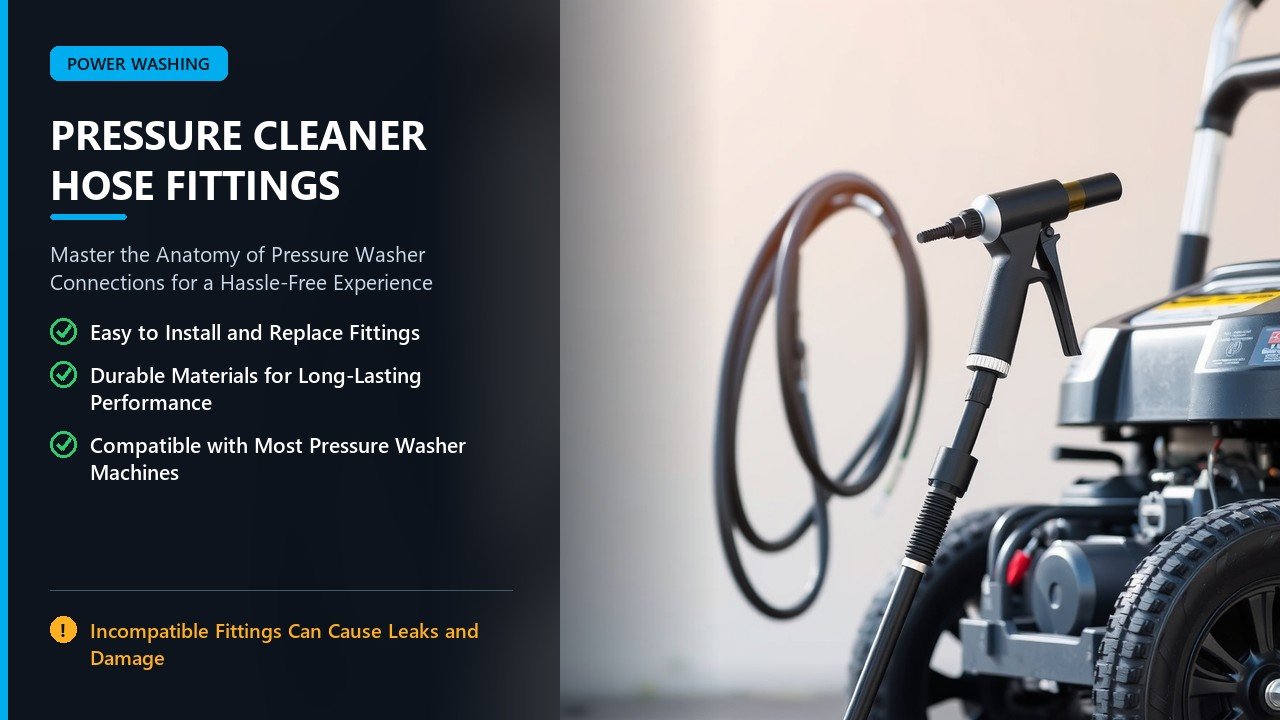
Why Hose Fittings Matter More Than They Seem
A pressure washer is a chain of connections, and each one is a potential failure point. Water leaves the machine at high pressure, travels through the hose, into the gun, and out the wand. At every junction, a fitting must contain that pressure without leaking. When a fitting fails, you lose pressure at the nozzle, spray water where you do not want it, and risk damaging equipment.
The stakes are higher than for a garden hose because of the pressure and the potential for injury. High-pressure water can inject into skin, so a fitting that blows apart under pressure is not just annoying, it is dangerous. Getting fittings right is a safety matter as much as a performance one.
Fittings also determine compatibility across the enormous range of pressure washer accessories. Guns, wands, foam cannons, surface cleaners, turbo nozzles, and extension wands all connect through fittings, and buying the wrong type means staring at parts that will not join. Understanding the standards removes that barrier entirely.
The Anatomy of a Pressure Washer Connection
Before the specific standards, it helps to see what a connection is made of. Most pressure washer connections combine a few elements.
The threaded interface. Many connections thread together, and the thread pattern must match exactly. Two fittings that look identical can have different thread pitches and refuse to seal.
The o-ring or seal. Flat-face and quick-connect fittings usually seal with an o-ring or a rubber washer rather than on the threads themselves. This is why missing or worn o-rings cause so many leaks. The o-ring is the seal; the fitting only holds it in place.
The locking mechanism. Quick-connect fittings use a collar with spring-loaded balls or pins that lock into a groove on the plug. Some use a threaded collar. The locking mechanism holds the connection together against pressure.
The body material. Fittings are made from brass, stainless steel, zinc-plated steel, or plastic. Material affects durability, corrosion resistance, and price.
When a connection leaks, the cause is almost always one of these elements: a mismatched thread, a worn or missing o-ring, a failed locking mechanism, or a damaged body. Diagnosing which is the whole game.
Thread Standards You Need to Know
Thread standards are where confusion peaks, so let us simplify them.
Garden hose thread. The familiar thread on outdoor spigots and garden hoses. Many machines connect to a water supply with an adapter that goes from garden hose thread to the machine’s inlet. Adapters of this type are extremely common.
M22 thread. A metric thread found on many pressure washer pumps, guns, and hoses, especially European-style machines. There are two common M22 variants with different pitches, M22 14mm and M22 15mm, and they are not interchangeable. This subtle difference is a notorious source of mismatched fittings. If your M22 part will not thread all the way on, you likely have the wrong variant.
NPT and BSP. Pipe thread standards. NPT is the common US standard, while BSP is common in many imported machines. They look similar but do not seal against each other reliably. Connecting an NPT fitting to a BSP port is a recipe for leaks and damaged threads.
Quick-connect. Not a thread at all, but a push-and-lock system, usually based on an industry size standard. Quick-connects let you swap nozzles and accessories instantly.
| Fitting Type | Common Use | Key Detail |
|---|---|---|
| Garden hose thread | Water supply inlet | Matches spigots and hoses |
| M22 (14mm / 15mm) | Pump, gun, hose ends | Two variants, not interchangeable |
| NPT / BSP | Pipe connections | US vs import standard, do not mix |
| Quick-connect | Nozzles, accessories | Push to lock, pull to release |
The practical rule is to identify your machine’s fitting type before buying anything. Check the manual, inspect the existing fittings, and measure if necessary. Guessing leads to returns and frustration.
How Quick-Connect Fittings Work
Quick-connect fittings are the most convenient system in pressure washing, and understanding them makes accessories much easier to use.
A quick-connect connection has two parts: a plug, usually on the accessory, and a socket or coupler, usually on the gun or wand. The plug has a groove near its tip. The socket has a collar and internal locking balls. To connect, you push the plug into the socket until the balls snap into the groove. To release, you pull the collar back, which retracts the balls and frees the plug.
The seal in a quick-connect is an o-ring inside the socket. When that o-ring wears out or falls out, the connection leaks no matter how tight the lock feels. This is why the first troubleshooting step for a leaking quick-connect is always to inspect and replace the o-ring.
Quick-connects come in standard sizes, so accessories from different makers often interchange. That said, cheap fittings with weak springs or soft metal wear out and pop off under pressure. Buying quality brass quick-connects is a small investment that prevents a lot of trouble.
Common Fitting Sizes Explained
Size confusion causes as many problems as thread type. Here are the sizes you will meet most often.
Quick-connect nozzle size. Most consumer pressure washer nozzles use a standard quick-connect size that allows color-coded nozzles and accessories to be swapped. This is the size you deal with when buying foam cannons, turbo nozzles, and surface cleaner adapters.
Hose-end fittings. The ends of a pressure washer hose are usually M22 or quick-connect, depending on the machine. Some consumer machines use proprietary or unusual fittings, which is why adapters exist.
Inlet fittings. The water inlet often uses garden hose thread or an M22 connection. Adapters bridge the gap between your water source and the machine.
Pipe fittings. Inside pumps and heaters, you find NPT or BSP pipe threads in various diameters. These are less commonly handled by homeowners but matter for repairs.
If you are unsure of a size, take the part you are matching to the store, or measure the thread diameter and pitch carefully. Photos and measurements go a long way toward getting the right part.
Materials: Brass, Steel, or Plastic
Material affects how long a fitting lasts and how well it resists corrosion.
Brass. The best choice for most fittings. Brass resists corrosion, holds up to repeated connect and disconnect cycles, and seals reliably. It costs more but lasts far longer.
Stainless steel. Excellent corrosion resistance and strength, often used in marine or chemical environments. Durable but pricier.
Zinc-plated steel. Common in budget fittings. Adequate but more prone to corrosion and thread wear than brass. Fine for occasional use.
Plastic. Found on some gadgets and low-pressure accessories. Light and cheap but not suitable for high-pressure connections, where it can crack and fail dangerously.
For anything that carries full pressure, brass is the sensible default. Saving a few dollars on a cheap fitting that fails under pressure is a false economy and a safety risk.
Diagnosing and Fixing Leaks
Leaks are the most common fitting complaint, and most have simple causes.
Leak at a quick-connect. Almost always a worn or missing o-ring. Replace the o-ring with the correct size and material, and inspect for debris holding the seal open.
Leak at a threaded connection. Usually a missing seal, the wrong thread type, or insufficient sealing. Some threaded connections use an o-ring or washer, while tapered pipe threads use thread sealant. Never assume you can tighten your way out of a leak, because over-tightening damages threads and cracks fittings.
Leak from a cracked body. Freeze damage or over-tightening can crack a fitting. Replace it rather than trying to seal it.
Hose pops off under pressure. A worn quick-connect, a bad o-ring causing vibration, or an oversize plug. Replace the failing component with quality brass parts.
Loss of pressure at the nozzle. Could be a leak upstream, a partially open unloader, or a worn nozzle. Check all connections before blaming the pump.
Adapters and Converters
Adapters are what make mismatched equipment work together, and a few good ones solve most compatibility problems.
A garden hose to machine inlet adapter lets you feed your pressure washer from a spigot. A quick-connect to M22 adapter lets you use quick-connect accessories on an M22 machine, or the reverse. Foam cannon and surface cleaner adapters let these tools plug into standard quick-connects. A water inlet filter adapter protects the pump while connecting your supply.
The key is to identify both ends of the connection you need to make and buy the adapter that bridges them. Buying a small variety pack of adapters and spare o-rings is a smart move for any pressure washer owner, because it turns a project-stopping mismatch into a quick fix.
For a broader look at getting the most from your hose setup, our guide to the 100 ft pressure washer hose covers choosing and connecting long hose runs. If your machine uses a standard hose, keeping the right fittings on hand is what keeps long runs working.
Assembling Connections That Hold
Correct assembly prevents most leaks before they start.
Hand-tighten threaded connections firmly, then a small additional turn if needed, but never force them. For flat-face and o-ring sealed connections, the o-ring does the sealing, and over-tightening only damages it. For tapered pipe threads, apply the correct thread sealant or tape made for the fluid and pressure, wrapping in the direction of the threads. Keep o-rings clean and lightly lubricated with a compatible grease so they seat without twisting. Make sure quick-connects are fully seated and locked before pressurizing, and never use a fitting that shows cracks, cross-threading, or heavy corrosion. Assemble with clean hands and clean parts, because a grain of sand under an o-ring causes a leak that no amount of tightening will stop.
Matching Fittings to Your Machine
The surest way to buy the right fittings is to know your machine. Look up the manual or the manufacturer’s parts list, which usually specifies the fitting types at the inlet, hose ends, and gun. If the manual is gone, inspect the fittings directly and measure the thread, or take a photo and compare it to known standards. When in doubt, buy from a seller who understands pressure washers and offers clear specifications, and keep the receipt.
It also helps to standardize. If your machine and accessories use quick-connects, adding quick-connect adapters at every junction lets you swap parts freely and reduces the number of thread types you must remember. A little standardization up front makes every future purchase easier.
Maintenance and Spare Parts
Fittings need almost no maintenance, but a small stash of spares prevents downtime. Keep a supply of o-rings in the sizes your machine uses, a few spare quick-connect fittings, and the adapters you rely on most. Inspect fittings periodically for corrosion, cracks, and worn threads, and replace anything questionable before a job. After winter, check every connection for freeze damage, since trapped water cracks fittings and o-rings swell or split. Keep threads clean and lightly protected, and store hoses and fittings out of the elements to extend their life.
A Starter Kit of Fittings Every Owner Should Have
Rather than running to the store every time something leaks, keep a small kit on hand. It costs very little and saves hours of frustration.
Start with spare o-rings in the sizes your machine and accessories use. O-rings are the most common failure point and the cheapest fix, so having a variety is essential. Add a couple of brass quick-connect fittings, one male and one female, so you can replace a worn connector without waiting for a shipment. Include an adapter from garden hose thread to your machine’s inlet, plus an adapter from M22 to quick-connect if your machine uses M22, since these bridge the gaps that stop projects cold.
A roll of the correct thread sealant or tape for your pipe connections, a small tube of o-ring compatible grease, and a nozzle cleaning tool round out the kit. For a modest outlay, this collection turns most fitting emergencies into a five-minute repair. Build it once and you will rarely be caught without the part you need.
Tip: Label your o-rings and adapters with their sizes using a marker and a small parts box. When a leak happens, you will grab the right part instantly instead of squinting at similar-looking pieces.
Connecting Specific Accessories
Different accessories attach in different ways, and knowing the pattern for each helps you plan purchases.
Nozzles. Most consumer color-coded nozzles and turbo nozzles use a standard quick-connect plug that pushes into the gun or wand. If your machine has a different connector, an adapter converts it.
Foam cannons. These typically use the same nozzle quick-connect, so they plug into most consumer guns with no adapter. Some connect at the inlet instead, depending on the design.
Surface cleaners. These connect where the wand would, and most come with adapters to fit common quick-connect and M22 setups. Because a surface cleaner handles a lot of water and pressure, quality fittings here matter more than anywhere else.
Extension wands and guns. These connect at the gun-to-wand and wand-to-accessory junctions, so matching the connector types across your gun, wands, and nozzles keeps everything swappable.
Hoses. Hose ends must match the machine outlet and the gun inlet, usually quick-connect or M22. If you buy a replacement or extension hose, confirm both ends match your existing setup, or buy adapters to bridge them.
The pattern is consistent: identify the connector on the tool and the connector on the machine, then bridge them with the right adapter if they differ. Standardizing on quick-connects across your entire setup makes all of this frictionless.
Regional and Imported Machine Differences
Fitting standards vary by region and manufacturer, which is why a part that fits one machine refuses to fit another. US-built machines tend to use NPT pipe threads and standard quick-connects, while many imported machines use BSP pipe threads and M22 metric fittings. Connecting a US accessory to an imported gun may require an adapter, and mixing thread standards without one leads to leaks and damaged threads.
This is not a defect, just a difference in convention, and it is easily handled with the right adapter. When buying accessories for an imported machine, pay attention to the stated thread standard rather than assuming your local parts will fit. Imported machines often use M22 14mm or M22 15mm at the gun and hose ends, so confirming which variant you have prevents the most common cross-border mismatch. If you are buying a machine abroad or importing one, buy a set of adapters at the same time so you can use locally available accessories right away.
Fix It or Replace It
When a fitting fails, the decision to repair or replace is usually easy once you know what failed.
Replace the o-ring if the fitting body and threads are sound and only the seal is worn. Replace the whole fitting if the body is cracked, the threads are damaged, the lock is weak, or corrosion is significant. There is no reliable way to repair a cracked fitting or restore stripped threads, and attempting to seal a damaged fitting under high pressure is unsafe.
For quick-connects that leak despite a fresh o-ring, the locking mechanism or the seating surface is likely worn, and replacement is the answer. For threaded fittings that leak, first confirm you have matching threads and a proper seal; if the threads are sound and sealed correctly but it still leaks, the fitting is likely damaged internally.
The judgment call is always about safety. A cheap fitting that fails under pressure can cause injury, so when in doubt, replace it with quality brass rather than nursing a questionable part along. The cost of a fitting is trivial compared with the cost of an injury or a ruined job.
Pressure Cleaner Hose Fittings: Frequently Asked Questions
Why does my pressure washer hose keep popping off? The most common causes are a worn quick-connect fitting, a bad or missing o-ring causing vibration, or a mismatched plug. Replace the failing part with quality brass components.
What is the difference between M22 14mm and M22 15mm? They are two metric thread variants with different pitches. They look similar but do not thread together properly, so you must match your machine exactly.
Can I use garden hose fittings on my pressure washer? Only for the low-pressure water supply inlet, using an appropriate adapter. Garden hose fittings are not rated for high-pressure sections and must never be used there.
Do I need thread tape on pressure washer fittings? Only on tapered pipe threads, and only the correct type. Flat-face and o-ring sealed connections seal on the o-ring, so tape is unnecessary and can even interfere.
How do I stop leaks at my quick-connect? Inspect and replace the o-ring inside the socket, and check for debris. If the lock is worn, replace the fitting with a quality brass one.
Are brass fittings worth the extra cost? Yes. Brass resists corrosion, endures repeated cycling, and seals reliably, making it far more durable than zinc-plated or plastic alternatives.
Final Verdict on Pressure Cleaner Hose Fittings
Pressure cleaner hose fittings are small, inexpensive, and responsible for a surprising amount of the frustration that pressure washer owners experience. Once you understand the thread standards, the role of o-rings, how quick-connects lock and seal, and how to match fittings to your machine, every problem becomes diagnosable and every accessory becomes easy to connect. The leaks, the popping hoses, and the accessories that will not thread on are not mysteries, they are simply mismatched or worn parts.
Stock a few brass quick-connects, a set of the right o-rings, and the adapters your setup needs, and learn to inspect connections with clean hands and a careful eye. Do that, and you will spend your time cleaning instead of fighting your equipment. My leaking first pressure washer was not a bad machine after all. It just needed a two-dollar o-ring and an owner who understood the difference between a thread and a seal. That owner is you now.