A pressure washer pump is the heart of the machine. When it is working, water blasts out with force. When it fails, all you get is a weak trickle or no pressure at all. Most people facing this problem ask the same question: do I rebuild or replace the pump on my pressure washer, or is it time to buy a whole new machine? The answer comes down to pump type, repair cost, and the condition of the rest of the washer.
This guide breaks down what a pressure pump washer is, how it works, the most common failures, repair versus replacement, costs, and how to decide whether fixing it makes sense.
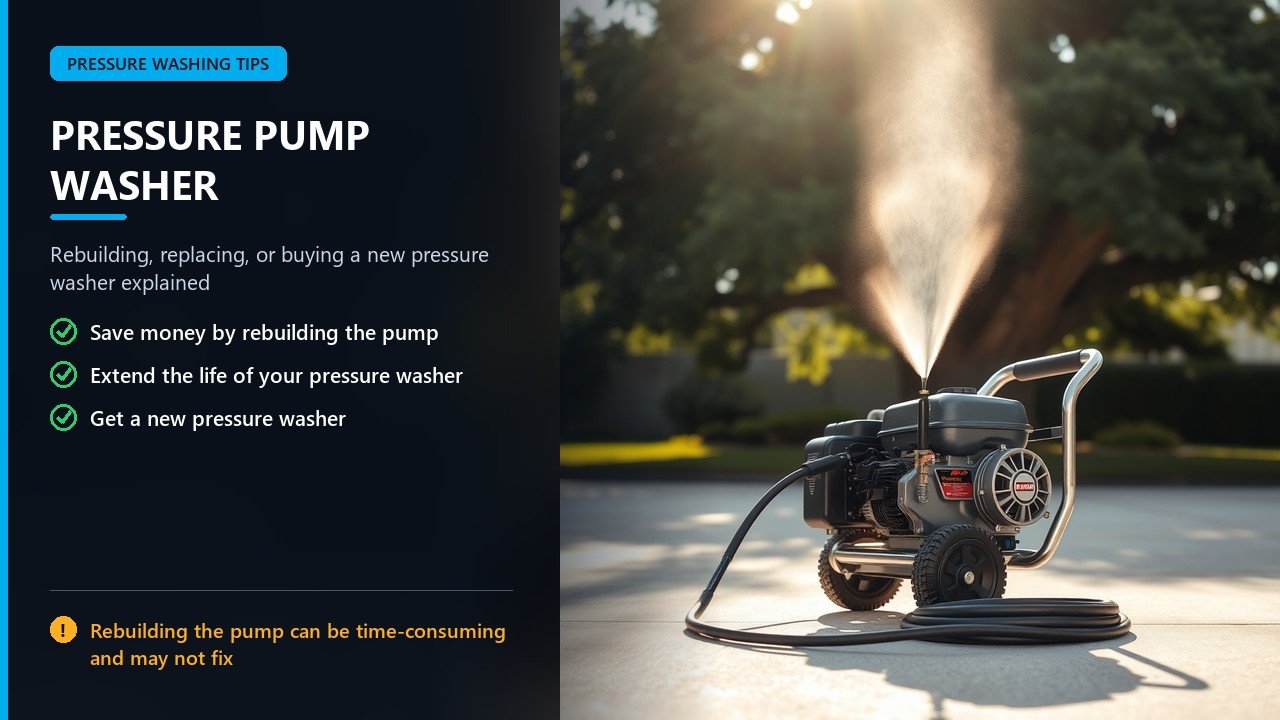
What Is a Pressure Pump Washer?
A pressure pump washer is simply a pressure washer pump — the component that takes water from your garden hose and pressurizes it. Gas and electric pressure washers both rely on a pump. The pump takes low-pressure water and forces it through a small nozzle, creating the high-pressure spray that cleans surfaces.
There are three main pump types found on consumer and pro machines: wobble pumps (sealed, entry-level), axial cam pumps (common on homeowner gas/electric), and triplex plunger pumps (found on prosumer and commercial machines). Each type differs in durability, price, and whether it is worth repairing.
Signs Your Pressure Washer Pump Is Failing
Pump problems usually show up before total failure. Watch for low or no pressure even with the engine/motor running, pressure that pulses or cycles rapidly, water leaking from the pump body or seals, strange noises (grinding or knocking), or the pump refusing to build pressure after running dry or sitting for a long time. If you see water seeping around the crankcase or oil/water mixing, the seals are likely shot.
Pump Types and Repairability
Whether a pressure pump washer is worth fixing comes down to its design. Wobble/compact sealed pumps are not serviceable — if they fail, you must replace the whole pump. Axial cam pumps can sometimes be rebuilt with seal kits, but on many budget models, a full replacement pump costs less than a rebuild kit plus labor. Triplex plunger pumps are the most repairable; you can replace seals, valves, unloaders, and plungers many times, making rebuilds cost-effective for quality machines.
In short: if you have a quality triplex pump, rebuild. If you have a sealed wobble pump, replace the pump or replace the whole machine. If you have an axial cam pump, compare the cost of a replacement pump versus a rebuild.
Rebuild vs Replace the Pump
Rebuilding means disassembling the pump and replacing wear items (seals, O-rings, valves, unloader) with a kit. Replacement means buying a new pump that bolts onto your machine. Rebuilding saves money if the pump housing, crankshaft, and manifolds are still in good shape. Replace the pump if the housing is cracked, the crankshaft is damaged, bearings are seized, or repair costs creep past about 50% of a new pump.
A good rule of thumb is simple: if the pump cost to fix is more than half the cost of a new comparable pump (or half the value of the whole machine), replacement usually makes more sense. Quality brands with serviceable triplex pumps almost always lean toward rebuild. Budget models with sealed pumps almost always lean toward replacing the whole washer.
| Pump Type | Repairable? | Typical Action |
|---|---|---|
| Wobble/Sealed | No | Replace pump or whole machine |
| Axial Cam | Sometimes | Compare replacement vs rebuild cost |
| Triplex Plunger | Yes (many times) | Rebuild usually worth it |
Costs: Rebuild Kit, New Pump, or New Washer
For most consumer pressure washers, seal/O-ring kits run $20–$80. A full rebuild kit (seals, valves, sometimes plungers) runs $80–$200 for serviceable pumps. A new replacement axial cam pump runs $80–$250. A new triplex pump runs $250–$600+, and premium commercial triplex pumps can run $600–$900+. Professional labor adds $100–$250 depending on shop rates.
New pressure washers range widely: electric light-duty $150–$250, gas consumer $250–$450, prosumer gas $400–$900. If the repair (pump+labor) goes over roughly 50% of the cost of a comparable new machine, buying new usually wins. For budget electric machines, this threshold is hit fast because the whole unit is cheap.
When to Replace the Whole Machine
It is often better to buy a new washer if the engine or motor is tired (hard starts, low compression, burning oil, or weak electric motor), if parts are hard to find for an older model, if the frame or high-pressure hose is badly corroded/damaged, or if you have a sealed low-end pump and the pump+labor approaches the price of a new unit. Also consider safety: cracked pump housings, frayed hoses, or electrical issues are not worth gambling on.
When It Is Worth Replacing Just the Pump
Replace just the pump if the engine/motor runs strong, starts easily, and has plenty of life left. This is especially true for gas washers with a quality Honda/Briggs engine and a serviceable pump. Also worth it if you can bolt on a direct replacement pump yourself (saves labor), or if the washer is a higher-end prosumer model that would cost much more to replace than to fix.
For example, a $250–$350 replacement pump on a $700 gas washer with a great engine is usually a smart move. A $150 pump on a $200 electric washer is usually not.
DIY vs Professional Repair
Swapping an entire pump is usually straightforward for most homeowners — unbolt the old one, match the shaft/flange and PSI/GPM, bolt on the new one, hook up hoses, and test. Rebuilding a triplex pump is more involved and requires careful reassembly, torque specs, and cleanliness. If you are comfortable with basic tools, pump replacement is DIY-friendly. If the diagnosis is unclear or you are rebuilding an expensive triplex pump, a pro is worth the labor cost for the warranty on the work.
Final Decision Checklist
Ask yourself: What is the pump type? Is the engine/motor healthy? What is the total repair cost (parts+labor)? How old is the machine? Can I get an exact replacement pump? If repair is under 50% of a comparable new machine and the rest of the unit is solid, fix it. If not, replace the whole pressure washer.
Final Thoughts
A failing pressure pump washer does not always mean you need a new machine. For quality washers with serviceable pumps and a strong powerplant, replacing or rebuilding the pump is often the smartest, most cost-effective choice. For cheap, sealed-pump models near end-of-life, buying a new pressure washer is usually cheaper and less hassle in the long run. Diagnose first, compare costs honestly, and let the engine’s condition make the final call.