Water alone, even at high pressure, cannot remove everything. Grease, oil, mildew, algae, and stubborn organic growth often need chemical help, and the right chemical can turn a difficult cleaning job into an easy one. But the world of pressure wash chemicals can be confusing, with detergents, degreasers, acids, and bleach-based solutions, each suited to different surfaces and soils, and each with its own safety and handling requirements. Used correctly, chemicals dramatically improve results; used carelessly, they can damage surfaces, harm plants, or injure the operator. This guide explains the common pressure wash chemicals, how they are applied, how to match them to the task, and how to use them safely.
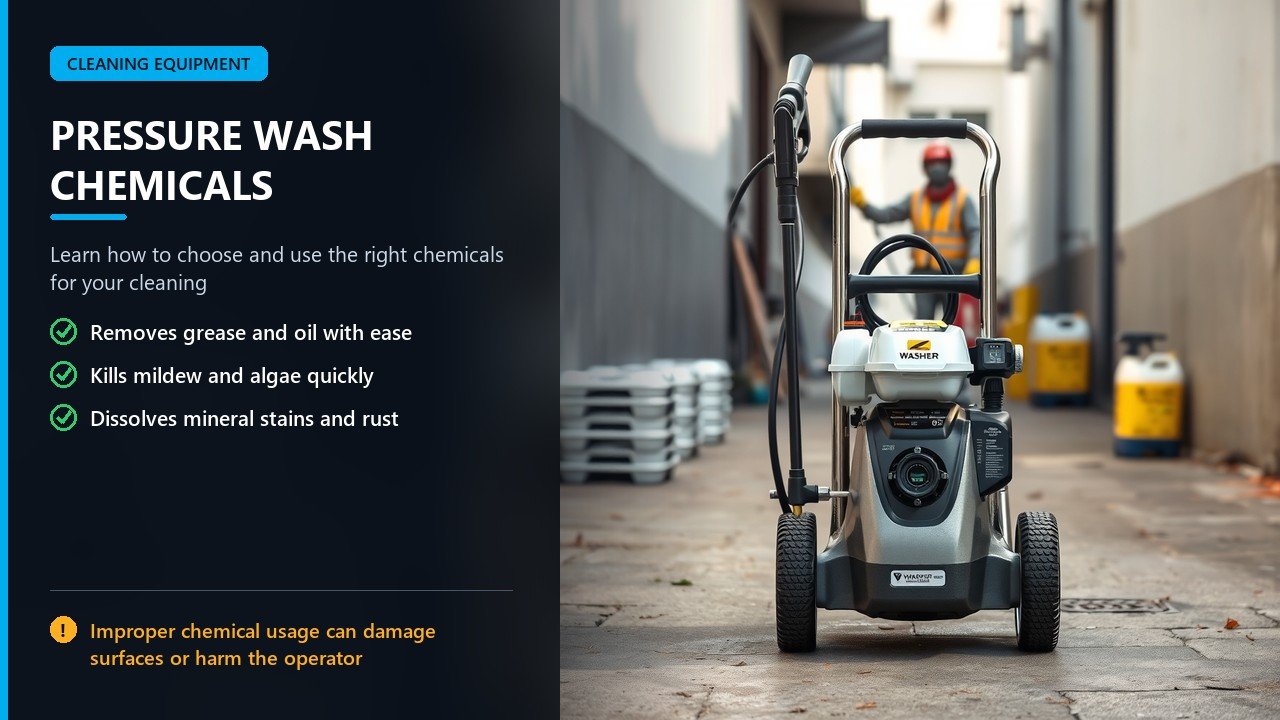
Why Chemicals Matter
Pressure alone removes loose dirt and grime, but many soils need chemistry to break down.
Grease and oil resist water, clinging to surfaces until a degreaser emulsifies them so they can be rinsed away. Mildew, algae, and mold require a chemical that kills the growth, not just blasts its surface, or it returns quickly. Mineral stains, rust, and hard-water deposits need acids or specialized cleaners to dissolve them. Even ordinary dirt comes off faster and more thoroughly with a detergent that lifts it from the surface, letting the water carry it away.
This is why professional cleaners rely on a combination of pressure and chemistry, matching the chemical to the soil and surface. A detergent for general cleaning, a degreaser for grease, a bleach-based solution for organic growth, and an acid for mineral stains cover the common situations. Applying the right chemical, allowing it to dwell, and then rinsing produces results that pressure alone cannot achieve, and often with less pressure, which is safer for surfaces. Understanding chemicals therefore expands what a pressure washer can clean and how well it cleans it.
The key is using chemicals correctly: choosing the right type, diluting properly, applying and dwelling appropriately, and rinsing thoroughly. Done well, this multiplies the machine’s effectiveness; done poorly, it risks damage and poor results. This guide covers the chemicals, their uses, and safe handling so you can clean more effectively while protecting surfaces, plants, and yourself. Our guide to pressure washer components explains how the machine applies water and detergent.
Types of Pressure Wash Chemicals
The main categories of chemicals serve different soils and surfaces.
General detergents. All-purpose pressure washer detergents lift dirt, grime, and light oils from a wide range of surfaces, including siding, patios, vehicles, and outdoor furniture. They are the everyday cleaner, safe for most surfaces when diluted and rinsed, and they form the base of most cleaning routines.
Degreasers. Formulated to break down grease, oil, and grime, degreasers are used on driveways, engine bays, grills, commercial kitchens, and areas with oil and grease. They range from mild to heavy-duty, and stronger degreasers may require more careful handling and better rinsing.
Bleach-based solutions (sodium hypochlorite). Used for organic growth like mildew, mold, and algae, and central to soft washing, bleach-based solutions kill the growth so it does not quickly return. They are common on siding, roofs, decks, and concrete. Bleach is powerful and must be handled carefully, diluted properly, and kept off plants and certain surfaces unless appropriate.
Acids. Acid cleaners remove mineral stains, rust, hard-water deposits, and efflorescence, and they are used on specific surfaces like concrete, brick, and some metals. Acids are strong and require careful handling, proper dilution, and caution around certain materials and plants, since they can etch or damage surfaces and harm the environment if misused.
Surfactants and rinse aids. Surfactants help water penetrate and lift dirt, and they are often included in detergents. Rinse aids help water sheet off surfaces for a spot-free finish, useful for vehicles and glass. These support the main cleaners rather than acting alone.
Each category addresses particular soils, and the art of chemical cleaning is matching the chemical to the surface and the soil. Using the wrong chemical can damage a surface or fail to clean it, while the right one makes the job easy. Understanding these categories lets owners choose appropriately and clean more effectively. Our guide to a pressure washer inlet water filter is a reminder that clean water and clean chemistry work together.
How Chemicals Are Applied
Pressure washers apply chemicals through a few common methods.
Downstream injection. Most consumer and many professional pressure washers use a downstream injector, which siphons detergent into the water stream after the pump, at low pressure. This is the standard way to apply chemicals with a pressure washer, using a soap nozzle or black tip to spray the diluted chemical at low pressure before rinsing at higher pressure. Downstream injection is convenient but relies on the machine’s siphon and often dilutes the chemical significantly.
Upstream injection. Less common on consumer machines, upstream injection introduces chemical before the pump, which can deliver stronger concentration but requires a pump and seals compatible with chemicals. This is used in some professional setups.
Foam cannons and foamers. A foam cannon or foamer mixes chemical with air to produce a clinging foam, common for vehicle washing and some surface cleaning. The foam clings to surfaces, extending dwell time and improving the chemical’s effect.
Pump sprayers and separate application. Chemicals are often applied with a pump sprayer or by hand, especially for soft washing where bleach solutions are applied and then rinsed with the pressure washer. This gives control over concentration and coverage and is standard in professional soft washing.
Choosing the application method depends on the machine, the chemical, and the task. Downstream injection is convenient for detergents, foam cannons suit vehicles, and separate application suits stronger chemicals and soft washing. Understanding these methods lets you apply chemicals effectively and safely, matching the technique to the job. Our guide to a high pressure washer nozzle covers the soap and nozzle tips used to apply chemicals at low pressure.
Matching Chemicals to Surfaces
Surface compatibility is critical when choosing a chemical.
For concrete, driveways, and masonry, general detergents and degreasers work well, and bleach-based solutions handle organic growth, while acids address mineral stains and efflorescence with care. For wood decks and fences, use gentler cleaners, often wood-safe detergents or oxygen-based cleaners, and avoid bleach unless appropriate for the wood type and finish, since bleach can damage some woods. For siding, general detergents and, for organic growth, bleach-based solutions (as in soft washing) are common, applied at low pressure and rinsed.
For vehicles, use car-specific soaps and wheel cleaners, never harsh degreasers or bleach on paint, and avoid acids except on specific safe components per product guidance. For roofs, soft washing with a bleach-based solution at low pressure is the standard, since pressure washing roofs can damage shingles and void warranties. For patios, grills, and outdoor furniture, match the cleaner to the material: gentle detergent for most, degreaser for grease, and appropriate products for specific materials like aluminum or composite.
| Surface or Soil | Chemical and Method |
|---|---|
| General dirt on siding, patios | General detergent, downstream, low pressure |
| Grease and oil | Degreaser, applied and dwelled, then rinsed |
| Mildew, algae, mold | Bleach-based solution, soft wash, low pressure |
| Rust, mineral stains | Acid cleaner, careful use, proper dilution |
| Vehicles | Car soap and wheel cleaner, foam cannon or bucket |
| Wood decks | Wood-safe detergent, gentle pressure |
Matching chemical to surface prevents damage and ensures effective cleaning. A chemical that is fine on concrete may ruin a deck finish; one safe for vehicles may be useless on mildew. Knowing the compatibility, and testing on a small area, protects surfaces while delivering results. When in doubt, choose the gentler chemical, dilute more, and test, escalating only if needed. This approach keeps cleaning safe and effective across the many surfaces a pressure washer encounters. Our guide to pressure washer hose connector types is a reminder that the machine’s plumbing must also handle chemical use properly.
Using Chemicals Safely
Chemical safety protects the operator, the surroundings, and the surfaces.
Always read and follow the product label, including dilution instructions, dwell times, and safety warnings. Dilute as directed; stronger is not better and can damage surfaces or increase hazards. Wear appropriate protective equipment, including gloves, eye protection, and, for bleach and acids, respiratory protection and protective clothing, and work in ventilated areas. Never mix chemicals, especially bleach with acids or ammonia, which can create toxic gases. Keep chemicals away from your eyes, skin, and lungs, and avoid spraying into the wind.
Protect plants and landscaping by pre-wetting them and covering or avoiding them, since bleach and other chemicals can kill vegetation. Protect surfaces not intended for treatment, such as painted trim, glass, and metals, and rinse adjacent areas if overspray occurs. Do not let chemicals dry on surfaces, as this can cause damage and leave residue; apply, allow the proper dwell, and rinse thoroughly. Dispose of rinse water responsibly and avoid letting chemicals run into storm drains or waterways. Store chemicals safely, out of reach of children and pets.
Because pressure wash chemicals can be hazardous, safety is not optional. Proper dilution, protective equipment, no mixing, plant protection, and responsible disposal prevent the injuries, damage, and environmental harm that careless use causes. Following the label and using common sense keep the work safe and effective. The power of these chemicals is what makes them useful, and respecting that power is what makes them safe, so the care taken in handling them is what allows their benefits without their dangers. Our guide to a power washing nozzle tips covers the tips used to apply and rinse chemicals. For chemical hazard guidance, the OSHA provides safety information.
Environmental Considerations
Pressure washing chemicals affect the environment, so responsible use matters.
Many pressure wash chemicals, especially bleach, degreasers, and acids, can harm plants, aquatic life, and soil if they run off into storm drains, which often lead directly to waterways without treatment. Preventing chemical-laden water from entering storm drains is important. Where possible, wash on permeable surfaces, contain and redirect runoff, and avoid washing near drains and waterways. Pre-wetting and rinsing plants before and after, and covering sensitive landscaping, protects vegetation from overspray and runoff.
Choosing environmentally preferable products where appropriate also reduces impact. Some detergents and cleaners are biodegradable or formulated to be gentler, and using the least aggressive chemical that does the job reduces chemical loads. Diluting properly and not over-applying also limits the chemical entering the environment. Proper disposal of rinse water and leftover chemicals, and never dumping chemicals on the ground or into drains, are basic responsibilities.
Because pressure washing often happens outdoors near soil, plants, and water, responsible chemical use protects the environment that surrounds the work. The same chemicals that clean surfaces can harm the landscape and waterways if mismanaged, so care in application, containment, and disposal is part of doing the job well. Environmentally conscious cleaning balances effectiveness with responsibility, using the right chemical in the right amount with the right precautions. This protects the property’s surroundings and the broader environment, and it reflects good practice. Our guide to a sidewalk cleaner for pressure washer covers a tool that cleans flat surfaces with less chemical waste.
Common Chemical Mistakes
Several mistakes undermine chemical cleaning or cause harm.
Mixing chemicals. Never mix bleach with acids or ammonia, or any chemicals unless directed. Mixing can produce toxic gases or violent reactions.
Using too strong a concentration. Over-concentrated chemicals damage surfaces, harm plants, and increase hazards. Dilute per the label.
Letting chemicals dry. Allowing chemicals to dry on surfaces leaves residue and can cause damage. Apply, dwell, and rinse before drying.
Applying at high pressure. Chemicals are applied at low pressure and rinsed at higher pressure. High-pressure application of chemical wastes it and can force it into surfaces.
Ignoring surface compatibility. Using the wrong chemical on a surface can ruin it. Match the chemical to the material and test first.
Skipping protective equipment. Bleach, acids, and degreasers require gloves, eye protection, and often more. Protect yourself.
Releasing chemicals into drains. Runoff into storm drains harms waterways. Contain and redirect runoff where possible.
Avoiding these mistakes keeps chemical cleaning effective and safe. Most stem from impatience or carelessness, and the fixes are simple: dilute, protect, match, dwell, rinse, and dispose responsibly. Because chemicals amplify a pressure washer’s power, they also amplify the consequences of misuse, so careful handling is essential. Done right, chemical cleaning is a powerful, efficient tool; done wrong, it causes damage and injury. Learning the safe practices makes chemicals an asset rather than a risk, and it elevates the quality and safety of every cleaning job. Our guide to a pressure washer repair kit is a reminder that chemical use also affects the machine, so flush and maintain it properly.
Dilution and Dwell Time
How a chemical is diluted and how long it dwells on the surface often matter as much as which chemical you choose.
Dilution determines the chemical’s strength. Products are formulated to work at a specific dilution, and the label’s ratio achieves the intended strength. Using a stronger mix than directed is a common mistake: it rarely cleans meaningfully better but can damage surfaces, harm plants, and increase hazards, while also wasting product and requiring more rinsing. Using a weaker mix than directed may fail to clean. The correct approach is to follow the label’s dilution, adjusting only within the product’s guidance and testing on a small area first.
Dwell time is how long the chemical sits on the surface before rinsing. Most chemicals need time to break down the soil, so applying and immediately rinsing wastes the chemical, while letting it sit too long, especially in sun or on sensitive surfaces, risks damage or drying. The label typically specifies an appropriate dwell, and the goal is to give the chemical enough time to work without letting it dry. Working in sections, applying, allowing the dwell, and rinsing before the chemical dries keeps the process effective and safe.
Getting dilution and dwell right multiplies a chemical’s effectiveness and safety. A correctly diluted chemical given adequate dwell time cleans better than a stronger one rinsed immediately, and it protects the surface and surroundings. Since these two factors are entirely within the operator’s control, understanding them is one of the most practical skills in chemical cleaning. Paying attention to dilution and dwell, along with proper application and rinsing, is what turns a chemical from a risky shortcut into an effective tool. Our guide to pressure washer inlet is a reminder that the water supply and the chemistry work together to clean.
Store-Bought Versus DIY Chemicals
Owners sometimes wonder whether to buy commercial chemicals or mix their own.
Store-bought pressure washer chemicals are formulated, tested, and labeled with specific dilution and safety guidance for their intended use, which makes them predictable and safe when used as directed. They cover the common needs, from general detergents to degreasers and bleach-based solutions, and they remove the guesswork. For most owners, commercial products are the simplest and safest choice, since the formulation is designed for pressure washing and the instructions are clear.
Some operators mix their own solutions, such as diluted bleach for soft washing or homemade degreasers, usually to save money or customize strength. Mixing your own can work, but it carries risks: incorrect concentrations, unsafe combinations, and lack of formulation testing can lead to damage, poor results, or hazards. If mixing, use proper measurements, follow established recipes, and never combine incompatible chemicals. For bleach solutions, precise dilution matters for both effectiveness and safety, and for any homemade mix, careful research and testing are essential.
For most owners, buying commercial chemicals and following their instructions is the sound choice, offering reliability and safety with minimal effort. Experienced operators may mix their own for specific reasons, but even then, the principles of correct dilution, safe combinations, and testing apply. The deciding factors are cost, control, and confidence: commercial products suit those who want predictability, while DIY suits those who understand the chemistry and accept the responsibility. Either way, the label and safe practice govern. Our guide to a pressure washer o ring kit is a reminder that the machine’s seals must handle the chemicals and pressures used.
Getting Better Results with Chemicals
A few techniques make chemical cleaning more effective.
Pre-soak heavily soiled areas to let the chemical penetrate before the main cleaning, and work the chemical into the surface where appropriate, using a brush for scrub-sensitive areas. Apply in sections so the chemical does not dry before you rinse, and work from the top down so dirty rinse water does not re-soil cleaned areas. Rinse thoroughly, since leftover chemical residue can cause streaks or damage, and follow with a clean-water rinse to flush the surface. For vehicles, wash in the shade and avoid letting soap dry, using a foam cannon and two-bucket method for a spot-free finish.
Combining chemicals with the right technique and equipment multiplies results. A surface cleaner for flat areas, a foam cannon for vehicles, and appropriate nozzle tips for application and rinsing make the chemical work harder and the process faster. Matching pressure to the chemical also helps: chemicals are applied at low pressure, and rinsing may use low or higher pressure depending on the surface, so understanding the machine’s controls and tips maximizes the outcome.
Better results come from the combination of the right chemical, correct dilution and dwell, good technique, and appropriate equipment. No single factor is enough, but together they produce professional-quality cleaning that water alone cannot match. Because chemicals are a multiplier for the machine, using them skillfully compounds the benefit, and the improvement over plain water is often dramatic. With practice, the routine of pre-soak, apply, dwell, agitate where needed, and rinse becomes second nature, and the results speak for themselves. Our guide to a best pressure washer wand covers the tool that applies the chemical and rinse to the surface.
Frequently Asked Questions About Pressure Wash Chemicals
What chemicals do pressure washers use? Common ones include general detergents, degreasers, bleach-based solutions for organic growth, acids for mineral stains, and surfactants and rinse aids. The right choice depends on the surface and the soil.
How do I apply chemicals with a pressure washer? Most machines use a downstream injector with a soap nozzle at low pressure, or a foam cannon, and stronger chemicals and soft washing may be applied with a separate sprayer before rinsing.
Can I use bleach in a pressure washer? Yes, for organic growth and soft washing, but dilute it properly, use a downstream injector or separate sprayer, protect plants, and never mix it with acids or ammonia.
What is a good degreaser for pressure washing? Use a degreaser formulated for pressure washers, diluted per the label, applied and allowed to dwell, then rinsed. Match its strength to the surface and soil.
Are pressure wash chemicals safe for plants? Many are not. Bleach, acids, and degreasers can harm vegetation, so pre-wet and cover plants, avoid overspray, and keep runoff away from landscaping and waterways.
Do I need to rinse after applying chemicals? Yes. Chemicals should be applied, allowed to dwell per the label, and rinsed thoroughly before they dry, to remove the chemical and the loosened dirt.
Final Verdict on Pressure Wash Chemicals
Pressure wash chemicals extend what a pressure washer can clean, breaking down grease, killing organic growth, and dissolving mineral stains that water alone cannot remove. The main categories, general detergents, degreasers, bleach-based solutions, acids, and surfactants, each serve particular soils and surfaces, and choosing the right one, applied by downstream injector, foam cannon, or separate sprayer, makes cleaning easier and more effective.
The keys to success are matching the chemical to the surface and soil, diluting correctly, applying at low pressure and rinsing thoroughly, and using chemicals safely and responsibly, with protective equipment, no mixing, plant protection, and careful disposal. Used well, chemicals turn a good pressure washer into a versatile, professional-grade cleaning tool; used carelessly, they cause damage and harm. Learn the categories, respect their power, and use them thoughtfully, and your cleaning will be both more effective and safer for your surfaces, your surroundings, and yourself.