A pressure washer hose is not like a garden hose. It is stiffer, heavier, and rated to handle thousands of PSI, which makes it awkward to coil by hand and prone to kinking into a stubborn, muddy tangle. After a long cleaning job, wrestling that hose into storage is often the least enjoyable part of the work, and a heap of high-pressure hose is an invitation to kinks, abrasion, and frustration. A pressure wash hose reel solves this by storing the hose neatly and letting you deploy and retrieve it quickly, turning an unwieldy length of stiff tubing into a managed, ready-to-use resource. This guide explains pressure washer hose reels, why they matter more for pressure washing than for garden hoses, and how to choose, install, and maintain one.
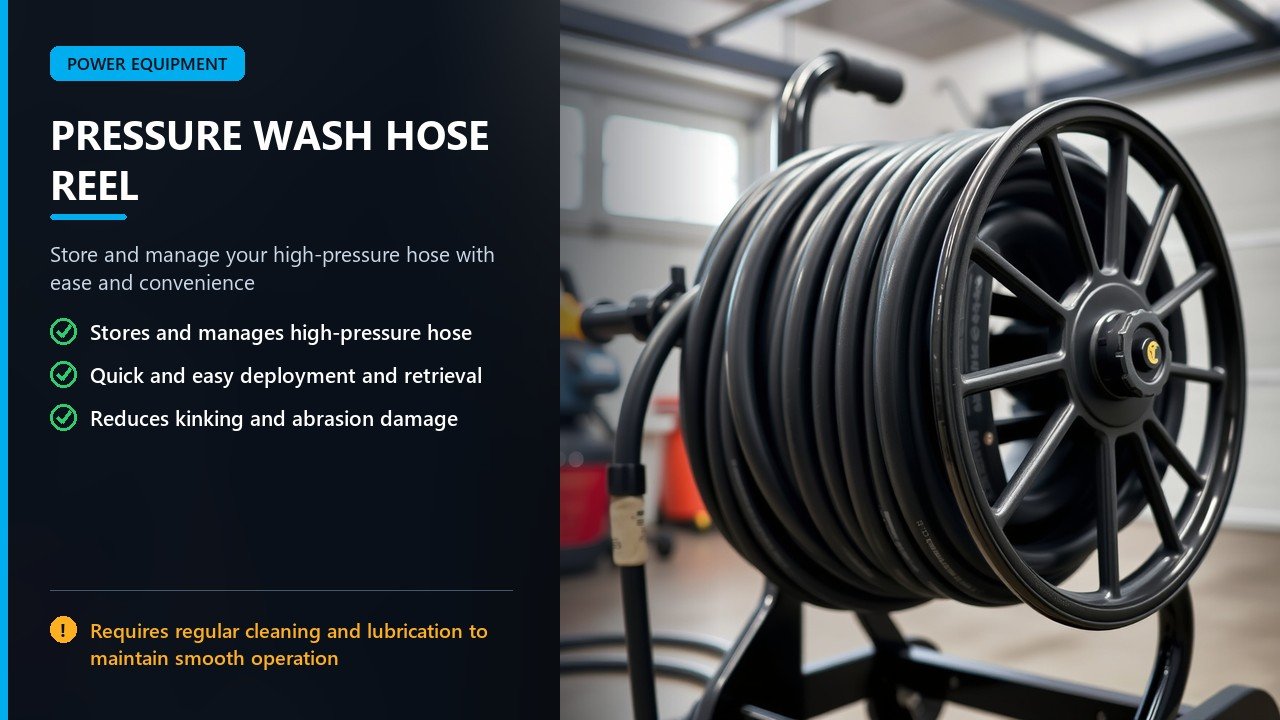
Why Pressure Washer Hoses Need a Reel
Pressure washer hoses present challenges that garden hoses do not.
They are stiff and heavy, since they are built to contain high pressure, and they resist bending into a neat coil, tending to kink and fight back when coiled by hand. They are also often long, since reach matters for cleaning siding, driveways, and vehicles, and a long, stiff hose is a genuine hassle to manage. Left in a heap, such a hose kinks, abrades against the ground, and becomes a trip hazard, and moving it around the work area is awkward.
A reel addresses all of this. Winding the hose onto a reel keeps it off the ground, protecting it from abrasion and reducing kinks, and it stores the hose neatly, ready for quick deployment. When you begin cleaning, you pull the hose out smoothly; when you finish, you wind it back in seconds. This transforms the hose from a source of frustration into a managed tool, saving time and reducing wear with every use. For a pressure washer owner, a reel is often one of the most appreciated additions.
Because the pressure washer hose is used on every job and is the most awkward part of the setup to manage, a reel delivers benefits on every cleaning session. The stiffer and longer the hose, the greater the benefit, which is why reels are especially valuable for pressure washing. Keeping the hose organized also protects a relatively expensive component from damage, extending its life. Understanding why pressure washer hoses need a reel makes the case for adding one clear. Our guide to pressure washer components places the hose and reel in the machine’s overall system.
What a Pressure Wash Hose Reel Is
A pressure wash hose reel is a spool that holds a pressure washer hose, with fittings that connect into the machine’s pressurized water path.
Unlike a simple storage spool, a pressure washer reel is part of the water system. Its swivel fitting allows the drum to rotate while water flows through continuously, so the hose remains connected to the machine or supply as it winds and unwinds. This swivel must be rated for the machine’s pressure and must not leak or restrict flow, which is what distinguishes a pressure washer reel from a garden hose reel. The reel’s inlet connects to the pressure washer (or the water supply, depending on the setup) and its outlet connects to the hose, or vice versa.
This integration is why a pressure washer reel must be built for pressure washer use. A garden hose reel’s fittings and swivel may not handle high pressure and could leak or fail. A proper pressure washer reel has high-pressure-rated swivels, a durable drum sized for the hose, and mounting suited to the setup. It stores the hose and lets it deploy smoothly while maintaining the sealed, pressurized connection the machine requires.
Understanding that a pressure wash hose reel is a pressurized component, not just a storage device, is key to choosing one. The reel must match the machine’s pressure and flow, accept the hose’s fittings and diameter, and mount securely. When these requirements are met, the reel manages the hose without compromising performance, delivering convenience and protection. When they are not, the reel leaks, restricts flow, or fails, defeating its purpose. Choosing for pressure washer use, rather than garden use, ensures the reel works correctly. Our guide to a power hose reel covers the broader category of hose reels in detail.
Types of Pressure Wash Hose Reels
Reels come in several designs, each suited to different uses.
Manual crank reels. Wound by hand with a crank, these are affordable, reliable, and need no power. For a typical length of pressure washer hose, winding takes only seconds, and the simplicity means fewer parts to fail. Many owners find a manual reel sufficient.
Retractable reels. These use a spring to retract the hose automatically with a gentle pull and release. They are convenient for frequent use and store the hose compactly, though the spring mechanism adds cost and complexity and requires the hose length and diameter to suit the reel.
Motorized reels. A motor winds the hose, often at a button push, offering the greatest convenience for long, heavy hoses. They cost the most and need power at the mounting location, but for demanding setups they make winding effortless.
Wall-mounted reels. Mounted on a wall or post, these keep the reel off the ground and create a permanent cleaning station. They are ideal for fixed locations like a garage or the side of a house.
Cart and frame reels. Built into a cart or frame, or mounted on the machine itself, these travel with the setup, suiting users who clean in different locations or want everything together.
The right type depends on how often you clean, where, and how much convenience you want. Occasional users often do well with a manual wall-mounted reel, while frequent or demanding users may prefer retractable or motorized reels, and mobile setups suit cart or frame reels. Matching the type to your routine makes the reel a natural part of the workflow. Understanding the options lets you choose the reel that best fits your pressure washing habits. Our guide to a pressure washer wall mounted hose reel details the popular fixed option.
Key Features to Check
Several features determine whether a reel works well.
Pressure and flow rating. The reel’s swivel and fittings must be rated for your machine’s pressure and flow. An underrated reel leaks or fails under pressure.
Hose capacity and diameter. The reel must hold your hose length and accept its diameter. Pressure washer hoses vary in diameter, so capacity and compatibility matter.
Fittings and connections. The inlet and outlet must match your machine and hose connectors, or adapters are needed. Common pressure washer fittings and quick-connects should be accommodated.
Swivel quality. The rotating swivel is the reel’s critical pressurized part. A quality swivel, often with replaceable seals or o-rings, prevents leaks and lasts.
Mounting. Wall, post, cart, or frame mounting should suit your location and be sturdy enough for a full, heavy hose. Consider the mounting hardware and surface.
Material and construction. Durable materials and bearings determine how smoothly the reel turns and how long it lasts under frequent use.
| Feature | What to Check |
|---|---|
| Pressure rating | Rated for your machine’s pressure and flow |
| Capacity | Holds your hose length and diameter |
| Fittings | Match your machine and hose connectors |
| Swivel | High-pressure rated, serviceable seals |
| Mounting | Suits your location, sturdy for a loaded reel |
Checking these features ensures the reel is compatible and durable. A reel that is underrated, too small, or mismatched in fittings is worse than useless, while one that meets the requirements is a lasting convenience. Because the reel is a pressurized component, the pressure rating and swivel quality deserve special attention. Matching the reel to your machine and hose, and choosing quality construction, delivers reliable performance. Our guide to a pressure washer hose connector covers the fittings the reel must accommodate.
Choosing a Pressure Wash Hose Reel
Choosing well comes down to matching the reel to your machine, hose, and routine.
Start with the pressure rating: the reel must handle your machine’s pressure and flow, with a swivel rated accordingly. Then match the capacity and diameter to your hose, leaving a little margin if you might use a longer hose later. Ensure the fittings match your machine and hose, or plan for adapters, and check that the reel accommodates your hose’s connector style. Decide on the mounting and type based on where and how you clean: a fixed wall reel for a permanent station, a cart or frame reel for mobility, manual for simplicity, retractable or motorized for convenience.
Consider how the reel integrates with your setup. Some reels mount on the machine or a cart, keeping everything together; others mount on a wall or post, creating a station. Think about where you connect the water supply, where you begin cleaning, and how the hose will travel, so the reel’s position supports your workflow rather than fighting it. For long-reach cleaning, a reel with enough capacity to hold your full hose length keeps the hose ready without tangles. For shorter hoses, a smaller, simpler reel suffices.
Matching the reel to the machine, hose, and routine yields a tool that performs and lasts. Because the reel becomes part of every cleaning session, getting the match right pays off continuously, and a well-chosen reel is quickly forgotten as it quietly does its job. Considering pressure rating, capacity, fittings, mounting, and type covers the essentials, and choosing quality where it matters, especially in the swivel, ensures reliability. With the right reel, hose management stops being a chore and becomes effortless, which is the whole point. Our guide to a pressure washer hose reel 100 ft covers reels sized for long hoses and big jobs.
Installing and Maintaining a Reel
Proper installation and simple maintenance keep the reel reliable.
Mount the reel where it is convenient for your cleaning area and out of the way when not in use. For wall mounting, attach to a solid surface such as a stud, masonry, or a sturdy post using appropriate hardware, since a loaded reel is heavy. Ensure the swivel and connections align without sharp bends or strain, and leave clearance for the hose to wind and unwind freely. Connect the inlet and outlet to the machine and hose using compatible fittings, and check for leaks at the swivel, which is the most common leak point.
In use, wind the hose evenly and without tension, avoiding cross-winding that causes kinks, and never overfill the reel beyond capacity. Do not store the hose pressurized, and check the swivel and fittings periodically for leaks or wear, replacing seals as needed. Keep the reel clean and inspect the mounting for looseness over time. In cold weather, drain the hose and reel before storage to prevent freezing damage, since trapped water can crack fittings. Lubricate moving parts such as the swivel or crank as recommended, and protect the reel from prolonged sun and weather if outdoors.
With these simple practices, a pressure wash hose reel serves reliably for years, protecting the hose and making every job easier. Because the reel handles a pressurized hose and sees frequent use, modest maintenance preserves its function, and proper installation prevents the sagging mounts and leaking swivels that frustrate users. Keeping the seals in good condition, winding properly, and winterizing are the key habits. A well-installed, well-maintained reel is a lasting asset that quietly improves every cleaning session, and the small effort it requires returns hours of saved time. Our guide to winterizing a pressure washer covers the seasonal steps that protect the hose and reel.
Common Mistakes to Avoid
Several mistakes undermine a pressure wash hose reel.
Using a garden hose reel. A garden reel may not handle pressure washer pressures and fittings. Use a reel rated for pressure washer use.
Ignoring the pressure rating. An underrated reel leaks or fails. Match the reel’s rating to your machine.
Mismatched capacity or fittings. A reel too small or with incompatible fittings is useless. Check capacity, diameter, and connections.
Weak mounting. A loaded reel is heavy; mounting it on an inadequate surface risks it pulling loose. Mount to a solid surface.
Overfilling or forcing the hose. Winding under tension or overfilling causes kinks and damage. Wind evenly within capacity.
Neglecting the swivel. A leaking or worn swivel is the most common problem. Check and service it.
Leaving the hose pressurized. Storing under pressure stresses fittings. Depressurize before storage.
Avoiding these mistakes ensures the reel delivers convenience rather than problems. The themes are matching the reel to pressure washer use, installing it securely, and caring for the swivel and hose. Because a reel is meant to reduce hassle, choosing and maintaining it well is what makes it worthwhile. With the right reel and habits, hose management becomes effortless, and the reel becomes an invisible part of an efficient setup. Our guide to a pressure washer repair kit is a reminder that worn fittings and seals, including the reel’s swivel, affect performance.
Pressure Washer Reels Versus Garden Reels
The distinction between a pressure washer reel and a garden reel is important and often overlooked.
A garden hose reel is designed for a low-pressure garden hose, typically carrying water for watering and general washing. Its swivel and fittings are made for that modest pressure and for the lighter, more flexible garden hose. A pressure washer reel, by contrast, must handle high pressure and connect into a pressurized system, and it must accommodate the stiffer, heavier, higher-rated pressure washer hose. Its swivel is built to rotate under pressure without leaking or restricting flow, which is a more demanding engineering requirement than a garden reel faces.
Using a garden reel with a pressure washer risks failure. The fittings and swivel may not hold the pressure, leading to leaks or a burst connection, and the reel may not accommodate the pressure washer hose’s diameter and fittings. Even if it initially holds, the stress of high pressure can cause premature failure and a safety hazard. Conversely, a pressure washer reel is overkill for a garden hose, though it can usually be used for one if the fittings match. The key point is that pressure washer use demands a reel built for it.
Understanding this difference prevents the common mistake of buying an attractive garden reel for a pressure washer, only to find it inadequate. When shopping, look specifically for a reel rated for pressure washer use, with a high-pressure swivel and compatible fittings. The cost difference is modest, and the reliability is worth it. For anyone using a pressure washer, choosing a purpose-built reel ensures the hose is managed safely and effectively, without the risk of a failure under pressure. Our guide to a pressure washer hose connector types explains the fittings a pressure washer reel must handle.
Setting Up a Pressure Washing Station
A reel is often the centerpiece of an organized, permanent pressure washing station.
For owners who clean regularly in the same place, a wall-mounted pressure wash hose reel, positioned near the water supply and the machine, creates a convenient station where everything is ready. The machine sits in place, the water supply connects, and the reel holds the hose, so beginning a job means pulling out the hose, hooking up, and starting, with no setup hassle. This organization saves time on every job and keeps the workspace tidy.
Adding a few elements enhances the station: a place to store nozzles, tips, and accessories; a hook for the gun and wand; and a stable spot for the machine. Quick-connect fittings throughout speed connection and disconnection, and keeping spare o-rings and a nozzle set on hand prevents interruptions. For mobility, a cart-based setup with a reel lets you move the station to different locations, bringing the machine, hose, and accessories together. Either way, the reel is what keeps the hose manageable within the station.
An organized station reflects and enables efficient cleaning. When the hose, machine, and accessories are neatly arranged and the reel keeps the hose ready, the work flows smoothly, and the frustration of tangled hoses and missing parts disappears. Because the reel is central to managing the hose, it anchors the station’s convenience, and the modest investment in a reel and a bit of organization returns a noticeably better experience on every job. For anyone who pressure washes regularly, a well-set-up station with a proper reel is a smart, time-saving arrangement. Our guide to a stationary electric pressure washer is another example of a permanent setup that benefits from organization.
Cost and Value of a Reel
A pressure wash hose reel is a modest investment that returns significant value.
Reels range from affordable manual crank models to pricier motorized ones, so there is an option for nearly every budget. Even the least expensive reel rated for pressure washer use protects the hose, saves time, and reduces frustration, which is value that accrues on every job. Considering that a replacement pressure washer hose can cost a meaningful amount and that a tangled hose wastes time and invites damage, a reel often pays for itself by extending hose life and saving effort.
The value is not only monetary. The reduced frustration of a managed hose, the improved safety of a hose off the ground, and the time saved on setup and cleanup are benefits felt on every use. For frequent users, these compound quickly, making the reel one of the best per-dollar upgrades available. Even occasional users appreciate the difference, since the awkwardness of a pressure washer hose is felt regardless of frequency.
Weighing the modest cost against the ongoing benefits, a pressure wash hose reel is an easy recommendation. It does not change the machine’s cleaning power, but it changes the day-to-day experience of using it, removing an ongoing irritation and protecting an important component. Because the hose is used every time and is the most cumbersome part of the setup, improving its management yields outsized returns. For most pressure washer owners, a reel is a small investment with a large, lasting payoff, and it is well worth adding. Our guide to diesel hot water power washer shows how a well-organized, capable setup supports efficient, effective cleaning.
Frequently Asked Questions About Pressure Wash Hose Reels
What is a pressure wash hose reel? A reel that stores and manages a pressure washer hose, with a high-pressure swivel that lets the hose stay connected while winding and unwinding. It differs from a garden reel in its pressure rating and fittings.
Can I use a garden hose reel for a pressure washer? Generally no. Garden reels may not handle pressure washer pressures or fit its connectors. Use a reel rated for pressure washer use.
How do I choose a pressure washer hose reel? Match the pressure rating, hose capacity and diameter, and fittings to your machine and hose, then choose the mounting and type for your routine.
Do I need a powered reel? Not necessarily. A manual crank reel manages a pressure washer hose well, while retractable or motorized reels add convenience for frequent use or long, heavy hoses.
How do I maintain a pressure wash hose reel? Wind the hose evenly, check the swivel and fittings for leaks, keep the reel clean, lubricate moving parts as needed, and drain and winterize to prevent freeze damage.
Where should I mount a pressure wash hose reel? Near your cleaning area, on a solid surface such as a stud or masonry, with clearance for the hose to wind freely. Cart or frame reels suit moving between sites.
Final Verdict on Pressure Wash Hose Reels
A pressure wash hose reel is a simple addition that transforms the most awkward part of pressure washing, the stiff, heavy hose, into a neatly managed, ready-to-use tool. Unlike a garden hose reel, it must be rated for the machine’s pressure and use a high-pressure swivel, so choosing one built for pressure washer use is essential. Manual crank reels offer simplicity and value, while retractable and motorized reels add convenience, and the reel can be wall-mounted, cart-mounted, or built into the machine.
Choose a reel that matches your machine’s pressure and flow, holds your hose, fits your connectors, and suits your mounting and routine, install it securely, and maintain the swivel and hose with simple habits. The modest cost and small effort return hours of saved setup time and the quiet pleasure of a hose that behaves. If you have ever ended a job wrestling a tangled, high-pressure hose, a pressure wash hose reel is the cure, and it quickly becomes one of the best upgrades in your pressure washing setup.