A 3/8 pressure washer hose is the standard choice for high-flow, high-pressure machines, and knowing why helps you buy the right one. The 3/8 figure is the hose’s internal diameter, and that diameter decides how much water reaches the nozzle without losing pressure along the way. For gas machines and high-flow electric units, 3/8 is usually the correct size.
This guide explains what a 3/8 hose is, how it compares with thinner hose, and how to select and care for one.
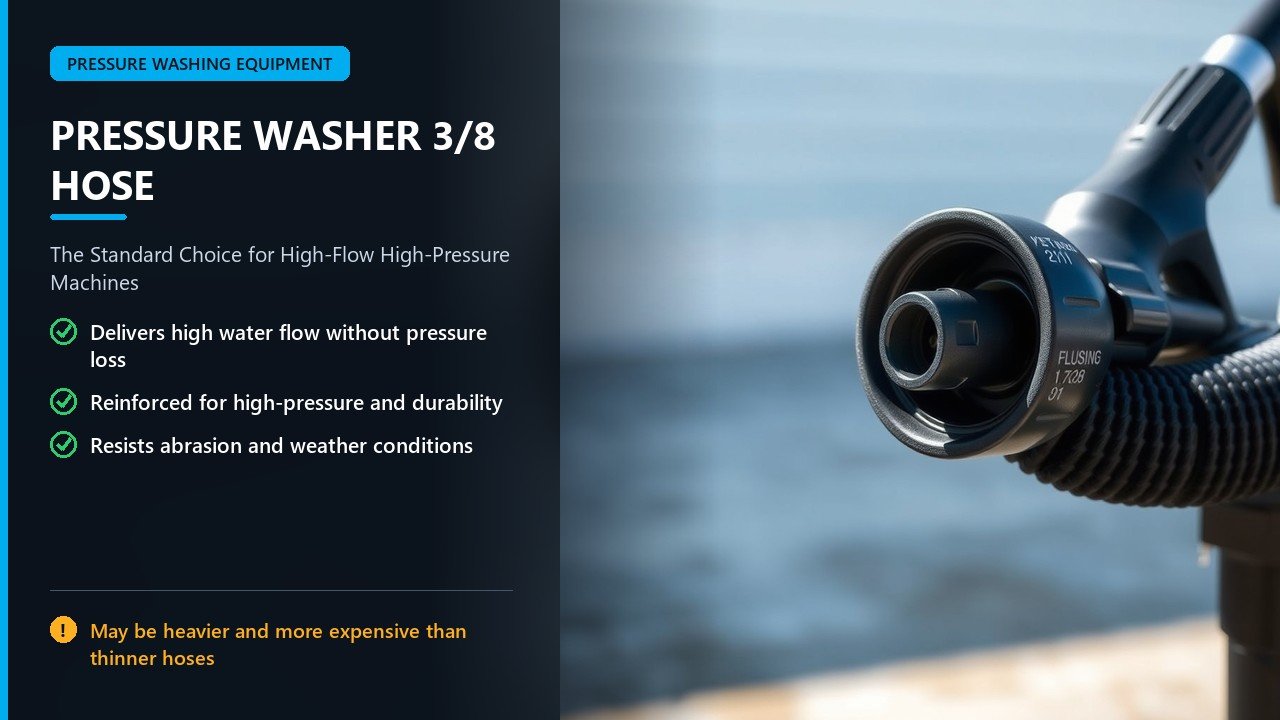
What 3/8 Refers To
The 3/8 in a 3/8 hose means three-eighths of an inch, which is the internal diameter of the water channel inside the hose. This is not the outside thickness; it is the bore that the water flows through. A wider bore lets more water pass with less resistance, which is exactly what a high-flow pressure washer needs.
A 3/8 hose is built for pressure, with a reinforced tube, layers of wire braiding for strength, and a tough outer cover. It carries the full pressure of the machine, often several thousand PSI, and is rated for it. Its outer cover resists abrasion, oil, and weather, and its ends carry fittings that match the pump and gun.
Because the bore is wide, a 3/8 hose flows freely, making it the go-to standard for machines that deliver a high volume of water. Where a machine works at high flow, a 3/8 hose lets it breathe, whereas a thinner hose would restrict it and cost the machine much of its performance.
3/8 vs 1/4 Hose
The other common size is 1/4 inch. A 1/4 hose has a narrower bore, so it restricts flow more, but it is lighter, more flexible, and cheaper, which suits light electric machines with low flow. A 3/8 hose has a wider bore, flows more freely, and is the right choice for high-flow gas machines and larger electric units.
The rule is simple: match the hose to the machine’s flow. A high-flow machine fed through a 1/4 hose cannot reach its rated performance, because the narrow hose becomes a bottleneck, and the wasted flow shows up as lower pressure at the nozzle. A 3/8 hose removes that restriction and lets the machine deliver its full capability.
The trade-off is weight and manageability. A 3/8 hose is heavier and stiffer than a 1/4 hose, so it is harder to drag around and coil up. On a light machine, its extra bulk is unnecessary. But on a high-flow machine, the extra flow capacity is worth the weight, because the performance gain is real and measurable.
How the Hose Fits the Whole System
A 3/8 hose is one link in the water path that runs from the supply, through the pump, along the hose, and out of the nozzle. Every link must suit the flow, and the hose is often where restrictions hide. A machine rated at high flow with a 3/8 hose can perform as designed, but the same machine with a thinner hose loses pressure before the water ever reaches the nozzle.
That is why the hose should never be an afterthought. A powerful pump and a correct nozzle cannot compensate for a hose that chokes the flow, and the loss shows up as a weaker jet and slower cleaning. Matching the hose diameter to the machine’s flow keeps the whole system working as intended.
The hose also has to handle the machine’s pressure and, on a hot machine, its temperature. A hose that is right in diameter but under-rated in pressure or temperature is unsafe, regardless of how well it flows. The correct 3/8 hose meets all three requirements: diameter, pressure, and temperature.
Where 3/8 Hoses Are Used
You will find 3/8 hoses on gas pressure washers of moderate to high flow, on larger electric machines, and on many commercial units. They are the default on machines where flow matters for cleaning speed, from serious homeowner washers to professional rigs. Their wide bore suits the higher GPM these machines deliver.
They are also common on hot-water machines, in a hot-rated form, because those machines combine high flow with heat and need a hose that handles both. On trailer-mounted and skid units, a 3/8 hose is standard for reaching the work while carrying full flow and pressure.
The common thread is flow. Wherever a pressure washer moves a large volume of water, a 3/8 hose is the natural fit, because it lets the water through without becoming the bottleneck. That is why it has become the high-flow standard across so many machines.
Ratings and Fittings
Every 3/8 hose carries two ratings that matter: pressure and temperature. The pressure rating must meet or exceed the machine’s output, with margin for the spikes that occur when the trigger is released. The temperature rating must suit the water, since a cold-rated hose will soften and fail on a hot-water machine. Check both before you buy.
The fittings on each end must match the pump and gun connections. Common 3/8 hose ends use quarter-inch thread with a male or female fitting, often with a quick-connect system. The gender and thread type must be correct, and the fitting’s pressure rating must be at least as high as the hose. Most high-pressure hose ends are crimped and permanent.
For hot water, pay attention to the seal material inside the connectors. A heat-rated seal is required, because standard seals break down under heat and leak. Matching the fittings and seals to the machine prevents leaks and avoids the disappointing situation of a strong hose that will not connect or hold.
Length and Materials
Hose length affects performance, because every extra foot adds resistance and reduces the pressure at the nozzle. Choose the shortest 3/8 hose that comfortably reaches your work, and resist adding length just in case. A long hose quietly weakens the machine, no matter how good the pump is.
The cover material affects durability. Rubber covers resist abrasion, weather, and oil and stay flexible in cold, though they are heavier. Thermoplastic covers are lighter and cheaper but less tough in hard use. For a machine used regularly or stored outdoors, a rubber-covered 3/8 hose lasts longer and is worth the extra cost.
The table below sums up the main selection points.
| Feature | What to Choose |
|---|---|
| Diameter | 3/8 for high-flow gas and larger electric machines |
| Pressure rating | Exceed the machine’s PSI, with margin |
| Temperature | Suit cold or hot water, with heat-rated seals for hot |
| Length | The shortest that reaches the work |
| Cover | Rubber for durability; thermoplastic for lighter use |
Getting these five points right ensures the hose matches the machine and the job.
Choosing a 3/8 Hose
To choose a 3/8 hose, start with the machine: note its pressure, flow, water temperature, and the connection types on the pump and gun. Choose a hose whose pressure and temperature ratings exceed the machine’s, whose ends match both connections, and whose length covers your work without being excessive. If in doubt, buy a higher pressure rating than you need.
Consider how you will use and store it. For regular use, a rubber-covered hose is the better buy, and if you coil it on a reel, choose a hose that suits the reel and coils cleanly without kinking. A 3/8 hose is heavier than a 1/4 hose, so a reel helps manage it. Check that any reel you use can handle the wider diameter.
Also confirm the fittings match your machine’s system. If your machine uses quick-connects, buy a hose with the matching quick-connect ends; if it uses threaded fittings, match the thread and gender. This avoids adapters, which add joints that can leak and reduce performance. A hose that connects cleanly is easier to live with.
Care and Troubleshooting
If a machine seems weaker than it should, a wrong or damaged 3/8 hose is worth checking. A kink, a partial blockage, or a worn spot restricts flow, and a hose with the wrong fittings may leak. Confirm the hose is undamaged, the correct diameter for the flow, and properly connected with sound seals.
Leaks at the ends usually come from worn or missing seals rather than the hose itself. Use the right seal method for the fitting type: tape on threaded fittings that need it, and a sound O-ring, never tape, on quick-connect and M22 joints. Renew worn seals, which is often all a leaking connection needs.
To keep a 3/8 hose healthy, avoid dragging it over sharp edges, don’t run over it, and keep it away from hot engine parts and exhausts. Store it coiled without tight kinks, protect it from frost, and inspect it for bulges, cracks, and worn spots. Replace it at once if any appear, because a high-pressure hose that fails can cause serious injury. Cared for properly, a good 3/8 hose delivers full performance for years.
Frequently Asked Questions
What is a 3/8 pressure washer hose? A hose with an internal diameter of three-eighths of an inch, the standard size for high-flow gas and larger electric pressure washers. The wider bore flows more water with less resistance.
Is 3/8 better than 1/4? For high-flow machines, yes. A 3/8 hose flows more freely and lets the machine deliver its full performance. A 1/4 hose is lighter and suits light electric machines.
What pressure rating do I need? One that exceeds your machine’s output, with margin for pressure spikes. Match the temperature rating to the water, and use heat-rated seals on hot-water machines.
What fittings do 3/8 hoses have? Commonly quarter-inch threaded male or female ends, often with quick-connects. They must match the pump and gun connections, directly or with adapters.
What length should I choose? The shortest that comfortably reaches your work. Every extra foot adds resistance and lowers pressure at the nozzle, so avoid unnecessary length.
Can a 3/8 hose handle hot water? Only if it is rated for the temperature and fitted with heat-rated seals. A cold-rated hose will soften and fail under hot water.
Rubber or thermoplastic cover? Rubber is more durable and stays flexible in cold but heavier. Thermoplastic is lighter and cheaper but less tough. Choose rubber for regular or hard use.
How do I make it last? Avoid sharp edges, crushing, and hot surfaces, store it coiled without kinks, protect it from frost, and replace it if you see bulges, cracks, or worn spots.
Final Thoughts
A 3/8 pressure washer hose is the high-flow standard because its wide bore lets a powerful machine deliver its full pressure and volume to the nozzle. Choosing it is usually the right call for gas machines and larger electric units, where a thinner hose would simply hold the machine back.
Match the pressure and temperature ratings to the machine, get the fittings right, and keep the length as short as the job allows. Choose a durable cover, manage it well with a suitable reel, and inspect it regularly. Selected and cared for correctly, a 3/8 hose lets your machine perform at its best for years. For related reading, see our guides on a high pressure hose pressure washer and pressure washer high pressure hose.