Pairing a pressure washer and tank is one of the most practical upgrades you can make, and many users discover they need it only after a machine stops performing. A tank solves the most common pressure washer problem there is: not enough water supply to feed the machine. Together, the washer and tank let the machine run at its true rating, wherever the work is.
This guide explains why a pressure washer and tank go together, when you need one, and how to set the combination up correctly.
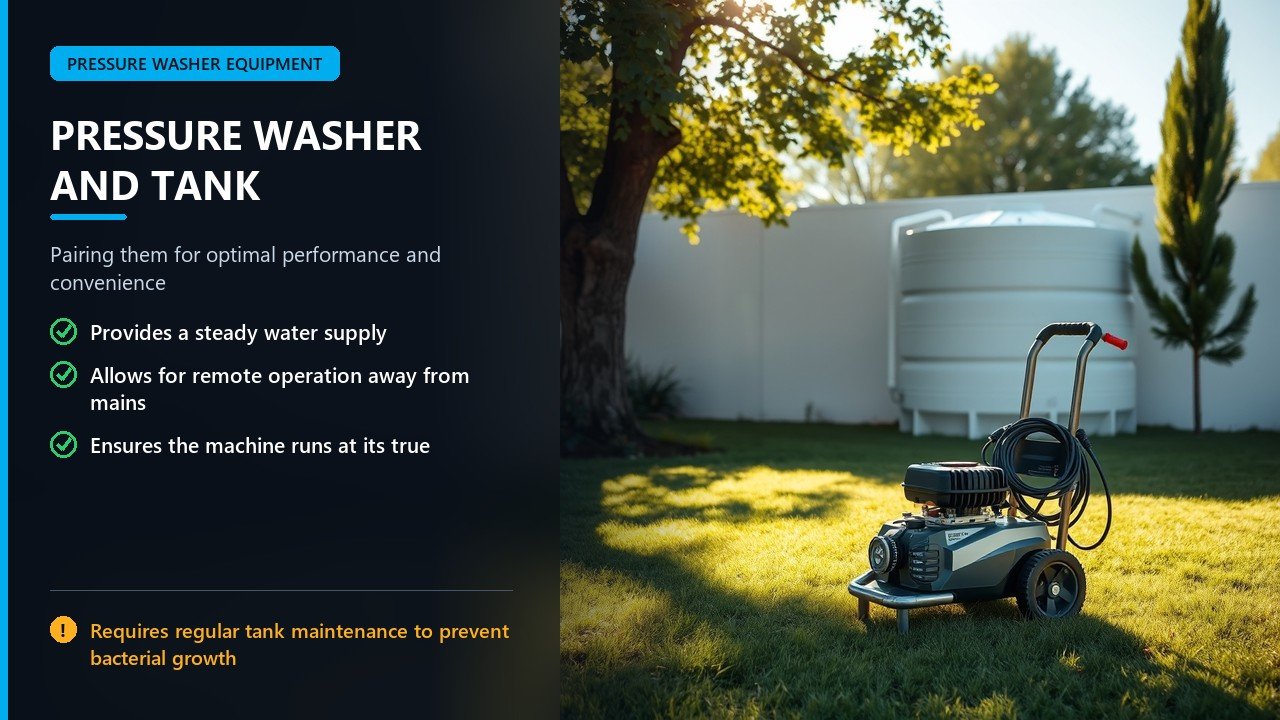
Why a Tank Helps
A pressure washer can only deliver water as fast as it receives it. If the machine puts out 3 or 4 gallons per minute and the tap supplies less than that, the pump starves, pressure drops, and the pump can be damaged by cavitation. This is a quiet, common failure: the machine seems defective, when the real fault is the supply.
A water tank acts as a reservoir between the tap and the machine. It fills at whatever rate the supply allows, then feeds the washer at the flow the machine needs. This smooths out the mismatch and gives the pump a steady, abundant supply, so it runs at its rated output and the cleaning power is what it should be.
The tank also frees the machine from the tap. With a tank, you can work away from a mains supply, using a filled tank as your water source. For mobile cleaning and remote jobs, this turns a machine that needed a nearby tap into a self-contained unit.
When You Need a Tank
The clearest sign that a pressure washer and tank pairing is right for you is a machine that underperforms on your water supply. If pressure drops when you pull the trigger, or the machine loses power after a short burst, the supply is likely too small. Check it honestly by timing how long a tap takes to fill a container of known volume and comparing that to the machine’s GPM.
You also need a tank if you work away from mains water entirely. Mobile detailers, farmers, builders, and anyone cleaning remote sites rely on a tank, filling it where water is available and then working wherever the job takes them. In these cases the tank is not optional; it is the machine’s only water source.
Even where supply is adequate, some users add a tank for stability. A buffer tank smooths fluctuations, keeps air out of the system, and gives the pump a steady feed, which is why professional and trailer-mounted rigs almost always include one. It is a small addition that makes the whole setup more reliable.
Sizing the Tank
Tank size depends on two things: how long you need to work between refills, and how quickly you can refill it. If a tap can refill the tank faster than the machine uses water, a modest tank may be enough, because the tank only has to buffer the difference. If the supply is slow or absent, size the tank to hold enough water for the whole job, or as much as you can carry.
The math is simple. If a machine flows 4 gallons per minute and you want 20 minutes of cleaning between refills, you need about 80 gallons, minus whatever the supply adds during that time. Add a margin, because you rarely run a tank to empty in practice and want a reserve for rinsing.
Physical space and weight matter too. Water is heavy, so a large tank mounted on a truck, trailer, or skid must be carried by a suitable frame and vehicle. Weight limits and stability on the move are real constraints, so size the tank for the job and the vehicle, not just for the machine.
For a machine working at high flow, a larger tank is generally wise, because a high-GPM washer empties a small tank quickly. The tank must match the machine’s appetite for water, not just its pressure.
Tank Types and Materials
Water tanks come in several materials and shapes, and the choice depends on the setup. Polyethylene tanks are lightweight, rust-free, and resistant to most water-borne contaminants, and they come in many sizes, including horizontal and upright shapes that fit a trailer or truck bed. They are the common choice for mobile pressure washing.
Other setups use metal tanks or custom-built reservoirs, sometimes integrated into a trailer or skid frame. Steel tanks are strong but heavier and can corrode if not protected, while stainless steel resists corrosion but costs more. For most mobile cleaning, a poly tank is the practical combination of light weight, durability, and low cost.
Tanks come baffled or unbaffled. A baffled tank has internal dividers that reduce the sloshing of water as it moves, which matters on a vehicle because a large volume of shifting water can affect handling and stability. For road use, a baffled tank is the safer option, and fittings like a drain, vent, and outlet with a strainer make the tank easier to use and maintain.
Mobile and Trailer Setups
The pressure washer and tank combination really comes into its own on mobile and trailer setups. Mounting the tank, washer, feed pump, and hose reel on a skid or trailer creates a self-contained cleaning rig that carries its own water and can work anywhere it can be driven. This is how professional mobile detailers and cleaning services operate.
On such a setup, the tank feeds the washer through a feed pump, and the machine draws at its full flow without ever starving. A float valve can refill the tank from a supply where one is available, so the rig can work from mains water when parked and from the tank when it cannot. This flexibility is the whole point of the pairing.
Weight and balance deserve care in any mobile setup. Water is heavy, so the rig must be built to carry the tank safely, with the load distributed over the axles and the tank baffled and secured. Done properly, a mobile pressure washer and tank rig is a powerful, independent cleaning machine that goes wherever the work is.
How the Tank Feeds the Pump
There are a few ways a tank can supply a pressure washer, and the right one depends on the machine and the setup. In a gravity-feed arrangement, the tank sits above the pump, and water flows down into the machine’s inlet, aided by the pump’s suction. This is simple, but it relies on a positive head and a pump that can draw water reliably.
A better approach for many setups is a feed pump, which pushes water from the tank to the washer at the required flow and pressure. This guarantees the machine receives enough water even if the tank is below it, and it protects the washer’s pump from starvation. Feed pumps are common on professional trailer and skid setups for exactly this reason.
Some machines can draw directly from a tank through suction, using the washer’s own pump with a suitable inlet hose and a foot valve or strainer. This suits certain machines, but it must be done within the pump’s suction limits, and it is not suitable for every design. Always follow the machine maker’s guidance on drawing from a tank.
Whichever method you use, the tank outlet, plumbing, and any feed pump must be sized for the machine’s flow, with a filter to keep debris out and a float valve or shut-off to control filling. Restrictive plumbing defeats the purpose of the tank.
Setting Up the Combination
Set up a pressure washer and tank so the water path is short, wide, and clean. Use hose and fittings sized for the machine’s full flow, fit a strainer or filter before the pump, and include a float valve if the tank fills automatically from a supply. Keep the inlet fed without air locks, and mount the tank securely, especially on a vehicle, since a sloshing tank shifts weight.
Vent the tank so it fills and drains freely, and fit an overflow where a supply fills it continuously. Check that the feed arrangement delivers at least the machine’s rated flow before you rely on it, and test the whole setup before a job. A trial run shows whether the pump receives enough water.
The table below summarises the main approaches.
| Method | Notes |
|---|---|
| Gravity feed | Simple; tank must sit above the pump |
| Feed pump | Reliable; guarantees flow even with a low tank |
| Direct suction | Suits some machines; stay within suction limits |
Choosing the right method keeps the pump fed and the machine performing.
Frequently Asked Questions
Why combine a pressure washer and tank? To guarantee the machine gets enough water at its rated flow. A tank smooths out a weak supply and lets the washer run at full performance or work away from a tap.
How do I know if I need a tank? If the machine loses pressure or power during use, the supply is likely too small. Measure your tap’s flow against the machine’s GPM to confirm.
What size tank do I need? Size it to cover the time between refills at the machine’s flow, plus margin. For example, 4 GPM for 15 minutes needs about 60 gallons, minus what refills during use.
How does a tank feed the washer? By gravity, by a feed pump, or by the washer’s own suction, depending on the machine and setup. A feed pump is the most reliable for demanding machines.
Can I run a pressure washer from a tank alone? Yes, on machines that can draw or be fed from a tank. You then fill the tank where water is available and work anywhere, which suits mobile cleaning.
Do I need a pump between tank and washer? Often yes, especially if the tank sits below the machine or the machine has high flow. A feed pump guarantees the required supply and protects the washer’s pump.
What about debris? Fit a strainer or filter before the pump inlet to keep grit out, and keep the tank clean. Debris causes pump wear and blockages.
Is a tank safe on a vehicle? Only if mounted securely, with the weight properly supported. Water is heavy and shifts while moving, so a proper mount and load rating are essential.
Final Thoughts
A pressure washer and tank belong together whenever the supply is too weak or the work is away from a tap. The tank feeds the machine at the flow it needs, protecting the pump from starvation and letting the washer deliver the cleaning power it was built for.
Size the tank to the machine’s flow and your working time, feed it reliably by gravity, feed pump, or suction as the machine allows, and keep the plumbing wide, filtered, and secure. Test the setup before a job and mount the tank safely. Done right, a pressure washer and tank become a self-contained system that performs at full strength wherever the work takes you. For related reading, see our guides on a mounted pressure washer and GPM pressure washers.