Pressure alone does not clean everything. For a car covered in road film, siding coated in mildew, or a patio stained with embedded grime, water blasting the surface can leave a film behind. That is where a pressure washer brush comes in — an attachment that combines water with agitation, scrubbing the surface as it rinses so the dirt actually lifts.
This guide covers the main types of pressure washer brushes, what each is for, and how to choose and use them without damaging the surface.
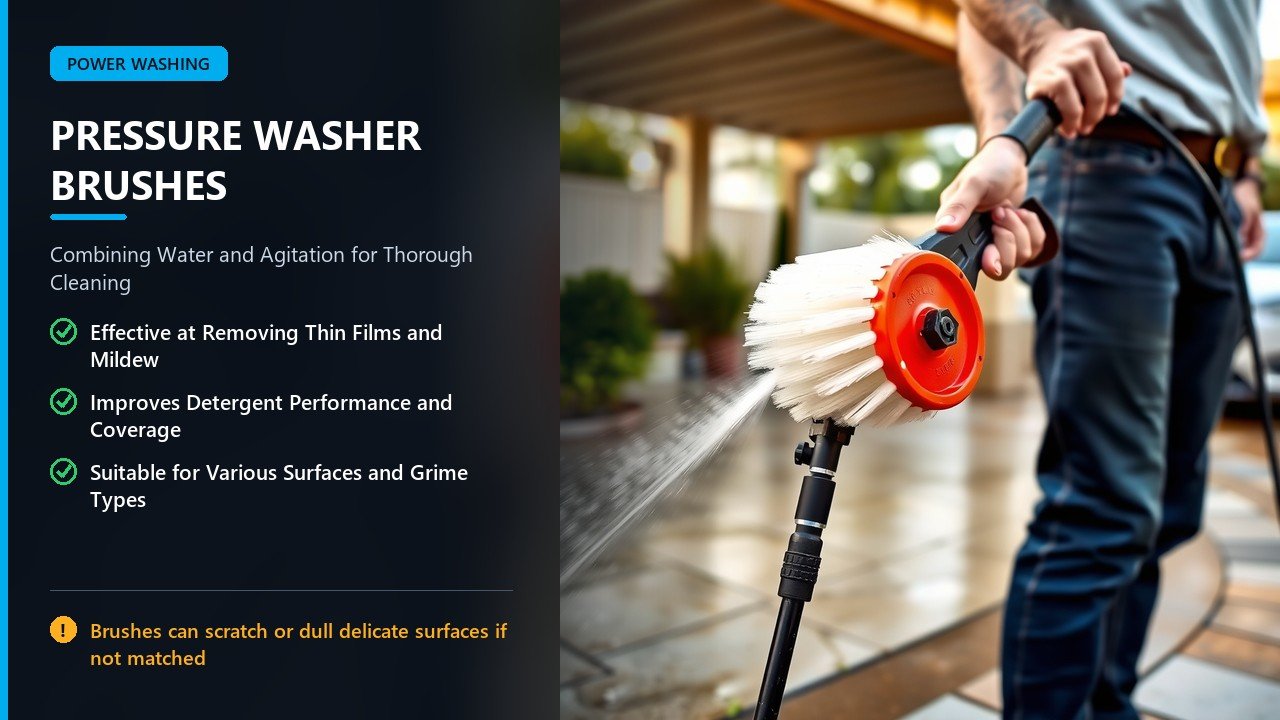
Why Brushes Help
A pressure washer removes dirt by force, but not all dirt releases under force alone. Thin films, oils, mildew, and organic growth cling to surfaces in a way that needs friction to break down. A brush adds that friction, working the surface while the water carries the loosened dirt away. The combination cleans more thoroughly than either the brush or the water would alone.
Brushes also make better use of detergent. A cleaning solution works far better when it is agitated into the dirt rather than simply sprayed on and rinsed off. Scrubbing with a brush spreads the detergent, works it into the grime, and then lets the rinse water flush it away, which is why a brush is standard equipment for anyone cleaning vehicles, siding, or outdoor surfaces seriously.
The catch is that a brush must suit the surface. Used on the wrong material or with too stiff a bristle, a brush can scratch, dull, or mark a finish. Matching the brush to the task — soft for paint and delicate surfaces, stiffer for masonry and tough grime — is what separates a good result from a damaged one.
Types of Pressure Washer Brushes
Brushes come in several forms, each designed for a different job. The table below outlines the main types.
| Type | Best for |
|---|---|
| Rotary (rotating) brush | Large areas: cars, siding, flat surfaces; powered by the water flow |
| Fixed scrub brush | Spot scrubbing of small areas and stubborn marks |
| Water-fed brush | Window and glass cleaning with a pole and pure water |
| Gutter / telescopic brush | Reaching up to clean gutters, fascia, and high siding |
A rotary brush is the workhorse for large areas. Water passes through it and spins the bristles, so the brush scrubs automatically as the user moves it across the surface, making short work of big jobs. A fixed scrub brush is for targeted work where a small area needs direct elbow grease. A water-fed brush is part of a pure-water window cleaning system, and a gutter brush is a long-reach tool for jobs above head height.
Rotary Brushes
The rotary brush is the most useful attachment for large cleaning jobs. It contains bristles arranged around a rotor that spins as water flows through it, so the brush agitates the surface while the water rinses it. The result is fast, even cleaning of cars, trucks, siding, fences, and flat outdoor surfaces without the arm fatigue of manual scrubbing.
Rotary brushes come in different bristle stiffnesses for different surfaces. Soft bristles suit vehicle paint, gel coat, and delicate finishes, where scratching is a real risk. Medium and stiff bristles suit siding, concrete, and tougher surfaces that can take more abrasion. Choosing the right stiffness is the key decision, because a stiff brush on soft paint does permanent damage.
These brushes attach through a quick connect to the wand or gun, and many include a soap injection port or work with a downstream detergent system. Running detergent through a rotary brush is an efficient way to wash large areas, since the brush spreads the soap and scrubs it in at the same time, then the rinse follows.
Fixed and Water-Fed Brushes
A fixed scrub brush does not spin; it is a hand tool with a water-fed head or a plain bristle head for working a small area directly. It is useful for stubborn spots — a patch of mildew, a stain on a step, the detail on a wheel — where a rotary brush is too broad and a nozzle alone is not enough. Many fixed brushes have adjustable or interchangeable bristles.
A water-fed brush belongs to the pure-water window cleaning world. It is a soft brush on a pole that feeds pure water to the glass while the bristles agitate the surface, and because the water is purified, it dries without leaving spots. These brushes are not for pressure washing masonry but for reaching windows and delicate glass from the ground with a pole system.
The water-fed approach depends on pure water and low pressure, the opposite of a pressure washer’s blast. It is worth knowing this so you do not confuse a gentle window brush with a high-pressure cleaning tool — they serve different trades, even though both attach to a hose and pole.
Specialty Brushes
Specialty brushes handle jobs that ordinary brushes cannot reach. A telescopic or gutter brush extends a cleaning head high into gutters and along fascia, so the work can be done from the ground rather than a ladder. Roof and siding brushes follow the same idea, reaching up to wash large vertical surfaces without ladders or scaffolds.
Other specialty brushes include narrow detail brushes for grout lines and edges, and vehicle-specific brushes for wheels, tires, and trim. Some brushes combine a nozzle with bristles so water sprays through the bristles as you scrub. The common thread is that each is built for a surface or a reach that a standard brush cannot handle.
Because specialty brushes exist for particular surfaces, choosing the right one protects the material being cleaned. A grout brush, a wheel brush, and a gutter brush each have bristles and geometry suited to their task, and using the right tool is safer and more effective than forcing a general brush to do a specialist job.
Choosing the Right Brush
Choosing a brush starts with the surface. For painted or delicate surfaces, choose the softest bristle that will do the job, and always test on a hidden spot first. For masonry, concrete, and unpainted wood, a stiffer brush is safe and more effective. When in doubt, start soft — a soft brush is slower but safer, and it is easier to add stiffness than to undo a scratch.
The second consideration is the reach and the area. Large, flat surfaces call for a rotary brush, which covers ground fast. Small stubborn areas call for a fixed scrub brush. High or awkward spots call for a telescopic or gutter brush. Matching the brush to the geometry of the job, not just the surface, makes the work faster and safer.
The connection and water feed are the final checks. Confirm the brush attaches to your wand or gun with the right fitting, since brushes come in different connection types. Check whether the brush needs its own water feed or works with your detergent system, and whether it is rated for the pressure the machine produces. A brush meant for low pressure may not suit a high-pressure machine.
Using Brushes With Detergent
A brush works best with detergent, and the two together beat either alone. Apply detergent through a foam cannon, a downstream injector, or a built-in brush port, then work it into the surface with the brush. The agitation helps the detergent lift the dirt, and the follow-up rinse flushes it away. This is the standard sequence for car washing and for cleaning siding.
Work in sections so the detergent does not dry on the surface, which can leave streaks. Start at the bottom of a vertical surface and work upward only if you plan to rinse downward, or work top down and rinse as you go, keeping the surface wet. Scrubbing a dry surface with dried detergent is hard work and can mar the finish.
Match the detergent to the job as well as the brush. A vehicle wash, a general outdoor cleaner, and a mildew treatment are different products, and the wrong one may not work or may harm the surface. Rinsing thoroughly afterwards matters, because leftover detergent attracts dirt and can damage finishes over time.
Care and Safety
Brushes are simple tools, but they need a little care. Rinse them clean after use so detergent and grit do not harden in the bristles, and let them dry fully before storage to prevent mildew. Check the bristles for embedded grit, because a single trapped piece of gravel can scratch an entire car or panel. A clean brush is a safe brush.
Respect the surface ratings. Never use a stiff brush on car paint, gel coat, or polished surfaces, and never scrub a surface that the pressure washer can clean on its own if the brush risks harm. The force of a pressure washer plus a stiff brush is a powerful combination that can strip paint and etch soft materials.
Check the brush’s pressure rating as carefully as any other accessory. A brush attached to a high-pressure machine sees that pressure, and a low-rated brush or connector can fail. Keeping the pressure appropriate to the brush and the surface protects both the tool and the finish.
Frequently Asked Questions
What is a pressure washer brush used for? It combines water with agitation to scrub surfaces as they rinse, lifting dirt, film, and mildew that pressure alone may leave behind.
What is a rotary brush? A rotating brush that spins as water flows through it, scrubbing large areas like cars, siding, and flat surfaces automatically as you move it.
Will a brush scratch my car? Not if it is a soft-bristle brush kept clean. A stiff brush, or a brush with trapped grit, can scratch paint, so keep brushes clean and use soft bristles on vehicles.
Can I use a brush on concrete? Yes. Use a medium or stiff brush for concrete, siding, and masonry. Reserve soft brushes for paint, glass, and delicate finishes.
What is a water-fed brush? A soft brush on a pole that feeds pure water to windows and glass, used in pure-water window cleaning. It relies on low pressure and purified water, not a pressure washer.
Should I use detergent with a brush? Yes. Detergent works far better when agitated into the dirt by a brush, then rinsed away. Work in sections and keep the surface wet.
How do I keep a brush safe? Rinse it after use, let it dry before storing, and check the bristles for trapped grit that could scratch a surface.
Does brush stiffness matter? Very much. Soft bristles suit paint and delicate surfaces; stiffer bristles suit concrete and tough grime. The wrong stiffness causes damage.
Final Thoughts
A pressure washer brush adds the one thing water alone cannot provide: friction. By scrubbing as it rinses, a brush lifts the films, oils, and mildew that a blast can leave behind, and it makes detergent work far harder. For cars, siding, masonry, and windows, the right brush turns a good pressure washer into a far more effective cleaning system.
Match the brush to the surface, the reach, and the pressure rating. Keep bristles soft where finishes are delicate, work with detergent in sections, and keep the brush clean so it never carries grit. Used with care, a brush is one of the most useful, inexpensive accessories a pressure washer owner can add. For related reading, see our guides on turbo pressure washer nozzles and a window cleaning hose reel.