A pressure washer cover is a simple, inexpensive way to protect a machine between uses. Left uncovered, a pressure washer collects dust, dirt, and cobwebs, is rained on, and sits in sunlight that degrades hoses, plastics, and paint. A cover keeps all of that off, and for a machine stored outdoors or in a dusty workshop, it can meaningfully extend its life.
This guide explains what a pressure washer cover protects against, how to choose one that fits, and how to use it without causing problems.
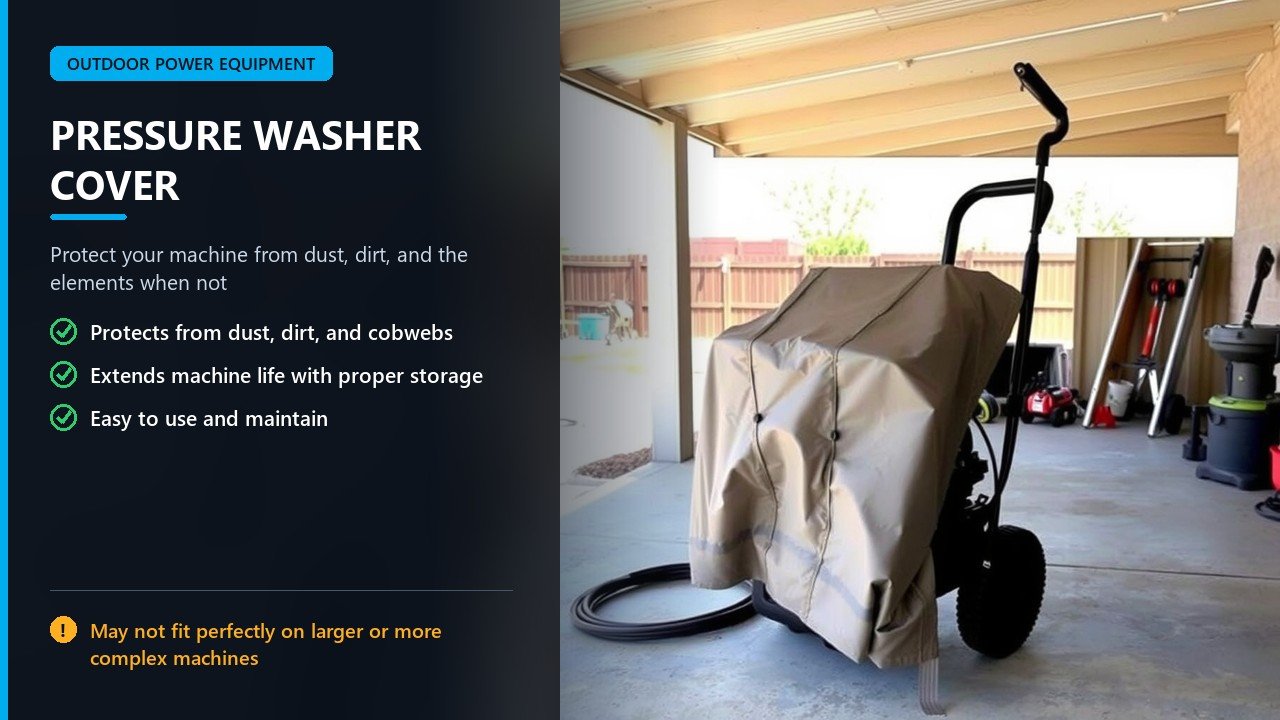
What a Cover Protects Against
A cover shields a pressure washer from the things that cause slow damage. Dust and dirt settle into the machine, clogging cooling fins and finding their way into the pump and controls. Rain and damp promote rust on metal parts and can seep into electrical components. Sunlight degrades rubber hoses, plastic housings, and paint, leaving them brittle and faded over time.
Indoors, the threats are dust, dirt, and, in a workshop, spray from other work, such as paint, sawdust, or metal filings. Outdoors, the threats are weather: rain, frost, and ultraviolet light. A cover addresses all of these, keeping the machine cleaner and protecting the materials that weather and dust attack.
There is a maintenance benefit too. A machine kept covered stays cleaner, so there is less to clean and inspect before use, and its hoses and plastics last longer. For a machine worth protecting, a cover is a small cost that returns in tidiness and longevity.
When a Cover Helps Most
A cover helps most where the machine is stored in less than ideal conditions. Outdoors, or in an unheated shed or garage, a pressure washer is exposed to damp, frost, and dust, and a cover is well worth having. In a dusty workshop, a cover keeps the machine free of the debris of other jobs.
Even indoors in a clean space, a cover keeps dust off the machine, which matters for a tool used only occasionally. A machine that sits for months will gather dust on every surface, and a cover spares it, keeping the pump, engine, and controls cleaner.
Where a cover helps less is for a machine used daily and stored under shelter. In constant use, the cover is taken on and off repeatedly, and if the machine lives in a clean, dry spot, the benefit is smaller. As ever, the value depends on the storage conditions and how often the machine is used.
Types of Cover Material
Covers are made from a range of materials, each with strengths and weaknesses. Coated polyester and heavy-duty oxford fabric with a water-resistant coating are common and affordable, and they shed rain while resisting tears. Canvas is tough and breathable but heavier, and true waterproof canvas costs more. PVC-backed covers are fully waterproof but often not breathable, so they can trap moisture.
For outdoor storage, the ideal is a cover that is water-resistant but breathable, so rain runs off while any moisture inside can escape. Some covers include a vent or a breathable panel for exactly this reason, and they are the better choice in humid or changeable conditions. A sealed, non-breathable cover may keep rain out but can leave the machine damp underneath.
Material quality also affects durability. A thin, cheap cover may tear or degrade in sunlight within a season, while a heavier, UV-resistant fabric lasts for years. Since a cover’s job is to be exposed to the weather so the machine is not, it is worth choosing a material that survives that exposure rather than a paper-thin one that fails.
What Not to Cover
Not everything benefits from being covered, at least not straight away. A machine that has just been used and is still hot or wet should be left to cool and dry before the cover goes on, or the trapped heat and moisture will do harm. Covering the wrong things at the wrong time is worse than leaving the machine open.
The same applies to a dirty machine. Covering a washer caked in mud or grit traps that dirt against the surfaces for months, and the abrasion can mark the finish and the hoses. Clean the machine, or at least brush off the worst of the dirt, before covering it for storage.
Finally, do not use a cover as a fix for bad storage. A cover over a machine sitting in a puddle, or in a damp, unventilated shed, will not prevent rust if the surroundings are wet. Fix the storage conditions as well: keep the machine off the floor, ensure some ventilation, and drain it properly.
Choosing the Right Cover
The first job is to measure the machine. Note its overall length, width, and height, including the handle, wheels, and any mounted accessories, then choose a cover sized to those dimensions with a little room to spare. A cover that is too small will not fit over the machine; one that is far too large will flap and pool water, so a close fit is best.
Next, choose the material. Covers are made from materials such as coated polyester, heavy-duty oxford fabric, and canvas, and the best for outdoor use are water-resistant yet breathable. A breathable cover lets moisture vapour escape, which prevents condensation building up inside and rusting the machine, while a fully waterproof but non-breathable cover can trap damp.
Look for features that make the cover practical. A drawstring or elastic hem, and straps or buckles, keep the cover secure in wind. Reinforced seams and a durable fabric resist tearing, and a vent or breathable panel helps moisture escape. Some covers are shaped specifically for pressure washer carts, with room for the handle, which fits better than a generic box cover.
Using a Cover Correctly
Use the cover correctly to avoid creating problems. Never cover a machine while it is still hot, since trapping heat can damage components and the cover, and always let the machine cool and dry first. Covering a wet machine traps moisture against the metal and encourages the very rust the cover is meant to prevent.
Cover a dry, clean machine. If the washer is dirty, clean it before covering, so grit does not sit against surfaces for months. Drain and winterise the machine before long storage, especially in cold climates, and then fit the cover. A cover protects a machine that is already in good order; it does not fix a machine stored wet or dirty.
Secure the cover so it does not blow off and does not trap water. A close fit with a drawstring or straps keeps it in place, and a breathable material prevents condensation inside. Check the machine occasionally during storage, lifting the cover to confirm it is dry and free of problems, because a small issue found early is easy to fix.
Do Covers Cause Problems?
A cover can cause problems if it is the wrong type or used badly. A non-breathable cover that traps moisture can worsen rust, and covering a wet or hot machine does the same. A loose cover that flaps and pools water can, over time, abrade surfaces and make a machine damper inside than one left open and ventilated.
The fix is to choose a breathable, water-resistant cover, fit it closely, and use it on a dry, cool, clean machine. With those conditions met, a cover is a benefit rather than a risk. The idea is to keep dust and weather off while letting any residual moisture escape, not to seal the machine in an airtight bag.
In very humid conditions or a damp shed, ventilation matters more than sealing. A breathable cover, or a small air gap, helps. If the storage space is damp, addressing the damp itself, perhaps with better ventilation or a dehumidifier, matters as much as the cover.
Cover or Store Indoors
A cover is a good middle ground, but indoor storage is better where possible. A dry, frost-free garage or shed protects the machine from weather, sunlight, and temperature extremes far better than any cover, and a cover on top of indoor storage adds dust protection. If you can store the machine inside, do, and use a cover for the dust.
Where indoor space is unavailable, a good cover, combined with careful preparation, is the next best thing. Store the machine off the ground if possible, to avoid damp rising into it, and make sure it is drained and winterised. Together, a cover and sensible storage protect a machine that has to live outdoors.
The table below sums up the cover points.
| Point | Detail |
|---|---|
| Fit | Measure L x W x H; choose a close fit |
| Material | Water-resistant and breathable for outdoor use |
| Timing | Cover only a dry, cool, clean machine |
| Security | Drawstring or straps to stop it blowing off |
| Best storage | Indoors if possible; cover adds dust protection |
Follow these and the cover protects rather than harms.
Frequently Asked Questions
Do I need a pressure washer cover? It helps if the machine is stored outdoors, in a shed, or in a dusty workshop. It keeps off dust, rain, and sunlight, protecting hoses, plastics, and metal parts.
What should I look for? A close fit based on the machine’s dimensions, a water-resistant yet breathable material for outdoor use, and a drawstring or straps to keep it secure.
Can a cover cause rust? Only if it is non-breathable or used on a wet or hot machine. Choose a breathable cover and fit it to a dry, cool, clean machine to avoid trapped moisture.
Should I cover a hot machine? No. Let it cool and dry first. Covering a hot or wet machine can trap heat and moisture and cause damage or rust.
Is a cover better than indoor storage? No. Indoor storage is better where possible. A cover is the next best option and adds dust protection even indoors.
How do I choose the size? Measure the machine’s length, width, and height, including the handle and wheels, and pick a cover sized to those figures with a little room to spare.
What material is best? A breathable, water-resistant fabric such as coated polyester or heavy-duty oxford is a good outdoor choice. Canvas is durable but check that it breathes.
Should I store it off the ground? Yes, if outdoors or in a damp space, to stop damp rising into the machine. Combined with draining and winterising, it protects the machine well.
Final Thoughts
A pressure washer cover is a cheap, sensible way to protect a machine between uses. It keeps off the dust, rain, and sunlight that slowly damage hoses, plastics, and metal parts, and it keeps the machine cleaner and readier for the next job. For a machine stored outdoors or in a dusty space, it is well worth having.
Choose a cover that fits closely, made from a water-resistant yet breathable material, and use it on a dry, cool, clean machine, secured so it stays in place. Store the machine indoors if you can, drain and winterise it before long storage, and the cover becomes a small but worthwhile protection. For related reading, see our guides on parts of a pressure washer and a wall mounted pressure washer.