A pressure washer degreaser is a cleaning chemical designed to break down grease, oil, and fat, the kinds of dirt that water pressure alone struggles to shift. Instead of trying to blast grease off a surface, a degreaser loosens it chemically so a rinse can carry it away. For driveways with oil stains, engine bays, grills, and machinery, it is often the difference between a good clean and an endless battle.
This guide explains what pressure washer degreasers are, the main types, how to apply them, and how to use them safely.
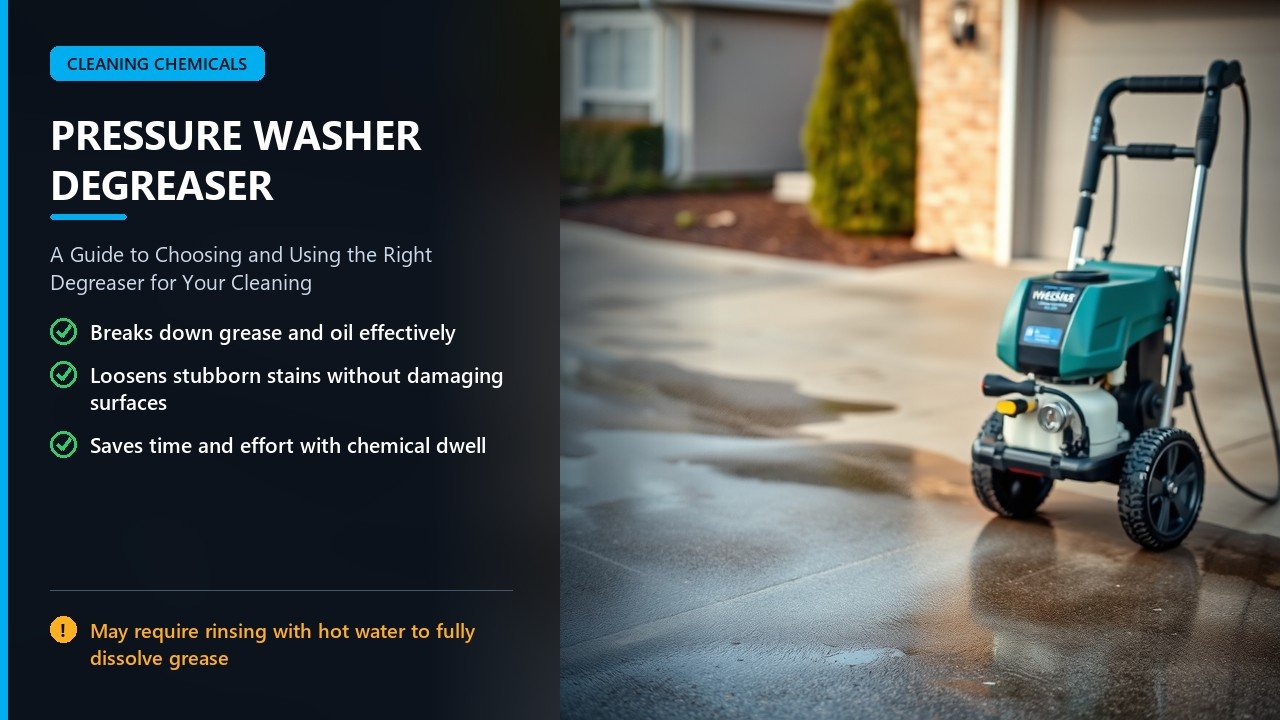
Why Use a Degreaser
Grease and oil are the enemy of cold-water pressure washing. They cling to surfaces, repel water, and stand up to pressure, so a jet alone tends to push the grease around rather than remove it. A degreaser changes the chemistry: it penetrates and lifts the grease so that water can carry it away, and it does so gently, without needing damaging pressure.
Working chemically also protects surfaces. Blasting clinging grease with maximum pressure can etch concrete, strip paint, or score metal, whereas a degreaser loosens the grease and lets a moderate rinse do the work. This is both more effective and gentler, which is why degreasers are standard for greasy jobs.
Finally, a degreaser saves time and effort. Rather than scrubbing or repeatedly blasting, you apply the chemical, let it dwell while it works, and rinse. The dwell time does much of the labour, and the result on greasy surfaces is far better than pressure alone.
Types of Degreaser
Degreasers fall into a few broad types. Alkaline degreasers, often based on caustic soda or other alkaline builders, are powerful on grease and are common in commercial and heavy-duty cleaning. Solvent-based degreasers use petroleum solvents to dissolve oil and work well on machine parts, though they are harsher and need care with fumes and disposal.
Citrus-based degreasers, built around d-limonene, are a popular middle ground: effective on grease, pleasant-smelling, and relatively safe, though they can still affect some surfaces and finishes. Surfactant or detergent-based products rely on soap-like molecules to lift grease and are the mildest of the group, good for light jobs and safer on delicate surfaces.
For a pressure washer, look specifically for a product intended for pressure washing or downstream injection. These are formulated to work with the machine, and many are designed to be diluted and injected into the water stream rather than run through the pump, which matters for how you apply them.
Degreaser vs Detergent
Degreasers and detergents are related but not the same. Detergents are general-purpose cleaners built around surfactants, the soap-like molecules that lift everyday dirt, and they are mild enough for many surfaces. Degreasers are more specialised, formulated to attack grease and oil specifically, and they are usually stronger, with alkaline, solvent, or citrus chemistry behind them.
In practice, the line sometimes blurs: a strong detergent can handle light grease, and some “degreasers” are really concentrated detergents. The distinction that matters is strength and chemistry. A degreaser is the heavier tool, chosen when grease and oil are the problem, while a detergent suits general grime and is safer on delicate finishes.
If you are unsure, start with a detergent and move to a dedicated degreaser if the grease will not shift. Using the mildest product that does the job protects surfaces and reduces the risk of damage, and it is often all that a light, greasy mess requires.
How to Apply It
There are three common ways to apply a degreaser with a pressure washer. The first is a downstream injector, which uses the machine’s water flow to draw diluted degreaser into the stream after the pump. It is simple, applies the chemical at low pressure, and keeps it out of the pump. The second is a foam cannon, which mixes the chemical with air to produce a clinging foam that dwells on the surface, useful for vertical and stubborn surfaces.
The third is running a “pump-safe” chemical through the pump itself, using a chemical injector built into some machines. This is convenient but only for products the pump can tolerate, since harsh chemicals can damage pump seals. For most degreasers, especially alkaline or solvent types, downstream injection or a foam cannon is the safer choice.
Whichever method you use, the principle is the same: apply the diluted degreaser at low pressure, let it dwell, then rinse at pressure. Agitating with a brush on tough spots helps, and heat, where available, speeds the process. Always dilute as directed, since too strong can damage surfaces and too weak does little.
Getting Good Results
Dwell time is the key. Apply the degreaser, then let it sit for the time the product recommends, so it can penetrate and lift the grease. Rushing the rinse before the chemical has worked wastes the product and leaves grease behind. In hot weather, keep an eye on it so it does not dry on the surface, re-wetting if needed.
Work in sections and from the bottom up on vertical surfaces, or from one edge to the other on flat ones, so you always rinse into unwashed areas rather than over cleaned ones. On floors, work away from where you must stand. This keeps the runoff and the grease moving in one direction and stops you re-soiling what you have cleaned.
Keep pressure moderate for the rinse. High pressure can drive grease back into porous surfaces and is unnecessary once the chemical has lifted the dirt; often a wider nozzle and a steady pass rinse cleanly. On stubborn spots, agitate with a brush or re-apply and dwell again rather than turning up the pressure.
Mistakes to Avoid
The most common mistake is rinsing before the degreaser has worked. Without dwell time, the chemical cannot lift the grease, and you end up blasting a surface that is still oily. Give it the minutes it needs, then rinse.
Another is using too strong a product, or the wrong type, on a delicate surface. An alkaline or solvent degreaser that is fine on concrete can dull aluminium or strip a finish. Match the strength to the surface, and test first. Equally, letting a strong product dry on the surface can leave marks, so keep the area wet until the rinse.
Finally, do not run harsh degreasers through the pump, and do not let the runoff reach plants or waterways. Keep most chemicals downstream of the pump, direct runoff to a safe place, and rinse the surface and machine thoroughly afterwards. Avoiding these mistakes keeps both the surface and the machine in good order.
Using a Degreaser Safely
Degreasers are chemicals, and they demand respect. Wear gloves and eye protection, work in a ventilated area, and avoid breathing mists, especially from solvent-based products. Never mix a degreaser with other chemicals, particularly anything containing bleach or acid, since the combinations can release dangerous vapours.
Protect what should not be cleaned. Cover or move plants, and keep runoff out of storm drains, ponds, and waterways, since degreasers can harm aquatic life. On the machine itself, avoid drawing harsh chemicals through the pump unless the product and pump are both rated for it, or the seals may suffer. Test on a hidden area first, as some degreasers can dull or stain certain paints, plastics, aluminium, or finishes.
Do You Need Hot Water?
A degreaser works with cold water, and for many jobs that combination is enough. Heat, however, makes grease easier to remove, so a hot water pressure washer plus a suitable degreaser is the fastest, most thorough approach for heavy grease and oil. Where heat is unavailable, a degreaser and dwell time close much of the gap.
The choice therefore depends on the job. For light grease and occasional use, a cold water machine and a good degreaser will do. For regular heavy grease, such as engine bays or commercial kitchens, hot water plus degreaser is worth the extra capability. In both cases the chemical is doing the critical work, with pressure, and optionally heat, assisting.
The table below sums up the main types of pressure washer degreaser.
| Type | Best For | Note |
|---|---|---|
| Alkaline | Heavy grease, concrete | Powerful; downstream only |
| Solvent | Machine parts, oil | Harsh fumes; ventilate |
| Citrus | General degreasing | Safer; test finishes |
| Detergent | Light grease, delicate | Mildest option |
Match the type to the job and apply with dwell time for the best result.
When buying, check the dilution ratio and the intended method. Some products are concentrated and must be diluted before use, often at ratios from ten to one up to thirty to one, while others are ready to use. A product labelled for downstream injection or foam cannons is formulated to work at those dilutions, whereas a general-purpose cleaner may be too weak or the wrong chemistry for a pressure washer setup. Buying the right product for your method and dilution saves both money and frustration, and lets the degreaser do the heavy lifting so the machine and operator do less.
Frequently Asked Questions
What is a pressure washer degreaser? A cleaning chemical that breaks down grease, oil, and fat so that a pressure washer can rinse it away. It does the work chemically, so pressure can stay moderate.
Do I need a degreaser? For greasy or oily dirt, yes. Water and pressure alone push grease around rather than removing it, while a degreaser lifts it so it can be rinsed clean.
Which type should I choose? Alkaline for heavy grease, solvent for machine parts, citrus for general degreasing, and detergent for light jobs and delicate surfaces. Match the type to the task.
How do I apply it? Dilute as directed, apply at low pressure with a downstream injector or foam cannon, let it dwell, then rinse at pressure. Keep most degreasers out of the pump.
How long should it dwell? Follow the product’s instructions, usually a few minutes. Letting it work is what lifts the grease; rinsing too soon wastes it.
Can I use it through the pump? Only with a pump-safe chemical and a pump rated for it. Harsh alkaline or solvent products can damage pump seals, so injection after the pump is safer.
Is it safe on all surfaces? No. Some degreasers can dull or stain paint, plastic, aluminium, and finishes. Test on a hidden area and rinse thoroughly.
Do I need hot water? No, but heat helps on heavy grease. A degreaser plus cold water handles most jobs; hot water and degreaser is the fastest for heavy oil.
Final Thoughts
A pressure washer degreaser is the chemical partner that makes greasy cleaning possible. By lifting grease, oil, and fat so water can carry them away, it turns a frustrating job into a straightforward one, and it lets you clean gently rather than relying on damaging pressure.
Choose the type to suit the task, apply it by downstream injection or foam cannon at low pressure, give it dwell time to work, and rinse at a moderate pressure. Use it safely, protect plants and waterways, keep it out of the pump unless it is pump-safe, and test on a hidden area first. For related reading, see our guides on a cold water pressure washer and on a hot water electric pressure washer.