Using a pressure washer on a flat surface is one of the most satisfying cleaning jobs, and one of the easiest to get wrong. Driveways, patios, paths, and garage floors demand a different approach from walls or vehicles, because the water has nowhere to drain and striping and surface damage are common. Getting the technique right makes the difference between a clean, even result and an ugly, uneven one.
This guide covers how to pressure wash a flat surface, from choosing the right tool and nozzle to working in a way that is fast, even, and safe for the surface.
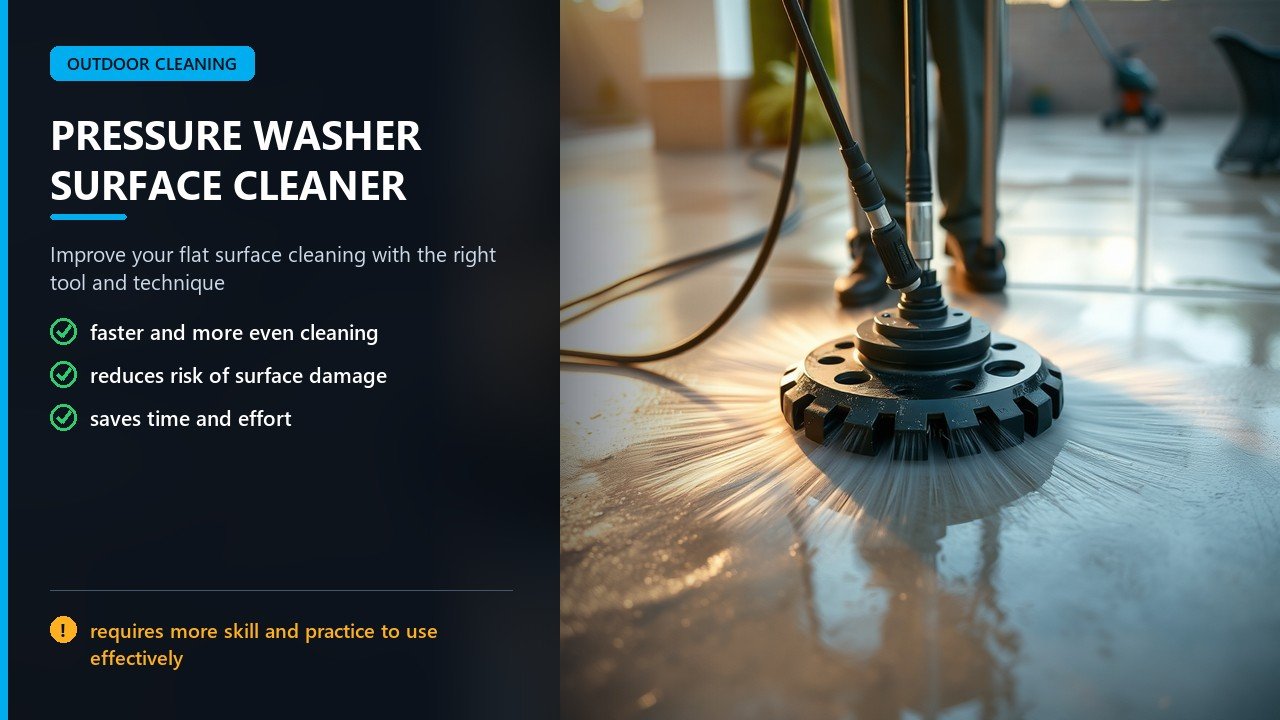
Wand or Surface Cleaner
The single biggest improvement you can make to flat-surface cleaning is to use a surface cleaner instead of a wand. A surface cleaner is a spinning attachment that houses one or more nozzles under a hood, spreading the jet over a wide, even path. It cleans flatwork far faster than a wand and, crucially, far more evenly, because the rotating spray does not leave the stripes a wand produces.
A wand can clean flat surfaces, but it takes care. The single jet is concentrated in a narrow line, and it is easy to leave stripes, overlap too little, or hold the nozzle in one spot long enough to etch the surface. For small areas or tight spots, a wand is fine; for driveways and patios, a surface cleaner saves time and gives a better finish.
Whichever you use, match the pressure to the surface. Flat surfaces are usually robust, but some, such as soft stone, weathered decking, and old concrete, are easily damaged by too much pressure. Start with less pressure than you think you need, test in a hidden area, and increase only if necessary.
Nozzles and Pressure
Nozzle choice controls how aggressive the cleaning is. The 25-degree and 40-degree nozzles are the usual choices for flat surfaces: the 40-degree is gentler and good for general rinsing and softer surfaces, while the 25-degree is more focused for routine concrete cleaning. A 15-degree nozzle can be used on tough concrete but should be kept moving, and the 0-degree nozzle should generally be avoided on flat surfaces because it concentrates all the force into one point and can etch or gouge.
Pressure is the other half. Higher PSI cleans faster but risks damage, so the right setting is the lowest that does the job. A machine in the 2,500 to 3,000 PSI range is ample for most concrete, and using a wider nozzle reduces the effective intensity even at the same pressure. With a surface cleaner, the pressure is spread across a broader area, which also reduces the risk to the surface.
Flow matters as much as pressure on large flatwork. A machine with a good flow rate covers ground faster and rinses away loosened dirt more effectively, so flow and pressure together decide how quickly and cleanly a large area can be done. For big driveways, a machine with solid flow is a real advantage.
Working the Surface Evenly
Even working is the key to a good result. Whether you use a wand or a surface cleaner, move steadily and overlap each pass, so no line is left under-cleaned. With a wand, work in overlapping strips and keep the nozzle at a consistent distance and angle; with a surface cleaner, simply keep a steady pace and let its rotating spray do the even work.
Work in a sensible order. Clean in sections and, on a slope, work downhill so dirty water runs away from the cleaned area rather than back over it. Rinse loosened dirt forward as you go, and avoid cleaning yourself into a corner. A little planning turns a slow, messy job into a quick, tidy one.
Pre-treat stubborn areas. On concrete with oil stains or heavy grime, applying a suitable detergent, letting it dwell, and then washing it off gives a far better result than pressure alone. Follow the detergent’s directions, keep it off plants and drains as instructed, and rinse thoroughly afterward. Never let detergent dry on the surface.
Different Flat Surfaces
Concrete is the most forgiving flat surface and the usual target for pressure washing. It tolerates higher pressure, cleans up well, and shows dramatic results, though very old, spalled, or painted concrete needs gentler treatment so the surface is not stripped or gouged. Test first, and use the lowest pressure that works.
Block paving and pavers need more care. The joints between blocks hold sand that can be washed out by aggressive cleaning, destabilising the paving, so use lower pressure, keep the nozzle moving, and be ready to re-sand the joints afterward. A surface cleaner with moderate pressure is a good choice here.
Wooden decking is delicate. Too much pressure furs the grain and damages the wood, so use low pressure, a wide nozzle, and keep the nozzle well back. Stone and other natural surfaces vary widely: some are hard, others are soft and easily marked, so identify the material and err on the side of caution.
Finishing and Protecting
After cleaning, let the surface dry and assess the result. Re-sand paving joints if needed, and consider sealing or protecting the surface where appropriate. Sealing concrete or stone can help it resist staining and make future cleaning easier, and re-oiling or treating timber protects it after cleaning.
Keep the working area safe throughout. Flatwork cleaning produces a lot of water and loosened dirt, so take care with slippery surfaces, keep people and pets away, and direct dirty water sensibly rather than into storm drains if it carries detergent or oil. The table below sums up the surface-by-surface approach.
| Surface | Approach |
|---|---|
| Concrete | Higher pressure okay; test and keep moving |
| Block paving | Lower pressure; protect sand joints; re-sand after |
| Wooden decking | Low pressure, wide nozzle, keep back; avoid furring |
| Natural stone | Identify the stone; use the gentlest effective setting |
Match the approach to the surface and the results last.
Common Mistakes to Avoid
The most common flat-surface mistakes all involve too much intensity. Holding the wand in one place etches a permanent line or gouge into concrete. Using a narrow, aggressive nozzle on a soft surface strips or marks it. Cleaning too close to the surface does the same. Every one of these is avoided by using the gentlest setting that works and keeping the nozzle moving.
Striping is the classic wand error. It happens when passes do not overlap enough or when the pressure is inconsistent, leaving visible lines across an otherwise clean surface. A surface cleaner largely solves this, and with a wand the cure is consistent distance, steady pace, and generous overlap. Clean, even movement matters more than raw power.
Another error is ignoring the detergent step on greasy or heavily soiled surfaces. Pressure alone can drive grime deeper or spread it around, whereas a detergent that lifts the dirt and is then rinsed away gives a much cleaner finish. Matching the method to the soil is part of doing the job properly, not an optional extra.
Tools That Help
A surface cleaner is the standout tool for flatwork, but a few others help too. An angled wand adapter lets you clean flat surfaces from a more comfortable standing position and reach under overhangs and vehicles more easily. Quick-connect fittings let you switch nozzles and attachments in seconds, which is handy when moving between a surface cleaner and a wand for edges.
A telescoping wand or an extension helps with reach and comfort, so you are not stooping over large areas, and a good detergent injector or foam cannon allows the pre-treatment step to be done properly. A hose reel keeps the high-pressure hose tidy and prevents kinks, which keeps the flow steady across a large job.
None of these tools changes the machine’s output, but each makes flat-surface cleaning faster, easier, and more even. The surface cleaner does the most, and a comfortable working position does the rest, turning a chore into an efficient job.
Edges and Detail Work
A surface cleaner cannot reach right into the edges and corners of flatwork, so most jobs need a wand for the finish. After running the surface cleaner over the main area, switch to a wand and clean the perimeter, the joints against walls and steps, and any tight or awkward spots the cleaner missed. Working the edges last keeps the whole surface looking even.
Take particular care at edges. A wand held against a wall can blast dirt up the wall or damage the base, so angle the spray down and out, and control the pressure at transitions between surfaces. Where paving meets brickwork or render, keep the nozzle off the softer material.
Draining the water matters too. Flat areas hold runoff, so work so that dirty water flows away from where you have already cleaned, and if the area cannot drain, use a wet vacuum or squeegee to clear standing water. Following the water’s path as you work keeps the finish clean rather than re-soiled.
Frequently Asked Questions
What is the best way to pressure wash a flat surface? Use a surface cleaner with moderate pressure for even, fast results. A wand works for small areas or edges if you keep it moving and overlap passes.
What nozzle should I use? A 25-degree or 40-degree nozzle is the usual choice on flat surfaces. Avoid the 0-degree nozzle, which concentrates force and can etch the surface.
How much pressure do I need? The lowest that does the job. Roughly 2,500 to 3,000 PSI suits most concrete, and softer surfaces such as decking need much less.
Why do I get stripes? Usually from a wand with poor overlap or uneven pressure. A surface cleaner prevents striping; with a wand, use steady movement and generous overlap.
Can I use it on pavers and decking? Yes, but with care. Use lower pressure on pavers to protect the sand joints, and low pressure with a wide nozzle on wooden decking to avoid damaging the wood.
Should I use detergent? On greasy or heavily soiled surfaces, yes. Let a suitable detergent dwell, then rinse thoroughly, keeping it off plants and drains as directed.
Do I need a surface cleaner? Not strictly, but for driveways and patios it cleans faster and far more evenly than a wand, so it is well worth it for large flatwork.
Is flatwork cleaning safe for the surface? It is, if you match pressure and nozzle to the material and keep the nozzle moving. Test a hidden area first on anything unfamiliar.
Final Thoughts
Pressure washing a flat surface is about control more than power. The right tool, usually a surface cleaner, a sensible nozzle, and the lowest effective pressure give a clean, even finish on driveways, patios, and paths, while too much intensity causes striping, etching, and damage that cannot be undone.
Match the approach to the surface, work evenly in overlapping passes, and pre-treat the tough areas before washing. With a steady technique and a little care, flat surfaces come up like new, quickly and safely. For related reading, see our guides on GPM in pressure washers and how a power washer jet shapes your cleaning.