Windows are a big part of a home’s appearance, and when the exterior is grimy, dirty windows stand out. It is natural, then, to wonder whether a pressure washer, which cleans everything else so well, can be used on windows. The answer is nuanced: a pressure washer can help with window frames, screens, and the surrounding exterior, and it can clean glass in some cases, but it can also damage windows if used carelessly. Glass, seals, and frames have limits, and the wrong pressure or technique can cause cracks, leaks, and expensive repairs. This guide explains how to use a pressure washer for windows safely, what you can and cannot do, and the techniques that get clean windows without damage.
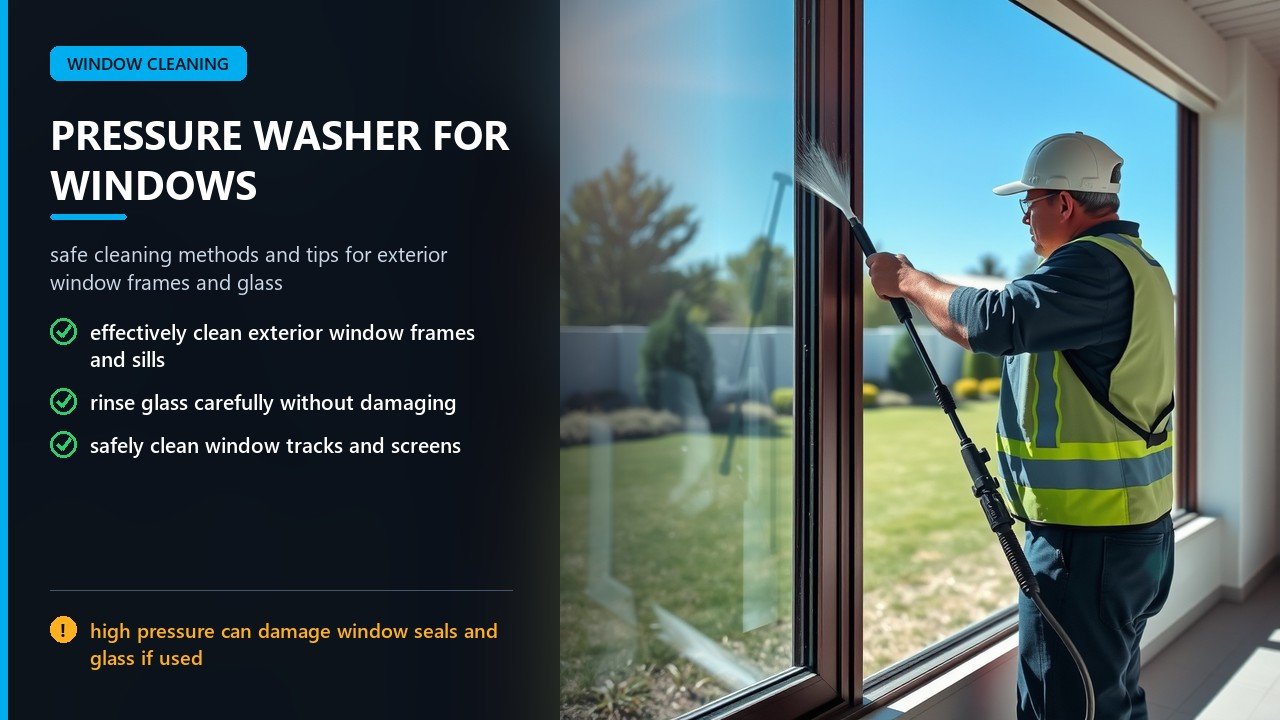
Can You Pressure Wash Windows
The answer depends on what part of the window you mean.
Window frames, sills, tracks, and screens are exterior surfaces that a pressure washer can effectively clean, especially when grimy or covered in mildew, since they are sturdier than the glass and can take moderate pressure with care. The surrounding area, such as the siding and trim around windows, is also cleaned as part of pressure washing the exterior. Glass is the delicate part: it can be rinsed carefully with a pressure washer, but a concentrated, high-pressure stream can crack it, damage seals, or force water inside, so it demands caution.
So the practical answer is that a pressure washer suits frames, tracks, screens, and surrounding surfaces well, and can help with glass if used gently, but it is not the ideal tool for cleaning glass itself, where a squeegee, soap, and cloth are safer and more effective. Many window cleaning professionals clean frames and exteriors with pressure, then clean glass with traditional methods, combining the strengths of each. Understanding this division of labor is key.
A pressure washer for windows is therefore best understood as a tool for the parts around the glass, with careful use on glass. Because the frames, tracks, and screens benefit from pressure and the glass does not tolerate it well, matching the method to the part prevents damage and gets the best results. Used this way, the pressure washer speeds the exterior work while traditional methods handle the glass, giving clean windows without risk. Our guide to pressure power washing covers the method’s basics that apply to windows.
Risks to Glass and Seals
Understanding the risks explains the caution windows require.
Window glass can crack or shatter when hit by a concentrated high-pressure stream, especially if the glass is damaged, has a chip or crack, or is under stress, and a powerful jet aimed at a small area can break even intact glass. Pressure can also force water past the seals around the glass and frame, driving moisture into the wall or between panes, which can cause fogging, mold, and damage over time. These are the reasons pressure washing glass directly and with force is risky.
Seals and weatherstripping are also vulnerable, and high pressure can damage them, leading to leaks and drafts. Older windows, damaged glass, and poorly sealed units are especially at risk. So the concerns are real and can result in costly repairs if ignored. This does not mean windows can never see a pressure washer, but it means the glass and seals must be treated gently, with low pressure, wide spray, and distance, or avoided in favor of traditional glass cleaning.
Knowing the risks lets you avoid them. Because glass can break and seals can leak when hit with too much pressure, keeping the pressure low, the spray wide, and the nozzle at a distance, or simply not pressure washing the glass, protects the windows. Frames and screens are sturdier and can take more, but even they benefit from care. Respecting these limits prevents the damage that careless pressure washing can cause, and it is the difference between helping and harming your windows. Our guide to a best pressure washer wand covers the tool that delivers the spray you control.
Cleaning Frames, Tracks, and Screens
These parts benefit most from a pressure washer.
Window frames, sills, and tracks collect dirt, mildew, and grime, and a pressure washer with a moderate, wide spray can clean them effectively. Work with a wider nozzle at a suitable distance, and keep the spray moving rather than concentrating on one spot. For tracks, which collect debris, a pressure washer can flush them out, though you may need to remove standing water and check that the drainage works. For screens, remove them if possible and clean them flat with a gentle spray, since they are delicate and can be damaged by high pressure or a close nozzle.
Cleaning these parts not only improves appearance but also helps the windows function, since clean tracks allow windows to slide or open properly. Detergent suited to the material, applied at low pressure, can help with grime and mildew, followed by a rinse. Around the frames, clean the adjacent siding and trim as part of the exterior, taking care not to drive water into the window openings or seals. With a gentle approach, the pressure washer makes short work of the grime around and on the frames.
Frames, tracks, and screens are where the pressure washer earns its place in window cleaning. Because these parts are sturdier than the glass and prone to grime, they respond well to pressure cleaning, and the result improves both appearance and function. Using moderate pressure, a wide nozzle, and detergent as appropriate, and being careful around the glass and seals, gets them clean without risk. This is the safe, effective way to use a pressure washer on windows, handling the parts it can and leaving the glass to gentler methods. Our guide to pressure washing detergent covers detergents suited to different surfaces.
How to Clean Windows With a Pressure Washer
A careful method makes window cleaning safe.
Set up for gentle pressure. Use a wide-angle nozzle, such as 40 degrees, and keep the machine’s pressure low, or use a lower-pressure setting if available. Keep the nozzle at a distance from the surface, and never use a zero-degree or narrow nozzle on windows.
Start with the frames and exterior. Clean the frames, sills, tracks, and surrounding siding with a moderate, wide spray, using detergent as needed, and keep the spray moving. Remove screens and clean them separately, flat and gently.
Rinse glass carefully, or clean by hand. If you rinse glass with the pressure washer, do so at low pressure, from a distance, with a wide spray, and keep it moving; avoid direct, concentrated contact with the glass and especially with seals and edges. For truly clean, streak-free glass, use soap, a squeegee, and a cloth instead, which is safer and more effective.
Protect interior and surroundings. Be careful that water does not enter the home through openings, and protect plants and surfaces from detergent and runoff. Check windows for existing damage before cleaning.
Following these steps lets you use the pressure washer where it helps and avoid the risks. The key is gentle pressure, a wide nozzle, distance for glass, and traditional methods for the glass itself if you want it spotless. This combination cleans the frames and exterior efficiently while protecting the glass and seals, and it delivers clean windows without the damage careless pressure washing can cause. With care, the pressure washer is a useful part of window cleaning. Our guide to power washing nozzle tips covers the nozzle angles that keep the spray gentle.
Pressure Washer Versus Traditional Window Cleaning
Each method has a role.
A pressure washer is excellent for the exterior around windows, frames, tracks, and screens, where its force removes grime and mildew quickly. It is less suited to cleaning glass, where the risk of cracking and seal damage, plus the tendency to leave water spots, makes traditional methods better. Traditional window cleaning, with soap, water, a squeegee, and cloths, cleans glass safely and leaves it streak free, and it is the professional standard for the glass itself.
For the best results, combine them: use the pressure washer for the exterior and frames, and hand cleaning for the glass. This plays to the strengths of each method, cleaning everything efficiently while protecting the delicate glass. For a quick exterior rinse of the whole area, a gentle pressure pass over the windows may suffice, but for truly clean windows, the squeegee finishes the job. Understanding the division helps you choose the right method for each part.
| Window Part | Best Method |
|---|---|
| Glass | Hand cleaning with soap and squeegee (or gentle low-pressure rinse) |
| Frames, sills, tracks | Pressure washer with wide nozzle, detergent |
| Screens | Remove, clean flat with gentle spray |
| Surrounding exterior | Pressure washing as part of the exterior |
Choosing the right method for each part gives clean windows without risk. Because the pressure washer excels on frames and exteriors and traditional methods excel on glass, combining them is the smart approach, and this table summarizes the split. Used this way, each tool does what it does best, and the window cleaning is both efficient and safe. This method matching is the key to using a pressure washer for windows successfully. Our guide to pressure washer components helps you understand the machine you are using.
Safety Tips for Pressure Washing Windows
Safety protects both you and the windows.
Wear eye protection when pressure washing, since water and debris can fly, and never point the spray at people, animals, or yourself. Keep water away from electrical outlets, wiring, and fixtures around the home, and be careful on ladders or when reaching high windows. Ensure water does not enter the home through openings, and protect plants from detergent and runoff. Check the windows for existing cracks or damage before you begin, since pressure can worsen them.
Use the machine safely, following its instructions, and manage the water and runoff responsibly. Work carefully around glass and seals, keeping pressure low and distance adequate, and never overreach. If a window is delicate or valuable, hand cleaning or professional service is safer. These precautions make window cleaning with a pressure washer safe and effective.
Safety and care complete the picture of using a pressure washer for windows. Because the risks involve both injury and window damage, protective measures and gentle technique protect everyone and everything, and checking for existing damage prevents surprises. With these practices, the pressure washer helps clean windows and their surroundings safely, and the job is done well. Respect for the limits of glass and seals, combined with standard safety habits, ensures a good outcome. Our guide to a pressure washer repair kit is a reminder that keeping the machine in good repair supports safe use.
Cleaning Window Frames and Tracks in Detail
These parts benefit most and reward a careful approach.
Window frames come in materials like vinyl, aluminum, wood, and clad, and each tolerates pressure differently. Vinyl and aluminum frames are generally sturdy and handle moderate pressure with a wide nozzle, while wood frames need lower pressure and care to avoid raising the grain or damaging the finish, and painted frames risk chipping if blasted. Match the pressure and technique to the frame material, use a wide nozzle, and keep the spray moving. Detergent suited to the material helps remove grime and mildew, applied at low pressure and rinsed.
Tracks and sills collect dirt, leaves, and grime, and a pressure washer can flush them clean, but they can also fill with water, so check that they drain and remove standing water afterward to prevent mildew and damage. For screens, remove them and clean them flat with a gentle spray, since the mesh is delicate, or wash them by hand if they are fragile. Around the frames, clean the adjacent siding and trim as part of the exterior, taking care at the edges where water could enter the window opening.
Detailed care of frames and tracks improves both appearance and function. Because clean tracks let windows open and slide smoothly, and because frames and sills are visible and collect grime, attending to them with the right pressure and technique delivers real benefits. Matching the approach to the material and managing water prevent damage, and the result is cleaner, better-functioning windows. This is where the pressure washer contributes most to window cleaning, and doing it well is worthwhile. Our guide to pressure washing detergent covers detergents for materials like these.
When to Call a Professional
Some window jobs are best left to experts.
For high or hard-to-reach windows, delicate or historic windows, windows with existing damage, or large commercial jobs, a professional window cleaner is often the safer and more effective choice. Professionals have the equipment, including water-fed poles and squeegees, the skill to clean glass without damage, and insurance, and they can handle heights and delicate surfaces that are risky for a homeowner. For tricky jobs, their expertise prevents costly mistakes.
Even for the exterior around windows, if the home has delicate siding or features, or if the job is large, a professional pressure washing service may be worthwhile to avoid damage. Homeowners can handle typical single-story window exteriors and frames with care, but when the risk or scale rises, professional help is prudent. Weigh the job’s difficulty, the value of the windows, and your equipment and confidence when deciding.
Knowing when to call a professional prevents damage and effort wasted on risky jobs. Because some windows and exteriors are delicate or hard to reach, professional service is the wise choice there, while straightforward home jobs are within DIY reach. This judgment protects your windows and saves you from the consequences of a mistake. For the jobs that suit DIY, careful technique works well, and for the rest, a professional delivers safety and quality. Our guide to pressure washer for mobile detailing shows professional cleaning in practice.
Maintaining Clean Windows Longer
A little upkeep keeps windows cleaner between washes.
After cleaning, keeping windows clean longer is mostly about reducing the buildup that returns. Cleaning the exterior around windows as part of regular pressure washing removes the grime that would otherwise accumulate, and addressing mildew sources, such as shaded, damp areas, reduces its return. Trimming vegetation away from windows reduces dirt, pollen, and pests, and keeping gutters clear prevents dirty water from running down the exterior and windows. These steps reduce how quickly windows get dirty.
For the glass, periodic hand cleaning keeps it clear without the risk of pressure, and prompt attention to spots like bird droppings or tree sap prevents them from hardening and staining. Protecting plants and surfaces during cleaning, and rinsing thoroughly, avoids residue that could attract dirt. Over time, a simple routine of exterior cleaning and hand glass cleaning keeps windows looking good with less effort than letting grime build up and tackling it all at once.
Maintenance keeps windows presentable and reduces the work of cleaning them. Because grime returns, especially on exteriors exposed to weather and vegetation, a routine that includes exterior pressure washing and periodic glass cleaning keeps windows clean with less effort, and it prevents the heavier buildup that is harder to remove. Combined with the right cleaning methods, this upkeep makes window care manageable, and it preserves the appearance of the home. Clean windows, maintained with the methods best suited to each part, are a lasting improvement. Our guide to pressure power washing covers the exterior cleaning that keeps the area around windows clean. Our guide to pressure washer components helps you keep the machine ready for the job.
Frequently Asked Questions About a Pressure Washer for Windows
Can you pressure wash windows? You can pressure wash frames, tracks, screens, and the surrounding exterior, and gently rinse glass, but avoid concentrated high pressure on glass, which can crack it or damage seals.
Will a pressure washer break my windows? It can if you use high pressure or a close, narrow nozzle on glass, especially damaged or stressed glass. Use low pressure, a wide nozzle, and distance, or clean glass by hand.
Can I pressure wash window screens? Yes, but gently. Remove the screens and clean them flat with a wide, low-pressure spray to avoid damaging the mesh.
What pressure is safe for windows? Keep pressure low and use a wide 40-degree nozzle at a distance for any glass contact. For frames, moderate pressure with a wide spray is fine. Never use a narrow nozzle on glass.
How do I get streak-free windows? Clean the glass by hand with soap, a squeegee, and a cloth, which is safer and more effective than a pressure washer for glass. Use the pressure washer for frames and exteriors.
Should I pressure wash windows before or after the siding? Clean the surrounding exterior and frames as part of the pressure washing, then clean the glass, so any debris from the exterior does not dirty freshly cleaned glass.
Final Verdict on a Pressure Washer for Windows
A pressure washer for windows is a useful tool when used with the right parts and the right care. It excels on frames, sills, tracks, screens, and the surrounding exterior, where moderate pressure and detergent remove grime and mildew quickly, improving both appearance and function. On glass, however, it must be used gently, or not at all, since concentrated pressure can crack glass and force water past seals.
The best approach is to combine methods: use the pressure washer for the exterior and frames, and hand cleaning with a squeegee for the glass. Use a wide nozzle, low pressure, and distance if you rinse glass, protect plants and interiors, and check for existing damage before you start. With this method matching and care, a pressure washer helps you clean windows and their surroundings safely and effectively, delivering clean windows without the risk that careless pressure washing can bring.