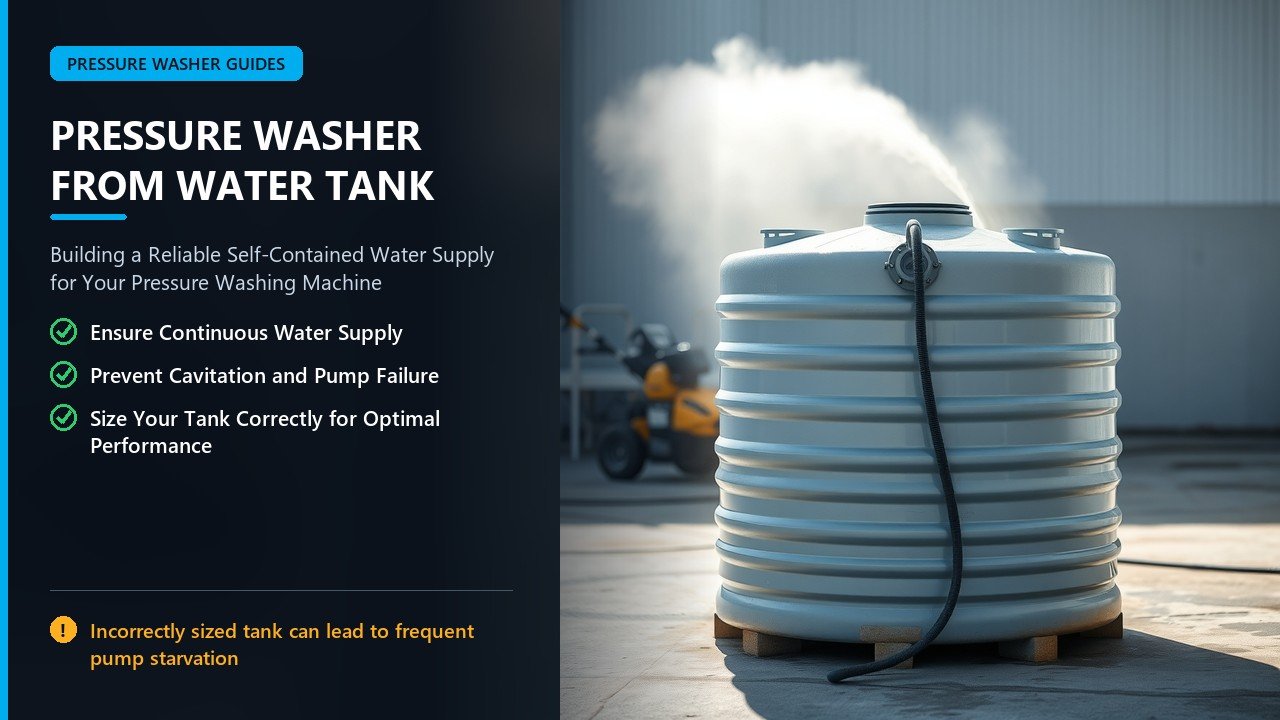
One of the first upgrades a pressure washing setup needs is freedom from the nearest spigot. Plenty of good jobs, a fleet in a back lot, a storefront with no exterior water, a building under construction, simply do not have a tap you can use. The solution is a water tank, but attaching a pressure washer to a tank is not as simple as dropping a hose in and hoping. The machine is built to draw water at a certain rate, and if the tank and plumbing cannot deliver, the pump starves, cavitates, and eventually fails. Getting a pressure washer from water tank setup right means understanding how water moves from the tank to the pump and making sure the supply always exceeds the demand.
This guide explains how to run a pressure washer from a water tank. We will cover the requirements, gravity versus pump-fed setups, choosing between feed methods, tank sizing, plumbing a drawing line, preventing cavitation, common mistakes, and maintenance. By the end, you will know how to build a reliable, self-contained water supply for your machine.
Why Run From a Tank
- Work without a spigot at sites that lack water.
- Become self-contained and more professional.
- Control supply and quality.
- Buffer low-flow sources by filling the tank and drawing from it.
- Enable soft washing with stored water and mix.
The Core Requirement: Supply Over Demand
The pump needs a continuous supply of water at or above its rated flow. Starve it, and you get cavitation, which is the root of most tank-fed problems.
- Cavitation: Pump draws more water than the supply delivers, causing bubbles and damage.
- Symptoms: Pulsing, pressure loss, unusual noise, and eventual pump failure.
- Prevention: Ensure the supply always exceeds demand.
Feed Methods
| Method | How It Works | Best For |
|---|---|---|
| Gravity feed | Tank above the pump; water flows down | Lower-flow machines, simple setups |
| Transfer pump feed | A separate pump pushes water to the machine | Higher-flow and reliable supply |
| Direct suction | Machine pump pulls from the tank | Only when inlet conditions allow |
| Float tank | Tank refills from a source automatically | Maintaining a working level |
For most higher-flow machines, a transfer pump is the reliable choice, while gravity feed suits lighter setups.
Choosing the Feed Method
| Your Situation | Recommended Feed |
|---|---|
| Small electric machine | Gravity feed from a tank above |
| Mid to high flow gas machine | Transfer pump |
| Low-flow water source | Tank and transfer pump as a buffer |
| Soft wash rig | Tank with transfer pump and chemical mix |
Sizing the Tank
Size the tank by run time and refill access.
| Machine Flow | Run Time per 100 Gallons |
|---|---|
| 1.5 GPM | Over an hour |
| 2.5 GPM | About 40 minutes |
| 4.0 GPM | About 25 minutes |
| 5.5 GPM | Under 20 minutes |
Divide tank gallons by GPM for a rough run time, and choose a tank that covers your longest jobs between refills.
Plumbing the Draw Line
- Fit a bulkhead fitting at the tank outlet.
- Install a shutoff valve to control flow.
- Use a strainer or filter to protect the pump.
- Size the line to the required flow to avoid restriction.
- Connect to the machine inlet with rated fittings.
- Add a transfer pump if gravity cannot keep up.
- Include a fill point and overflow on the tank.
Preventing Cavitation
- Keep the draw line short and wide.
- Maintain head pressure with an elevated tank if gravity feeding.
- Use a transfer pump for higher-flow machines.
- Keep the inlet filter clean.
- Avoid air leaks in the suction line, which introduce air and cavitation.
- Never let the tank run dry.
Common Mistakes
- Assuming gravity will feed any machine. It often cannot at higher flow.
- Using undersized plumbing. Restriction starves the pump.
- Skipping the filter, which lets debris damage the pump and nozzles.
- Letting air into the suction line. Causes cavitation.
- Running the tank dry. Damages the pump.
- Ignoring tank weight and balance on the trailer.
Maintenance
- Rinse the tank to remove sediment.
- Clean the filter and strainer regularly.
- Check fittings and valves for leaks and air entry.
- Inspect the transfer pump if used.
- Drain and dry before freezing weather.
- Secure the tank and check mounts.
Frequently Asked Questions
Can I run a pressure washer from a water tank?
Yes. Many rigs draw from a tank, either by gravity or with a transfer pump, provided the supply always exceeds the machine’s demand.
Do I need a pump to feed my pressure washer from a tank?
Not always. Gravity feed works for lower-flow machines with the tank elevated. Higher-flow machines usually need a transfer pump to avoid cavitation.
What is cavitation and why does it matter?
It happens when the pump draws more water than the supply provides, creating bubbles that cause noise, pressure loss, and pump damage. Preventing it requires supply above demand.
How big should my water tank be?
Size it to your machine’s GPM and your longest jobs. Divide tank gallons by GPM for run time, and choose a tank that avoids running dry mid-job.
Why is my pressure washer pulsing from a tank?
Likely cavitation or air in the suction line. Check for a restricted draw line, a dirty filter, air leaks, low tank level, or undersized plumbing, and ensure the supply exceeds demand.
Final Thoughts
Running a pressure washer from water tank supply is what makes a rig self-contained and able to work anywhere. The key is simple to state and easy to get wrong: the supply must always exceed the machine’s demand.
Choose gravity or transfer-pump feed to match your machine, size the tank to your jobs, plumb the draw line for full flow, and keep air and debris out of it. Get the supply right, and your machine runs smoothly from the tank wherever you take it.