The handle is the part of a pressure washer you touch most, yet it rarely gets the attention that pressure ratings and pumps receive. On a spray gun it is the trigger grip you squeeze for hours; on the machine it is the frame handle you grab to pull or carry it. Both affect comfort, control, and safety far more than most owners expect.
This guide covers pressure washer handles in both senses: the grips and handles on spray guns and wands, and the frame handles and grips on the machine itself. It explains what matters, how to choose and adjust them, and how to care for them.
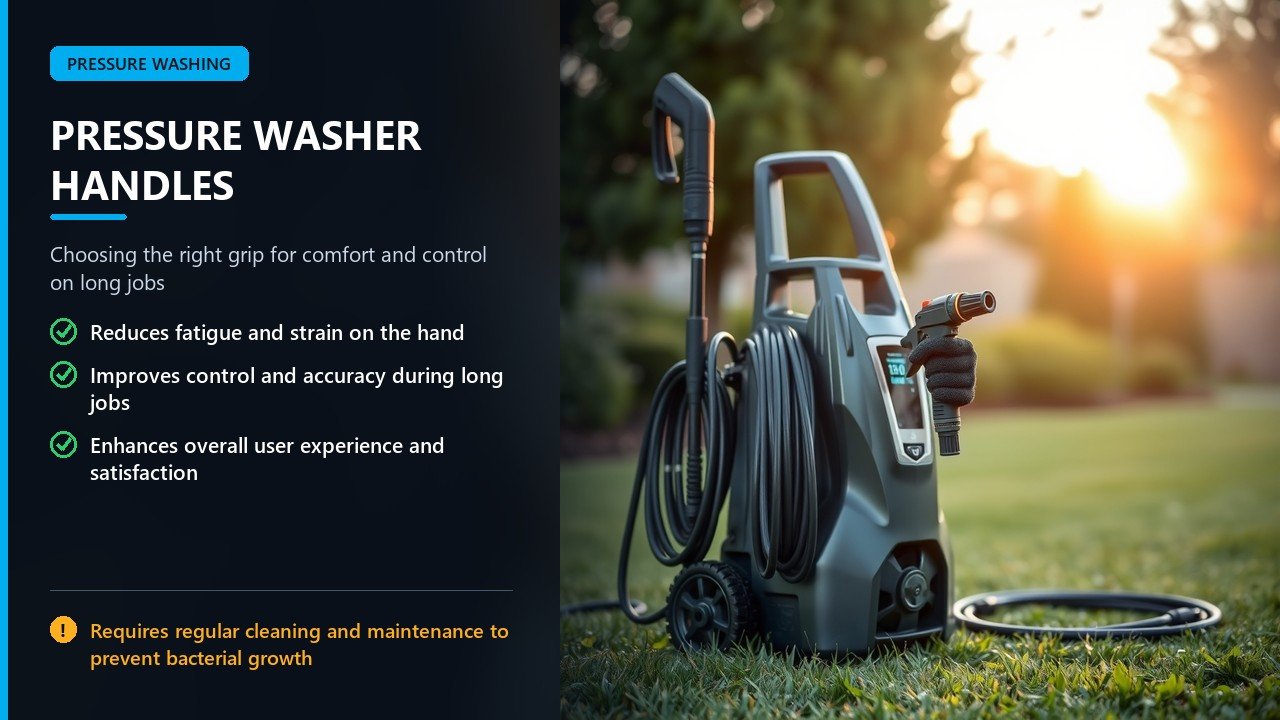
The Two Kinds of Pressure Washer Handles
When people say “pressure washer handle,” they usually mean one of two things. The first is the spray gun handle: the pistol-style grip you hold and squeeze to control the flow. The second is the machine handle: the frame grip or the integrated handle on the chassis that you use to push, pull, lift, or carry the washer.
Both matter for very different reasons. The spray gun handle determines how comfortable and controllable the wand feels in your hand, which affects fatigue, accuracy, and safety during long jobs. The machine handle determines how easily you move and store the washer, which affects how often you actually use it.
Some pressure washers also have an integrated handle on the gun or wand, and some frames combine the hose reel, handle, and storage in one structure. Understanding which handle you are dealing with helps you evaluate and improve it.
Spray Gun Handles and Grips
Spray gun handles come in several styles. The most common is the pistol grip, where the flow is controlled by a trigger squeezed against the grip. Some guns use a rear trigger, others a front trigger, and some have a swivel or rotating grip that lets the wand change angle without repositioning your hand.
Material and texture matter. Overmolded rubber or textured plastic grips improve purchase when hands are wet or muddy, which is common in pressure washing. A grip that fits your hand reduces fatigue and improves control, especially with heavier wands or higher-pressure recoil. Cheap, hard plastic grips become slippery and uncomfortable quickly.
Many guns include a trigger lock or safety catch that prevents accidental spraying when the gun is set down or moved. This is a genuine safety feature and one worth having. A handle with an ergonomic shape and a reliable lock is a better tool than a plain one, particularly for frequent use.
Machine Frame Handles
The machine handle, or frame grip, is what you use to move the washer. On a wheeled cart, it is often a handle at the top of the frame that you grip to roll the machine. On a light electric unit, it may be a molded grab handle on the housing. On a compact machine, it can double as a carrying handle.
A good frame handle makes the machine easier to maneuver, especially over steps, curbs, and uneven ground. A handle with a comfortable grip and a balanced position reduces strain and makes the washer less likely to tip. Some frames include the handle as part of a folding or telescoping structure for compact storage.
Where the handle is placed and how the machine balances around it determines how it feels to move. A top-mounted handle on a stable wheeled base is easiest to push and pull, while a poorly placed handle makes even a light machine awkward. When choosing a washer, handle placement is a practical detail worth checking.
What to Look For
For the spray gun, look for an ergonomic grip that fills your hand comfortably, a smooth and reliable trigger, and a trigger lock. An overmolded or rubberized surface improves grip when wet, and a swivel grip can reduce wrist strain during long jobs. If you use the machine often or for long sessions, a quality gun handle is worth the upgrade.
For the machine, look for a handle that balances the washer well and is comfortable to hold, with enough clearance for a gloved hand. Consider how the handle folds or collapses for storage, and whether the frame is stable when you pull it over rough ground. A folding handle is convenient for tight storage but should still lock securely when extended.
Compatibility matters for replacement handles too. Spray gun grips and complete guns vary in their fitting type, so choose one that matches your wand and hose. Frame handles are usually specific to a machine model, though aftermarket grips and padded covers can improve an existing handle.
Comfort and Ergonomics on Long Jobs
Pressure washing often involves long sessions of holding a vibrating, recoiling gun, so comfort is not a luxury. A grip that fits, a trigger that is easy to hold, and a balanced wand all reduce fatigue. For extended work, gloves with padded palms add grip and cushioning and protect against the spray’s cold and the wand’s vibration.
Technique reduces strain as well. Keep the gun close to your body and use your larger muscle groups rather than gripping hard. Switch hands periodically on long jobs, take breaks, and avoid holding the trigger down longer than needed. For very large jobs, consider a gun with a swivel grip or a support that carries some of the weight.
For people with limited hand strength or arthritis, an easy-pull trigger and a larger grip can make a big difference in comfort. Some guns are designed with gentler trigger effort, and a soft grip cover can help. Comfort is not a luxury when it determines whether you can finish the job.
Grip Comfort and Ergonomics
Comfort on a pressure washer comes down to grip and balance. A grip that matches your hand size reduces the tension needed to hold the gun, which in turn improves accuracy and reduces fatigue. A hard, undersized, or slick grip forces you to squeeze harder, which tires your hand and wrist quickly.
Balance matters too. A wand that is too long or too heavy pulls the muzzle down, so you compensate with your wrist. A shorter, lighter wand or a grip closer to the balance point eases the strain. If your gun has a swivel grip, you can rotate the wand without twisting your wrist, which is a real comfort advantage on angled surfaces.
Small additions improve ergonomics at low cost. A rubber grip cover cushions the handle and improves purchase. A trigger with a lighter pull reduces finger fatigue. On long jobs, a wrist strap or a support handle spreads the load. These touches can make hours of cleaning far more tolerable.
Trigger Locks and Safety
Most spray guns include a trigger lock or safety catch that holds the trigger in the off position. This prevents accidental spraying when the gun is set down, carried, or bumped. It is a simple feature with real safety value, and it should be engaged whenever you are not actively spraying.
A trigger lock is not a substitute for caution. Even with the lock engaged, the system is pressurized, and a disconnected nozzle or a worn quick-connect can still release water. The safe habit is to release the trigger, engage the lock, and, when changing attachments or leaving the machine, shut off the flow at the source to fully depressurize.
If your gun lacks a trigger lock, consider upgrading the gun, since it is an important safety feature. A partial lock or a stiff one is also a hint that the gun is worn and worth replacing. The handle is where safety and comfort meet, so a good gun matters.
Machine Handles and Portability
The machine handle shapes how easily you move and store the washer. A well-placed top handle on a stable wheeled base lets you roll the machine with one hand over most surfaces. A poor handle, or none at all, makes moving the machine awkward and encourages people to drag it or lift it by the hose, which damages equipment.
Some frames fold down or telescope so the handle retracts for storage and extends for use. These designs save space but must lock securely, because a handle that collapses under load can cause a fall or a pinch. Check that the folding mechanism is sturdy and engages positively.
For very light machines, the handle doubles as a carrying grip, so it must be comfortable to lift when the machine is full of water and attached to a hose. A molded grip with a wide, rounded opening is easier on the hand than a thin bar, especially when the machine is heavy.
Using the Machine Handle Well
Move the washer by its handle, not by the hose or wand. Pulling the machine by the hose strains the hose and its fittings and can cause a burst or a leak. When going over steps or curbs, lift the machine by the frame handle and set it down gently rather than dragging it.
Keep the handle dry and free of detergent, which can make grips slippery. If the grip becomes slick, wipe it clean before moving the machine. On wheeled machines, make sure the wheels roll freely and are not jammed by debris, since a stuck wheel turns an easy pull into a drag.
When storing the machine, the handle is often the natural place to hang or steady it. Use it as intended, and avoid hanging heavy loads on a handle not designed for it. Treating the handle as a structural part of the machine, not just a convenience, keeps it reliable.
When to Replace Handles and Grips
Spray gun grips and handles wear over time. A trigger that sticks, leaks, or feels mushy usually means the gun’s internal valve is worn, and replacing the gun is the practical fix. A grip that has become cracked, slick, or loose is another sign it is time to replace the grip or the gun.
Machine handles can also fail. A cracked frame handle, a broken folding mechanism, or a grip that has come loose should be repaired or replaced before use, because a handle failure can cause the machine to fall or tip. Check the handle as part of regular maintenance, especially if the machine is moved often.
Replacement grips, covers, and even entire guns are inexpensive and widely available, so there is little reason to tolerate a handle that hurts your hand or feels unsafe. Upgrading a poor handle is one of the cheapest improvements you can make to a pressure washer.
Handle Types Compared
Pressure washer handles come in a few forms on both the gun and the frame. The table below summarizes the main types and what they offer, so you can judge which suits your machine and your comfort needs.
| Handle Type | Where | Characteristics |
|---|---|---|
| Pistol grip | Spray gun | Standard trigger control; ergonomic if overmolded |
| Swivel grip | Spray gun | Rotates the wand without wrist strain |
| Rear / front trigger | Spray gun | Changes grip posture and reach |
| Top frame handle | Machine | Push or pull a wheeled machine |
| Carry handle | Machine | Lift compact machines |
| Folding / telescoping | Machine | Compact storage; must lock securely |
The best handle for you depends on how you use the machine and your own comfort. For long gun work, ergonomics and a trigger lock matter most. For a machine you move often, a sturdy, well-placed frame handle makes the difference.
Improving Comfort on Any Machine
You do not need a new gun to improve comfort. A rubber grip cover inexpensively improves the purchase and cushioning of a basic handle. A trigger with a lighter pull, a swivel grip, or a shorter wand can each reduce strain. If your hand tires quickly, these small changes make long jobs easier.
On the machine, adding a grip cover to a thin frame handle improves comfort when pushing or pulling. Ensuring the wheels roll freely and the handle is at a comfortable height reduces the effort of moving the washer. Small adjustments to how the machine sits can make it feel lighter.
Posture and technique matter too. Keep the gun close to the body and use your core rather than gripping hard. Switch hands, take breaks, and let the machine’s flow do the work instead of fighting the recoil. Comfort is partly equipment and partly how you use it.
Maintaining Handles and Grips
Keep handles and grips clean and dry. Detergent and grime make grips slippery, so wipe them after use. Check the grip for cracks and the trigger for smooth operation, and lubricate the trigger mechanism if the manufacturer allows. A sticking trigger should be addressed before it fails mid-job.
On the machine, check the frame handle and any folding mechanism for looseness, cracks, or worn fasteners. Tighten mounting hardware periodically, since vibration can loosen bolts. A folding handle that no longer locks should be repaired or retired, because a sudden collapse can cause a fall.
Inspect the gun’s connection to the wand and hose as part of handle maintenance, since leaks and looseness often show up there. Replacing worn O-rings and couplers keeps the handle assembly working smoothly and safely. A little attention keeps the parts you touch most in good condition.
Handles and Safety
Handles are a safety feature as much as a comfort feature. A trigger lock prevents accidental spraying, an ergonomic grip reduces fatigue that leads to mistakes, and a sturdy frame handle prevents drops and pinches. Treat a failing handle as a safety concern, not just an inconvenience.
Never carry a running machine by the hose or the wand, and never use the gun handle to pull the machine. Disconnect the hose before lifting the machine by its frame handle, and keep the trigger locked when the gun is not in use. These habits prevent injuries and equipment damage.
Also keep the handle area clear of water sources when using an electric washer. Use a ground-fault-protected outlet, keep connections dry, and never touch the plug with wet hands. The handle is where you and the machine meet, so keeping that interface safe and sound protects the operator.
Frequently Asked Questions
What is a pressure washer handle? It usually means the spray gun grip you squeeze to control flow, or the frame handle on the machine you use to move and carry it.
What makes a good spray gun handle? An ergonomic grip that fits your hand, a smooth, reliable trigger, a trigger lock, and a surface that grips well when wet.
What is a swivel grip? A gun handle that rotates so you can change the wand angle without twisting your wrist, which reduces fatigue on angled surfaces.
Do I need a trigger lock? Yes, it is an important safety feature that prevents accidental spraying when the gun is set down or bumped. Engage it whenever you are not spraying.
How do I move a pressure washer safely? Use the frame handle, not the hose or wand, and lift the machine over steps rather than dragging it. Keep the wheels clear of debris.
Can I replace just the grip? Often, yes. Grip covers and replacement guns are inexpensive. A cracked or loose grip, or a mushy trigger, usually means replacing the grip or the gun.
How do I reduce hand fatigue? Use an ergonomic or swivel grip, a lighter trigger, a shorter wand, and good technique. Switch hands and take breaks on long jobs.
How do I maintain handles? Keep them clean and dry, check for cracks and smooth trigger operation, tighten frame hardware, and replace worn or unsafe handles promptly.
Final Thoughts
Pressure washer handles play a bigger role than their small size suggests. The spray gun handle determines how comfortable, accurate, and safe the wand feels in your hand, while the frame handle determines how easily you move the machine. Together they shape your whole experience of using the washer.
Choose a gun with an ergonomic grip and a trigger lock, and a machine with a sturdy, well-placed handle. Add a grip cover or a lighter trigger if you need more comfort, keep the handles clean, and replace anything cracked or unsafe. These small improvements make every cleaning job easier on your hands. For related reading, see our guides on the 4000 PSI pressure washer gun and pressure washer spray wand.