Pressure Washer Hose Couplers and How to Choose the Right One
A pressure washer hose coupler joins two hoses or connects a hose to a gun, wand, or pump. Choosing the right coupler keeps the system leak-free, safe, and able to handle the machine’s pressure and flow. Using the wrong one causes leaks, blow-offs, and wasted time.
This guide explains what a pressure washer hose coupler is, the common types, how to match threads and sizes, quick-connect versus threaded couplers, and how to fit and maintain them. It also covers compatibility, safety, and where to buy the right parts.
What a Pressure Washer Hose Coupler Does
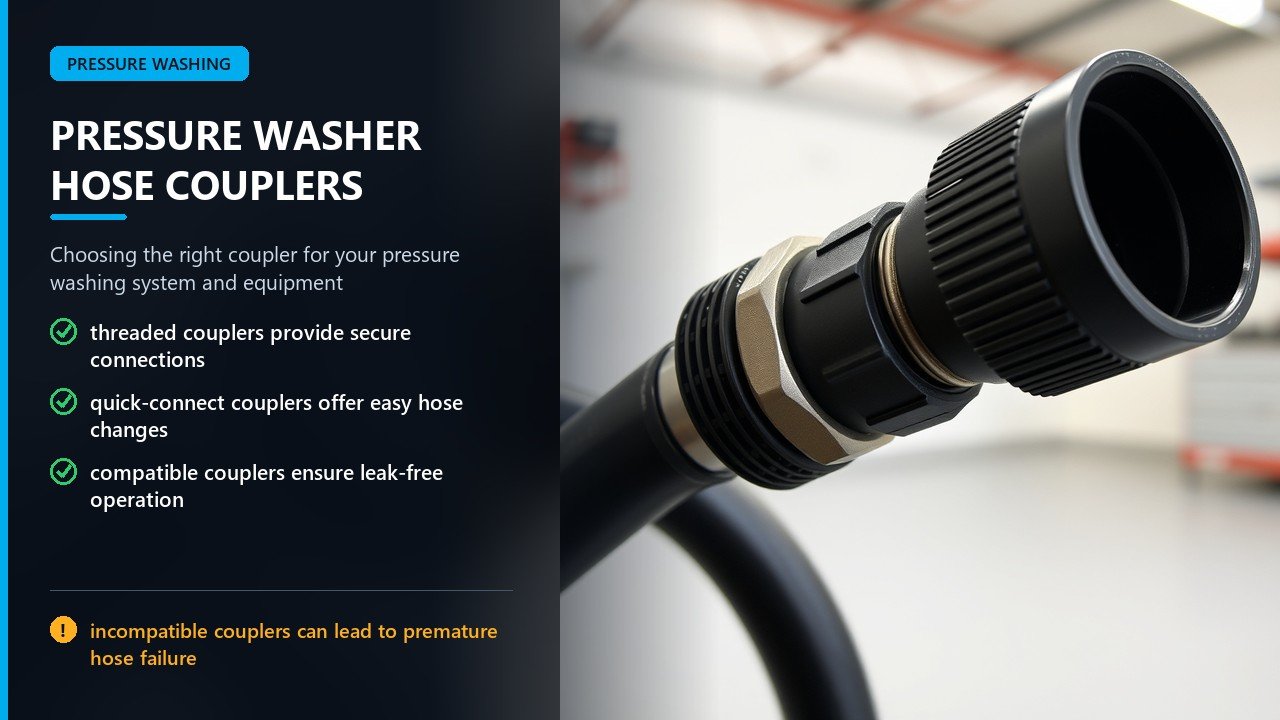
A coupler connects two pieces of high-pressure hose or joins a hose to another component, letting you extend or split your setup. It creates a sealed joint that must hold the full pressure of your machine without leaking or disconnecting. A good coupler stays tight under load and unhooks easily when needed.
Because pressure washers push water at thousands of PSI, the coupler’s rating, thread, and seal matter. A loose or mismatched coupler can fail and spray water forcefully, which is dangerous. Choosing correctly is a safety issue as much as a convenience issue.
Note: Never use a garden-hose coupler on a pressure washer. Garden-hose couplers are not rated for high pressure and can burst. Always use a coupler rated for your machine’s PSI and GPM.
Threaded vs Quick-Connect Couplers
Two main styles dominate: threaded couplers and quick-connect couplers. Threaded couplers screw together and are very secure at high pressure. Quick-connect couplers use a push-and-click fitting, which makes swapping hoses and tools fast, and they are common on modern home machines.
| Style | Pros | Cons |
|---|---|---|
| Threaded | Secure, high-pressure safe | Slower to connect |
| Quick-connect | Fast swaps | Can wear, less robust on very high pressure |
Match the style to your system. Many machines use quick-connect on the gun and nozzles, but some use threaded connections for hoses. Using adapters between styles is fine if everything stays within the pressure rating. Our guide to matching threads before you buy covers the details.
Common Threads and Sizes
Threading is where most mistakes happen. Common pressure washer fittings are M22, M14, 3/8-inch NPT, 1/4-inch NPT, and proprietary quick-connect plugs and sockets. Measure or check your existing fittings before buying a coupler, because a mismatch will not seal.
| Thread | Where It Is Common |
|---|---|
| M22 | Hose-to-gun, many consumer machines |
| M14 | Smaller electric washers and some guns |
| 3/8″ NPT | Pumps and some industrial fittings |
| 1/4″ NPT | Guns, lances, nozzles |
Always count threads or check against your machine’s manual. Our guide to matching the ends before you buy is a useful reference. If you cannot match, use a quality adapter rather than forcing a fitting.
Quick-Connect Plug and Socket Sizes
Quick-connect systems are sized by the flow and by the plug. The two most common for pressure washers are 1/4-inch and 3/8-inch quick-connect, which refer to the internal bore and the fittings used. A 3/8-inch quick-connect passes more flow and suits higher-GPM machines, while 1/4-inch is common on smaller units.
Mixing sizes causes restriction or leaks, so match the quick-connect size across the whole run. If your machine uses 3/8-inch and you have 1/4-inch tools, use a reducing adapter that is rated for the full pressure. Never step down without checking the rating.
Material and Quality
A good coupler is made of brass, stainless steel, or a high-grade composite designed for high pressure. Brass is corrosion-resistant and strong, making it the common choice for threaded fittings. Cheap zinc or soft alloys can strip and fail under load.
Look for couplers with good O-rings and a solid locking mechanism for quick-connect types. Replace worn O-rings rather than overtightening a fitting, since overtightening damages threads and seals. Quality parts are available from Pressure Wash Supply, Grainger, and Amazon.
Note: Cheap couplers can blow off under pressure. Spend a little more for a rated, reputable fitting, and always stay within the pressure and flow rating of your machine. The cost of a good coupler is trivial compared to the risk of a failure.
When to Use a Coupler
Use a coupler when you need to join two hoses to gain length, or when you want to split a setup so you can connect different guns or tools. A jumper hose with couplers links a pump to a reel or joins short lengths. Couplers are also useful to connect a replacement hose to your existing gun.
Avoid chaining too many couplers, since each adds a potential leak point and a small restriction to flow. If you need a long run, use a single longer hose rated for your pressure. For short extensions, a high-quality coupler and a rated hose are fine.
How to Choose the Right Coupler
Match four things: connection style, thread size, pressure rating, and flow rating. First, confirm whether you need a quick-connect or a threaded coupler. Second, match the thread or quick-connect size to both sides. Third, ensure the rating exceeds your machine’s PSI. Fourth, ensure it can handle your GPM.
| Check | What to Look For |
|---|---|
| Style | Quick-connect or threaded |
| Thread/size | M22, M14, NPT, or quick-connect |
| Pressure | Rated above your washer |
| Flow | Adequate for your GPM |
Our guide to hose fittings and connectors and to matching M22, GHT, and quick-connect walk through the common conversions.
Installing and Sealing Couplers
Clean the threads or quick-connect surfaces before joining. For threaded couplers, hand-tighten until snug, then add a small turn with a wrench if needed, but avoid overtightening. For quick-connect, ensure the collar locks and pulls back firmly without leaking.
Use the right O-ring or seal for the fitting, and replace them when they are cracked or flattened. A tiny dab of plumber’s tape can help on some NPT threads, but never use tape on quick-connect or on some straight threads. Follow the manufacturer’s advice.
Note: Never overtighten high-pressure fittings. Overtightening strips threads and deforms seals, making leaks worse. Tighten enough to seal, no more. If it still leaks, replace the O-ring or the fitting.
Common Coupler Problems
Leaking at the joint is the most common problem, usually from a worn O-ring, dirt on the seal, or a mismatched thread. A coupler that blows off under pressure means it is not rated or not locked properly. Difficulty connecting often means debris or slight size mismatch.
| Problem | Fix |
|---|---|
| Leak at joint | Clean, replace O-ring, check thread |
| Blows off | Use correct rated fitting and lock |
| Hard to connect | Clean and verify size |
| Restriction | Check bore size, avoid reducers |
Our guide to solving connection problems quickly gives a practical checklist.
Maintenance and Longevity
Keep couplers clean, dry, and free of grit. After use, disconnect and rinse them, and store them in a clean bag so they do not collect dirt. Replace O-rings at the first sign of cracking or flattening, and replace the whole coupler if threads are damaged.
Inspect couplers periodically, especially before high-pressure jobs. A worn quick-connect can fail suddenly, and a damaged threaded fitting can leak. Small spares are cheap and save time on the job. Keep a couple of rated couplers and O-rings in your kit.
Frequently Asked Questions
What is a pressure washer hose coupler? It is a fitting that joins two hoses or connects a hose to a gun, wand, or pump. It creates a sealed, high-pressure joint that lets you extend or connect parts of your setup.
Which coupler do I need for my pressure washer? Match the style, thread size, pressure rating, and flow rating to your machine. Common fittings are M22, M14, and 1/4- or 3/8-inch quick-connect, so check your existing fittings before buying.
Are quick-connect couplers safe for high pressure? Yes, when rated for your machine. Quality quick-connect fittings work well on most home and mid-range washers. For very high-pressure industrial machines, threaded couplers are sometimes preferred for extra security.
Can I use a garden-hose coupler on a pressure washer? No. Garden-hose couplers are not built for high pressure and can burst. Always use a coupler specifically rated for pressure washer use.
Why is my pressure washer hose coupler leaking? Common causes are a worn O-ring, dirt on the seal, overtightened threads, or a mismatched fitting. Clean it, replace the O-ring, and check that the sizes match.
How do I size a pressure washer hose coupler? Measure the thread, check the quick-connect size, and match the bore. Also confirm the PSI and GPM ratings are equal to or above your machine. When in doubt, check your manual or take the part to a supplier.
Final Thoughts
A pressure washer hose coupler is a small part that does a big job. Choosing the right one keeps your setup leak-free, safe, and easy to use. Match the style, size, and rating to your machine, and buy quality over the cheapest option.
Keep spares on hand, replace O-rings regularly, and avoid forcing mismatched parts. With the right coupler fitted correctly, you can extend hoses, swap tools, and keep your pressure washer working without leaks or blow-offs.
Note: Buy couplers from suppliers that stock rated parts. Trusted sources include Amazon, Pressure Wash Supply, and Grainger.