When people compare electric pressure washers, they usually look at PSI and GPM. But behind those numbers is the part that actually does the work: the motor. The type of motor inside an electric pressure washer decides how much pressure it can build, how long it runs before it needs a rest, how loud it is, and how long it lasts.
Understanding pressure washer motors makes it easier to choose the right machine and to keep it running. This guide explains the motor types, what the specs mean, and how to match a motor to the job.
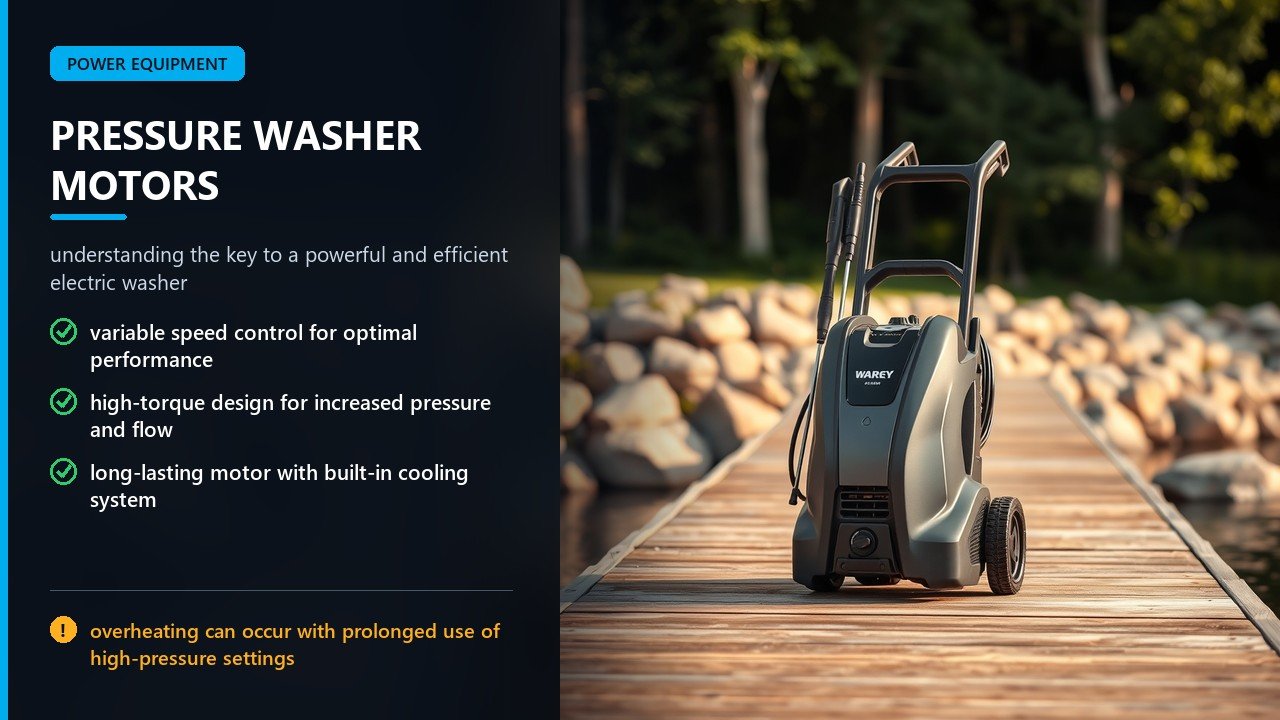
The Motor’s Job
A pressure washer motor turns electrical energy into rotation, and that rotation drives the pump. The pump is what pressurises the water, but it can only do so with the power the motor supplies. A weak motor on a strong pump, or a strong motor on an undersized pump, both miss the mark — the two must be matched by the manufacturer to hit the machine’s rated PSI and GPM.
Motor power is usually stated in horsepower, amps, or watts, and it is the ceiling on how much pressure and flow a machine can produce. More motor power means the machine can sustain higher pressure and flow, but only if the pump is built to match. This is why two washers with identical PSI ratings can behave very differently: the better one has a motor and pump combination that holds its output under load.
The motor also sets the machine’s duty cycle — how long it can run before overheating. Cheaper motors with little cooling must rest; better motors with proper cooling run continuously. For occasional home use a light-duty motor is fine, but for long jobs the motor’s ability to run without overheating is what matters.
Types of Electric Motors
Electric pressure washers use one of two main motor types: a universal (brushed) motor or an induction motor. A universal motor is small, light, inexpensive, and found in most consumer machines. It has brushes that wear over time, runs faster and louder, and generally has a lower duty cycle. It is the reason a typical homeowner washer is light and affordable.
An induction motor is larger, heavier, and more expensive, but it is quieter, has no brushes to wear, runs cooler, and handles long continuous duty. It is found in better-quality and semi-professional electric washers. When a machine is described as durable or built for long use, an induction motor is often the reason.
The table below summarises the difference.
| Motor type | Traits |
|---|---|
| Universal (brushed) | Light, cheap, high RPM, louder, brushed, lower duty cycle |
| Induction | Heavy, quiet, no brushes, cooler, longer continuous duty |
Many washers also use a capacitor to help the motor start, especially induction motors, which need a boost to overcome the load when starting. A failing capacitor is a common cause of a washer that hums but will not start.
Reading the Motor Specs
Several numbers describe a pressure washer motor, and each tells you something useful. Horsepower indicates the motor’s power, though it is often expressed as developed or peak horsepower, which flatters cheaper machines. A more honest guide is the electrical input — amps at a given voltage — because it reflects what the motor actually draws.
Voltage matters for what you can connect. Many home washers run on standard 120-volt household power, which limits how powerful the motor can be. Larger electric washers run on 230 volts, drawing the same amps but delivering more power, and are common in semi-professional and commercial machines. Higher pressure electric washers generally need the higher voltage to get there.
RPM describes the motor’s speed, and it connects to the pump through the drive. Universal motors run at high speed, while induction motors run slower — often around 3,400 RPM for a two-pole motor on 60 Hz power. Motor speed and pump design are matched, and the pump creates pressure through a combination of speed, plunger, and valve design rather than speed alone.
Two more specs matter for durability. Service factor indicates how much a motor can exceed its rated load without damage. Thermal overload protection shuts the motor off if it gets too hot, protecting it from burning out. A machine with both is better protected and more likely to survive accidental overload.
Voltage, Amps, and Phases
Electric motors run on single-phase or three-phase power. Homes have single-phase power — typically 120 or 230 volts — and consumer pressure washers are built for that. Three-phase power, common in commercial and industrial settings, is smoother and delivers more power for the same size, which is why larger commercial washers use three-phase motors.
A machine that runs on three-phase cannot run on household single-phase without a different motor or a converter, so the supply must match the machine. This is a key buying check for commercial buyers: confirm the machine’s voltage and phase against the power available on site before purchasing, because a mismatch makes the machine unusable.
The amps a motor draws determine the circuit it needs. A high-amperage or high-horsepower machine may require a dedicated circuit with a heavier breaker and wiring, because a standard household outlet cannot supply enough current. Running a powerful washer on an inadequate circuit trips breakers or starves the motor. Check the amp draw against the circuit before buying.
Caring for the Motor
Motors last longest when they stay cool and dry. Universal motors rely on airflow over their housing, so keeping the vents clear of dirt and dust prevents overheating. Induction motors are usually enclosed and fan-cooled, which protects them from dust and moisture, but the cooling fins and fan should still be kept clear.
Never run a pressure washer dry, because a starved pump makes the motor work harder against a bad load. Respect the duty cycle — let a light-duty motor rest as the manual advises — and give the machine a break if it feels hot. For machines with brushes, replace the brushes when they wear, since worn brushes cause weak or erratic running and can damage the commutator.
Store the machine dry and protected from freezing, and check the power lead and plug for damage before each use. A damaged cord is both a performance and a safety problem. With sensible care, the motor — the most expensive part of an electric washer — will outlast several sets of seals and hoses.
Matching Motor to Job
For light home use — cars, patios, garden furniture — a universal-motor machine at 120 volts is adequate and inexpensive. For medium work with longer sessions, an induction motor at 120 or 230 volts runs cooler and lasts longer with fewer breaks. For frequent or professional use, a 230-volt induction or three-phase machine is the appropriate choice, matched to a pump that can use the power.
Match the machine’s motor to the realistic demands of the job, not to the biggest numbers on the box. A powerful motor that runs continuously beats a peak-horsepower claim that cannot be sustained. Because the motor is the costliest component to replace, choosing a machine with a durable motor is the most important long-term decision.
There is also a power supply to consider. A 230-volt machine needs the right outlet, and a three-phase machine needs three-phase supply, both of which may require an electrician. Planning the power before buying avoids the frustration of a capable machine that cannot be plugged in.
Troubleshooting a Motor Problem
When an electric pressure washer misbehaves, the symptom often points to the motor or its power. A machine that hums but does not start usually has a failed start capacitor or a stuck pump, and the capacitor is the cheaper suspect to check first. A machine that starts and then trips a breaker is drawing too much current, which points to an undersized circuit, a fault, or a motor working too hard against a bad load.
A machine that loses power as it warms up may be hitting a thermal overload, which protects the motor by cutting power when it overheats. That protection is doing its job; the real problem is usually a low duty cycle being exceeded, poor ventilation, or a pump fault making the motor strain. Repeated overload trips should never be ignored, because they signal a fault that will eventually damage the motor.
Weak or erratic running can come from worn brushes on a universal motor, from a failing capacitor, or from a supply that cannot deliver enough current. Before suspecting the motor, rule out the simple causes: a bad extension cord, a loose plug, a tripped breaker, or a clogged inlet that starves the pump. Many “motor” faults turn out to be supply or pump problems.
Duty Cycle and Overheating
Duty cycle is the reason identical-pressure washers feel so different in use. A light-duty universal motor is built for short bursts and needs to rest, so its duty cycle might be a few minutes on followed by a few minutes off. A heavy-duty induction motor may run continuously. The duty cycle is set by how well the motor sheds heat, not by the pressure rating.
Respecting the duty cycle is the simplest way to protect the motor. If the manual says run for a set period and rest, follow it, especially in warm conditions where the motor sheds heat more slowly. Pushing a light-duty motor to run continuously will shorten its life or trigger the thermal protector, and repeated overheating eventually burns out the windings.
Good airflow keeps the motor cooler and lengthens its working window. Keep the cooling vents and fins clear of dust and debris, and avoid running the machine in an enclosed space where hot air collects. A motor that stays cool runs longer, quieter, and for more years than an identical one that is constantly hot.
Safety With Electric Motors
Electricity and water are a serious combination, so safety around a pressure washer motor is not optional. Use a residual current device or ground-fault protection on the circuit, keep the plug and connections out of standing water, and never handle the plug or the machine with wet hands. Inspect the power lead for damage before each use and replace it if the insulation is cut or worn.
Use an extension cord only when necessary and only of a gauge thick enough for the motor’s current draw, or the motor will be starved of voltage and overheat. Keep cords away from the water spray and from the area being cleaned, and never let water run toward a live connection. When the machine is not in use, unplug it rather than relying on the switch.
Respect the machine’s ratings and warnings, never bypass a safety device or the thermal protector, and have electrical faults repaired by a qualified person. A pressure washer motor that is correctly powered, kept cool, and treated with basic electrical caution will give long, safe service.
Frequently Asked Questions
What motor is in a pressure washer? Most electric pressure washers use a universal (brushed) motor, while better-quality and semi-professional machines use an induction motor.
What is the difference between universal and induction motors? Universal motors are light, cheap, and loud with a lower duty cycle. Induction motors are heavier, quieter, brushless, run cooler, and handle continuous duty.
Does motor horsepower determine PSI? Motor power is the ceiling on pressure and flow, but the pump must be matched to it. Peak horsepower claims flatter cheap machines; electrical input is a more honest measure.
Why does my washer hum but not start? Usually a failed start capacitor or a stuck pump. The capacitor is the cheaper suspect to check first.
What is duty cycle? How long the motor can run before it needs to rest. It is set by how well the motor sheds heat. Respecting it protects the motor from overheating.
What voltage do pressure washer motors use? Home machines typically use 120 volts, better electric machines use 230 volts, and professional machines may use three-phase supply. The machine must match the available power.
Why does my washer trip the breaker? The motor is drawing too much current — often from an undersized circuit, a bad extension cord, or a pump fault making it strain.
How do I make the motor last? Keep vents and fins clear, respect the duty cycle, never run the pump dry, use a proper power supply, and check the lead for damage.
Final Thoughts
The motor is the heart of an electric pressure washer. Its type, power, voltage, and duty cycle decide how much pressure the machine can sustain, how long it can run, and how long it lasts. Universal motors make machines light and affordable, while induction motors make them quiet, durable, and suited to real work.
Match the motor to the job and the available power, respect its duty cycle, keep it cool and dry, and protect it electrically. Because the motor is the most expensive part to replace, choosing a machine with the right motor for your needs is the decision that matters most. For related reading, see our guides on an electric cold water pressure washer and a 3 phase pressure washer.