If you’ve ever stared at a set of pressure washer tips and tried to guess which one to use, you’re not alone. The colored nozzles look simple, but using the wrong one can damage paint, gouge wood, or just waste time. The good news is that there’s a universal system. Once you understand pressure washer nozzle color coding, you can pick the right tip for any surface in seconds with total confidence.
Pressure washer nozzle color coding is the industry-standard way to identify spray angles at a glance. Red = 0°, yellow = 15°, green = 25°, white = 40°, and black = low-pressure soap. These colors are used by nearly every major brand of pressure washers that accept 1/4″ quick-connect tips. This guide explains each color, when to use it, when to avoid it, and a few extra tips to help you get professional results without damaging your surfaces.
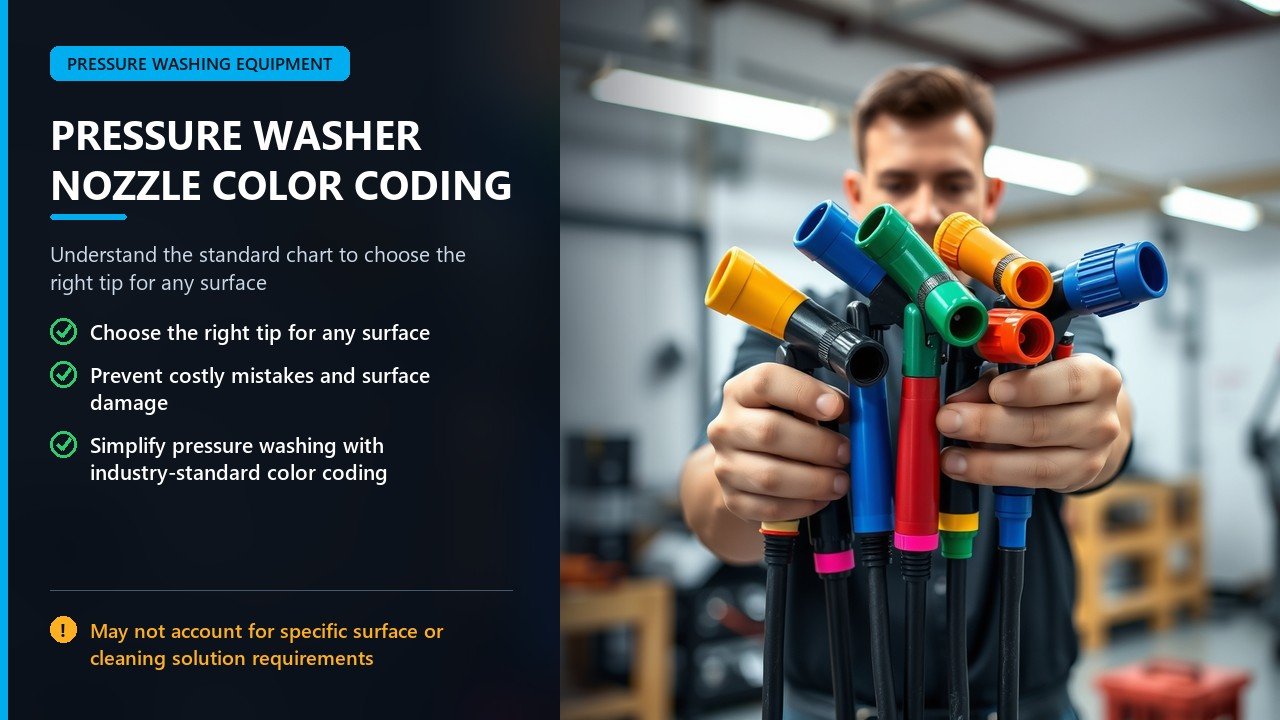
Why Pressure Washer Nozzle Color Coding Matters
Spray angle determines how concentrated the water stream is. A narrow angle hits with much more impact per square inch, while a wider angle spreads that force out for gentler cleaning. The color coding prevents costly mistakes — grabbing a red 0° tip when you meant white could strip paint in an instant. With color coding, you don’t need to read tiny numbers in the field; you just grab by color.
This standard keeps things consistent across brands. Whether you’re using a gas or electric machine, the colors mean the same thing for spray angle.
The Standard Pressure Washer Nozzle Color Coding Chart
Here is the breakdown of the five most common nozzle colors you’ll find in any standard set:
| Color | Spray Angle | Cleaning Strength | Best Uses | Avoid Using On |
|---|---|---|---|---|
| Red | 0° | Extreme | Tough concrete stains, rust, heavy equipment, bare metal | Wood, siding, paint, glass, cars, trim |
| Yellow | 15° | Very High | Concrete, brick, block, driveways, oil stains | Soft wood, painted finishes, delicate surfaces |
| Green | 25° | High | Patios, walkways, fences, stone, general-purpose cleaning | Thin or very fragile surfaces |
| White | 40° | Gentle | Cars, RVs, vinyl siding, wood decks, windows, rinsing | Deep-set, heavy industrial grime |
| Black | 65° (Low Pressure) | Lowest | Applying detergents/soaps with your pressure washer’s injector | Not for removing heavy dirt or rinsing under pressure |
Red (0°): The Most Aggressive Tip
The red nozzle produces a pencil-thin stream with maximum impact. Use it only on hard, unpainted, sound surfaces where nothing else works. It’s great for isolated concrete stains or cleaning thick caked-on mud off heavy steel equipment. Never use it on wood, painted surfaces, siding, glass, or vehicles — it can cause permanent damage in a fraction of a second.
Yellow (15°): Heavy-Duty Cleaning
Yellow strikes a balance between power and coverage. It chews through grime on driveways, brick, and concrete without the pinpoint intensity of red. It’s perfect for removing years of mildew, algae, or oil stains from hard surfaces. Still, test carefully on older or weathered masonry before going full coverage.
Green (25°): The Workhorse
Green is the tip you’ll reach for most often. It delivers strong cleaning power with enough spread to cover ground quickly. It’s ideal for patios, sidewalks, stonework, fences, and general outdoor cleaning. For most homeowners, 25° handles the bulk of weekend jobs safely and efficiently.
White (40°): Safe for Delicate Surfaces
White gives the widest spray of the high-pressure tips, distributing force gently across a large area. This makes it perfect for washing cars, rinsing vinyl or aluminum siding, cleaning wood decks (from a safe distance), and washing windows. It’s also great as a final rinse tip after applying detergent.
Black (Soap): For Detergent Application
The black nozzle is designed specifically for low-pressure application. It allows your pressure washer’s soap injector to draw detergent into the water stream. This low pressure helps soap cling to surfaces so it can dwell and break down grime. Never use black for blasting — switch to white, green, or another tip for rinsing after the dwell time.
Color Coding vs Orifice Size
One important point: pressure washer nozzle color coding tells you spray angle only, not flow rate. Each tip also has an orifice size (often stamped as a number like 3.5, 4.0, 5.5) that must match your pressure washer’s PSI and GPM. Using the wrong orifice can strain your pump or reduce cleaning power. Always use tips sized for your specific machine — check your owner’s manual or the nozzle chart that came with it.
If you’re buying a replacement set, buy one matched to your GPM/PSI, not just any universal color set.
How to Use Color Coding to Choose the Right Tip
Follow this simple rule: start wide and gentle. If you’re cleaning something you’re unsure about, grab the white (40°) tip first. Test in an inconspicuous spot, then step down to green, yellow, or red only if the surface can handle more power. For soap, always use black first, then rinse with white or green depending on the surface.
This approach prevents damage and saves you from having to fix mistakes later.
Safety Tips for Pressure Washer Nozzles
Always engage the safety lock on your spray gun before changing nozzles. Never point any tip at people, pets, or electrical components. Wear eye protection and closed-toe shoes. Keep the wand moving — holding a narrow stream stationary can etch concrete or damage soft surfaces. Start from a safe distance (12–36 inches) and move closer gradually only when necessary.
FAQs About Pressure Washer Nozzle Color Coding
Are pressure washer nozzle colors universal? Yes. Nearly all major brands follow the same pressure washer nozzle color coding (red 0°, yellow 15°, green 25°, white 40°, black soap) for standard 1/4″ quick-connect tips.
Which nozzle color is best for washing a car? White (40°). It provides a wide, gentle spray that safely removes dirt without risking paint damage when used at the proper distance.
Can I use the red tip on my driveway? Only on bare, sound concrete for spot treatment of very tough stains. Avoid on decorative, stamped, cracked, or aging concrete as it can cause damage.
Why does the black nozzle have such low pressure? Its larger orifice reduces backpressure, allowing the pressure washer’s unloader to drop pressure. This is required for proper detergent siphoning with downstream injectors.
Do I need to match orifice size too, or just color? Both matter. Color = spray angle. Orifice size = flow/pressure match for your GPM and PSI. Always use the correct orifice size for your machine to protect your pump.
Final Thoughts
Pressure washer nozzle color coding takes all the guesswork out of choosing the right tip. Red is for brute force, yellow for heavy-duty, green for everyday, white for delicate work, and black for soap. Remember to match orifice size to your machine, start gentle, and test first. Do that, and you’ll get cleaner surfaces faster with far less risk of damage.