When my pressure washer developed a steady drip at the hose connection, I did what a lot of owners do and tightened everything harder. The drip continued. The real problem was a hardened, flattened o-ring, a part so small and cheap that it is easy to overlook, yet so important that it can bring a pressure washer to a frustrating halt. The solution was an o-ring kit, a small box of assorted rings that let me match and replace the worn seal in seconds. O-rings are the unsung heroes of a pressure washer, sealing the many connections throughout the machine, and an o-ring kit is one of the most useful and inexpensive tools an owner can have. This guide explains o-ring kits, the seals they contain, and how to use them to stop leaks for good.
What Is a Pressure Washer O Ring Kit
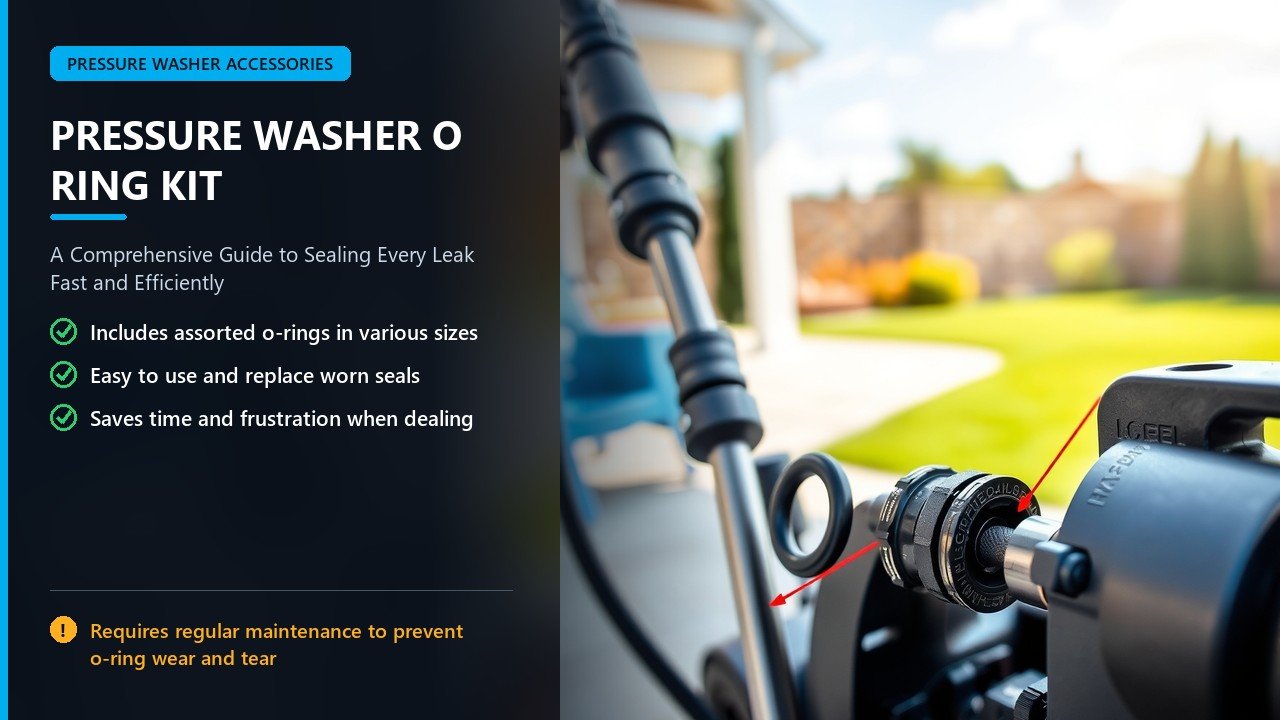
A pressure washer o-ring kit is a collection of o-rings, the small circular rubber seals used at the joints and connections of a pressure washer. Rather than buying one o-ring of a specific size at a time, a kit provides an assortment of common sizes, and sometimes materials, so you can find the right seal for whatever connection leaks. This saves the frustration and delay of hunting individual o-rings and ensures you have the seal you need on hand when a leak develops.
The kits come in several forms. Assortment kits provide many o-rings in a range of sizes, organized in a case, suitable for general use across a machine. Model-specific kits provide the exact o-rings for a particular machine or component, taking the guesswork out of matching. Material-specific kits group o-rings by material, for situations where chemical or temperature compatibility demands a particular rubber. Some kits focus on a component, such as a pump or a gun, providing the seals that component needs.
Whatever their form, o-ring kits exist because o-rings are ubiquitous and are a common failure point. They seal the connections that join the machine’s components, and because they are soft rubber exposed to pressure, water, and chemicals, they wear out. When they do, the result is a leak, and a kit is the practical solution. For a few dollars, an o-ring kit equips an owner to fix the most common pressure washer problem, making it a staple of any maintenance toolkit. Our guide to pressure washer o-rings explains these seals in depth.
Where O-Rings Are Used on a Pressure Washer
Understanding where o-rings seal shows how many places they matter.
Hose connections. The high-pressure hose connects to the machine and the gun, and o-rings seal these joints, especially where quick-connect fittings are used.
Gun and wand. The gun, trigger, and wand have o-rings sealing their internal and external connections, and the quick-connect couplers that hold nozzles and attachments rely on o-rings.
Nozzle connections. Quick-connect nozzles seal against the wand coupler with an o-ring, which is why a leaking nozzle connection usually means a worn o-ring.
Pump. The pump contains numerous o-rings sealing its body, valves, and connections, and internal pump o-rings are part of pump seal kits.
Inlet and outlet. The water inlet where the supply hose attaches, and the outlet where the high-pressure hose connects, use o-rings or washers to seal.
Unloader and accessories. The unloader and various accessories, like surface cleaners and foam cannons, use o-rings at their connections.
This breadth is why o-rings are a leading cause of pressure washer leaks: almost every joint has one, so a worn ring anywhere produces a drip. A machine can develop leaks at the hose, gun, wand, nozzle, or inlet, and in most cases the culprit is an o-ring. Owning a kit means you can address any of these before they become a bigger problem, and because the seals are so common, a good kit covers the vast majority of leak points. Our guide to pressure washer components shows how these sealed connections fit into the machine.
O-Ring Sizes and How to Measure Them
Matching the o-ring size is essential, because an ill-fitting ring will not seal.
O-rings are defined by three dimensions: the inside diameter, the outside diameter, and the cross-section, which is the thickness of the ring’s material. The inside diameter determines what the ring fits around, the cross-section determines how much material compresses to seal, and the outside diameter is related to the other two. To match an o-ring, you must match these dimensions, because a ring that is too thin will not seal, and one that is the wrong diameter will not fit.
Sizing systems vary. O-rings are sold in standard sizes, such as SAE (imperial) sizes and metric sizes, and the two are not interchangeable. Pressure washers, especially imported ones, may use metric o-rings, while others use imperial sizes, and many machines mix both. This is why an assortment kit or exact-size matching is valuable, because you need the specific size, in the specific sizing system, for each connection.
To match an o-ring, measure the old one, or the groove it seats in, with calipers, and compare to the kit’s sizes or a size chart. Measuring the inside diameter and cross-section is usually sufficient to identify the size. When a kit provides an assortment, you can test-fit rings until one matches, which is the practical advantage of assortment kits. Matching the size, in the correct sizing system, is the foundation of an effective o-ring repair, and a kit makes that matching quick and reliable by putting many sizes at hand. If precision matters and you know the exact size, buying that specific o-ring, or a model-specific kit, ensures a perfect match.
O-Ring Materials
The o-ring’s material determines its compatibility with water, chemicals, and temperature, so material matters alongside size.
NBR (Buna-N, nitrile rubber). The most common material for pressure washer o-rings. It resists water, oils, and many chemicals well and handles the temperatures of typical pressure washing, making it a dependable general-purpose choice.
Viton (FKM). Resists high temperatures and a broader range of chemicals than NBR, suited to hot water machines and applications involving aggressive chemicals. It costs more, but where heat or chemical resistance is needed, Viton outperforms NBR.
EPDM. Excellent resistance to water, steam, and many chemicals, EPDM suits hot water and steam applications and some chemical conditions, though it is not compatible with oils and fuels.
Silicone. Handles a wide temperature range and is flexible, but it has lower resistance to some oils and abrasion, so it suits specific conditions rather than general pressure washing.
For most cold water pressure washer connections, NBR is the standard and works well. For hot water or steam machines, or where chemicals are involved, a more resistant material like Viton or EPDM may be needed, which is why material-specific kits exist and why matching material to the application matters. The wrong material can swell, harden, or degrade quickly, causing the leak to return, so knowing your machine’s conditions and choosing accordingly ensures the repair lasts. A general NBR assortment covers most needs, and for specialty machines, selecting the appropriate material for the o-rings in contact with heat or chemicals prevents recurring failures. Our guide to a hot water pressure washer trailer covers machines where heat-resistant seals matter.
Types of O-Ring Kits
Choosing the right kit depends on your needs.
| Kit Type | Contents | Best For |
|---|---|---|
| Assortment kit | Many sizes, one material | General use, matching unknown sizes |
| Model-specific kit | Exact o-rings for a machine or part | A known machine, guaranteed fit |
| Component kit | Seals for pump, gun, or wand | Repairing a specific component |
| Material-specific kit | O-rings in Viton, EPDM, etc. | Hot water, chemicals, specialty conditions |
| Metric or SAE kit | O-rings in one sizing system | Machines using that system |
An assortment kit is the most versatile starting point, because it lets you match unknown sizes and covers many connections. A model-specific kit guarantees the right fit for a particular machine, which is ideal if you own one machine and want certainty. Component kits suit repairing a pump or gun, and material-specific kits address hot water or chemical conditions. Many owners keep a general assortment kit for common leaks and buy specific seals or a model kit for precision. The best choice depends on whether you value broad coverage or exact matching, but any of these kits equips you to handle the o-ring leaks that are the most common pressure washer problem.
How to Replace an O-Ring
Replacing an o-ring is a simple repair that follows a few steps.
Identify the leak. Locate where the water escapes, which indicates the connection with the worn o-ring. Often a drip at a fitting or coupler points directly to the seal.
Disconnect and relieve pressure. Turn off and depressurize the machine, and disconnect the leaking connection. O-rings are usually accessible at the joint, though internal seals require disassembly.
Remove the old o-ring. Extract the worn ring, using care not to scratch the groove or sealing surface. Note its size and location.
Match the new o-ring. Find the correct size and material from your kit, comparing to the old ring or measuring the groove. Ensure a proper fit.
Install the new o-ring. Seat the new ring in its groove, lubricating it with a compatible lubricant or clean water where appropriate to ease installation and help it seal. Ensure it is not twisted or pinched.
Reconnect and test. Reassemble the connection, hand-tightening threaded fittings to avoid cross-threading, and test for leaks under pressure.
This procedure applies to accessible seals, the most common case, and it takes only minutes with the right o-ring. For internal seals, such as inside a pump, disassembly is required, and following the machine’s manual or a repair guide for the component ensures correct reassembly. Because o-ring replacement is so simple and cheap, it is the first repair to try for most leaks, and doing it carefully, with a properly matched and lubricated o-ring, produces a lasting fix. Our guide to pressure washer repair kits covers o-ring replacement as part of broader repairs.
Common O-Ring Troubleshooting
Several symptoms point to o-rings.
Drip at a connection. A worn or damaged o-ring at that joint. Replace it.
Leak at a quick-connect. The o-ring inside the socket, a very common failure. Replace the socket o-ring.
Water spraying at the gun or wand. A worn o-ring in the gun, wand, or coupler.
Pump leaking. Internal pump o-rings and seals, usually addressed with a pump seal kit, which includes o-rings.
Recurring leak after replacement. Wrong size, wrong material for the conditions, or a damaged groove. Match correctly and inspect the sealing surface.
Leak only under pressure. A marginal o-ring that seals at rest but fails under pressure; replace it with a correct one.
Recognizing these patterns makes o-ring problems easy to diagnose and fix. Since o-rings are the most common cause of pressure washer leaks, they should be the first suspect whenever water escapes at a connection, and with a kit on hand, the fix is quick and cheap. The key is matching the size and material and installing the ring carefully, without twisting or pinching, because a correctly installed, correct o-ring seals reliably. With the wrong one, the leak returns, which is why a good kit and careful matching prevent the frustration of repeated repairs. This is why o-ring kits earn their place in every pressure washer owner’s toolkit. Our guide to a pressure washer inlet water filter covers another small part that protects the machine and reduces wear.
Maintaining O-Rings and Preventing Leaks
A little care extends o-ring life and prevents leaks.
Inspect o-rings during regular maintenance and replace any that show wear, hardening, flattening, cracking, or swelling, since a degraded o-ring is a leak waiting to happen. Lubricate o-rings occasionally with a compatible lubricant, which keeps them supple, aids sealing, and reduces wear from friction during connection and disconnection. Keep connections clean, since grit and debris damage o-rings and their sealing surfaces, and avoid overtightening threaded fittings, which can deform or cut the o-ring. Protect o-rings from extreme conditions and incompatible chemicals, choosing the right material for the application.
Store spare o-rings properly, away from heat, sunlight, and ozone, which degrade rubber over time, and keep a kit accessible for quick repairs. When winterizing, disconnect and store components so o-rings are not trapped and frozen, which damages them. These habits keep o-rings sealing and prevent the leaks that o-rings most often cause. Because o-rings are cheap and their replacement is simple, proactive care and prompt replacement of worn rings means leaks never develop into bigger problems, and the machine stays drip-free. A small o-ring kit, used with care, is one of the best investments a pressure washer owner can make, turning the most common failure into a trivial, inexpensive fix.
O-Rings Versus Other Seals
O-rings are the most common seal on a pressure washer, but they are not the only kind, and knowing the difference helps you fix the right part.
Beyond o-rings, pressure washers use sealing washers, packing, and mechanical shaft seals. Sealing washers, often copper or fiber, seal some threaded connections, particularly at the machine inlet and certain fittings, and they crush or deform to seal, requiring replacement when reused or worn. Packing seals seal around moving parts, such as in some pumps and valves. Mechanical shaft seals seal the pump’s rotating shaft, and these are more complex, part of a pump seal kit rather than a simple o-ring. Recognizing which type seals a given joint ensures you replace the right one, because substituting an o-ring for a washer, or vice versa, will not seal.
For the many connections where an o-ring is used, a kit covers the need. For connections and components that use washers or shaft seals, you need those specific parts, which are available individually or in component kits. The practical approach is to identify the seal type at the leak, then replace with the correct part: an o-ring from your kit for o-ring joints, a washer for washer joints, and a pump seal kit for pump shaft seals. Because o-rings are by far the most common, a kit handles the majority of leaks, and knowing when a different seal is involved prevents the frustration of replacing an o-ring where a washer was needed. Understanding the range of seals, and matching the right one to each joint, is part of mastering pressure washer leak repair.
Building and Organizing an O-Ring Kit
A well-organized kit makes repairs quick, so building and maintaining one is worthwhile.
Start with a general assortment kit covering a range of sizes in NBR, the most common material, which handles the majority of cold water connections. Add a material-specific set, such as Viton or EPDM, if your machine involves hot water or harsh chemicals. Include a few common sealing washers and the specific o-rings your machine uses most, identified from the manual or by measuring. A small pair of calipers helps measure rings and grooves to match sizes precisely, and a compatible lubricant aids installation and sealing.
Organize the kit in a compartmented case, sorted by size, so you can find a ring quickly rather than dumping the contents out and searching. Label compartments or sections, and keep the case with your machine’s maintenance supplies and manual, so both the parts and the reference are at hand when a leak appears. Checking the kit periodically and restocking used sizes keeps it ready for the next repair.
An organized o-ring kit is a small, cheap, and powerful resource. With it, the most common pressure washer problem, a leaky connection, becomes a quick, confident fix rather than a frustrating hunt for a tiny part. Building the kit thoughtfully, with the sizes and materials your machine needs, and keeping it organized and stocked, means you are always prepared to stop a leak in minutes. Since o-rings are the seals that keep water in the machine, having a ready supply of them is one of the most practical things an owner can do, and it turns a recurring nuisance into a trivial chore. Our guide to a pressure washer repair kit covers the broader set of parts that keep a machine in service.
Frequently Asked Questions About Pressure Washer O Ring Kits
What is a pressure washer o-ring kit? A collection of o-rings, often assorted in size and sometimes material, used to replace the seals at a pressure washer’s connections. It makes matching and replacing worn seals easy and cheap.
Why does my pressure washer keep leaking? O-rings are the most common cause. Worn, hardened, or damaged o-rings at connections leak, and replacing them fixes the problem. Always check o-rings first for a leak.
What size o-rings does a pressure washer use? Sizes vary, and machines may use metric or imperial o-rings, or both. Measuring the old o-ring’s inside diameter and cross-section, or using an assortment kit, matches the correct size.
What material should pressure washer o-rings be? NBR (Buna-N) suits most cold water connections. For hot water, steam, or chemicals, use a more resistant material like Viton or EPDM, chosen for the conditions.
Can I replace an o-ring myself? Yes. O-ring replacement is a simple repair, usually involving disconnecting the joint, removing the worn ring, and installing a matched one. Internal pump seals require more disassembly.
How do I stop an o-ring leak for good? Match the correct size and material, install the ring without twisting or pinching, lubricate it, keep connections clean, and avoid overtightening. Correct matching prevents recurring leaks.
Final Verdict on Pressure Washer O Ring Kits
A pressure washer o-ring kit is a small, inexpensive investment that solves the most common pressure washer problem: leaks. O-rings seal nearly every connection on the machine, so a worn ring anywhere produces a drip, and because the seals are cheap and their replacement is simple, a kit lets any owner fix leaks in minutes. Matching the size, in the correct sizing system, and the material, for the conditions, ensures the repair lasts, and careful installation and lubrication keep connections sealing.
Keep an o-ring kit on hand, inspect and replace worn rings proactively, and treat these humble seals with the attention they deserve. The drip that defeated me by tightening alone was cured instantly by a correctly matched o-ring from a kit, and that lesson applies to every pressure washer owner: before blaming the pump or buying an expensive part, check the o-rings. An o-ring kit equips you to do exactly that, turning the machine’s most frequent failure into a trivial fix and keeping your pressure washer leak-free for years.