Setting up and using a pressure washer is far easier when you can snap components together instead of threading and unthreading fittings every time. A pressure washer quick connect kit makes this possible, letting you attach hoses, wands, nozzles, surface cleaners, and foam cannons with a simple push-and-click instead of wrestling with threaded connections. When that kit is made of stainless steel, it adds corrosion resistance and durability that brass or plastic fittings may lack, especially with regular water exposure. Choosing the right stainless steel quick connect kit involves understanding the components, thread sizes, and material benefits. This guide explains pressure washer quick connect kits in stainless steel, what they include, how to choose and install them, and how to keep them working.
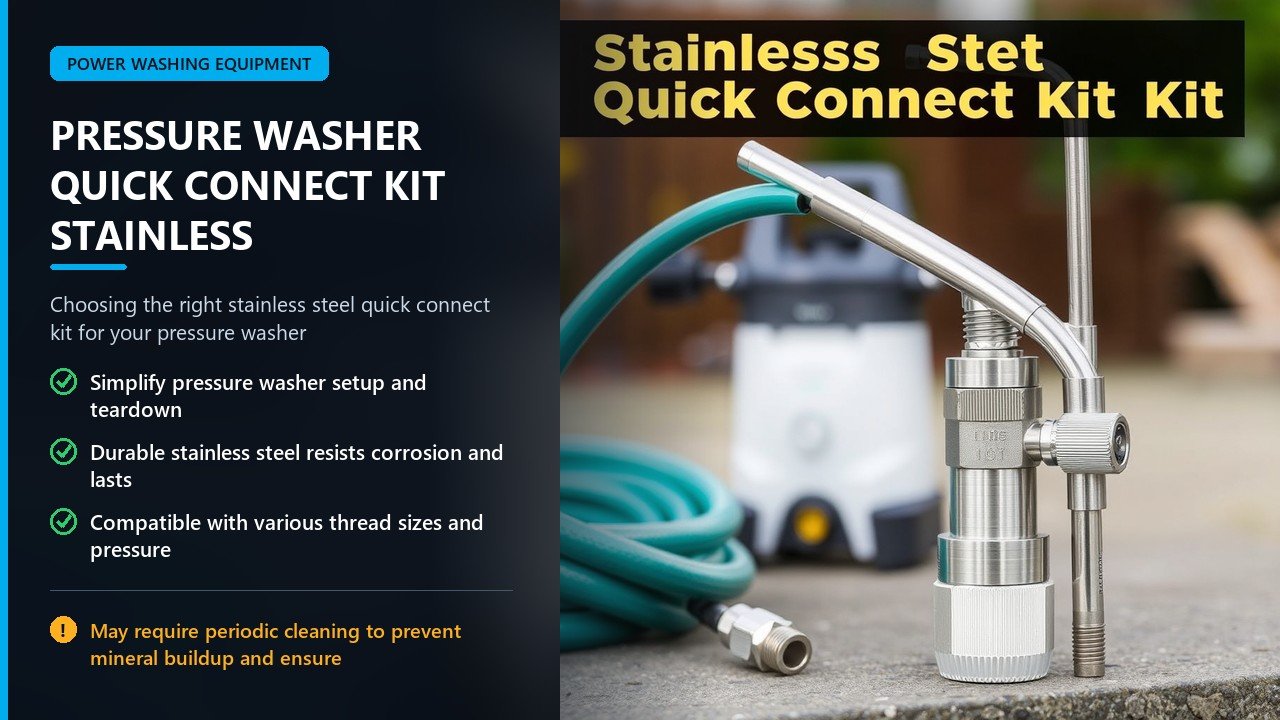
What a Quick Connect Kit Is
The kit replaces threading with clicking.
A pressure washer quick connect kit is a set of fittings that allow you to attach and detach components quickly using a push-and-click mechanism rather than screwing threaded connections together. The kit includes couplers, which receive the plug and lock it in place, and plugs, which are attached to the components being connected, along with adapters that convert existing threads to the quick connect system. With a kit, you can swap a nozzle, change from a wand to a surface cleaner, or connect a hose in seconds, which speeds up setup and makes cleaning more convenient.
Quick connect fittings are common on pressure washers for nozzles, which typically use a quick connect tip, and kits extend the system to other connections, such as the hose, wand, and accessories. This standardization makes the machine more versatile and user-friendly, and it reduces wear on threaded connections, which can strip or seize. A quick connect kit is thus an upgrade that improves convenience and protects the machine’s fittings, and choosing a quality kit, like stainless steel, ensures it lasts.
Understanding what a quick connect kit is sets the foundation. Because it replaces threaded connections with a fast, convenient click system, the kit makes pressure washing easier and protects the machine’s fittings, and it extends the quick connect convenience to more components. This improvement is worthwhile for anyone who values speed and ease. With this understanding, the benefits of stainless steel, the components of a kit, and the importance of matching sizes become clear. Our guide to pressure washer components places quick connects in the machine’s system.
Why Stainless Steel
The material affects durability and corrosion.
Quick connect kits are made from materials like brass, stainless steel, and plastic, and stainless steel offers advantages in strength and corrosion resistance. Because pressure washer fittings are constantly exposed to water, sometimes with detergents or minerals, corrosion is a real concern, and stainless steel resists rust and corrosion better than many alternatives, keeping the fittings functional and clean over time. This makes stainless steel fittings durable and reliable, especially for regular or commercial use where the machine is used frequently and exposed to moisture.
Stainless steel is also strong and resistant to wear, which matters for the moving parts of a quick connect, where the locking mechanism and seals endure repeated connect and disconnect cycles. Brass is a common material and works well, but it can corrode or tarnish over time, and plastic is affordable but less durable and may crack under stress or pressure. Stainless steel provides a balance of strength, corrosion resistance, and longevity that suits pressure washer fittings, making it a preferred choice for those who want durability.
Why stainless steel matters is its combination of strength and corrosion resistance. Because the fittings are exposed to water and stressed by repeated use, a material that resists rust and wear lasts longer and performs reliably, and stainless steel delivers this better than plastic and often better than brass. This makes a stainless steel kit a worthwhile upgrade, especially for frequent or professional use. Understanding the material’s benefits helps you appreciate the kit and choose accordingly. Our guide to power washer quick connect kit covers quick connect systems more broadly.
Components of a Quick Connect Kit
The kit includes several fitting types.
A pressure washer quick connect kit typically includes couplers, which are the female fittings that accept and lock a plug, often with a collar you pull back to release; plugs, which are the male fittings attached to hoses, wands, or accessories; and adapters, which convert threaded connections, such as the machine’s outlet or a hose’s threaded end, to the quick connect system. Kits may also include multiple adapters to fit different thread types on the machine, hose, and accessories, so everything works together.
The specific contents vary, and some kits focus on a particular connection, such as the hose-to-wand connection, while others are comprehensive and cover the machine outlet, hose, wand, and accessory connections. Kits for nozzles may include quick connect tips in various angles. Understanding the components helps you choose a kit that covers the connections you want to convert, and it ensures you have the right couplers, plugs, and adapters for your machine. This is why reading the kit’s description and matching it to your setup matters.
Knowing the components ensures a complete kit. Because connections require matching couplers, plugs, and adapters, and because different machines and accessories use different threads, understanding what a kit contains helps you select one that covers your setup and avoids missing pieces. This knowledge also helps you install the kit and troubleshoot if a connection does not fit. With the right components, the kit converts the connections you need, making the machine fast and convenient to set up. Our guide to pressure washer hose connector covers the connections in detail.
Thread Sizes and Compatibility
Matching sizes is essential.
The most important consideration when choosing a quick connect kit is matching the thread sizes and connection types on your machine, hose, wand, and accessories. Common pressure washer thread types include M22 (a metric thread often used for hose and machine connections), and 1/4-inch or 3/8-inch quick connect (the plug and coupler sizes used for wands, nozzles, and accessories), along with specific threads on certain machines. A kit must include the right adapters to convert these connections, or it will not fit.
Quick connect fittings also come in standard sizes, with 1/4-inch being common for nozzles and smaller connections and 3/8-inch for higher-flow applications, and the coupler and plug sizes must match so they connect. If you buy a kit with the wrong sizes, the components will not fit together or onto your machine, so verifying the sizes against your equipment before buying is essential. Some kits are designed for specific brands or connection types, while others are universal with multiple adapters, so checking compatibility prevents disappointment.
Thread sizes and compatibility are the make-or-break factor for a quick connect kit. Because the kit must adapt your machine’s specific connections to the quick connect system, and because sizes and threads vary, matching them ensures the kit works, while a mismatch renders it useless. This makes verifying compatibility the first step in choosing a kit. With the right sizes, the kit installs easily and delivers the convenience you want. Our guide to m22 pressure washer hose fittings covers one common thread type. Our guide to pressure washer hose connector types covers the range of connectors.
| Component | Purpose |
|---|---|
| Coupler | Female fitting that accepts and locks a plug |
| Plug | Male fitting attached to a component |
| Adapter | Converts threaded connections to quick connect |
| Common sizes | 1/4-inch, 3/8-inch quick connect; M22 thread |
This table summarizes the components of a quick connect kit and the common sizes, showing what the kit includes and why matching sizes matters. Understanding the components and threads lets you choose a kit that fits your machine and achieves the convenient connections you want. With the right kit, setup becomes fast and the machine more versatile, and stainless steel adds durability to the convenience.
Installing a Quick Connect Kit
Installation is straightforward with the right parts.
Installing a quick connect kit involves attaching the adapters to the machine’s threaded connections and the plugs to the components, then connecting them with the couplers. Begin by identifying the connections you want to convert, such as the machine outlet, the hose ends, and the wand, and select the matching adapters. Use thread sealant tape or paste on threaded connections to prevent leaks, being careful not to overtighten, and ensure the fittings are clean and free of debris. Then attach the plugs to the components and the couplers as needed.
Test the connections by running water through the system and checking for leaks, tightening or resealing as needed, and verify that the couplers lock and release smoothly. Keep the fittings clean, since grit can prevent the quick connect from sealing or locking properly. With proper installation, the kit works reliably, and the connections are fast and leak-free. Following the instructions and matching the parts to the connections ensures a successful installation.
Installing a quick connect kit is simple with the right parts and care. Because the adapters, plugs, and couplers must match the connections, and because thread sealant and cleanliness prevent leaks, following the steps installs the kit successfully. This makes the upgrade accessible to anyone, and it delivers the convenience of quick connections. With a proper installation, the kit transforms the machine’s setup and teardown. Our guide to pressure cleaner hose fittings covers the fittings involved.
Maintaining Quick Connect Fittings
Care keeps the connections working.
Quick connect fittings need occasional care to keep working properly. The locking mechanism and the internal O-rings seal the connection, and if they become dirty or worn, the connection may leak or fail to lock. Keep the fittings clean by rinsing and wiping them, and inspect the O-rings for wear, replacing them if they harden, crack, or leak, since O-rings are inexpensive and easy to replace. Lubricating the O-rings with a suitable grease can help them seal and last, and it makes connecting and disconnecting smoother.
For stainless steel fittings, the corrosion resistance reduces maintenance, but cleaning and inspection are still wise, and storing the fittings and hoses properly, protected from debris and damage, extends their life. If a connection leaks, checking the O-ring and the fit is the first step, and replacing a worn O-ring or cleaning debris usually solves it. With this simple care, quick connect fittings remain reliable, and the convenience they provide continues. Maintaining the fittings is easy and worthwhile.
Maintenance keeps quick connect fittings dependable. Because the O-rings and locking mechanism are subject to wear and debris, and because a small amount of care keeps them sealing and locking, looking after the fittings ensures they continue to work. This makes the convenience of quick connects lasting. With clean, well-maintained fittings, connections are fast and leak-free, and the stainless steel material adds durability. Our guide to pressure washer o ring kit covers the O-rings that seal these fittings.
Benefits of a Quick Connect Upgrade
The kit improves the whole experience.
Upgrading to a quick connect kit delivers convenience, speed, and protection. Instead of threading and unthreading fittings, which is slow and can strip threads, you click components together, so switching from a wand to a surface cleaner or a nozzle takes seconds, and setting up and packing away the machine is faster. This is especially valuable for users who clean often or professionally, where saving time on every job adds up. The convenience makes the machine more enjoyable and efficient to use.
The kit also protects the machine, since repeatedly threading and unthreading connections wears and can damage them, while quick connect fittings leave the original threads mostly untouched once the adapters are installed. It reduces the chance of cross-threading or overtightening, which damages fittings and causes leaks, and it makes the connections more consistent and reliable. For these reasons, a quick connect kit is a popular upgrade that improves both convenience and durability, and the stainless steel version adds corrosion resistance and longevity to the benefits.
The benefits of a quick connect upgrade are practical and lasting. Because the kit speeds setup and teardown, protects the machine’s threads, and makes connections reliable, it improves the pressure washing experience, and stainless steel ensures the fittings endure. This makes the kit a worthwhile addition for nearly any user. With the convenience and durability it provides, the quick connect kit is one of the best small upgrades for a pressure washer. Our guide to power washer quick connect kit covers the upgrade in general.
Brass Versus Stainless Steel
Both work, but stainless offers advantages.
Brass is a traditional material for pressure washer fittings and works well, offering good strength and resistance to corrosion in many conditions, and brass quick connect kits are common and often less expensive than stainless steel. However, brass can tarnish and, over time and with certain water conditions, corrode, and it is softer than stainless steel, so it may wear faster under heavy use. For occasional home use, brass is often perfectly adequate and cost-effective.
Stainless steel offers greater strength and superior corrosion resistance, which suits frequent use, exposure to water and detergents, and commercial applications where durability matters. It resists rust and tarnish, keeps its appearance, and withstands repeated use better, making it a longer-lasting choice. Plastic, meanwhile, is the least durable, suitable only for light use and low pressure. The choice between brass and stainless depends on your use and budget: brass for occasional, economical use, and stainless steel for durability and frequent or professional use.
The brass-versus-stainless comparison guides your choice. Because brass is adequate and affordable for light use while stainless steel lasts longer and resists corrosion for frequent or demanding use, selecting the material based on your needs and budget makes sense. For many users, stainless steel’s durability justifies the cost, while brass serves occasional users well. Understanding the trade-off helps you choose a kit that fits your use and lasts. Our guide to pressure cleaner hose fittings covers fitting materials and types.
Common Quick Connect Mistakes
Avoiding these errors keeps the kit working.
A common mistake is buying a kit without checking thread and size compatibility, so the fittings do not match the machine and cannot be used. Always verify your machine’s threads and the quick connect sizes before buying. Another mistake is using too few or too many adapters, or forcing a connection that does not fit, which damages the fittings, so match components carefully and never force a connection. Over-applying thread sealant to the quick connect parts, rather than only the threaded joints, can also interfere with the O-ring seal.
Neglecting O-rings and letting them wear or clog with debris causes leaks, so inspect and replace them as needed, and keep the fittings clean, since grit prevents proper sealing and locking. Overtightening threaded adapters can crack fittings or strip threads, so tighten firmly but not excessively. Using low-quality fittings that are not rated for the machine’s pressure can fail under load, so choose fittings rated for pressure washer use. Avoiding these mistakes keeps the kit reliable and the connections leak-free.
Avoiding common mistakes ensures the kit serves you well. Because mismatched sizes, forced connections, poor sealant use, neglected O-rings, overtightening, and low-quality fittings cause problems, being careful in choosing and installing the kit prevents them. This makes the quick connect upgrade reliable and long-lasting. With attention to compatibility, cleanliness, and quality, the kit works as intended, and the convenience and durability it provides are realized. Our guide to m22 pressure washer hose fittings helps you identify your threads.
Frequently Asked Questions About a Pressure Washer Quick Connect Kit Stainless Steel
What is a pressure washer quick connect kit? A set of couplers, plugs, and adapters that let you attach hoses, wands, nozzles, and accessories with a push-and-click instead of threading. It speeds up setup and protects the machine’s threaded fittings.
Why choose a stainless steel quick connect kit? Stainless steel resists corrosion and rust, which is important for fittings exposed to water, and it is strong and durable for repeated connect and disconnect cycles, lasting longer than plastic and often better than brass.
What sizes do quick connect kits come in? Common quick connect sizes are 1/4-inch and 3/8-inch, and threads include M22 and other types. Match the kit to your machine’s hose, wand, and accessory connections.
How do I know which kit fits my pressure washer? Check your machine’s thread types and the quick connect sizes on your hose, wand, and accessories, and choose a kit with matching adapters. Some kits are universal with multiple adapters.
Can I use quick connects on the high-pressure side? Yes, quick connect kits are made for pressure washer use, but use fittings rated for your machine’s pressure and flow. Stainless steel offers strength and corrosion resistance for these connections.
Why is my quick connect leaking? A worn or dirty O-ring, debris in the fitting, or a loose connection is the usual cause. Clean the fitting and replace the O-ring, and check that the coupler and plug are the correct size and locked.
Final Verdict on a Pressure Washer Quick Connect Kit Stainless Steel
A pressure washer quick connect kit in stainless steel upgrades your setup by replacing slow threaded connections with fast push-and-click fittings, while the stainless steel adds corrosion resistance and durability for wet conditions and repeated use. The kit includes couplers, plugs, and adapters, and it makes attaching hoses, wands, nozzles, and accessories quick and convenient.
The key to a good kit is matching the thread sizes and quick connect sizes to your machine, so check your connections before buying, and choose stainless steel for longevity. Install it with proper thread sealant on the threaded adapters, keep the O-rings and locking mechanism clean, and the kit will work reliably. With a stainless steel quick connect kit, your pressure washer becomes faster and easier to use, and the durable fittings stand up to years of cleaning.