Stand in any pressure washing aisle and watch a pro build a machine in seconds, hose to gun, wand to tip, lance to extension, each piece clicking in place with one hand while the other cradles the next part. The magic that makes it possible is the pressure washer quick connector, the small brass or stainless fittings that turn a threaded, wrench-swinging assembly into a fingertip swap. Half of every pressure washer’s convenience, and a solid share of its failures, lives in these few millimeters of thread and spring.
The story of quick connectors is the story of the o-ring. A coupler looks plain, a socket, a probe, and a tiny rubber ring, yet the ring is the entire seal, and the difference between a system that clicks together and one that spits water across a driveway is whether that ring sits clean and seated. Understanding the types of connectors, the fittings that match, and the care that keeps them sealed turns a mystery kit of small metal parts into the most reliable part of the whole machine.
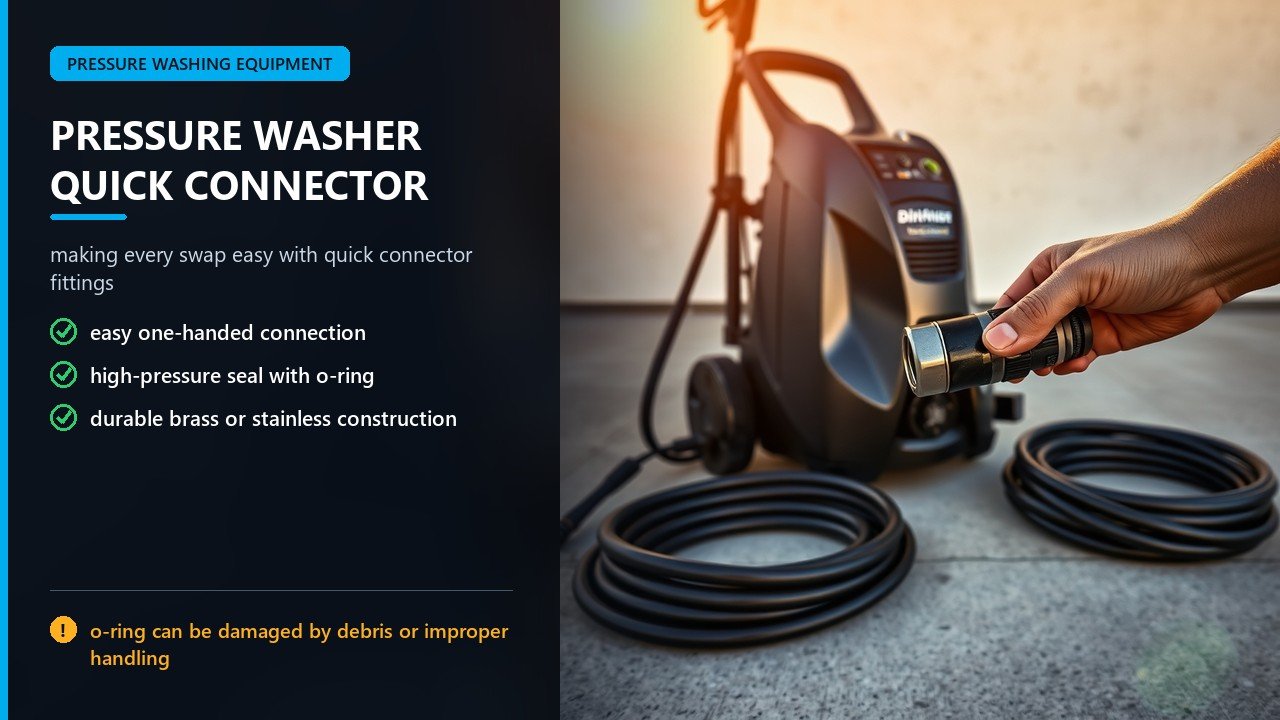
What a Quick Connector Does
A pressure washer quick connector is a pairing of a male probe and a female coupler that lock together with a spring-loaded collar, carrying water at high pressure through the joint. The operator pushes the probe into the coupler, the collar clicks, and the connection is made, no threading, no wrench, no Teflon tape, just a one-handed click that holds at full operating pressure. Pulling the collar back releases the probe, and the swap is as fast as the click.
The connector family follows a few families of sizes and threads. The most common consumer size is the 1/4-inch quick connect, with the male probe and the female coupler sold as parts of a kit, and the industry also uses threaded M22 connections on many machine inlets and outlets, which is where adapters step in. The pressure washer uses these two families together, quick connects for the wand and the tips, threaded fittings for the permanent machine ends, and an adapter joins them where needed.
The o-ring is the whole seal. Every quick connect seats a small rubber ring that closes the tiny gap between the probe and the socket as the collar clicks, and it is the ring that stops thousands of PSI from finding the daylight. That is why a leaking quick connect almost always means a worn, torn, or dirty o-ring rather than a failed coupler, and why keeping a bag of the right replacement rings fixes nearly every connector complaint in the family.
The Threaded Fittings Behind the Scenes
Behind the click of every quick connect sits the threaded world that holds the machine together. The gun’s inlet, the wand’s base, and the machine’s outlet use threaded connections, most often M22 and its variants, which seal with a tapered thread or a washer and stay put until deliberately taken apart. The threads are not quick, and they are not meant to be; they are the permanent anchors the quick connects attach to, and the adapters that bridge the two families live on the same threads.
Adapters line the bridge. A threaded M22 to quick-connect adapter turns a machine outlet into a click-in coupler, a quick-connect-to-thread adapter mates an old threaded wand to a new quick-connect gun, and a variety of in-between sizes joins boots, extensions, and guns that came from different kits. Each adapter adds a joint, and each joint adds a potential leak, which is why the pros keep the adapter stack short and inspect every seat rather than piling on converters until something wobbles.
The thread count and the wash geometry differ, and that is where mismatches bite. Some threads use a “BSP” and others a “NPT” profile that look alike and refuse to seal, and an adapter that threads but leaks is the classic symptom. The safe checklist before buying any adapter, measure the thread diameter and count the pitch, read the listing for the standard, and test on a bench joint before trusting it on the live machine, the adapter guidance on the site details the match.
Choosing Between Brass, Stainless, and Plastic
Material decides the connector’s life and price. Brass is the industry standard, corrosion-resistant, reasonably priced, and strong enough for the consumer and mid-range commercial classes, and it is what most kits ship. Stainless steel steps up for harsh chemicals, hot water, and the commercial grade, resists the elements that tarnish brass, and costs more; plastic sits at the budget end, light and cheap, and fails sooner under daily abuse and UV.
The right material follows the machine and the duty. A home machine fed tap water and run seasonally is perfectly served by brass quick connectors; a commercial rig running hot water, bleach, and daily bursts wants stainless on the chemical side and brass on the clean side, and a kid-simple plastic kit does a light car wash fine but frustrates a working crew. The chart is short and honest: match the metal to the pressure and the chemistry, and the connectors outlast everything they join.
The probe and coupler must come from the same standard to click. Sellers carry matched sets and labeled genders, and mixing brands within the same standard usually works since the 1/4-inch quick-connect form is universal, but a mismatched collar between cheap and premium models can be sticky or sloppy. The buyer who buys matched sets from one vendor removes the guesswork, and the quick connect guide on the site walks the whole family of combinations.
Fixing the Common Connector Problems
The most common connector failure is the permanent drip, and almost every drip is an o-ring. When the collar clicks but water weeps, the ring is worn, torn, or dry, and the fix is a replacement ring of the right size, seated clean, often with a smear of silicone grease to help it seal. When water sprays from the collar itself, the coupler’s internal spring or ball bearings are failing and the whole female half earns replacement, since the collar is what actually holds the probe in against the pressure.
A connector that refuses to click needs its own check. Grit in the socket, a burr on the probe, or a collapsed spring jams the ensemble, and the fix is a rinse, a light clean, and a fresh look at the collar’s action before the machine fires. A connection that fights the operator is usually the probe inserted at an angle, and the trick is to press straight and true until the collar seats, which is exactly why keeping the mating surfaces clean makes every swap feel effortless.
Prevention beats every repair. Rinse the connectors after chemical jobs, wipe the probes dry before storage, and keep spare o-rings and one spare coupler in the kit so a mid-job leak becomes a two-minute fix rather than a trip home. The operators who never leak are not lucky; they treat the o-rings like the consumable parts they are, and the connectors pay back the attention with a decade of reliable clicks.
Building a Quick-Connect Kit as One Set
A matching quick-connect set changes the feel of the entire machine. Choose one standard, the 1/4-inch quick connect, and outfit the gun, the wands, the lances, the tips, and the hose ends to that standard, so every piece of the kit clicks into every other without an adapter. This full-kit quick connect story spells out the build, and the result is a machine that reassembles in seconds instead of wrestling with threads.
The set wears a few simple rules. Keep the o-rings fresh, keep the thread adapters minimal, and keep the connectors clean and labeled, and the click system behaves like a primer system rather than a collection of leaks. When a hose or a wand wears out, buy the replacement in the same standard, so the family stays whole, and the operator builds the habit of checking each seat at assembly, which catches the worn ring before the first blast.
A complete set pays for itself in time. The operator who swaps tips five times a house saves a minute per swap, and the crew that builds the machine each morning saves the same, compounded across every job of the season. The quick connector is the smallest part of the kit and the most used, and building the whole kit around one quiet standard is the professional habit that keeps the clicks coming without a single socket set in view.
The O-Ring: Sizes and Replacement
The o-ring is the smallest part and the whole argument. Most pressure washer quick connectors seat a standard nitrile o-ring in the 1/4-inch class, sold by the dozen for pennies each, and a kit bag of replacement rings is the highest-value accessory a washer owner can own. The ring sits in the socket’s groove and closes the gap when the collar clicks, and its size, durometer, and cleanliness decide whether the seal holds or the drip drives the operator to the repair bench.
Replacement is a two-minute job. Disconnect and dry the parts, pop the worn ring from the groove with a dental pick or a small awl, seat the fresh ring square and free of cuts, and smear a light silicone grease so it hugs the probe without chafing. Nitrile rings handle water, mild detergents, and moderate heat fine; harsh bleach and hotter machines warrant a Viton or FKM ring rated for the chemistry, and the upgrade costs pennies next to the seals it protects.
Store the spares where the leaks happen. A small packet of rings and one spare coupler rides in the machine’s kit box, so a dripping collar mid-job becomes a three-minute swap instead of a canceled afternoon. The operators who never leak at a site keep the rings and the coupler at hand, replace on schedule, and treat the o-ring as the consumable it is, which is the quiet professionalism behind every click that just works.
Connecting Hoses, Guns, and Tips: A Walkthrough
The connector family proves itself in assembly. Start with the machine’s outlet, attach a threaded adapter if needed to convert to the quick-connect standard, then join the pressure hose with its matched coupler, one hand holding the hose, the other pressing the probe until the collar clicks. At the gun end, the same click joins the hose to the gun’s inlet, and the wand, its own probe already seated, clicks to the gun to complete the pressure path before a single nozzle is chosen.
The tip seat closes the loop. The wand ends in a quick-connect coupler that receives the color-coded tips, and swapping a tip becomes a pull-and-push of the collar at the far end of the wand, the whole machine’s versatility riding on that one click. A long day of house washing rotates green, white, and a soap tip at the same collar, and the operator who built the kit to one standard never reaches for a wrench, which is the exact convenience the quick connector was invented to deliver.
Every assembly follows the same three-beat rhythm, inspect the o-ring, press the probe straight, and feel the collar seat. Moving fast is fine; moving sloppy is the leak, since a ring pinched in the groove at assembly dribbles until it is reseated. The walkthrough is short and universal, and by the second machine the operator does it one-handed, which is the quiet proof that the standard, the matching set, and the clean collar turned the whole kit into a single clickable system.
Buying Connector Kits and Matching Sets
Shopping for connectors starts with knowing the machine’s family. Read the gun and wand ends, confirm the 1/4-inch quick connect or the M22 threads, and then buy matched male and female halves in a kit, since a matched set from one vendor clicks without the gender-and-standard guesswork that mixed brands sometimes bring. A starter kit with a few couplers, probes, and adapters covers a home machine, and the spare o-rings and a spare coupler belong in the same order.
Buy metal to match the chemistry. Brass satisfies a tap-water home machine, and stainless carries the hot water, bleach, and chemical side of a commercial rig, while plastic fits the light budget kit destined for occasional car washes. The metal and the spring matter more than the sticker on the box, since a collar that fails at the field hands is not a discount, it is a liability, and the what to buy guide on the site lists the trusted sets.
Read the reviews for the actual model. Real owners report the fit of a given coupler on a given brand of gun, the collar’s stiffness, and the o-ring quality, wisdom no sticker reveals, and a few minutes of reading prevents the adapter-stack regret that follow a hasty pick. The right kit assembled to one standard clicks for years, while the cobbled-together bag leaks and unravels, which makes the thirty minutes of buying the cheapest insurance the whole machine sees.
Safety at the Connector
Pressure and a loose connector make a short, sharp lesson. Never break a connector while the machine is pressurized and the trigger is live, because the release sends the probe flying and the water with it, and always squeeze the trigger and bleed the gun, or shut the machine down, before pulling the collar. The pressure that cleans a driveway at 3,000 PSI is the same pressure that turns a loose coupler into a projectile, and the bleed is the price of the click.
Inspect the connectors as preflight, not as afterthought. Feel every collar this morning clicks and holds, look at each o-ring for cracks, and confirm each adapter sits flush, because a coupler that separated once will separate again until fixed. The OSHA high-pressure guidance and the machine’s own safety notes set the floor, and the operator’s daily habit, check, click, bleed, is what keeps the connectors boring, which is exactly how good connectors should be.
Finally, store the connectors dry and clean. Water trapped in a coupler breeds grit and corrosion, and a connector packed wet in a bag carries its next failure with it, so dry the probes, seat the caps, and keep the kit sorted. The machine that clicks together dry and clean on the first try is the machine that runs a trouble-free season, and the o-rings, the collars, and the clean storage are the quiet reasons why.
Connector Cleaning and Seasonal Care
The connectors earn a small place in the seasonal routine. At the end of each workday, blast the probes and sockets clear with a quick rinse, dry them with a rag, and seat the caps or the tips back on so dirt and moisture never camp in a groove. Weekly in heavy use, give the collars a shot of the same air or water blast and confirm each one clicks and releases smoothly, because a collar that stiffened last month is a collar that will fight at the worst moment.
Seasonal service goes deeper. At spring prep, pull each o-ring, inspect for cracks and flatness, and replace the tired ones before the first real job, then lightly grease the seats and the probe tips so the first clicks of the season are smooth. At winter storage, dry every connector thoroughly, seat the caps, and keep the kit indoors, because a coupler left wet through a freeze splinters its ring and seizes its collar, the same freeze story that visits the winterizing guide.
The payback is invisible and total. The kit that clicks effortlessly in June is the kit that was dried and greased in May and stored clean in October, and the machine that never leaks over a season is the machine whose rings were changed on a schedule rather than on a breakdown. Connectors are small, and caring for them is small, which is precisely why the operators with the dripless machines are the ones who do it without thinking.
Common Quick Connector Mistakes
The mistakes cluster around the same hooks. The first is mixing standards and stacking adapters until a joint wobbles and leaks, when one standard plus a single matched adapter would have clicked clean. The second is ignoring the o-ring, letting a worn ring drip for months and blaming the connector, when the ring is a 50-cent consumable. The third is pressing a probe into a dirty socket, which jams the collar and scores the seat, when a rinse would have kept the assembly smooth.
Fourth is over-tightening the threaded side, which crushes the washer and strips the path, when plain hand-tight plus a snug final quarter turn holds the pressure. Fifth is buying the cheapest kit and riding it into commercial work, when the brass and springs were never built for daily duty, and the failures surface mid-shift at exactly the wrong moment. Each fix is a habit, clean, match, inspect, bleed, and buy the class the job deserves.
Finally, forgetting that connectors are consumables. A coupler that has clicked ten thousand times owes its life to nothing, and the honest owner retires the tired collar before it fails, keeping one spare in the box. The discipline is the same as the rest of the pressure washer, small parts, checked regularly, replaced on schedule, and the whole machine stays at the trigger, which is the ordinary miracle of a well-chosen quick connector set.
Frequently Asked Questions
What is a pressure washer quick connector? It is a coupling pair of a male probe and a female quick-connect coupler that lock with a spring collar, carrying the pressurized water through a one-hand click instead of a threaded joint. The o-ring inside is the seal.
Are all pressure washer quick connectors the same size? Most consumer kits use the universal 1/4-inch quick-connect standard with a matching male and female, while machine ends and some accessories use threaded M22. Check the fittings on your gun, wand, and tips before mixing.
Why does my quick connect leak? A leaking connector is almost always a worn, torn, or missing o-ring. Replace the ring, seat it clean with a light silicone grease, and re-click; a spray from the collar itself means the coupler’s spring or balls are failing and the coupler needs replacing.
Can I mix brass and stainless connectors? Yes, in the same standard the metals mate fine, though stainless resists harsh chemicals better where it matters most. The gender and standard must match, a male probe clicks into a female coupler of the same form.
Should I bleed the pressure before disconnecting? Yes. Squeeze the trigger to bleed the gun and shut the machine down before pulling the collar, because releasing a live 3,000 PSI connection sends the probe flying. Bleed first, click later, every time.
Final Thoughts on the Pressure Washer Quick Connector
The pressure washer quick connector is the machine’s smallest and most essential convenience, the click that makes the whole swappable kit work and the o-ring that holds every drop of the pressure. Chosen to one standard, matched in size and metal, and kept clean with fresh rings, the connector turns the pressure washer from a fixed tool into a modular one, and it does it with the quiet reliability that the rest of the machine leans on.
Outfit the kit around a single quick-connect family, buy the metal to match the chemistry and the duty, and make the preflight, check, click, bleed, part of every job. Keep spare o-rings and a spare coupler in the box, rinse the connectors after chemical work, and retire the tired collars before they fail. Handled that way, the click comes every time, the leaks never do, and the pressure washer stays the fast, dependable tool its maker intended it to be.