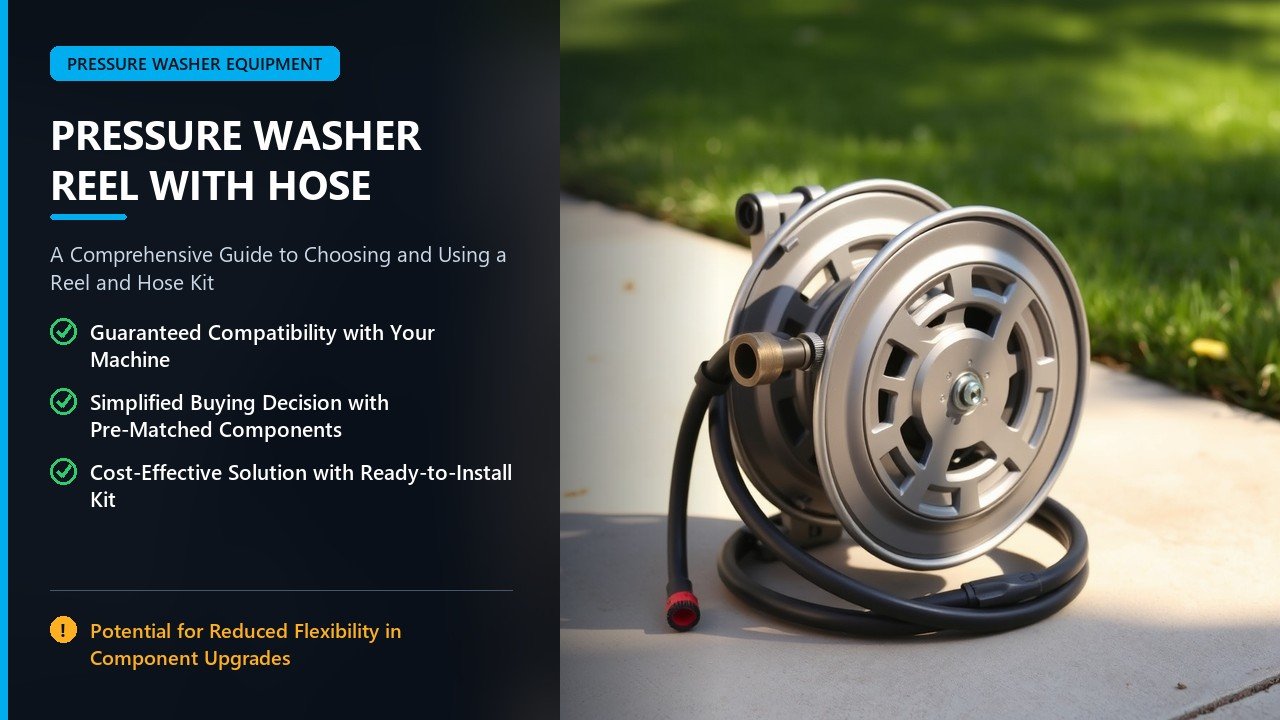
Buying a hose reel and a high-pressure hose separately can leave you guessing about compatibility. That is why many owners choose a pressure washer reel with hose — a matched kit where the reel and the hose are designed to work together. The reel holds the hose properly, the fittings line up, and the capacity is matched, so the whole setup works as intended from day one.
This guide focuses on reel-and-hose kits: why buying them together makes sense, what to look for in a kit, how to install and use it, and how to keep both components in good condition.
Why Buy a Reel With the Hose
A reel and hose that are matched avoid the most common frustration of separate purchases: incompatibility. When the reel’s capacity, its swivel, and its fittings are chosen for a specific hose, the hose winds smoothly, the connection seals properly, and the reel is not strained by a hose that is too big or too long for it.
Kits also simplify the buying decision. Instead of cross-checking hose diameter, length, pressure rating, and reel capacity, you choose a kit rated for your machine and trust that the parts fit together. For someone who is not steeped in pressure washer specifications, this saves time and prevents costly mistakes.
A matched kit can also cost less than buying premium components separately, and it arrives ready to install. For many owners, the convenience and guaranteed compatibility of a kit outweigh the flexibility of picking parts individually.
What Comes in a Reel and Hose Kit
A typical kit includes a reel — usually manual, often wall-mount or cart-mount — and a high-pressure hose rated to match the reel. It may also include mounting hardware, a swivel or inlet fitting, and sometimes a leader hose that connects the reel to the pump or gun. Some kits add a gun, wand, and nozzles to form a complete accessory set.
The hose in a kit is the heart of it. It should be rated at or above your machine’s maximum pressure, with a diameter and length suited to your flow and reach. The reel should hold that hose with a little room to spare, so the hose winds without binding.
Check what the kit includes before buying. A kit with a quality hose, a smooth swivel, sturdy mounting hardware, and matching fittings is a complete solution. A kit with a thin hose or a flimsy reel may save money upfront but cost more in replacements if the hose cracks or the reel binds.
Matching the Kit to Your Machine
The first requirement is pressure rating. The hose in the kit must be rated at or above your machine’s maximum pressure, or it can burst and cause injury. Verify the rating, and never use a kit whose hose is underrated for your washer.
Then match the fittings. Pressure washers use common connection standards, especially quick-connect fittings and M22 threaded connections, but not every machine is the same. Confirm the kit’s fittings match your machine, or that the kit includes the adapters needed. Restrictive or mismatched fittings cause leaks and pressure loss.
Consider flow and reach next. Choose a hose diameter that suits your machine’s flow — larger diameters flow more but are heavier — and a length that reaches your work without excessive pressure loss. The reel should be sized for that hose, with capacity left over so it is not overfilled.
Manual vs Powered Kits
Most reel-and-hose kits use a manual reel, wound by a crank. Manual reels are simple, durable, and affordable, and they suit the majority of home and light commercial uses. They have no power source to fail and are easy to maintain.
Powered kits, with a motor or hydraulic drive, wind the hose automatically and are convenient for very long hoses and heavy use. They cost more and add complexity, but for professional operations or long hoses, the reduced effort can be worthwhile. Match the kit to how often and how long you clean.
For most buyers, a manual kit is the right choice: it delivers the organization and protection benefits of a reel without the cost and maintenance of a powered system. Choose powered only if the hose is long enough and the use frequent enough that winding by hand becomes a real burden.
Installing a Reel and Hose Kit
Installation depends on the reel’s mounting type. For a wall-mount kit, fasten the reel into solid framing or masonry, not drywall, because a full hose reel is heavy and pulls outward as you wind and unwind. Position it near the power washer and the water supply, at a comfortable height.
Connect the reel’s inlet to the machine and the hose to the reel’s outlet, following the kit’s instructions. If the kit includes a leader hose, connect it between the reel and the pump or gun as directed. Before winding the hose, pressurize the system briefly and check for leaks at every connection. Fix any drip first.
For a cart-mount kit, bolt the reel to the machine’s frame securely, checking that it does not interfere with the wheels, handle, or controls. For a free-standing reel, place it on stable ground and anchor it if it might tip. Once mounted, wind the hose evenly and confirm the reel turns smoothly without binding.
Using the Reel and Hose
Using the kit well comes down to a few habits. When deploying, pull the hose straight off the reel and walk it out to the work area rather than dragging it around obstacles. Pulling at an angle strains the swivel and the hose; pulling straight keeps everything aligned.
When winding, do it with the hose straight and free of kinks. Winding a tangled hose forces kinks into the coil, which cause pressure loss and cracking. Wipe off heavy grit before winding so it does not get trapped against the hose. Keep the hose clear of sharp edges, hot exhaust, and chemicals.
Keep the gun locked when not spraying, and never pull the power washer by the hose. Disconnect and drain the hose when the job is done, then store it on the reel if indoors, or loosely coiled if not. Good handling protects both the hose and the reel and keeps the kit working smoothly.
Managing Pressure Loss
Every hose and fitting adds some pressure loss, and long or thin hoses lose more. If you need long reach, choose a larger-diameter hose to limit the loss, and confirm the reel can hold it. Keeping connections clean and replacing worn O-rings and swivels maintains full flow.
Minimize adapters. Each additional adapter adds a potential leak and a bit of restriction, so a kit whose fittings match your machine directly performs better than one that needs a chain of adapters. If adapters are unavoidable, use good-quality ones and check them for leaks.
The practical rule is to use the shortest hose that reaches your work, in a diameter that matches your machine’s flow, with clean, quality fittings and a smooth swivel. That combination delivers the machine’s pressure to the nozzle and avoids the common complaint that a hose “kills” performance.
Maintaining the Kit
Maintain the hose and reel together, since they work as a system. Rinse the hose after use to remove grit, then wind it without kinks. Inspect the hose regularly for cracks, bubbles, abrasion, and worn fittings, and replace it immediately if the outer cover is damaged or the hose bulges, which signals a weakened wall.
Check the reel’s swivel and bearing for smooth operation and lubricate them if allowed. Tighten the mounting hardware periodically, because vibration and repeated winding loosen bolts. Replace worn swivels and O-rings rather than tolerating leaks.
Before winter, drain the hose and the reel and store them appropriately. Water left in a hose or in the reel’s swivel over a freeze can crack it. Store the kit dry and, where possible, above freezing, and clean out any grit that collected during the season.
Common Mistakes to Avoid
The most common mistake is choosing a kit whose hose is rated below the machine’s pressure, risking a burst. Another is buying a reel too small for the hose, or a hose too long for the reel, so the drum binds and the hose kinks. Poor fittings that leak are a frequent source of frustration.
On the use side, winding a kinked hose, overfilling the reel, and leaving water in the kit over winter are easy errors. So is pulling the machine by the hose or dragging the hose around corners, which damages both components. Each is cheap to prevent.
Finally, ignoring a slow leak at the swivel or a loose mounting bolt lets a small problem grow into a failed hose or a fallen reel. A matched reel-and-hose kit, installed and maintained properly, is one of the most practical upgrades a pressure washer owner can make, and it lasts for years with modest care.
What to Check in a Reel and Hose Kit
Not all kits are equal. The table below lists the components to verify before buying, with what to look for in each, so the kit you choose performs and lasts.
| Component | What to Look For |
|---|---|
| Hose | Pressure rating at or above your machine; correct diameter and length |
| Reel capacity | Rated for the included hose with a little room to spare |
| Swivel | Smooth and serviceable; replaceable if possible |
| Fittings | Match your machine; minimal adapters needed |
| Build | Steel or stainless for durability; sturdy frame and bearing |
| Mounting | Wall, cart, or free-standing to suit your setup; hardware included |
If a kit checks these boxes, it will serve well. If the hose is underrated or the reel is too small, keep looking — the savings are not worth the risk of a burst hose or a binding reel.
Setting Up a Fixed Station
A reel-and-hose kit is most useful as part of a fixed cleaning station. Mount the reel on a wall near a permanently placed power washer and a convenient water tap, and you have a setup that is always ready: unwind the hose, connect the gun, and clean. This is the workflow that wall-mount reels and integrated machines are built around.
Position the station so the hose reaches your main areas without stretching, and keep the gun, nozzles, and accessories on nearby hooks or shelves. A place for each tool keeps the station tidy and makes starting and finishing a job quick. It also encourages good habits, like winding the hose properly every time.
For a portable machine, a cart-mount kit brings the same organization on the move. Confirm the mounting brackets fit your machine’s frame and that the added weight and bulk do not make the washer hard to move. The convenience of an integrated reel usually justifies the small extra weight.
Hose Selection Within the Kit
The hose is the most important part of any kit, because it carries the pressure and takes the wear. A good hose has a durable outer cover, reinforced construction, and quality crimped or threaded fittings. A cheaper hose with a thin cover will abrade and crack sooner, especially when wound repeatedly on a reel.
Match the hose diameter to the machine’s flow. A larger-diameter hose flows more water with less pressure loss, which matters for higher-flow machines and longer runs. It is also heavier and takes more room on the reel, so balance performance against handling and capacity.
Match the length to your reach. A longer hose adds pressure loss and takes up reel space, so use the shortest length that reaches your work. If you need more distance, step up the diameter to limit the loss, and make sure the reel can hold the extra length.
Kits vs Separate Components
Buying a kit guarantees compatibility and simplifies the decision, but buying separately offers flexibility. If you already own a good hose, you might buy only a reel to match it. If you want a particular hose, you can pair it with a reel chosen for its diameter and length.
A kit makes sense when you are starting fresh or want assurance that the parts fit. Buying separately makes sense when you have specific requirements or already own one of the components. Either way, the principles are the same: match pressure rating, flow, diameter, length, and fittings.
When in doubt, a quality kit is the safer choice for a beginner, because it removes the guesswork. For a more experienced owner with specific needs, buying the reel and hose separately lets you optimize each part without being limited to what a kit includes.
Getting Value From the Kit
To get the most from a reel-and-hose kit, match it to your machine and your work, install it securely, and use it with care. A kit that fits your water supply, your reach needs, and your cleaning style delivers the best value, while one that is mismatched wastes money.
Spend on the components that matter most: the hose and the swivel. A high-quality hose and a smooth, serviceable swivel do more for performance and longevity than a fancy frame. The reel itself should be sturdy and sized correctly, but the hose and swivel are where reliability lives.
Finally, maintain the kit as a system. Rinse and drain the hose, keep the swivel and bearing clean, tighten the mounting, and store it dry and above freezing. A well-chosen, well-kept reel-and-hose kit turns a loose pressure washer hose into an organized, durable, and convenient part of your cleaning setup.
Frequently Asked Questions
What is a pressure washer reel with hose? A matched kit containing a hose reel and a high-pressure hose designed to work together, so the capacity, fittings, and diameter all line up.
Is it better to buy a kit or separate parts? A kit guarantees compatibility and simplifies buying; separate parts offer flexibility. A quality kit is the safer choice if you are unsure.
How do I know the hose is right for my machine? The hose’s pressure rating must be at or above your machine’s maximum pressure, with a diameter and length suited to its flow and your reach.
Do all kits fit all machines? No. Check the fittings — quick-connect or M22 — and confirm the kit matches your machine or includes the needed adapters.
Will a long hose reduce pressure? Yes, long hoses add pressure loss. Use the shortest hose that reaches, in a proper diameter, to keep pressure at the nozzle.
Should I choose a manual or powered reel kit? Manual suits most home and light commercial use; powered suits very long hoses and heavy use. Choose based on how much winding effort you can accept.
How do I store a reel and hose? Drain the hose, wind it without kinks, and store it dry and above freezing. Drain the reel’s swivel too, so trapped water does not freeze and crack it.
Can I repair a damaged high-pressure hose? No. A cut or bulging hose cannot be safely repaired and should be replaced, because it can burst under pressure.
Final Thoughts
A pressure washer reel with hose removes the guesswork from adding a reel to your setup. Matched components mean the hose winds smoothly, the fittings seal, and the reel is not strained, so the whole system works as intended and lasts longer than mismatched parts.
Check the hose rating, the reel capacity, the swivel, and the fittings before buying; install the kit securely; and use and store it with care. Done well, a reel-and-hose kit turns a loose hose into an organized, durable part of your cleaning routine. For related reading, see our guides on the pressure washer reel and hose and the reel for power washer.