The moment I bolted a wall mounted hose reel into my garage and connected a pressure washer to it, the entire feel of my weekend cleaning changed. No more tripping over a coiled hose, no more fighting a tangled mess to get twenty feet of line, no more dragging a heavy jumble across the floor. I rolled the washer into place, clicked the hose in, pulled out exactly what I needed, and when I was done, one gentle tug rewound everything neatly against the wall. It sounds like a small thing until you live without it, and then the pressure washer wall mounted hose reel becomes one of those upgrades you would never give back.
If you are tired of hose chaos, this guide is for you. We will cover what these reels are, how they work, how to choose the right one for your pressure washer, how to mount it safely, how to handle the unique demands of high-pressure hose, and the mistakes that turn a good reel into a leaky disappointment.
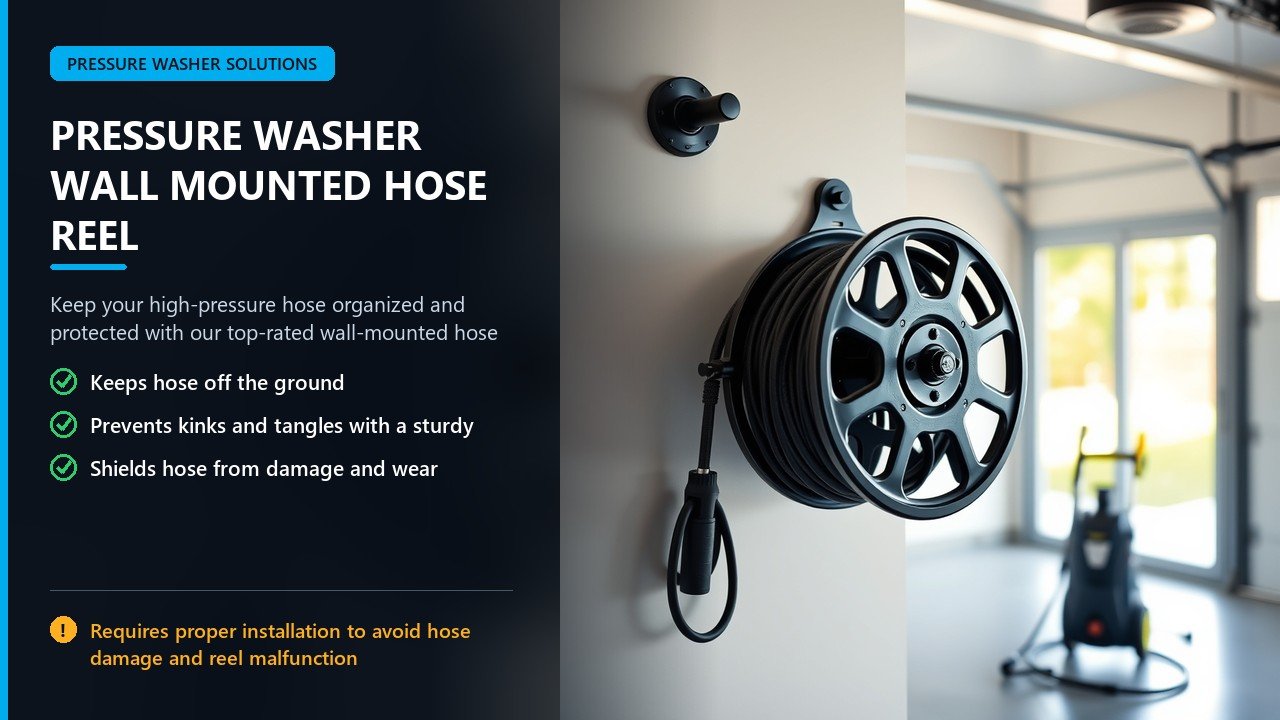
What Is a Pressure Washer Wall Mounted Hose Reel
A wall mounted hose reel is a bracket-mounted spool that holds a length of pressure washer hose. You mount it to a wall, post, or trailer frame, connect the hose to your machine through a swivel fitting, and wind or unwind the hose as needed. The reel keeps the hose off the ground, prevents kinks and tangles, and shields it from damage and UV exposure.
The difference between a garden hose reel and a pressure washer reel comes down to engineering. Garden hose carries low pressure and is relatively soft. Pressure washer hose carries thousands of PSI and is stiff, heavy, and unforgiving. The reel for pressure washer service needs a high-pressure-rated swivel, a strong frame that will not flex under the load of a heavy hose, and a spool wide enough to hold the hose without forcing tight bends that damage it.
Wall mounted reels are popular because they save floor space and keep the hose exactly where you need it, at the machine. In a tight garage, a wash bay, or a small trailer, that vertical storage is the difference between a clean station and a cluttered one.
Why a Wall Mounted Reel Is Worth It
Reels are not just about tidiness. They solve real problems that affect both how often you clean and how long your hose lasts.
Faster setup and teardown. When the hose is already on a reel at the machine, you pull it out and go. When you are done, you wind it back in seconds. That time saving adds up over a season, and it makes you more likely to tackle small jobs instead of putting them off.
Longer hose life. Hoses fail most often at kinks, sharp bends, and abrasion points, and at the fittings where constant flexing weakens the crimp. A reel stores the hose in gentle, consistent coils instead of a jumbled pile, which dramatically reduces kinking and bend stress. Keeping the hose off the ground also protects it from being run over and from UV damage that dries out rubber over time.
Safer workspace. A hose on the floor is a trip hazard and a snag waiting to happen. On a reel, it is up and out of the way.
A tidier, more professional station. Whether it is a home garage or a commercial wash bay, an organized setup looks better and works better. Clients notice, and you notice every time you use it.
Better for mobile rigs. On a trailer or truck-mounted rig, a reel is almost mandatory. It keeps a long hose contained, protects it during transport, and makes deployment fast on each job.
How a Hose Reel Works
A pressure washer hose reel has four main parts, and understanding them helps you spot quality and diagnose problems.
The drum or spool. This is the rotating cylinder the hose wraps around. A drum that is too narrow forces the hose into tight coils that kink and stress the rubber. A well-sized drum winds the hose in gentle, open loops that protect it.
The swivel. This is the heart of a reel. The swivel lets the drum rotate while water flows continuously from the fixed inlet to the turning drum and out to the hose. Because it carries full pressure while moving, the swivel is where cheap reels fail. Look for a swivel rated for your working pressure and heat level, with serviceable seals.
The frame and mounting bracket. The frame holds the drum and mounting hardware. It must be rigid enough to resist flexing under the weight of a full hose and the force of pulling the hose off the reel. Thin, flimsy frames warp and cause misalignment and leaks.
The crank or drive. Manual reels use a hand crank with a locking pin or brake. Motorized or spring-return reels use a motor or a spring to wind the hose automatically. The drive determines how easy rewinding is, which matters more as hose length increases.
Manual, Spring Return, or Motorized
Reels come in three drive styles, and the right choice depends on hose length and how much effort you want to spend.
Manual reels. You crank the hose back in by hand. They are simple, inexpensive, reliable, and virtually maintenance-free. For most homeowners and many small operations, a manual reel is the smart choice. The heavier a hose and the longer the run, the more work cranking becomes, so manual reels suit shorter hoses best.
Spring return reels. A spring rewinds the hose automatically, so you get the convenience of self-storing without a motor. However, springs can lose tension, and a powered retraction can whip a heavy pressure hose dangerously if you are not holding it. These are more common with air and water hose than with heavy pressure washer hose.
Motorized reels. A motor winds the hose electrically or hydraulically. They are the premium option for long hoses on commercial rigs, where hand-cranking a hundred feet of stiff hose is impractical. They cost more and add complexity, but on a busy mobile setup the time saved is real.
| Reel Type | Best For | Cost | Effort |
|---|---|---|---|
| Manual crank | Homes, short hoses, budget setups | Low | Moderate |
| Spring return | Light hoses, light commercial | Medium | Low |
| Motorized | Long hoses, heavy commercial rigs | High | Minimal |
Choosing the Right Reel for Your Pressure Washer
Matching the reel to your machine and hose prevents most of the problems people blame on the reel itself.
Match the pressure rating. The reel’s swivel and fittings must be rated above your machine’s working pressure with margin to spare. A reel meant for garden hose will burst or leak under pressure washer loads.
Match the temperature rating. If you run hot water, the swivel seals must be rated for heat. A cold-water reel will fail quickly on a hot water machine.
Match the hose diameter and length. Reels are sized to hold a specific hose diameter and a maximum length. A reel rated to hold a hundred feet of half-inch hose may not fit the same footage in a larger diameter. Overfilling a reel forces tight bends that damage the hose and strain the swivel.
Match the flow rating. The swivel’s internal passages must flow enough water to keep up with your pump. A restrictive swivel chokes flow and reduces cleaning performance.
Consider the mounting environment. Indoors, outdoors, on a trailer, or on a skid, the reel needs to survive its environment. Look for corrosion-resistant materials for outdoor and mobile use.
How to Mount a Wall Reel Safely
Mounting is where a good reel becomes a permanent, reliable part of your station, or a wobbly problem. Take it seriously.
Find solid structure. A loaded pressure washer reel can weigh a lot once a long hose is spooled on. Mount into studs, concrete, or steel, not drywall alone. Use appropriate anchors for your wall type, and when in doubt, add a backing board or steel plate to spread the load.
Choose the height carefully. Mount the reel so you can pull and crank the hose comfortably. Too high and cranking is awkward; too low and the hose drags. A common approach is to mount it at roughly waist or chest height, near the machine’s outlet.
Plan the hose path. The hose should travel from the machine to the reel inlet with a gentle curve, then from the reel out to your work area without sharp bends. Avoid routing the hose through tight spaces or across walkways where it can be stepped on or snagged.
Leave service access. Make sure you can reach the swivel to inspect and service it. A reel bolted tight into a corner where you cannot get to the fittings is a future frustration.
Use quality fittings. Connect the machine to the reel and the reel to the hose with properly rated fittings and, ideally, quick connects for fast setup. Cheap fittings are a common source of leaks at the reel.
Pressure Washer Hose: The Part That Makes or Breaks the Reel
Your reel is only as good as the hose it holds. Pressure washer hose is stiff and heavy, and the wrong hose makes any reel miserable.
Choose a hose rated above your machine’s working pressure, with a high burst rating for safety. A steel-braided, rubber-covered hose generally handles heat and pressure better than a lightweight thermoplastic hose, though it is heavier. Consider a flexible, lighter hose for easier handling if your pressure allows, because a more pliant hose winds onto a reel with much less fighting.
Length matters too. A hundred-foot hose is convenient for reaching around a building, but it is heavy and stiff to manage. Many users run a shorter primary hose to a convenient point and use a second hose only when needed. If you regularly need a long reach, a larger reel rated for the load, or a motorized reel, saves your arms.
One more tip: keep the hose clean and dry before winding it in. Grit on the hose wears the swivel seals and contaminates the reel, and winding a wet hose promotes corrosion and mildew. A quick wipe as you wind is a small habit with a big payoff.
Common Mistakes to Avoid
Buying a garden hose reel for pressure washer use. It will leak or burst. Get a reel rated for pressure.
Overfilling the reel. Too much hose forces tight bends that kink and damage it. Stay within the capacity rating.
Mounting into drywall alone. The reel will pull out under load. Anchor into solid structure.
Using a cold-rated reel with hot water. The swivel seals fail. Match the temperature rating.
Ignoring the swivel. It is the most stressed part of the reel. Inspect it, keep it clean, and service it.
Kinking the hose on the reel. Wind evenly and keep gentle loops. A kink under pressure weakens the hose and can burst.
Leaving the hose pressurized on the reel. Relieve pressure after use to reduce stress on seals and fittings.
Maintenance for a Long-Lasting Reel
Reels are low-maintenance, but a little care goes a long way. Periodically inspect the swivel for leaks, stiffness, or play, and rebuild or replace it when it degrades. Clean the reel and hose to remove grit. Lubricate the drum bearing or crank mechanism according to the manufacturer’s guidance. Check mounting hardware for looseness, especially on trailers where vibration works bolts loose. Inspect the hose for cuts, bulges, and worn spots near the fittings, and replace a failing hose immediately, because a burst under pressure is dangerous. Store the reel protected from weather where possible, and drain water from the hose before long storage or freezing temperatures.
Wall Mount vs Cart vs Floor Stand Reels
Wall mounted is popular, but it is not the only option. Knowing the alternatives helps you pick the best fit for your space, especially if you rent, move often, or have limited wall structure.
Wall mounted reels. Bolted to a wall or post, these save the most floor space and keep the hose off the ground. They are ideal for garages, wash bays, and trailer walls. The catch is that you need solid structure to mount into, and the location is fixed.
Cart mounted reels. A reel on a wheeled cart can be rolled to the job and moved out of the way when stored. This suits setups where the machine itself moves or where wall space is limited. Carts add footprint but improve mobility.
Floor or pedestal stand reels. These sit on the ground on a stand and can be relocated more easily than a wall mount. They suit open areas without convenient walls, though they take up floor space and can be tipped if not stable.
Trailer and skid mounted reels. On mobile rigs, reels are bolted to the trailer frame or skid, often with the hose routed to a boom or guide so it deploys in any direction. This is the standard commercial configuration.
| Reel Mount | Space Used | Mobility | Best For |
|---|---|---|---|
| Wall mounted | Minimal | Fixed | Garages, bays, trailer walls |
| Cart mounted | Moderate | High | Renters, shared spaces, flexible setups |
| Floor or pedestal | Floor space | Moderate | Open areas with no usable wall |
| Trailer or skid | On the frame | With the vehicle | Mobile commercial rigs |
Placement Ideas for Different Setups
Where you mount the reel shapes how pleasant the whole station is to use. These setups work well in practice.
The residential garage. Mount the reel on the wall beside the pressure washer, at a height that lets you crank comfortably, with the hose feeding out toward the driveway. Keep the machine on a small platform or cart so it stays dry, and route the hose so it does not cross the walkway to the house.
The dedicated wash bay. In a fixed bay, mount the reel near the center of the back wall and consider a second reel on the opposite side if you clean long vehicles. A boom or guide arm lets you pull the hose in either direction without dragging it around the car.
The mobile trailer rig. Mount the reel on the trailer frame at a height that lets you deploy the hose over the side without lifting it high. A guide roller at the trailer edge reduces wear where the hose bends as you pull. Make sure the reel is protected from road spray and debris during transport.
The small home patio setup. If you do not want to drill into the house, a cart-mounted reel stored in a corner and rolled out for use is a clean solution. It keeps the hose organized without permanent mounting.
Quick Connects Make the Reel Even Better
One upgrade multiplies the convenience of a reel: quick connect fittings. With quick connects, you snap the hose onto the machine and the wand, and you can swap components in seconds without threading and tightening fittings every time. On a reel setup, quick connects let you detach the hose for storage or transport, move the machine, and change accessories without fighting threads.
Choose stainless steel or high-quality brass quick connects rated for your pressure and temperature. Cheap connectors leak and wear out quickly, which defeats the purpose. Keeping a spare set of o-rings on hand also prevents a slow drip from becoming a project. If you are new to these fittings, our guide to pressure washer quick connect fittings explains how to choose and maintain them.
Tip: Standardize your quick connects across your machine, wand, surface cleaner, and foam cannon. When everything uses the same connector, swapping tools takes seconds, and your reel becomes the hub of a genuinely modular setup.
How Much Hose Do You Actually Need
More hose is not always better. Every extra foot adds weight and stiffness to manage, and a reel stuffed with more hose than it is rated for damages both the hose and the swivel.
Measure the longest realistic distance from your machine to the farthest point you clean, add a margin of about ten to fifteen feet so you can move around obstacles, and stop there. For a typical two-car garage and driveway, that often means forty to sixty feet. For a large commercial site, a hundred feet or more may be justified, but that is where motorized reels and larger drums earn their keep.
If your machine lives in one place but you occasionally need extra reach, consider keeping a second hose on a separate reel or hook rather than cramming a longer hose onto the primary reel. This keeps day-to-day use light and easy while still covering the occasional long job. And remember that if you are buying a new pressure washer and reel together, matching the reel capacity to the hose you will use most is more important than planning for rare maximum reach.
Pressure Washer Wall Mounted Hose Reel: Frequently Asked Questions
Can I use a regular garden hose reel for a pressure washer? No. Garden hose reels and their swivels are not rated for pressure washer pressure and will leak or burst. Use a reel rated for pressure washer service.
What size reel do I need? Match the reel to your hose diameter, length, pressure, and temperature. Choose a reel rated to hold your hose length comfortably, with a swivel rated above your machine’s working pressure.
Can I use a wall reel with a hot water machine? Yes, if the reel and its swivel are rated for hot water. Check the temperature rating before pairing a reel with a heated machine.
How do I stop the reel from leaking? Replace or rebuild the swivel, use rated fittings, and keep the hose and water clean. Swivel seals are the usual leak point.
Where should I mount the reel? On solid structure, at a comfortable height near the machine’s outlet, with a gentle hose path and access to service the swivel.
Is a motorized reel worth it? For long hoses on commercial rigs, yes. For home use and short hoses, a manual crank reel is simpler and more reliable.
Final Verdict on Wall Mounted Hose Reels
A pressure washer wall mounted hose reel is a small upgrade with an outsized effect on how pleasant and efficient your cleaning routine becomes. It protects your hose, keeps your workspace safe, cuts setup time, and makes even a modest home setup feel organized and professional. The keys are simple: buy a reel rated for your pressure and temperature, size it correctly to your hose, mount it into solid structure, and take care of the swivel.
Whether you run a compact electric machine in a garage or a heavy-duty hot water rig on a trailer, the reel is the part that turns a tangle of hose into a tool you enjoy using. Start with the right reel, add a quality hose and rated fittings, and you will wonder how you ever worked without it.