For anyone who cleans properties professionally or has a large property to maintain, a pressure washer with a trailer is a combination that changes how you work. Instead of dragging a machine and a tangle of hoses around, you get a self-contained unit that carries the washer, its water supply, and its accessories, ready to roll to the job and start cleaning. The trailer turns a tool into a system, and for the right user, it is a significant upgrade in capability and efficiency. This guide explains what a pressure washer with a trailer involves, the benefits, how machines are mounted on trailers, what to look for whether buying or building, and the considerations for towing and use.
What a Pressure Washer With a Trailer Involves
The combination pairs a machine with a trailer for mobility and self-sufficiency.
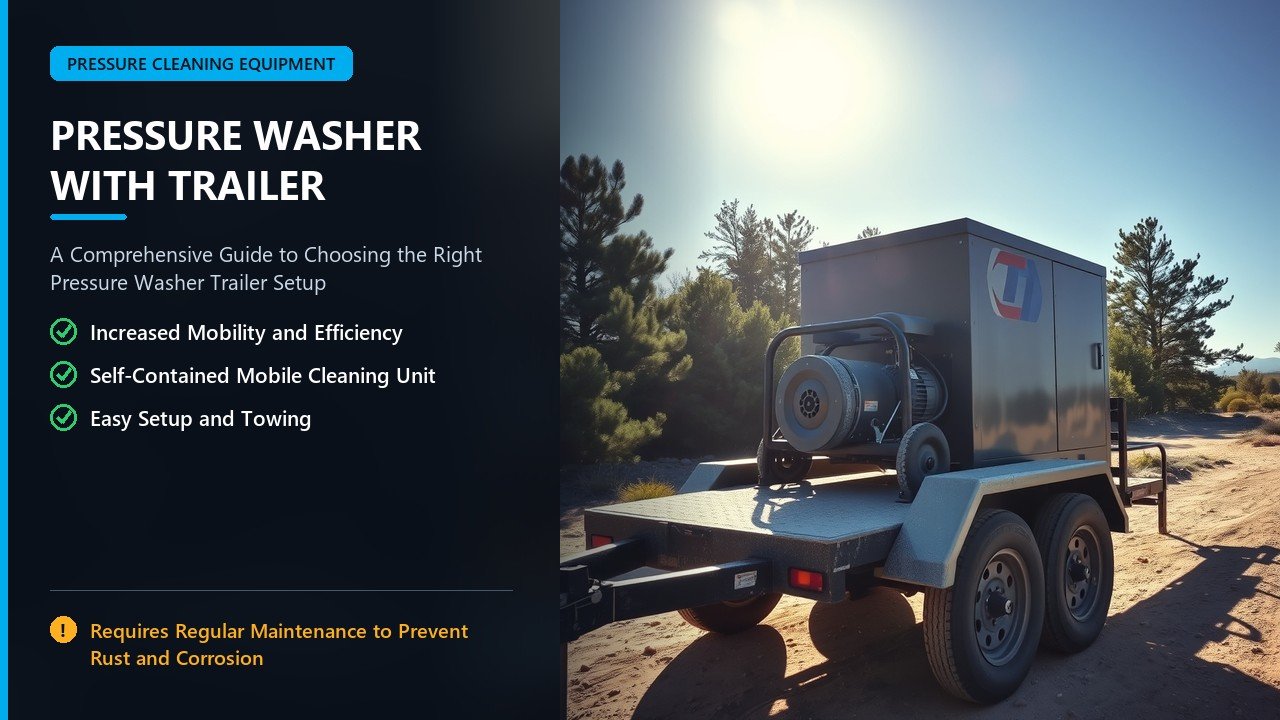
A pressure washer with a trailer is exactly that: a pressure washer mounted on a trailer, usually along with the supporting equipment needed to operate away from a fixed water and power source. The machine may be a gas or diesel pressure washer with its own engine, and the trailer often carries a water tank, hose reels, hoses, a chemical tank, and storage, forming a self-contained mobile cleaning unit. Some setups are sold as complete packages, while others are assembled by mounting a machine on a trailer and adding components.
The trailer provides mobility and carrying capacity, letting you transport the machine and a substantial water supply to where the work is, and the machine provides the cleaning power. Together, they let you clean properties without convenient water or power, which describes most on-site cleaning. This combination is the foundation of mobile pressure washing, whether for a business serving customers or a homeowner with large or remote properties. The trailer is the platform that makes the machine and its water supply portable.
Understanding what the combination involves sets up the rest. It is a machine plus a trailer plus supporting equipment, working as a mobile unit, and it is most valuable where mobility and self-sufficiency matter. Recognizing this helps you see whether a trailer setup suits your work and what components it should include. For professional cleaning and demanding property maintenance, the pressure washer with trailer is a capable, efficient approach, and the components should be chosen to work together. Our guide to mobile pressure washing trailer covers the trailer setups in related detail.
Benefits of a Trailer Setup
Mounting a pressure washer on a trailer offers clear advantages.
Mobility and self-sufficiency. The trailer carries the machine and a water tank, so you can clean where the work is without relying on a customer’s water or power, expanding the jobs you can take and simplifying on-site work.
Organization. A trailer keeps the machine, tank, reels, hoses, and tools organized in one place, so setup and teardown are faster and nothing is left behind.
Capacity. A trailer can carry a larger machine and a substantial water tank than a mobile cart or a vehicle, giving more cleaning power and autonomy.
Professional image. A well-set-up trailer presents a professional appearance to customers, which helps a cleaning business win and keep work.
Efficiency. With everything in place and ready, jobs start faster and flow better, improving productivity and, for a business, profitability.
These benefits make the trailer setup attractive for professional cleaning and large-property maintenance. The mobility and self-sufficiency address the core problem of on-site cleaning, while organization, capacity, and image add value. For a business, the trailer is a productivity tool that supports growth, and for a homeowner with big or remote properties, it provides convenience and capability. Understanding the benefits helps you judge whether the investment suits your needs. Our guide to for sale pressure washer trailer covers buying a ready-made setup.
How Machines Are Mounted on Trailers
Safe, sensible mounting is the foundation of a good trailer setup.
The pressure washer is mounted on the trailer’s deck or frame, securely fastened so it does not shift or vibrate loose, with access to its controls, connections, and maintenance points. The water tank is positioned to balance the load, often over or near the axle, and its outlet feeds the machine, sometimes via a transfer pump or the machine’s suction. Hose reels are mounted where hoses deploy easily, and a chemical tank, if included, is placed near the injector or pump. Storage for tools and supplies is arranged for a smooth workflow, and weight is distributed thoughtfully.
Safety is central to mounting: all components must be secured for towing, the total weight must stay within the trailer’s and tow vehicle’s limits, and the load must be balanced for stable towing. Water is heavy, so a full tank adds substantial weight that must be accounted for. Wiring, fuel, and any electrical components must be safely installed. Proper mounting involves more than placing items on the deck; it requires secure fastening, weight management, and attention to safety, which is why bought packages or careful building are advisable.
Mounting is where the setup’s safety and function are determined, so it deserves care. Because an improperly mounted machine or unbalanced tank can be dangerous or damage the trailer, secure fastening and weight management are essential, and arranging components for access and workflow makes the setup efficient. Whether buying a package or building, the mounting should be solid and safe. With proper mounting, the trailer setup is reliable and pleasant to use, and the machine performs as it should. Our guide to pressure washer on a trailer covers mounting a machine, whether bought or built.
Buying Versus Building a Trailer Setup
Both paths are viable, with trade-offs.
Buying a ready-made setup. Manufacturers sell complete pressure washer trailers with the machine, tank, reels, and accessories installed and matched, offering convenience, a proven design, warranty and support, and a setup ready to work. The cost is higher, but the time saved and the assurance of a working design are valuable, especially for a business that needs to start quickly.
Building your own. Building from a base trailer and individual components can cost less and allows full customization, but it requires selecting and matching components, installing them safely, and managing weight and safety, which takes time and skill. For those who want a specific setup and are comfortable with the work, building can be economical and rewarding.
Consider your budget, time, skills, and how specific your needs are, and whether warranty and support matter. Buying suits those who value convenience and proven design and want to work soon, while building suits those who want to save money, customize, and enjoy the process. Many successful setups have been both bought and built, so the choice depends on your situation and preferences. Either way, the goal is a well-matched, safely mounted setup that works. Our guide to pressure washer components helps you understand the parts involved in building.
What to Look For
Certain features distinguish a good setup.
Adequate machine. A pressure washer with sufficient pressure and flow for your work, often a gas or diesel machine, and hot water if you clean grease and grime.
Appropriate water tank. A tank sized for your jobs, giving enough autonomy without excessive weight, with a reliable feed to the machine.
Organized reels and storage. Hose reels and storage arranged for efficient workflow, keeping hoses and tools accessible and organized.
Chemical system. A soap or chemical tank and injector for cleaning solutions, adding versatility.
Safe, sturdy trailer. A well-built trailer with adequate capacity and secure mounting, rated for the weight and safe to tow.
Compatible components. Hoses, fittings, nozzles, and accessories matched to the machine’s pressure and flow.
| Component | What to Look For |
|---|---|
| Pressure washer | Enough pressure and flow; hot water for grease |
| Water tank | Suited to your jobs; balanced weight |
| Reels / storage | Organized, accessible, efficient layout |
| Chemical system | Tank and injector for cleaning solutions |
| Trailer | Sturdy, adequate capacity, safe towing |
These features define a capable setup, and choosing them to suit your work ensures the trailer earns its keep. Because the components must work together, matching the machine, tank, reels, and accessories and ensuring the trailer is sturdy and safe are key. A well-equipped setup is efficient and professional, while a mismatched or undersized one limits you. With attention to these features, whether buying or building, you get a setup that performs. Our guide to hot water pressure washer trailer covers setups with heated water.
Towing and Using a Trailer Setup
Safety and setup habits make the trailer practical.
When towing, respect the weight limits, use a proper hitch and safety chains, secure the load, and balance the weight for stable towing, remembering that a full water tank is heavy. Choose a tow vehicle rated for the loaded trailer, and drive with awareness that a loaded trailer handles differently. On the job, position the trailer to maximize hose reach and access, take advantage of the self-contained water and power, and set up hoses and tools efficiently. Plan for water refills if the tank is limited, and manage runoff and site considerations.
In cold weather, winterize the trailer’s water system to prevent freeze damage, and maintain the machine and trailer per their schedules. Keep the setup clean and organized, and inspect it before and after jobs. These habits keep the trailer reliable and the work efficient, and they protect the investment. Safe towing and efficient setup are what make the trailer a practical asset rather than a burden.
Towing and using the trailer well is what delivers its benefits. Because the trailer’s value comes from mobility and self-sufficiency, towing it safely and setting it up efficiently are essential, and attention to weight, balance, and access makes the work smooth. Combined with maintenance and winterizing, these practices keep the setup dependable. Used well, a pressure washer with a trailer transforms cleaning into an efficient, mobile operation, and for the right user, it is a productive, professional solution. Our guide to water tank and pressure washer covers the water supply that makes the setup self-sufficient.
Choosing the Right Machine for the Trailer
The machine is the heart of the setup, so choose it to fit the work.
The pressure washer on the trailer should match the cleaning tasks. For residential work like driveways and siding, a machine in the 3,500 to 4,000 PSI range with good flow handles most jobs, while commercial and fleet cleaning benefits from higher pressure and flow, and grease-heavy work calls for hot water. The machine’s power source matters too: a gasoline or diesel engine gives independence from electrical outlets, which is essential for on-site cleaning, while an electric machine may suit a setup with a generator or a fixed power source. Match the machine to your services and the level of autonomy you need.
Consider the machine’s flow as well as its pressure, since flow affects cleaning speed and powers tools like surface cleaners. A high-flow machine cleans large areas faster, but it needs a matching water supply and accessories, so balance power with the tank and feed system. Also think about the machine’s size, weight, and maintenance needs, since these affect the trailer setup and the ongoing care. A machine suited to your work and supported by parts and service is the right choice for the trailer.
Choosing the right machine ensures the trailer setup delivers the power your work requires. Because the machine determines cleaning capability and independence, matching it to your tasks, water supply, and autonomy needs is essential, and a well-chosen machine makes the whole setup effective. Pairing the machine with the right tank and accessories completes the picture. With the right machine at the center, the trailer earns its keep, and the setup handles the jobs you take. Our guide to pressure washer components helps you understand the machine’s parts.
Water Supply and Autonomy
The water tank defines how long you can work without refilling.
A pressure washer trailer’s water tank determines its autonomy, so sizing it to your jobs matters. Smaller tanks, around 100 gallons, suit shorter jobs or where water is available nearby, while larger tanks, 200 to 300 gallons or more, let you work longer before refilling, reducing interruptions. The tank size must balance autonomy against weight, since water is heavy and a full tank adds significant load that affects towing and the trailer’s capacity. Match the tank to your typical job length and your ability to refill.
The feed system also matters: a transfer pump or the machine’s suction must reliably deliver water from the tank to the pump without starving it, and a float tank or buffer can help. Some setups draw from the customer’s water supply when available and use the tank otherwise, while others rely solely on the tank. Planning how you will fill and refill, and whether you need a buffer system, ensures the machine has a steady supply, which protects the pump and keeps the work flowing.
Water supply and autonomy are central to a trailer’s value, since self-sufficiency is a main reason for the setup. Because the tank determines how long you can work and the feed system determines whether the machine gets enough water, getting both right is essential, and balancing tank size against weight is a key decision. A well-planned water system lets you work without constant refills and protects the pump. With the right tank and feed, the trailer is genuinely self-sufficient, and the work proceeds smoothly. Our guide to water tank and pressure washer covers the supply systems that make this work.
Common Trailer Setup Mistakes
Avoiding these mistakes keeps the setup safe and effective.
A frequent mistake is under-sizing the water tank, so you run out mid-job and lose time refilling, or over-sizing it, so the trailer is too heavy and hard to tow. Another is mounting the machine or tank without securing them or balancing the load, which is unsafe and can damage the trailer. Failing to account for the weight of water in the trailer’s and tow vehicle’s capacity, or towing with an inadequate vehicle, is dangerous. And neglecting to match the machine, tank, and accessories to work together leads to performance problems.
Other mistakes include poor layout that hinders workflow, inadequate water feed that starves the pump, and skipping maintenance or winterizing, which causes failures. Choosing a weak trailer that cannot handle the load, or using components not rated for the machine’s pressure and flow, also causes issues. To avoid these, size components to your work, secure and balance the load, respect weight limits, match components, and maintain the setup. These practices prevent the problems that undermine a trailer setup.
Common mistakes with trailer setups usually stem from under-planning, whether in sizing, mounting, weight, or matching. Because these issues affect safety, performance, and longevity, attention to them when buying or building prevents trouble, and considering the whole system together yields a better result. With careful planning, the trailer is safe, capable, and efficient, and the mistakes are avoided. Learning from these pitfalls helps you build or buy a setup that works, and it protects your investment and your safety. Our guide to pressure washer on a trailer covers the mounting that many of these mistakes involve. Our guide to pressure washer repair kit is a reminder that maintenance and spare parts keep the setup running.
Frequently Asked Questions About a Pressure Washer With a Trailer
What is a pressure washer with a trailer? A pressure washer mounted on a trailer, often with a water tank and accessories, forming a self-contained, mobile cleaning setup for on-site work.
Do I need a trailer for pressure washing? If you clean at customers’ sites or on large or remote properties and need water and power autonomy, a trailer is very useful. For small, stationary jobs, it may be unnecessary.
Can I mount my own pressure washer on a trailer? Yes, with secure fastening, proper weight distribution, and safe installation of the tank and components. Match the machine and tank to the trailer’s capacity.
What size water tank should a pressure washing trailer have? Common sizes are 100 to 300 gallons or more, sized to your jobs and balanced against weight. Larger tanks give more autonomy but add weight.
How much weight can a pressure washer trailer carry? It depends on the trailer. Water is heavy, so the machine, tank, water, and accessories must stay within the trailer’s and tow vehicle’s ratings.
Do I need a special license to tow a pressure washing trailer? Requirements vary by region and trailer weight. Check local rules, and ensure your vehicle is rated to tow the loaded trailer.
Final Verdict on a Pressure Washer With a Trailer
A pressure washer with a trailer pairs a machine with a mobile platform and, usually, a water tank and accessories, creating a self-contained cleaning setup that goes where the work is. For professional cleaning and large-property maintenance, it delivers mobility, self-sufficiency, organization, and a professional image, turning a tool into a system. The benefits are substantial for the right user.
Whether you buy a ready-made setup or build your own, focus on a suitable machine, an appropriate water tank, organized reels and storage, a chemical system, and a sturdy, safely mounted trailer with components matched to the machine. Tow it within weight limits and use it efficiently, maintaining and winterizing the system. For those who need to clean on-site and want water and power autonomy, a pressure washer with a trailer is a capable, productive investment, and doing it right yields a setup that pays off job after job.