A propane heated pressure washer is a hot water pressure washer that uses a propane burner to heat the water before it’s sprayed, making it far more effective at removing grease, oil, and stubborn grime than cold water alone. These machines are popular for commercial, industrial, and mobile cleaning where hot water is needed but natural gas or electrical heating isn’t practical. This guide explains how propane heated pressure washers work, their benefits, applications, safety, and how to choose and maintain one.
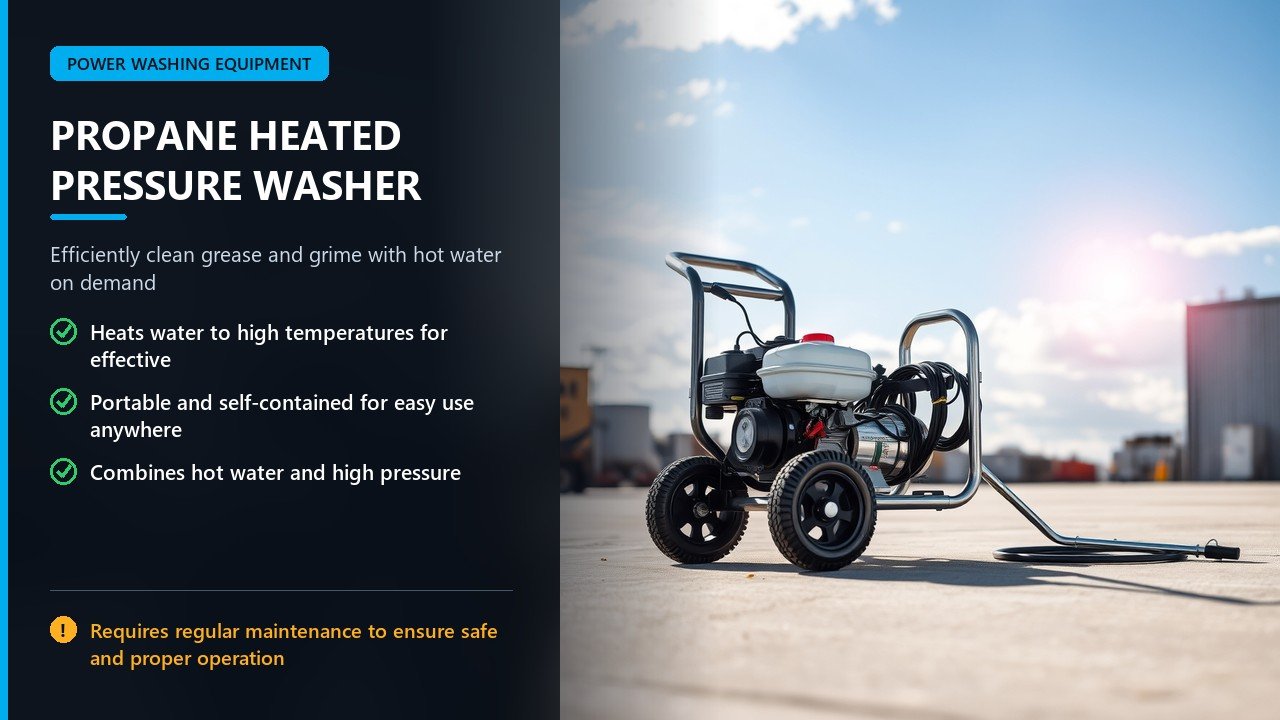
What Is a Propane Heated Pressure Washer
Hot water on demand, powered by propane.
A propane heated pressure washer combines a pressure washer pump with a propane-fired burner that heats the water as it flows through a heating coil. The result is hot water under high pressure, which cleans far better than cold water on greasy, oily, and grimy surfaces. The propane burner is self-contained, so the machine doesn’t rely on a building’s natural gas line or a large electrical circuit to produce heat.
These units are typically gas-engine (or sometimes diesel) powered for the pump and use propane only for heating the water. This dual-fuel setup means the engine may run on gasoline while the burner runs on a propane tank. Because propane is portable and available in refillable tanks, propane heated pressure washers are well-suited to mobile operations and locations where hot water is essential but infrastructure is limited.
Hot water, portable fuel. Because the propane burner is self-contained, it brings hot-water cleaning power anywhere. This makes it a versatile choice for mobile and remote jobs. With propane heat, cleaning is more effective on tough messes. Our guide to hot water pressure washing trailer covers hot water setups.
How a Propane Heated Pressure Washer Works
Burner heats water in a coil.
In a propane heated pressure washer, the pump pushes cold water through a heating coil (often made of steel or stainless steel) that passes over a propane burner. As the burner fires, it heats the coil, transferring heat to the water flowing inside. The heated water then travels to the spray gun and nozzle. A temperature control or thermostat regulates the burner to maintain the desired water temperature.
Propane flows from a tank to the burner, where it mixes with air and ignites to create a flame. Safety systems monitor the flame and shut off the gas if it goes out, preventing dangerous propane buildup. Some units also have a bypass that recirculates water when the gun is not being sprayed, protecting the coil from overheating. This system converts cold supply water into hot water efficiently, providing consistent hot-water cleaning.
Controlled heating for consistent results. Because the burner and coil system heats water to a set temperature, you get reliable hot water for cleaning. This makes the design important. With proper controls, the washer delivers steady heat. Our guide to diesel high pressure washer covers a similar hot-water heating approach using diesel.
Benefits of Propane Heated Pressure Washers
Effective, portable, and efficient.
The main benefit of a propane heated pressure washer is hot water cleaning power. Hot water dissolves grease, oil, and grime much faster than cold water, reducing the need for harsh chemicals and cutting cleaning time. Propane heating is also portable, since propane tanks can be carried on a trailer or cart, letting you work anywhere without a natural gas connection or heavy electrical service.
Propane burns cleanly compared to some alternatives and is widely available for refilling. Propane heated units can be more energy-efficient in certain settings and avoid the need for a dedicated electrical circuit that electric heaters require. For commercial and industrial cleaning, these benefits translate to faster jobs, better results, and the flexibility to serve remote locations.
Powerful and flexible. Because hot water cleans better and propane is portable, these washers excel where cold water falls short. This makes them valuable for professional use. With propane heat, you clean tougher messes faster. Our guide to pressure washing detergent shows how hot water reduces chemical reliance.
| Feature | Propane Heated Pressure Washer |
|---|---|
| Heat Source | Propane burner with heating coil |
| Water Temperature | Roughly 100°F to 200°F+ (varies) |
| Fuel | Propane tank (separate from engine fuel) |
| Best For | Commercial, industrial, mobile, remote sites |
| Key Advantage | Portable hot water without natural gas or big electric service |
| Considerations | Ventilation for exhaust, propane safety, tank refills |
This table summarizes the key features of a propane heated pressure washer, including its heat source, temperature range, fuel type, best uses, advantages, and important considerations. This helps clarify whether a propane heated unit fits your cleaning needs.
Applications for Propane Heated Pressure Washers
Where hot water matters most.
Propane heated pressure washers shine in applications that demand hot water. They are widely used for cleaning grease and oil from commercial kitchens, restaurant hoods, and dumpster pads, where cold water struggles. Fleet and vehicle washing benefits from hot water for cutting road grime and oil, and industrial equipment cleaning uses hot water to remove heavy deposits.
Other uses include cleaning building exteriors, sidewalks, and machinery, as well as agricultural equipment and food-processing areas where grease and residue are common. Because they’re portable, they serve mobile cleaning businesses and remote job sites. Anywhere grease, oil, or stubborn grime is present, a propane heated pressure washer provides the hot water advantage.
Hot water for tough jobs. Because grease and oil respond best to heat, propane heated washers are ideal for commercial and industrial cleaning. This makes them valuable across many industries. With hot water, even stubborn grime lifts. Our guide to pressure washer for mobile detailing covers mobile washing applications.
Safety When Using a Propane Heated Pressure Washer
Ventilation and propane safety are critical.
Safety is paramount with a propane heated pressure washer. The propane burner produces exhaust, including carbon monoxide, so never operate the unit indoors or in enclosed spaces without proper ventilation and venting. Carbon monoxide is odorless and deadly, so outdoor or well-ventilated operation with exhaust directed away from people is essential. Propane itself is flammable, so keep tanks upright, secured, and away from heat and ignition sources.
Inspect propane lines, connections, and regulators for leaks before use, and never use a damaged tank or hose. Ensure the burner’s flame-sensing safety system is working, and follow the manufacturer’s startup and shutdown procedures. Keep the machine clean and free of combustible debris, and have a fire extinguisher nearby. Because it involves both high pressure and flammable gas, treating the machine with care and following safety instructions is vital.
Safety is non-negotiable. Because propane and exhaust pose serious risks, proper ventilation and handling prevent accidents. This makes safety the top priority. With correct practices, operation is safe. Our guide to OSHA chemical hazards offers broader workplace safety guidance.
Choosing a Propane Heated Pressure Washer
Match specs and features to your needs.
When choosing a propane heated pressure washer, consider PSI and GPM. Higher PSI removes tougher grime, while higher GPM speeds cleaning. For commercial use, models in the 3000-4000 PSI and 3-5 GPM range are common. Decide on the pump type (triplex pumps are more durable) and whether the engine runs on gas or diesel. Confirm the burner’s heating capacity and achievable temperature, and the propane tank size and configuration.
Evaluate build quality, such as a steel frame and quality coil, and features like temperature control, safety shutdowns, and portability options (cart, skid, or trailer-mount). Consider service and parts availability, especially for the burner and pump. Budget for the machine, propane refills, and maintenance. Choosing a unit that matches your workload and environment ensures efficient, reliable hot-water cleaning.
The right specs matter. Because PSI, GPM, and burner capacity determine performance, and build quality affects durability, choosing carefully pays off. This ensures your investment suits your jobs. With the right machine, cleaning is faster and better. Our guide to pressure washer components explains the parts to evaluate.
Maintaining a Propane Heated Pressure Washer
Keep the burner and pump in shape.
Maintenance keeps a propane heated pressure washer running safely and efficiently. Service the engine (oil, air filter, spark plug) per schedule, and maintain the pump, including oil changes and seal inspection. For the burner, clean the heating coil and burner components, check the fuel lines and regulator, and verify the flame sensor and safety controls. Inspect propane connections for leaks regularly.
Winterize the unit in freezing climates by draining water and protecting the coil and pump from freeze damage. Store propane tanks properly, and inspect the machine for wear or corrosion. Regular maintenance on both the water and heating systems prevents breakdowns and extends the life of the machine, keeping your hot-water cleaning capability dependable.
Two systems need care. Because the water pump and propane burner both require maintenance, a complete routine keeps the machine reliable. This prevents costly failures. With good upkeep, the washer lasts longer. Our guide to winterizing a pressure washer covers freeze protection.
Frequently Asked Questions About Propane Heated Pressure Washers
How hot does a propane heated pressure washer get? Most propane heated pressure washers produce water temperatures ranging from about 100°F to 200°F or more, depending on the model and settings, which is hot enough to dissolve grease and oil.
Is propane heating better than diesel or electric heating? Each has advantages. Propane is clean-burning and portable, diesel delivers strong heat and is widely used, and electric heating requires a large power source but produces no exhaust. Choose based on your site and needs.
Can I use a propane heated pressure washer indoors? No, not without proper ventilation and exhaust venting. The burner produces carbon monoxide, which is dangerous in enclosed spaces. Always operate outdoors or vent exhaust safely.
Does the engine run on propane too? Often no. Many propane heated pressure washers use a gasoline or diesel engine for the pump and propane only for the water heater burner, so you may carry two fuels.
What PSI do I need for commercial hot water cleaning? For most commercial and industrial hot water cleaning, 3000-4000 PSI with 3-5 GPM is a common and effective range, though requirements vary by job.
How do I maintain the propane burner? Clean the heating coil and burner, check fuel lines, regulator, and connections for leaks, verify the flame sensor and safety shutdowns, and follow the manufacturer’s service schedule.
Final Verdict on Propane Heated Pressure Washers
A propane heated pressure washer delivers hot water cleaning power in a portable, self-contained package, making it ideal for commercial, industrial, and mobile cleaning where grease and oil demand heat. Hot water cleans faster and better than cold, and propane heating frees you from natural gas lines and heavy electrical service.
By choosing the right PSI, GPM, and burner capacity for your workload, and by prioritizing safety and regular maintenance of both the pump and burner systems, you’ll get dependable hot-water cleaning performance. For anyone facing tough grease and grime away from fixed utilities, a propane heated pressure washer is a powerful, flexible solution.