When the pump on my old gas pressure washer finally gave out after years of service, I faced a decision that confuses many owners: repair it, or buy a whole new machine? The pump, I learned, is a distinct, replaceable component, and in many cases a new pump can be fitted to an otherwise healthy machine for far less than the cost of a replacement unit. But choosing the right pump for a power washer requires understanding pump types, specifications, and how they match the engine. Get it right, and a worn machine gets a new lease on life; get it wrong, and the pump will not fit, will not perform, or will fail quickly. This guide explains the pump for a power washer, how to choose and match one, and how to replace it.
What the Pump Does
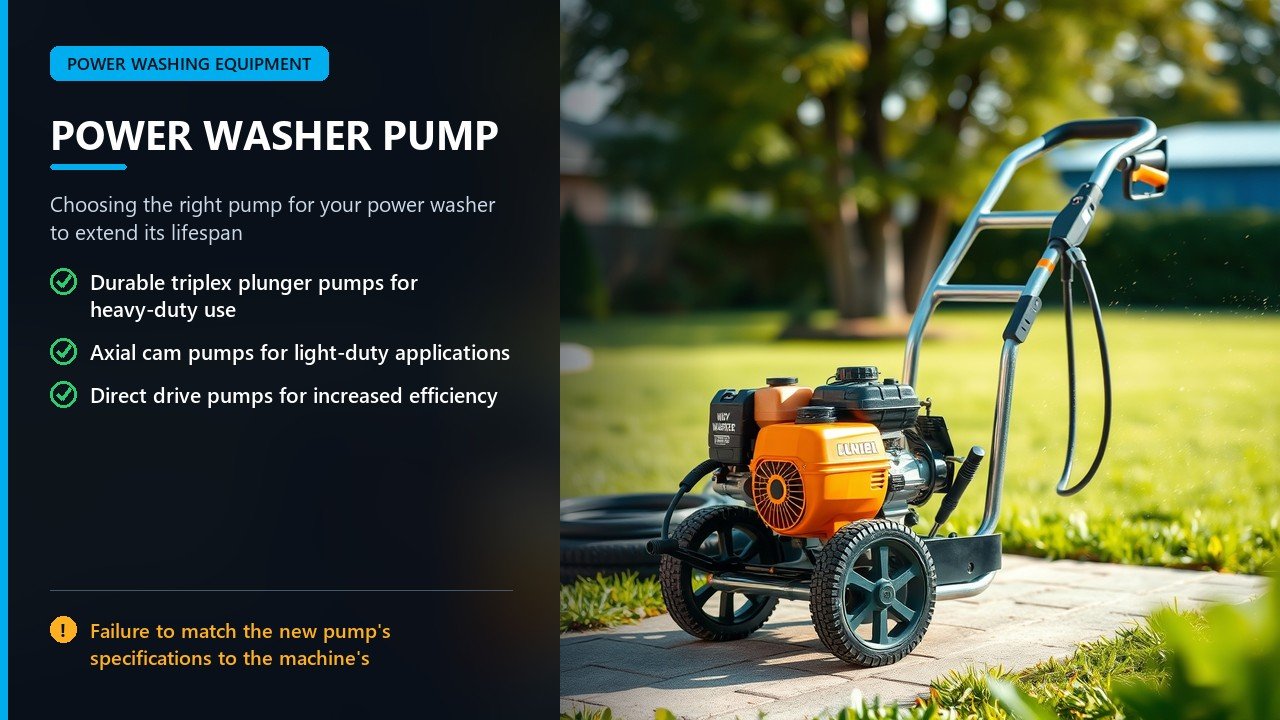
The pump is the heart of a power washer, the component that turns the engine or motor’s rotation into a high-pressure stream of water.
Water enters the pump through the inlet at low pressure and is pressurized by the pump’s internal mechanism, then exits at high pressure to the hose and gun. The pump’s design determines the machine’s pressure and flow ratings, and its quality determines how long the machine lasts. Because the pump works under high load, moving water at high pressure, it is the component most subject to wear and the most expensive to replace after the engine. When a power washer loses pressure, leaks, or fails, the pump is often involved, and understanding pumps helps owners diagnose problems and choose replacements.
There are two main types of pump used on power washers, and they differ significantly in durability and application. Choosing the right type, and the right specifications when replacing, is essential to performance and longevity. The pump is where the machine’s cleaning power is generated, so it is worth understanding thoroughly, whether you are buying a machine, maintaining one, or replacing a worn pump to extend a machine’s life. Our guide to pressure washer components places the pump among the other parts of the machine.
Pump Types: Axial and Triplex
The two pump types serve different purposes and price points.
Axial cam pumps. Common on light-duty and consumer power washers, axial cam pumps use a swash plate to move pistons and are compact, lightweight, and inexpensive. They are well suited to occasional use, but they are less durable than triplex pumps and are generally not repairable when they wear out, meaning they are replaced rather than rebuilt. Many axial pumps are also sealed and require no oil maintenance. Axial pumps suit homeowner machines and light use.
Triplex plunger pumps. The standard on quality, commercial, and professional power washers, triplex pumps use three plungers driven by a crankshaft and are built for durability and continuous use. They maintain performance better over their life, are serviceable and rebuildable with seal and valve kits, and have oil crankcases that require maintenance. Triplex pumps cost more but last far longer, and they are the choice for anyone who needs reliability and heavy-duty use.
The type of pump largely defines a machine’s class. A consumer machine with an axial pump is built for occasional use, while a professional machine with a triplex pump is built for hard work. When replacing a pump, matching the type is usually the simplest path, though upgrading from axial to triplex is possible when the engine and mounting allow. Understanding the difference helps owners evaluate machines, maintain their pump correctly, and choose replacements wisely. Our guide to Stihl RB 800 pressure washer shows a professional machine with a triplex pump, illustrating the durability difference.
Direct Drive vs Belt Drive
How the pump is driven by the engine affects its operation and maintenance.
Direct drive pumps. Mounted directly to the engine’s shaft, direct drive pumps are compact and common on consumer and mid-range machines. The pump turns at the engine’s speed, and the connection is simpler with fewer parts. Direct drive is convenient and space-efficient, though it exposes the pump to the engine’s heat and vibration more directly, and a direct-drive pump’s speed is tied to the engine.
Belt drive pumps. Connected to the engine by a belt and pulley system, belt drive pumps run at a speed set by pulley sizes, often slower than the engine, which can reduce wear and vibration and allow the pump to operate at its ideal speed. Belt drive also isolates the pump from engine heat and reduces the load on the engine shaft, and it can make the pump easier to service. Belt drives require maintaining the belt and pulleys, and they add complexity and bulk. Belt drive pumps are common on higher-end and heavier-duty machines.
The drive style affects the pump’s mounting, speed, and maintenance, and it must be considered when replacing a pump, since a direct-drive pump and a belt-drive pump are not interchangeable without changing the drive system. Most replacement pumps are designed for a specific drive style and mounting, and matching this to your machine ensures a proper fit and correct operation. Understanding the difference helps owners recognize their machine’s setup and choose a compatible replacement.
Pump Specifications to Match
Matching a pump to a machine, whether replacing or upgrading, requires several specifications to align.
| Specification | Why It Matters |
|---|---|
| Pressure (PSI) | Determines cleaning force; should match or suit the machine |
| Flow (GPM) | Determines cleaning speed; must match engine power to drive it |
| Drive type | Direct or belt; must match the machine’s drive system |
| Shaft size and type | Must fit the engine shaft for direct drive |
| Mounting / bolt pattern | Must bolt to the engine or frame |
| Inlet and outlet | Must match hose and plumbing connections and sizes |
| Required engine power | Engine must have enough power to drive the pump’s flow at pressure |
Pressure and flow define the pump’s output and must be appropriate for the machine and the engine driving it. A pump that demands more flow than the engine can drive, or that exceeds the machine’s plumbing and nozzle, will not perform correctly. The drive type, shaft, and mounting must physically fit the machine, since a pump that does not mount or connect cannot be used. The inlet and outlet must match the plumbing, including connection types and sizes, or adapters and re-plumbing are needed. Matching all these factors ensures the pump works, performs as expected, and fits.
The most critical consideration is matching the pump to the engine’s power, because the engine must be able to drive the pump’s flow at its pressure. A pump requiring more power than the engine provides will underperform and may stall or damage the engine, while a pump matched to the engine delivers its rated performance. When replacing a pump, the safest approach is to match the original pump’s specifications, which the manual lists, or to use a manufacturer’s cross-reference or replacement guide that identifies compatible pumps. This ensures the replacement suits the machine without guesswork. Our guide to Powerhorse pressure washer parts illustrates how replacement pumps are matched to specific machines and engines.
Pump Brands
Several manufacturers make the pumps used in power washers, and knowing them helps when replacing or upgrading.
Well-known pump brands include General Pump, Cat Pumps, AR North America (Annovi Reverberi), and Comet, among others. These manufacturers supply pumps to many power washer brands, and their pumps are often fitted to machines regardless of the machine’s own brand. This is useful for replacement, because a pump from one of these makers, matched to the machine’s specifications, can often replace an original pump. Quality pump brands are known for durability and serviceability, and their pumps can be rebuilt with kits.
When replacing a pump, identifying the original pump’s make and model is the best starting point, because it reveals the exact specifications and often a direct replacement. If the original is available, matching it is simplest. If upgrading, a pump from a reputable brand matched to the machine’s engine and mounting, and its pressure and flow, improves durability, especially when moving from an axial to a triplex pump. Reputable pump brands also support their pumps with parts, so a quality pump can be maintained and rebuilt rather than replaced. For owners seeking a long-lasting machine, choosing a machine with a pump from a known brand, or replacing a worn pump with one, is a smart investment. Our guide to pressure washer repair kits covers rebuilding these pumps when they wear.
Replace or Repair the Pump
When a pump fails, the choice between repair and replacement depends on the pump and the failure.
Repair the pump when: The failure is a worn seal, o-ring, valve, or unloader that a kit can fix, and the pump is otherwise sound, especially a triplex pump designed to be rebuilt. Rebuilding with a seal or valve kit restores performance for a fraction of replacement cost, and triplex pumps are made for this. Leaking from the pump body, loss of pressure from worn seals, and stuck valves are all repairable.
Replace the pump when: The failure is catastrophic, such as a cracked manifold or pump body, or the pump is a cheap axial unit that is not designed to be rebuilt. Axial pumps are often replaced rather than repaired. Also replace when the repair cost approaches the price of a new pump, or when upgrading to a better pump makes sense.
For a machine with a good engine and frame, replacing or rebuilding the pump is often the smartest option, since it restores the machine’s function for less than a new unit. The pump is the component most likely to fail and the most expensive after the engine, so handling its failure wisely extends the machine’s life and saves money. Diagnosing the failure accurately, checking the seals and valves before condemning the pump, ensures the right choice. Many pumps presumed dead are simply in need of a seal kit, and many worn axial pumps are best replaced with a better pump that will last longer. Our guide to pressure washer o ring kits covers the inexpensive seals that fix many pump leaks.
Replacing a Pump
Replacing a pump follows a general procedure, though details vary by machine.
Begin by identifying a compatible replacement pump, matching the specifications discussed, ideally a direct replacement for the original or a manufacturer-compatible pump. Disconnect the machine from water and power or fuel, and drain the system. Disconnect the plumbing from the pump’s inlet and outlet, the high-pressure hose, and any unloader, noting how each connects. Unbolt the pump from its mounting, whether directly to the engine or to the frame, and remove the old pump. Transfer or fit any components, such as the unloader or fittings, as needed, then mount the new pump, connect the plumbing, and check the oil level if the pump has a crankcase. Refill the pump oil if needed, prime the machine, and test for leaks and performance.
Matching the new pump precisely to the machine’s mounting, shaft, drive, and connections makes the job straightforward, while a mismatch requires modifications. Following the pump manufacturer’s instructions and the machine’s layout ensures correct installation. Once installed and primed, the machine should build pressure and perform as designed. A successful pump replacement gives a machine new life, and because the pump is replaceable, a failed pump need not mean a failed machine. For owners comfortable with basic mechanical work, replacing a pump is a rewarding repair, and for others, a technician can handle it with the right pump in hand. The key is choosing a compatible pump, which matching specifications ensures. Our guide to pressure washer on trailer notes that trailer machines also benefit from pump replacement when their pumps wear.
Maintaining the Pump
Pump maintenance maximizes its life, whatever its type.
Protect the pump with clean water and an inlet filter, since debris wears the pump’s seals and valves. Never run the machine without water, because running dry destroys the pump quickly. Avoid prolonged bypass, and let the thermal relief valve do its backup job. For triplex pumps, change the pump oil on schedule and check the level and condition regularly, watching for dark or milky oil. Address leaks promptly, since a leaking seal worsens with use. Use the machine within its rated pressure and flow, since operating beyond the design point accelerates wear.
These habits keep the pump running cool and lubricated, preventing the wear that leads to failure. Because the pump is the machine’s heart and its most expensive wear component, protecting it is the highest-value maintenance an owner can do. A well-maintained triplex pump can serve for many years, and even an axial pump lasts longer with clean water and careful use. When wear does occur, prompt repair with a kit or replacement with a quality pump keeps the machine working. The pump responds directly to care, and because it determines the machine’s performance and lifespan, giving it attention is always worthwhile. Our guide to pressure washer inlet water filter covers the small protective part that prevents much pump wear.
Matching Flow and Pressure to Engine Power
The relationship between the pump and the engine that drives it is a common source of performance problems, so understanding it helps in choosing and replacing pumps.
A pump requires a certain amount of power to drive its flow at its pressure, and the engine must provide at least that much power, with margin. If the pump demands more power than the engine supplies, the engine cannot drive it properly, resulting in reduced pressure and flow, rough running, stalling, or even engine damage. This is why a pump’s pressure and flow cannot be increased arbitrarily by swapping in a bigger pump, the engine must be able to drive it. Conversely, an engine with ample power driving a moderate pump delivers consistent performance with reserve.
Manufacturers specify the required horsepower or engine size for a given pump, based on its pressure and flow, and these specifications guide matching. When replacing a pump, choosing one with the same or similar pressure and flow as the original, or one whose required power your engine meets, ensures the machine performs correctly. Upgrading to a more powerful pump is possible only if the engine has the power to drive it, and sometimes requires a larger engine as well. This balance is why professional machines pair powerful engines with pumps they can fully drive, and why mismatched aftermarket combinations underperform.
Understanding this relationship prevents the mistake of buying a pump the engine cannot handle, and it explains why a machine’s pressure and flow are fixed by its engine and pump together. For owners replacing a pump, matching the original’s specifications or using a manufacturer’s recommendation for the engine is the reliable approach. For those buying a machine and considering upgrades, recognizing that engine power and pump output must be balanced ensures realistic expectations. The pump and engine are a matched pair, and respecting that pairing is essential to performance, whether maintaining, replacing, or evaluating a power washer. Our guide to pressure washer components explains how the engine and pump work together in the machine.
Evaluating a Machine by Its Pump
Because the pump is so central, it is one of the best ways to evaluate a power washer when buying.
A machine’s pump type and brand reveal much about its quality and intended use. A triplex pump from a reputable brand signals a machine built for durability and serious use, while an unbranded axial pump signals a light-duty consumer machine. The pump’s specifications, pressure and flow, indicate the machine’s cleaning power, and whether the engine is matched to drive it well. A quality pump also implies serviceability, since reputable triplex pumps can be rebuilt with kits, extending the machine’s life, while sealed axial pumps cannot.
This is why experienced buyers look at the pump as much as the machine’s advertised pressure and flow. Two machines may claim similar ratings, but one with a triplex pump and one with an axial pump differ greatly in durability and longevity. The pump, and the engine driving it, are the core of a machine’s value, and their quality determines whether the machine lasts a season or a decade. When shopping, identify the pump brand and type, check that the engine is matched to drive it, and prefer a serviceable triplex pump for any serious or prolonged use.
Evaluating by pump also helps owners understand their own machine and plan for its maintenance and eventual repair. A machine with a quality triplex pump is worth maintaining and repairing, including rebuilding or replacing the pump, because the rest of the machine supports it. A machine with a cheap axial pump may be a candidate for replacement when the pump fails, depending on the cost. Knowing your pump’s type and quality guides these decisions. The pump is the machine’s defining component, and judging a power washer by it is a sound strategy for both buying and ownership. Our guide to Powerhorse pressure washer parts shows how replacement pumps are matched to specific machines.
Frequently Asked Questions About a Pump for a Power Washer
What are the types of pressure washer pumps? Axial cam pumps, for light-duty and consumer machines, and triplex plunger pumps, for durable and professional use. Axial pumps are often not rebuildable, while triplex pumps are serviceable.
Can I replace the pump on my power washer? Yes, often. If the engine and frame are good, a compatible replacement pump can restore the machine. Match the specifications, drive type, mounting, shaft, and connections.
How do I choose a replacement pump? Match the original pump’s pressure, flow, drive type, shaft, mounting, and connections, or use a manufacturer’s cross-reference. Ensure the engine has enough power to drive the pump.
Should I repair or replace a failed pump? Repair (rebuild) if it is a serviceable triplex pump with worn seals or valves. Replace if it is a cheap axial pump or has catastrophic damage like a cracked body.
What brand of pump is best? Reputable brands like General Pump, Cat Pumps, AR, and Comet make durable, serviceable pumps. Match the pump to your machine’s specifications.
Why did my pump fail? Common causes are debris from a missing filter, running dry, prolonged bypass, worn seals, and neglected oil. Clean water and maintenance prevent these.
Final Verdict on a Pump for a Power Washer
The pump is the heart of a power washer, the component that creates the cleaning power, and it is the part most likely to wear out and the most expensive to replace after the engine. Understanding pump types, axial and triplex, and drive styles, direct and belt, and matching the key specifications when replacing, gives owners control over their machine’s performance and lifespan. For a machine with a good engine and frame, replacing or rebuilding the pump is often the smartest way to restore it, saving the cost of a whole new unit.
Choose a compatible pump carefully, matching pressure, flow, drive, shaft, mounting, and connections to the machine and its engine, or use a manufacturer’s cross-reference. Maintain the pump with clean water, an inlet filter, and, on triplex pumps, regular oil changes. When it wears, rebuild it with a kit if serviceable, or replace it with a quality pump. My own worn machine got years more service from a new pump, proving that the pump is a replaceable heart, not the machine’s death sentence. Understand the pump, and you understand your power washer’s most important component, and how to keep it beating for years.