A hose reel is one of those accessories that seems optional until you own one. Then you wonder how you ever managed without it. For a power washer, a reel keeps the high-pressure hose wound, protected, and ready to use, and it removes the tangle of hose that otherwise lies across the driveway or coils into a stiff, kinked mess in the garage.
This guide focuses on choosing and using a reel for your power washer: what a reel does for you, the types available, how to pick the right size and mount, and how to maintain it so it lasts.
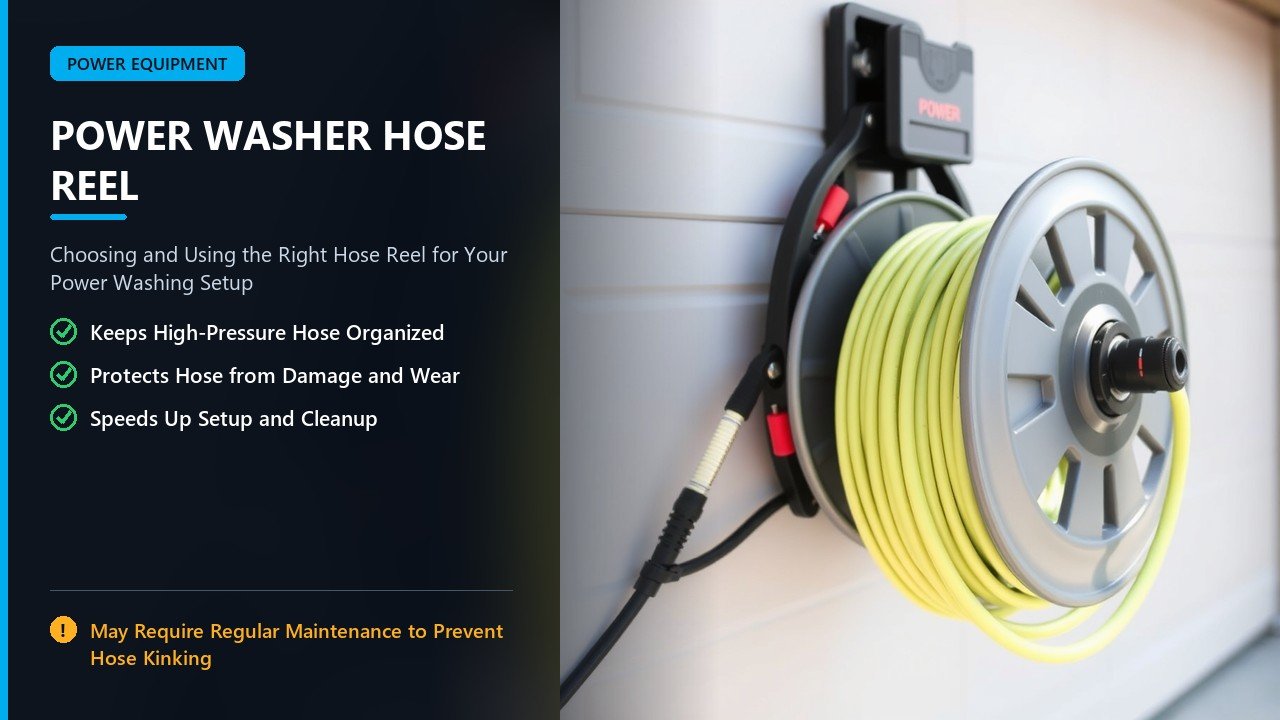
What a Hose Reel Does for a Power Washer
A hose reel stores the high-pressure hose on a spool, usually turned by a crank or a powered mechanism. Instead of coiling the hose on the ground or draping it over a hook, you wind it onto the reel, where it stays organized and out of the way. When you need the hose, you pull it off the reel, and when you are done, you wind it back.
The benefits are practical. A reel protects the hose from being stepped on, run over, or dragged through grit, all of which damage the outer cover and shorten the hose’s life. It prevents the tight, kinking loops that cause pressure loss and cracking. And it keeps your workspace tidy, so you spend less time untangling and more time cleaning.
A reel also speeds up setup and cleanup. With the hose wound on the reel, the machine is ready to go the moment you connect the gun. When the job is done, winding the hose takes seconds instead of the minutes spent wrestling a loose coil. For anyone who uses a power washer regularly, that saved time adds up.
Types of Reels for Power Washers
The most common type is the manual reel, wound by a crank or handle. Manual reels are simple, durable, and affordable, and they have no power source to fail. They are the right choice for most home and light commercial setups, provided the hose is not excessively long or heavy.
Powered reels use a motor or hydraulic drive to wind the hose automatically. They are convenient for very long hoses and frequent, heavy use, saving time and effort. However, they cost more, need a power or fluid source, and add complexity that can require maintenance. They suit professional operations where speed matters.
Mounting style is the other key distinction. Wall-mount reels attach to a wall or post, ideal for a fixed cleaning station near the machine. Cart-mount reels bolt to the power washer’s frame, keeping everything together and portable. Free-standing reels rest on the ground or a base for flexible placement. Choosing the mounting that fits where you clean is as important as the reel itself.
Choosing the Right Reel
Start with capacity. Reels are rated by the hose diameter and length they can hold, so match the reel to your hose. A reel that is too small for the hose strains the frame and forces the hose to bind, while one that is far too large wastes space and money. Check the capacity rating before buying.
Then consider the swivel, which is the rotating fitting that lets water flow through the reel as it turns. A smooth, quality swivel is essential; a stiff or leaking one makes winding difficult and causes pressure loss. Look for a reel with a serviceable swivel and, ideally, a swivel you can replace when it wears.
Finally, assess the build. Steel and stainless-steel reels withstand weather and heavy use, while plastic or composite reels are lighter and cheaper. For outdoor use, corrosion resistance matters. A sturdy frame, a smooth bearing, and quality fittings determine how well the reel holds up over years of use.
Matching the Reel to Your Setup
If you have a fixed cleaning station — a permanent power washer near a water tap — a wall-mount reel is the natural choice. Mount it at a comfortable height near the machine, with the hose reaching your main cleaning areas. This creates a tidy, always-ready setup where the reel is part of the station.
If your power washer is portable, a cart-mount reel keeps the hose and machine together, so you can move to a job and set up quickly. Confirm the reel’s mounting brackets fit your machine’s frame, and that it does not interfere with the wheels, handle, or controls.
For flexible situations, a free-standing reel lets you place the reel and hose wherever convenient and move them as needed. Whatever the type, match the reel’s fittings to your machine and hose, and check the pressure rating so the reel is safe under the full system pressure.
Installing a Reel
Installation is straightforward but should be done to hold up under the weight of a full hose. For a wall-mount reel, fasten into solid framing or masonry, not just drywall, because a loaded hose reel is heavy and pulls outward as you wind and unwind. Locate it near the power washer and the water supply, at a height that lets you reach the crank and pull the hose comfortably.
Connect the reel’s inlet fitting to the machine and the outlet to the hose, following the reel’s instructions and using the correct fittings. Before winding the hose, pressurize the system briefly and check every connection for leaks. Fix any drip before the hose goes on, because reaching a leaking fitting after the hose is wound is frustrating.
For a cart-mount reel, bolt the brackets to the machine’s frame securely and check that the reel sits level and does not obstruct anything. For a free-standing reel, place it on a stable surface where it will not tip when you pull the hose, and secure it if needed. Once mounted, wind the hose evenly and confirm the reel turns smoothly.
Using the Reel Correctly
Using a reel well depends on a few habits. When deploying the hose, pull it straight off the reel and walk it out to the work area rather than dragging it around obstacles or over the machine. Pulling at a sharp angle strains the swivel and the hose; pulling straight keeps everything aligned.
When winding the hose back, do it while the hose is straight and free of kinks. Winding a tangled or twisted hose forces kinks into the coil, and those kinks cause pressure loss and eventual cracking. Wipe off heavy dirt and grit before winding, so it does not get trapped in the coil against the hose.
Keep the hose clear of sharp edges, hot exhaust, and chemicals. Never pull the power washer by the hose, and never let the hose rest against a hot engine or a running exhaust. Handling the hose with care and using the reel as intended protects both the hose and the reel.
The Hose That Fits the Reel
A reel is only as good as the hose on it, so choose the hose with the reel in mind. The hose must be rated at or above the machine’s maximum pressure, or it can burst. Match the diameter and length to the reel’s capacity and to the machine’s flow: a larger-diameter hose flows more water, but is heavier and takes more room on the reel.
Use the shortest hose that reaches your work. A longer hose adds pressure loss and takes up more reel space, and it is heavier to handle. If you need more reach, choose a larger diameter to limit the loss, and confirm the reel can hold the extra length.
Look for hoses with tough outer covers, reinforced construction, and quality fittings that match your machine. A hose with a durable cover resists abrasion from being wound repeatedly, and quality fittings seal better and last longer. A good hose and a matching reel work together for years.
Maintaining the Reel
Reels need modest maintenance to stay smooth. Inspect the swivel and the bearing periodically, and lubricate them if the manufacturer allows. A stiff reel means the swivel or bearing is dry or worn, and ignoring it makes winding difficult and stresses the hose. Replace worn swivels and O-rings rather than tolerating leaks.
Tighten the mounting hardware from time to time, because vibration and repeated winding can loosen bolts. Check the frame and drum for cracks or bent parts, especially on a reel that has been exposed to weather. A bent drum makes the hose wind unevenly, which leads to kinks.
Before winter, drain the hose and store it appropriately. If the reel stays outdoors in freezing weather, water trapped in the swivel can freeze and crack it, so drain the reel as well. Storing a reel and hose dry and, where possible, above freezing prevents the seasonal damage that ends many hoses and reels early.
Common Mistakes to Avoid
The most common mistake is mounting a reel into weak material, which lets it pull free under the weight of the hose. Another is choosing a reel too small for the hose, which binds the hose and strains the frame. A poor swivel that leaks or sticks is a frequent source of frustration and pressure loss.
Winding a hose that is kinked or dirty, overfilling the drum, and leaving water in the reel over winter are other easy-to-avoid errors. So is pulling the power washer by the hose or dragging the hose around corners, both of which damage the hose and the reel.
Finally, ignoring a slow leak at the swivel or a loose mounting bolt allows a small problem to grow. A few minutes of maintenance now and then keeps the reel working smoothly and protects the hose it holds, which is the whole point of owning a reel.
Manual vs Powered Reels
The biggest decision when buying a reel is whether to go manual or powered. The table below compares the two, along with the main mounting options, so you can match a reel to your needs.
| Type | Strengths | Considerations |
|---|---|---|
| Manual reel | Simple, durable, affordable | Winding by hand; effort for long hoses |
| Powered reel | Fast, low effort, great for long hoses | Higher cost, needs power, more parts |
| Wall mount | Tidy fixed station, saves floor space | Requires a solid wall; location is fixed |
| Cart mount | Portable, keeps hose with the machine | Adds weight and bulk to the washer |
| Free-standing | Flexible placement | Can tip; may need anchoring |
For most homeowners, a manual wall-mount or cart-mount reel is the sweet spot: affordable, reliable, and convenient. Powered reels make sense when hoses are long and use is heavy enough that winding by hand becomes a burden.
Benefits Beyond Tidiness
The obvious benefit of a reel is a tidy workspace, but the real value runs deeper. By keeping the hose wound and protected, a reel extends the hose’s life, saving the cost of replacements. Hoses are expensive, and the damage that reels prevent — abrasion, kinks, and crush damage — is exactly what kills them.
A reel also improves safety. A loose hose on the ground is a tripping hazard and a snag risk, and a hose dragged over rough surfaces can catch and whip. Winding the hose onto a reel keeps the work area clear and reduces the chance of a hose snagging or a fitting being pulled loose under pressure.
Finally, a reel changes how willing you are to use the machine. When setup is easy and cleanup is quick, you use the washer more often and for smaller jobs you might otherwise postpone. That convenience, more than any single feature, is why owners of reels rarely go back.
Reel Capacity and Hose Sizing
Reel capacity is rated by hose diameter and length, so sizing the reel is really about choosing the hose first. Decide the hose diameter based on your machine’s flow, and the length based on the reach you need, then pick a reel rated to hold that hose with a little room to spare.
Avoid overfilling the drum. A reel that is packed tight makes winding hard and stresses the frame, and it forces the hose into tighter bends. Leaving some capacity unused lets the hose coil loosely, which is gentler on the hose and easier to wind.
If you plan to change hoses later, choose a reel with a bit more capacity so it can accommodate a longer or larger hose. Reels are a long-term accessory, so buying one that fits your current hose and has a little room to grow avoids replacing it if your setup grows.
Reel or No Reel
Some owners ask whether a reel is worth it at all. If you use the machine rarely and store it in a tight space, a simple hook or a loose coil may be enough, as long as you always coil the hose without kinks. Even then, a simple manual reel is inexpensive and adds convenience.
For anyone who uses a power washer regularly, or who owns a long hose, a reel is well worth the cost. The time saved on setup and cleanup, the protection it gives the hose, and the tidier workspace make it one of the most practical accessories available.
The best setup for many owners is a manual wall-mount reel for a fixed station or a cart-mount reel for a portable machine. Either keeps the hose organized and ready, matching the way the machine is used, and pays for itself in convenience and hose life.
Reels in a Fixed Cleaning Station
A reel is at its best as part of a fixed cleaning station. Pairing a wall-mount reel with a permanently installed power washer and a convenient water tap creates a setup that is always ready: unwind the hose, connect the gun, and clean. This is the workflow that wall-mounted machines and integrated reels are built around.
Position the station so the hose reaches your main areas without stretching. Keep the gun, nozzles, and other accessories on nearby hooks or shelves so everything is in one place. A place for each tool keeps the station tidy and encourages good habits, like winding the hose properly every time.
For a portable machine, a cart-mount reel brings the same organization on the go. Unwind cleanly, work without dragging the hose, and wind it back neatly when finished. Whether fixed or portable, a reel turns a loose hose into an organized system that makes cleaning easier and safer.
Frequently Asked Questions
Do I need a reel for my power washer? Not strictly, but a reel keeps the hose organized and protected from kinks, abrasion, and crush damage, which extends its life and saves time.
What kind of reel is best for a power washer? A manual reel is simple, durable, and affordable for most users. Powered reels suit very long hoses and heavy, frequent use.
What size reel do I need? Match the reel’s capacity to your hose’s diameter and length. Choose a reel with a little extra room so the hose winds without binding.
Should I mount the reel on the wall or the machine? A wall-mount reel suits a fixed cleaning station; a cart-mount reel keeps the hose with a portable machine. Choose based on where you clean.
Will a reel reduce water pressure? A reel itself does not, but a stiff or restrictive swivel can add pressure loss. Choose a reel with a smooth, quality swivel.
Can I leave water in the hose on the reel? No. Drain the hose and reel before storage, especially before freezing weather, since trapped water can freeze, expand, and crack them.
How do I keep a reel working smoothly? Keep the swivel and bearing clean and lubricated, tighten mounting hardware, and replace worn swivels and O-rings when they leak.
How do I wind the hose without kinks? Straighten the hose first, then wind it evenly, wiping off heavy dirt so grit does not get trapped in the coil.
Final Thoughts
A reel for a power washer is a small accessory with an outsized effect. It keeps the high-pressure hose organized, protected, and ready to use, which extends the hose’s life, improves safety, and makes every job quicker to start and finish. For regular users, it quickly becomes indispensable.
Choose a manual wall-mount or cart-mount reel for most setups, match its capacity to your hose, and favor a smooth, serviceable swivel. Mount it securely, wind the hose without kinks, and keep it drained and maintained. Done well, a reel turns a loose hose into a tidy, durable system. For related reading, see our guides on the pressure washer reel and hose and the Humpback 3000 pressure washer.