A detailer named Chris was washing a fleet of delivery vans that had accumulated a stubborn film of road grime, bug splatter, and diesel soot. Spray alone knocked off the loose dirt but left a dull, grainy layer that resisted every pass of his wand. He added a rotating brush attachment to his pressure washer, and the vans came clean in half the time. The spinning bristles agitated the surface while the water rinsed it, breaking up the film that pressure alone could not lift. It was the first accessory that genuinely changed how fast he could work.
A rotating brush for a power washer combines scrubbing power with water pressure, letting you agitate grime while you rinse it away. It is one of the most useful and most misunderstood pressure washer accessories, because it comes in several forms with very different uses. This guide explains what a rotating brush is, the types available, how to match one to your machine and surface, and how to use it without damaging anything.
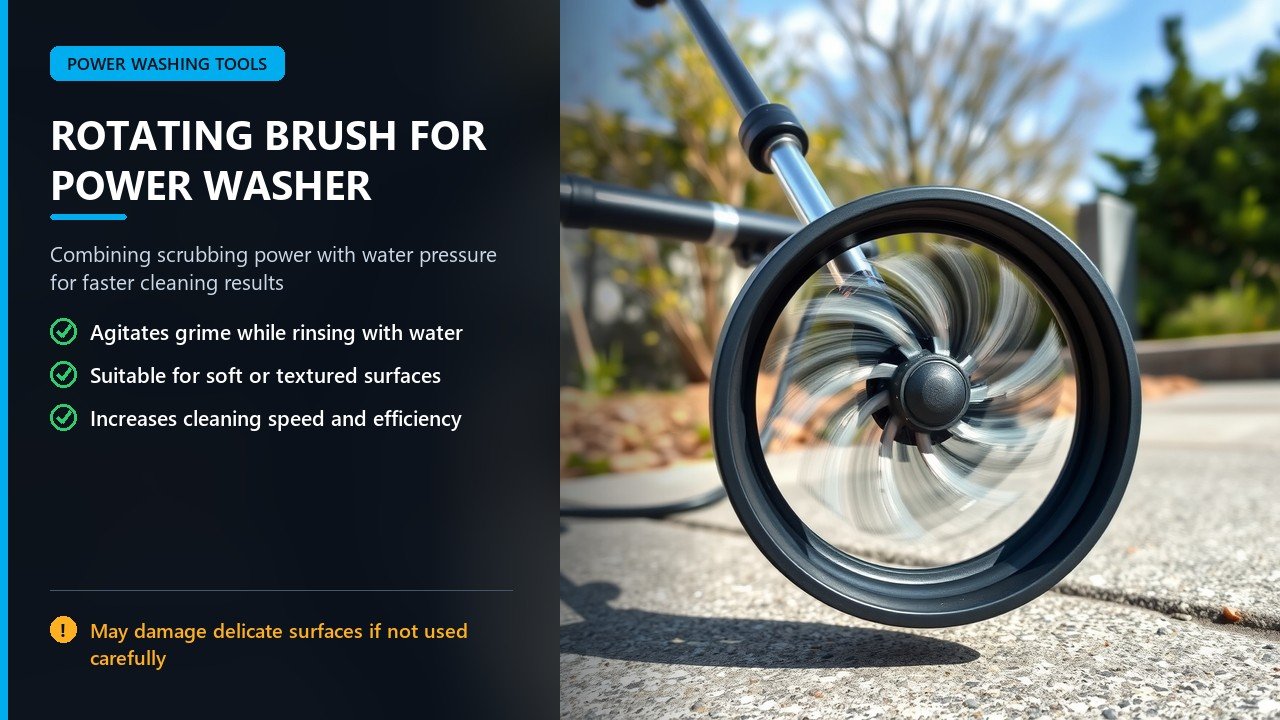
What a Rotating Brush Does
The idea behind a rotating brush is simple but effective.
It agitates and rinses together. As the brush head spins, its bristles work loose the dirt, film, and grime that pressure alone cannot break, while the water stream flushes the loosened material away. Combining the two steps saves time and produces a more even result than scrubbing and rinsing separately.
It reaches textured surfaces. Concrete, stucco, brick, and other textured materials have pores and crevices where dirt hides. Bristles reach into those areas in a way a flat water jet cannot, lifting embedded grime that would otherwise remain.
It is gentle by design. Unlike a concentrated water jet, which can gouge wood or strip paint, a brush spreads its force over many bristle tips. That makes it suitable for delicate or finished surfaces where high-pressure impact would cause damage.
It prevents spray-back. Many rotating brushes include a splash guard or shield that contains the spray, reducing the overspray and kickback that soaks the operator and splatters nearby surfaces.
Types of Rotating Brushes
Not all rotating brushes are the same, and the differences matter.
| Type | Best For | Bristle |
|---|---|---|
| Soft bristle brush | Vehicles, siding, furniture | Natural or soft synthetic |
| Stiff bristle brush | Concrete, brick, heavy grime | Stiff synthetic |
| Turbo brush (brush plus rotating jet) | Hard surfaces, faster scrubbing | Bristles plus turbo nozzle |
| Dual rotary nozzle brush | Wide coverage scrubbing | Fan-shaped rotating head |
Soft bristle brushes. Natural hair or soft synthetic bristles are gentle enough for vehicle paint, siding, windows, outdoor furniture, and boats. They lift grime without scratching, making them the safe choice for finished surfaces.
Stiff bristle brushes. Stiff synthetic bristles attack heavy grime on concrete, brick, and other durable surfaces. They scrub harder but should be used with care on softer materials, where they can leave marks.
Turbo brushes. A turbo brush combines bristles with a rotating water jet, delivering both scrubbing and concentrated spray in one head. These clean hard surfaces fastest but are more aggressive, so they suit concrete and masonry rather than paint or soft wood.
Dual rotary nozzle brushes. These use a fan-shaped, rotating spray head for broad coverage, ideal for large flat areas where speed matters. They function more like a spinning spray than a bristle brush, so know what you are buying.
What Surfaces a Rotating Brush Suits
Matching the brush to the surface protects both the material and your wallet.
| Surface | Recommended Brush |
|---|---|
| Car paint and glass | Soft bristle |
| Vinyl siding | Soft bristle |
| Concrete and driveways | Stiff bristle or turbo |
| Brick and masonry | Stiff bristle or turbo |
| Outdoor furniture | Soft bristle |
| Boats and RVs | Soft bristle |
Vehicles and finished surfaces. Soft bristle brushes are ideal for cars, trucks, boats, and anything with paint or a polished finish. They remove road film and bug splatter gently, and a splash guard keeps soap and water contained.
Siding and exterior walls. Vinyl and painted siding benefit from a soft to medium brush that scrubs off mildew and dirt without driving water behind the panels. Work downward to keep water moving away from seams.
Concrete and masonry. Stiff bristle or turbo brushes handle concrete slabs, brick, and stone. They scrub out embedded dirt and can be paired with a degreaser for oil stains, provided you choose the right nozzle for the surface.
Outdoor furniture and equipment. Patio furniture, grills, and lawn equipment all clean faster with a brush that reaches into joints and crevices. Choose bristles based on the material, softer for plastic and fabric, stiffer for metal.
Surfaces to avoid. Very soft or smooth materials, fresh paint, and anything prone to scratching should be tested in a hidden spot first. Even soft bristles can dull a delicate finish if used aggressively.
Compatibility With Your Machine
Before buying any brush, confirm it will work with your pressure washer.
Connection type. Most rotating brushes attach with a standard quarter-inch quick connect, the same fitting used by spray nozzles. If your wand uses this fitting, the brush snaps on directly. Our guide to pressure washer adaptors explains how to convert if your machine uses a different connection.
Pressure and flow ratings. Each brush has a maximum PSI and often a recommended GPM range. Staying within those limits keeps the brush spinning correctly and prevents damage. Some brushes need a minimum pressure, commonly around 2,000 PSI, to rotate effectively.
Flow matters too. A brush designed for a certain GPM range performs best on a machine that matches it. A brush rated for higher flow may not spin well on a small electric unit, and one rated low may not hold up to a big commercial pump.
Nozzle compatibility. If the brush is a turbo or dual-nozzle style, it may include its own nozzles or accept standard tips. Check the orifice sizing so the brush does not rob your machine of pressure, using the same sizing logic as any pressure washer spray nozzle.
How to Use a Rotating Brush
A little technique gets the most from the brush without harming the surface.
Pre-rinse the surface. Start by rinsing away loose dirt and debris with your wand. Cleaning a pre-rinsed surface prevents the brush from grinding grit into the material and keeps the bristles cleaner.
Apply detergent if needed. For greasy or heavily soiled surfaces, apply detergent first and let it dwell. The brush then works the loosened grime away efficiently rather than fighting it dry.
Keep the brush moving. Move the brush in overlapping passes and do not hold it in one spot. Constant motion produces even cleaning and prevents swirl marks or uneven wear.
Use light pressure. Let the brush and water do the work. Pressing hard does not clean faster and can bend bristles, stall the rotation, or scratch the surface.
Work top to bottom. Start high and work down so dirty water flows over uncleaned areas rather than over spaces you have already finished.
Rinse as you go. The brush rinses as it scrubs, but a final pass with a nozzle ensures no detergent residue remains, which can streak or attract new dirt.
Rotating Brush Versus Other Attachments
Knowing when to reach for a brush and when to use something else saves time.
Versus a turbo nozzle. A turbo nozzle spins a high-pressure jet for impact on hard flatwork, while a brush agitates with bristles for scrubbing. Use the turbo for concrete and the brush for surfaces that need physical scrubbing or that cannot take concentrated pressure.
Versus a surface cleaner. A surface cleaner is a large spinning disc for fast, even flatwork cleaning with no scrubbing action. It is faster on big flat areas, but it will not scrub textured or vertical surfaces the way a brush does.
Versus a wash mitt or sponge. Manual tools require effort and bucket work but offer total control on delicate paint. A rotating brush automates the scrubbing and pairs it with water, speeding up large jobs at the cost of a bit less finesse.
Versus a fixed brush. A stationary brush is fixed in one place and works best on large flat surfaces, while a rotating brush is more aggressive and versatile across many surfaces. Choose based on how much scrubbing power the job demands.
Caring for a Rotating Brush
A few habits keep the brush spinning and the bristles in shape.
Rinse after every use. Flush dirt, grit, and soap out of the bristles and the rotating mechanism to prevent buildup that stalls the spin and traps abrasive particles.
Inspect the bristles. Worn, bent, or missing bristles reduce scrubbing power and can scratch surfaces. Replace the brush when the bristles are visibly worn.
Check the bearing and seals. The rotating head depends on a bearing or bushing and seals to spin freely. If it stops rotating, check for debris in the mechanism or worn parts, and clean or replace as needed.
Store it dry. Dry the brush after use and store it indoors. Leaving a wet brush out encourages mildew in natural bristles and corrosion in metal parts.
Keep spares for different jobs. Owning both a soft and a stiff brush lets you match the tool to the surface instead of compromising with one brush for everything.
Choosing the Right Rotating Brush
Buying a rotating brush is not complicated once you know what to weigh.
Start with the surface. The single biggest decision is bristle stiffness. Soft bristles for paint, glass, siding, and furniture, stiff bristles for concrete, brick, and heavy grime. Getting this wrong risks either scratching a delicate finish or wasting time on a job that needs more bite.
Check the connection. Confirm the brush uses a quarter-inch quick connect or comes with the adaptor you need. A brush that will not attach to your wand is useless, so verify the fit before you buy, especially on machines with proprietary fittings.
Confirm the pressure rating. Look at both the maximum and the recommended minimum PSI. A brush rated far above your machine will never spin properly, and one rated well below your pump output may fail early under the stress.
Match the flow range. GPM compatibility is often overlooked. A brush built for 3.0 to 6.0 GPM will not perform as designed on a 1.2 GPM electric unit, no matter how promising it looks in the listing.
Look for a splash guard. A splash guard or shield contains overspray, keeping the operator dry and preventing dirty water from spattering clean surfaces. On vertical work like siding, this feature alone justifies the purchase.
Weigh build quality. Metal housings, sealed bearings, and replaceable brushes last longer than all-plastic heads. If you use the brush often, the sturdier build pays for itself in fewer replacements.
Detergent and Rotating Brushes
The right chemical pairing elevates what a brush can do.
Match detergent to soil. Use a degreaser for oil and grease, a mildewcide for organic growth on siding, and a mild car soap for vehicles. The brush agitates the loosened grime, but the detergent does the chemical work of breaking it down.
Respect dwell time. Apply detergent and give it the recommended minutes to work before scrubbing. Rushing straight to the brush wastes product and produces uneven results, since the chemical has not yet softened the grime.
Use the soap setting correctly. Many machines draw detergent through a siphon or a low-pressure soap nozzle. Brush on the soap pass, let it sit, then scrub and rinse on a clean-water pass rather than trying to do it all at once.
Do not over-concentrate. Too strong a mix can leave residue that streaks or damages finishes. Dilute according to the label, and never mix chemicals unless the manufacturer says they are compatible.
Rinse thoroughly. Detergent left in bristles or on the surface can attract new dirt and dull the finish. A clean-water rinse after scrubbing protects the work you just did.
Rotating Brush by Job Type
Seeing the brush in action across common jobs shows its range.
Fleet and vehicle washing. A soft brush removes road film, bug splatter, and diesel soot from vans, trucks, and trailers quickly, paired with car soap and a final rinse. It is one of the fastest ways to clean many vehicles in a row.
House washing. On siding, a soft to medium brush scrubs away mildew, dirt, and cobwebs while a splash guard keeps the runoff contained. Work top to bottom and avoid driving water into seams.
Driveways and sidewalks. A stiff brush or turbo brush lifts embedded dirt, tire marks, and organic staining from concrete far faster than the wand alone, especially with a degreaser on oil spots.
Decks and patios. On wood, a soft brush used with light pressure and the right cleaner removes gray surface grime without raising the grain. On composite and stone patios, a medium brush revives the surface safely.
Grills and equipment. A brush reaches into the joints of patio furniture, grills, and lawn equipment, scrubbing away baked-on residue that a flat spray leaves behind.
Boats and RVs. Large, gently curved surfaces that resist a flat jet are ideal for a soft rotating brush, which scrubs buildup while rinsing it clean without abrasive contact.
Safety With a Rotating Brush
Even a gentle tool deserves respect.
Wear eye and face protection. A spinning brush can throw water, detergent, and loosened debris. Eye protection is essential on every job, splash guard or not.
Keep hands clear. Never touch the spinning head or place fingers near the bristles while the machine is running. The rotation and water pressure can injure you even at modest settings.
Mind the reaction torque. The spinning head can create a small pull or kick, especially on turbo brush models. Grip the wand firmly and keep your footing on wet, slippery surfaces.
Watch for trip hazards. Hoses, cords, and wet ground combine badly. Lay out your lines carefully and keep the work area clear before you start.
Never brush electrical fixtures. Keep water and detergent away from outlets, lights, and meters. On siding jobs, plan your passes to avoid saturating these areas with runoff.
Maintenance and Troubleshooting
When a brush misbehaves, the fix is usually simple.
Brush stops spinning. Debris in the mechanism or a worn bearing is the usual cause. Disconnect the machine, flush the head with clean water, and inspect the moving parts. If it still will not spin, the brush needs rebuilding or replacing.
Uneven cleaning. This often comes from moving the brush too quickly, using too little pressure for the soil, or a detergent applied without adequate dwell time. Slow down, use overlapping passes, and let the chemical work.
Streaking or residue. Insufficient rinsing leaves detergent film that streaks and attracts dirt. Rinse again with clean water and reduce the detergent concentration on the next pass.
Bristles flattening. Pressing too hard flattens and bends bristles, reducing scrubbing power. Ease up and let the brush and water do the work.
Leaking at the connection. A worn O-ring at the quick connect is the culprit. Replace the O-ring, and if the leak persists, check for a damaged fitting or a mismatch between the brush and wand.
Frequently Asked Questions
What is a rotating brush for a power washer? It is an attachment with a spinning bristle head that scrubs and rinses at the same time. It agitates grime that pressure alone cannot lift, making it useful on textured and finished surfaces alike.
Is a rotating brush the same as a turbo nozzle? No. A turbo nozzle spins a high-pressure water jet for impact on hard flatwork, while a rotating brush uses bristles to scrub. They serve different surfaces and purposes.
What PSI do I need for a rotating brush? Many brushes recommend a minimum of about 2,000 PSI to spin effectively, with maximum ratings often around 3,000 to 4,000 PSI. Check the specific brush’s rating before buying.
Can I use a rotating brush on a car? Yes, with a soft bristle brush. It removes road film and bug splatter gently when used with light pressure and a clean brush. Never use a stiff or turbo brush on vehicle paint.
Will a rotating brush scratch my surface? A soft brush used with light pressure and clean bristles will not scratch typical finished surfaces. Stiff or turbo brushes can mark softer materials, and trapped grit can scratch even with a soft brush, so keep it clean.
How do I connect a rotating brush to my pressure washer? Most attach with a standard quarter-inch quick connect, the same fitting used by spray nozzles. If your machine uses a different connection, a matching adaptor bridges the gap.
Why has my rotating brush stopped spinning? A stalled brush usually has debris jammed in the rotating mechanism or a worn bearing. Flush it clean and inspect the moving parts, replacing the brush if the mechanism is worn out.
What is the best rotating brush for concrete? A stiff bristle brush or a turbo brush that combines bristles with a rotating jet works best on concrete. Soft brushes will wear out quickly and clean slowly on rough flatwork.
Can a rotating brush be used with hot water? Many are rated for hot water, but check the manufacturer’s temperature limit before use. High heat can soften some synthetic bristles and dry out natural ones, so confirm the rating first.
Do I need a foam cannon with a rotating brush? Not necessarily. A foam cannon lays down a thick layer of soap that softens grime before scrubbing, which can improve results on vehicles, but a simple detergent siphon plus the brush also works well.
How long does a rotating brush last? Bristle brushes last from a season to several years depending on use and surface. Soft brushes on paint last longest, while stiff brushes on rough concrete wear fastest. Replace when bristles are visibly worn or the head stops spinning smoothly.
Is a rotating brush worth it for a small electric pressure washer? Only if the brush is rated for your machine’s lower PSI and GPM. Many rotary brushes need more pressure than a compact electric unit supplies, so check the ratings and consider a brush designed for low-flow machines.
Can I use a rotating brush on wood? Yes, with a soft bristle brush, light pressure, and the grain. Keep the brush moving with the grain and avoid dwelling in one spot, which can raise the grain or leave marks on softer woods.
Does a splash guard actually help? Yes. A splash guard contains overspray, keeping you dry and preventing dirty water and detergent from spattering walls, windows, and clean surfaces. On vertical work it is one of the most useful features.
Final Thoughts on a Rotating Brush for a Power Washer
A rotating brush for a power washer turns pressure washing into a scrubbing and rinsing operation in one motion. It lifts the stubborn film and embedded grime that water alone leaves behind, it reaches into the texture of concrete and siding, and it remains gentle enough for paint and finished surfaces when you choose a soft bristle. Match the brush type to the surface, stay within your machine’s ratings, and keep the tool clean, and it will become one of the most-used accessories in your kit.
Chris now keeps a soft brush for the vans and a stiff one for the shop floor, and both earn their place on every job. He learned that pressure is not always the answer, sometimes the surface needs a scrub. Add a rotating brush to your setup, use it with light pressure and constant motion, and you will clean faster, more evenly, and more thoroughly than pressure alone can manage.
The key takeaways are simple. Match the bristle to the surface, stay within your machine’s pressure and flow ratings, keep the brush moving with light pressure, and rinse the tool after every use. Do those four things and a modest attachment will outwork far more expensive upgrades. For textured, delicate, or heavily soiled surfaces, the rotating brush is often the difference between a job that drags on and one that finishes clean the first time.