There is a style of pressure washer gun that looks almost cute in the hand, a compact grip and a short stubby barrel that snaps onto the wand like a revolver wearing its nose snipped off. The snub nose pressure washer gun, as the pressure washing world calls the short-barreled triggers, is more than a look; it is a handing lesson in balance, control, and the ergonomics of a day of spraying. Some operators swear by the short profile, and the design history explains why the snub nose keeps winning over fingertips.
The story of the snub nose gun is the story of leverage. A long barrel makes the wand reach farther, but it also throws the weight forward and forces the wrist to fight a lever arm all day, while the short-barreled gun tucks the balance into the palm and keeps the wand steady at arm’s length. It trades a little reach for a lot of comfort, and on the jobs where reach does not matter and fatigue does, the snub nose is quietly the better tool.
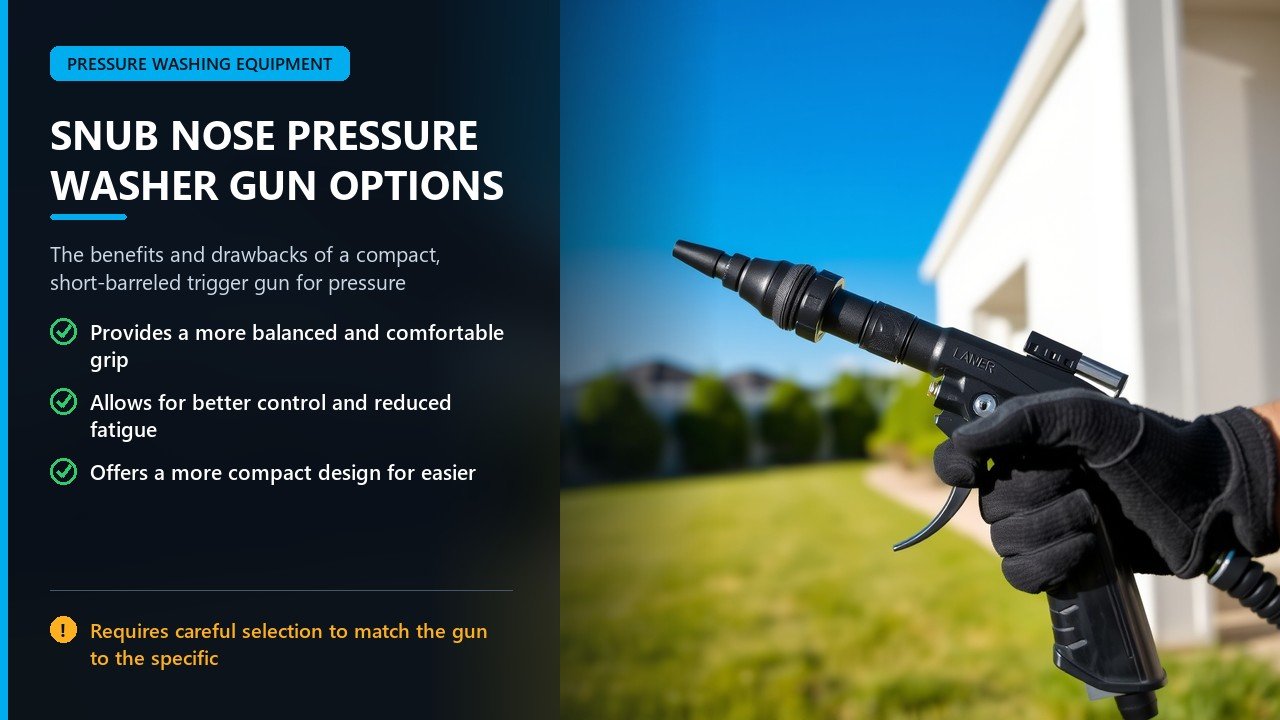
What a Snub Nose Pressure Washer Gun Is
A snub nose pressure washer gun is a trigger gun with an intentionally short barrel, the section between the grip and the wand socket cut to the minimum needed for the connections and the trigger. The gun still carries the standard quick connects, the hose enters at the handle or the base, and the wand clicks into the short nose just like any gun, but the overall length sits inches shorter than a conventional sidearm. The name borrows from firearms, and the logic is the same, a compact, even-balanced tool that carries close to the hand.
The shorter body changes the hand’s relationship to the machine. With the balance point tucked under the palm instead of drifting out over a long barrel, the wrist holds the gun upright with far less strain, and the wand at the nose steers like an extension of the arm rather than a load at the end of a stick. The design is the quiet hero of a long day’s house washing, where an extra inch of barrel translates into a fork-load of fatigue across a thousand trigger pulls.
The snub nose is not a gimmick or a toy, it is a proven ergonomic choice. The same short-profile logic runs through industrial spray heads, detail guns, and the modern compact triggers that dominate the market, and the operator who carries one learns the difference between a gun built to reach and a gun built to hold. The reach that a long gun adds is real; the comfort a short gun returns is equally real, and the trade is the entire discussion.
The Ergonomics: Why Short Feels Steadier
The physical story is about the center of gravity. A pressure washer gun with a long barrel carries its weight out past the knuckles, and the wrist works all day to keep the nose level, especially when the wand and the tip add their own inches ahead of the grip. Shortening the barrel pulls that weight back toward the palm, the wrist stacks over the tool instead of fighting it, and the whole arm relaxes into a more sustainable stance, the exact reason the snub nose disappears in the hand.
Balance matters more the longer the wand. With a four-foot lance clicked into the nose, the weight rides far out regardless, so the gun’s own body becomes the counterbalance that keeps the rig from tipping nose-heavy, and a short, heavy-bodied gun positioned at the balance point steadies a long reach astonishingly well. Operators who brace the base of the wand against the hip, the technique from the lance extension guide, find the snub nose makes the whole rig sit more naturally in the cradle of the arm.
The fatigue math closes the case over a shift. A full day of house washing is thousands of trigger pulls, wrists held at an angle, and a few ounces of forward weight compounded by distance becomes a real cost by the afternoon. The snub nose design shaves that recurring load, and the operator finishes the day fresher and cleaner, which is the unglamorous performance metric that explains why the short guns keep their devoted following.
Trigger Styles: Squeeze, and the Variable Options
The snub nose family splits by trigger style, and the choice follows the operator’s hand. The classic squeeze trigger fires when held and cuts when released, the standard of working guns, and the modern elastomeric trigger versions soften the pull and spread the grip pressure, so the forefinger and the palm share the work across a long day. The trigger’s return spring and the valve quality are the parts that decide whether a gun feels light or fights the hand, and the honest buy compares the pull feel before the price.
Variable-pressure guns add a second control. A knob or a lever on the gun varies the delivered pressure between gentle and full, so the operator adjusts rinse and blast on the fly without swapping tips, and the short body often carries the adjuster under the thumb where the balance stays neutral. The variable trigger is a convenience and a safety, since delicate surfaces get a softer pass without unzipping the kit, and it pairs well with the compact profile on mixed jobs.
Some snub nose guns add a swivel at the hose inlet, keeping the line from twisting the operator’s arm on a rotating pass. The swivel is the quiet upgrade that turns the compact gun into a full-day tool, and the swivel guide on this site explains the moving part in detail. Trigger, adjuster, and swivel together make the snub nose a complete control center, each feature serving the same goal, keep the hand comfortable and the wand steady through a thousand passes.
Matching the Gun to the Machine
The gun is the machine’s control panel, and the match matters. The pressure rating must cover the machine’s PSI with margin, since a gun rated too low fails under load at the exact point the operator holds it, and the fittings must match the kit, the hose’s quick connect at the inlet and the wand’s quick connect at the nose, both in the 1/4-inch standard the machine already uses. Size, thread, and rating, the same three checks the quick connector guide teaches, apply to the gun as to any fitting.
The flow capacity must keep pace too. A gun built for a 2 GPM machine starves a 4 GPM unit behind a stingy valve, producing weak, pulsing spray, so check the gun’s flow rating against the machine’s GPM before trusting the click. The valve and the barrel are sized together, and an undersized gun chokes exactly the machine the operator just paid a premium for, a disappointment few owners ever connect back to the gun.
The ergonomics complete the match, gripping the gun in the store or the aisle tells the truth. The palm span, the trigger reach, and the nose’s angle must suit the operator’s hand size, since a gun that cramps the palm or stretches the trigger leaves the day’s comfort on the shelf. The wand and gun guides on this site help frame the comparison, and the operator who tests in hand, not on paper, buys the gun that fits for years.
When the Snub Nose Wins and When It Does Not
The snub nose wins on the jobs where comfort and control dominate. House washing, car detailing, fence lines, and any work involving a long wand and a full day reward the compact, balanced profile, because the operator holds the gun for hours and the reduced lever load shows up in the finish quality and the shoulder. Detailing, in particular, loves the short barrel for the close, precise passes the mobile detailing guideline describes, and the gun’s balance makes each delicate flick of the wrist a controlled one.
It yields to the long-barreled gun where reach dominates. High fascia, soffits, and second-story work stretch the arm to its limit, and the extra inches of a conventional barrel buy the last bit of height that the snub nose gives away, since the short barrel and the wand stack together only reach so far. On those jobs, the operator either stands closer, or swaps to a longer gun, and the professionals carry both, choosing the profile to the wall rather than one gun for everything.
Flatwork with a surface cleaner barely cares, since the attachment rides under the machine’s skirt and the gun merely guides it, so the choice falls again to the operator’s preference. The honest summary is that the snub nose is not better or worse, it is better positioned, and the operator who matches the gun to the work, short for comfort and close control, long for reach, gets the best of both profiles instead of defending a single favorite to the end of a tired day.
Buying a Snub Nose Gun Wisely
Choosing between the snub nose options reads like any pressure washer purchase. Start with the rating and the flow, match both to the machine, then the fittings, and finally the ergonomics in hand, and the price floats below the comfort and the parts quality. A quality gun costs a modest amount and carries replaceable seals and a rebuildable valve, while the cheapest guns cost less and wear out faster, a trade the working operator settles on the side of the rebuildable build.
Brands and reviews carry real signal. The well-reviewed guns share the traits that matter, solid bodies, smooth triggers, compatible fittings, and ready spare parts, and the owners’ photos and complaints reveal the fit, the grip, and the leak habits that a catalog photo hides. A gun with a swivel, a variable option, and a solid warranty covers the features most mixed-duty operators want in one purchase, and the detail gun guides on the site touch the compact category in depth.
Two small extras complete the buy. A spare inlet o-ring and a rebuild kit, when the model offers one, tuck into the kit bag so a mid-shift drip becomes a minutes-long fix, and a cap and a clip keep the gun clean and at hand on the rig. The snub nose that arrives rated, matched, and rebuilt-ready is the gun the operator reaches for first every morning, which is the real test that a pressure washer gun passed its purchase long before the first trigger pull.
Comparing Compact Guns on the Market
The compact gun category spans a real range. The budget end offers plastic-bodied triggers for a few dollars, light and adequate for light duty, and the working end offers metal-framed guns with rebuildable valves, swivels, and trigger surfaces, priced higher and built for a decade of daily use. Between them sit the popular mid-range guns, aluminum or polymer bodies with decent springs and replaceable seals, that satisfy most operators who want the short profile without the fleet price.
The meaningful differences hide in the small parts. The trigger spring’s resistance, the valve’s rebuildability, and the swivel’s quality separate a pleasant gun from a leaky chore, and the catalog photos reveal none of them, which is why the owner reviews matter so much. A gun with easy-to-find o-rings and a rebuild kit keeps working after the budget special has been replaced twice, and the working operator’s ledger settles on the side of the part, not the plastic.
Feature tiers follow the buyer. A plain squeeze snub nose suits a casual washer; a variable, swivel-equipped, metal-bodied gun suits the commercial crew; and the decision rides on the hours the gun will actually hold. The related accessory guides like the reel story explain how the gun’s fittings mate to the whole kit, and the operator who matches the tier to the duty buys the compact gun that will still be clicking in a decade, which is the honest measure of good value in a trigger.
Installing and Connecting the Snub Nose
Mounting a snub nose gun is a three-click job. The hose’s quick connect clicks onto the gun’s inlet, the wand’s probe clicks into the nose coupler, and the tip set clicks onto the far end of the wand, completing the short control path in seconds, no threads, no wrench. The fittings must seat clean and click solid, and the machine’s pressure path from outlet to tip runs through each seat, so the operator walks the five-minute test, low start, full blast, reach for weeps, before trusting the new gun on the work.
Alignment makes the clicks reliable. Present the hose probe straight into the gun’s inlet until the collar seats, never wiggled at an angle that pinches the ring, and confirm the wand’s probe likewise, so the seal sits square and the collar snaps home. The bleeds before every break, squeeze the trigger and idle the machine before pulling a collar, are the same discipline the gun o-ring guides on the site stress, and they keep the new gun and the operator safe from a live-release surprise.
Once connected, the balance declares itself. The short body tucks to the palm, the wand steers steady, and the operator’s first day proves what the design promised, an hour of passes without the wrist’s familiar burn. The installation is over in minutes, and the feel it delivers is the payoff that pulls the operator back to the compact gun on every subsequent job, which is exactly the verdict the snub nose design was always meant to earn.
Pressure Control and Tips From the Compact Grip
The gun becomes the control center once the machine is running. A variable gun lets the operator throttle between gentle and full with a knob or the trigger’s travel, so a delicate siding pass drops the force without a tip swap, and a fixed gun relies on the tip set, the color-coded fans from the nozzle chart, to shape each pass. The two control paths, adjuster or tip, both work at the short nose, and the compact grip keeps them under the thumb.
Tip swaps at the nose stay effortless. The quick connect on the wand’s far end receives the green, white, or 15-degree tip, one hand pulling the collar, the other settling the new cone, and the short gun’s balance keeps the whole wand sturdier while the swap happens. Planning the tip for the row, wide for rinse, narrow for the stain, is the discipline from the nozzle guides, and the compact gun makes the plan easy to execute without the tool fighting back.
The gun’s controls are only as good as the service keeps them. A clean, dry trigger fires freely; a gummed throttle sticks at the worst pass; and the seasonal o-ring service, rinse, grease, and replace, keeps the adjuster and the swivel working the way the operator expects. The snub nose that steers the machine so precisely by the end of a season is no accident, it is the gun, the tips, and the routine all pulling in the same comfortable direction.
Care and Common Snub Nose Mistakes
The care routine is the same small ledger as the rest of the kit. Rinse the gun after chemical work to keep detergent out of the trigger and the seals, dry the fittings before storage, and service the o-rings and the swivel on the seasonal calendar the winterizing guide sets for the machine. A gun stored dry and sealed clicks back to life every spring, while one left wet and gritty greets the season with a sticky trigger and a drip at the swivel.
The common mistakes repeat the kit’s own lessons. The first is the rating mismatch, a budget gun rated below the machine, which fails in the operator’s hand at the worst moment; read the stamp. The second is the flow choke, an undersized valve starving a high-GPM machine, so check the GPM, not just the PSI, before buying. The third is ignoring the trigger feel, buying the prettiest gun and then fighting the grip for a season, when the palm-fit was the only spec that counted.
Finally, forgetting the gun’s own role in safety. The trigger is the machine’s kill switch, the piece the operator releases to stop the stream, and a gun with a worn, sticking trigger is a safety device that failed, so service it without delay. Bleed before breaking connections, keep the stream clear of faces and pets, and treat the compact grip as the daily control it is, and the snub nose gun stays the reliable, comfortable heart of the whole pressure washer for years.
Frequently Asked Questions
What is a snub nose pressure washer gun? It is a trigger gun with a short barrel between the grip and the wand socket, built to tuck the weight into the palm and reduce the wrist’s lever load during long sessions, while carrying the same fittings and ratings as any gun.
Is a short-barreled gun better than a long one? It is better for comfort and close control, and worse for overhead reach where the extra barrel inches matter. Professional operators often carry both and choose by the job, short for houses and detail work, long for fascia and soffits.
Do snub nose guns fit any pressure washer? As long as the rating and the flow match the machine and the fittings are in the same quick-connect or thread standard. Check the PSI, the GPM, and the inlet and nose connectors before the click.
Are snub nose guns only for detailing? No. They suit any low-reach work where the operator holds the gun for long stretches, from house washing to fence lines to flatwork guidance, though long-reach work still favors a longer-barreled gun.
How do I keep a snub nose gun working? Rinse it after chemical work, dry the fittings, grease and service the o-rings and the swivel, and store it sealed and dry. Replace worn seals on the seasonal schedule, and treat the trigger like the safety device it is.
Final Thoughts on the Snub Nose Pressure Washer Gun
The snub nose pressure washer gun proves the quiet truth of the trade, comfort and balance are performance. By tucking the gun’s weight into the palm and shortening the lever the wrist fights, it turns a day of trigger pulls from a grind into a steady rhythm, and it delivers the same rating, flow, and fittings as any gun while making the operator’s hand the real workhorse. It is not the longest-reaching tool, and it does not need to be, because it was built to hold, not to stretch.
Match the snub nose to the machine’s rating, flow, and fittings, test the grip before you buy, and carry a variable and a swivel option where the work rewards them. Keep the seals serviced, the trigger sharp, and the gun dry and ready, and use it where the days are long and the reach is short, alongside a longer gun for the fascia and soffits. The result is a pressure washer that feels balanced in the hand, steady at the wand, and ready at dawn, which is every operator’s idea of a good day’s work.