Stihl pressure washers are known for build quality, quiet operation, and a dealer network that stands behind them. The German maker, best known for chainsaws and garden tools, offers a range of electric and battery pressure washers rather than gas models, aimed at homeowners and light professional users who want reliable, well-made cleaning equipment.
This guide explains the Stihl pressure washer range, the features that set the brand apart, and what to expect in terms of use and maintenance.
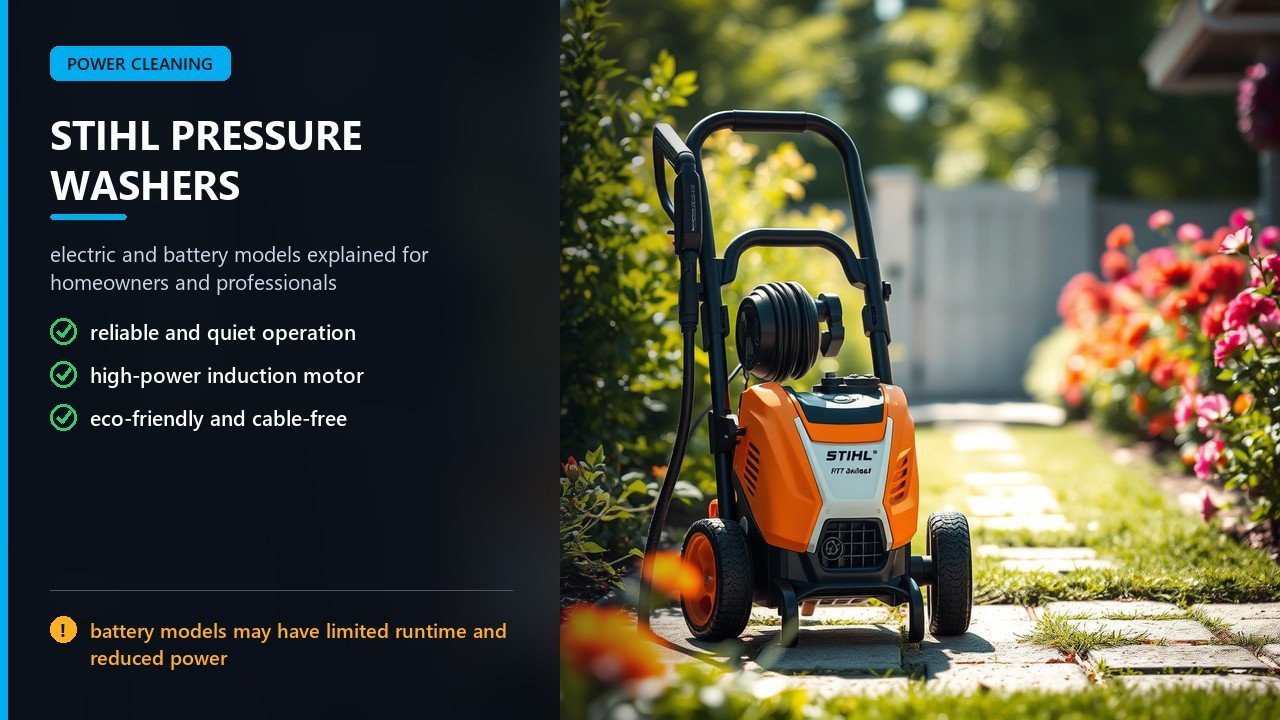
Electric and Battery Models
Stihl’s pressure washer line is built around electric and battery power. The RE series covers corded electric machines, from compact models for light home use to larger units for heavier cleaning, and these plug into a standard household supply. The REA and RCA ranges use Stihl’s battery system, so they run without a cord, sharing batteries with the brand’s other cordless tools.
Electric models are the mainstay. They start at the touch of a switch, run quietly on a quiet, high-power induction motor, produce no exhaust, and suit home use perfectly. Battery models trade some runtime and, in some cases, power for complete freedom from a cable and outlet, which suits users already invested in the Stihl battery platform or working where power is awkward to reach.
Because Stihl does not offer gas pressure washers in most markets, the choice is between mains electric and battery, not gas. For most home cleaning, an electric Stihl is the natural choice; for those already in the Stihl battery system, a battery model adds convenience. The model range spans entry-level units up to powerful machines for demanding home and light commercial work.
What Sets Stihl Apart
Stihl pressure washers are built around robust pump heads, often made from aluminium or brass, paired with quiet induction motors on the electric models. This attention to the pump, the heart of any pressure washer, and to quiet, durable motors is a large part of the brand’s reputation for longevity and reliability.
The machines also include practical features that make them pleasant to use. A plug coupling lets you change nozzles without tools, an integrated accessory slot keeps the wand and nozzles on board, and an anti-drill system prevents the high-pressure hose from twisting as you work. Many models allow you to regulate the pressure and water flow, often directly at the spray gun, so you can adjust the cleaning strength to the job.
Support is another strong point. Stihl sells through a network of servicing dealers, and its pressure washers are backed by that support, along with genuine parts and accessories. For buyers who value a machine that can be serviced locally and kept going for years, this dealer backbone matters as much as the specification.
Electric or Battery
The choice between an electric and a battery Stihl comes down to where and how you work. An electric model gives constant power from the mains, with no battery to charge and no runtime limit, which suits extended cleaning near a suitable outdoor socket. It is the simpler and usually the more affordable choice for most home users.
A battery model trades that constant power for freedom from a cord. It is ideal for cleaning where no socket is nearby, for quick jobs, or for users already invested in Stihl’s battery system and its shared batteries. The trade-offs are runtime, which is limited by the battery and the job’s demands, and the need to charge and manage batteries.
Either way, the Stihl features carry across: robust pumps, quiet operation, and practical handling. If you have an outdoor socket and do longer cleaning sessions, electric is the straightforward pick. If mobility or cordless convenience matters more, a battery model earns its place, provided you have enough battery capacity for the work you do.
Choosing a Model
Choosing a Stihl pressure washer comes down to how much cleaning you do and what you clean. For occasional use around the home, such as cars, garden furniture, and small patios, a compact electric model is enough. For larger areas, heavier grime, or frequent use, a more powerful model with higher pressure and flow and a more substantial pump pays off.
Pressure and flow are the numbers to compare, and Stihl machines span a wide range. A higher-pressure model cleans more stubborn dirt and covers ground faster, but it also costs more and demands a better water supply to deliver its rated flow. Match the machine to the job: buying far more pressure than you need wastes money, while too little leaves you struggling on tough surfaces.
Consider the power source and the practicalities too. Electric models need an outdoor socket within reach of a suitable power cord, and Stihl advises against extension cords on some models, so check the location. Battery models trade runtime for freedom from a cord, so weigh convenience against the size of the job and the number of batteries you have.
Using a Stihl Washer
Using any pressure washer well means matching the nozzle and pressure to the surface. Use the nozzle recommended for each job, regulate the pressure down for delicate surfaces such as wood or vehicles, and keep the spray moving. Stihl’s adjustable pressure and flow, and its quick-change nozzles, make this easy, but the principle still applies: use the gentlest setting that does the job.
Connect to a suitable water supply and turn the water on before starting, as running the pump dry causes damage. Keep the inlet filter clean so grit does not reach the pump, and keep the high-pressure hose free of kinks, using the anti-drill feature and a neat hose run to prevent twisting. Control the pressure at edges and transitions to avoid damaging nearby surfaces.
Follow the safety guidance in the manual. Keep the machine dry and never use it in the rain, do not spray electrical outlets or the machine itself, use the trigger safety lock when not spraying, and keep the high-pressure jet away from people and animals. These simple habits keep the operator and the machine safe.
Maintenance and Care
Caring for a Stihl pressure washer is straightforward, and much of it mirrors any quality electric machine. Flush clean water through the system after use, especially after using detergent, drain the pump, hose, and gun to prevent freeze damage in cold weather, and store the machine dry and frost-free. Wipe it down and inspect the hose and connections for wear.
Keep the inlet filter clean and check the seals and O-rings at the connections, renewing them if they leak. A Genuine Stihl parts approach is best where available: genuine nozzles, seals, and accessories are matched to the machine, and your Stihl dealer can supply parts and carry out servicing. This keeps the machine performing as designed.
Understand your pump. Stihl pressure washers use robust pumps, some of which are serviceable and some of which are maintenance-free, and the manual for the model tells you which. If the pump has an oil sump, use the correct Stihl pump oil and check it, changing the oil on schedule. If it is maintenance-free, leave it alone as instructed.
Common Issues and Servicing
If a Stihl washer loses pressure or behaves oddly, check the simple causes first: a blocked or worn nozzle, a leaking connection, a kinked or damaged hose, or an inadequate water supply. The manual’s troubleshooting section lists the common symptoms, such as fluctuating or dropping pressure, a changed spray pattern, and the pump cycling without the trigger pulled, along with their likely causes.
A nozzle that is blocked should be cleaned; one that is worn should be replaced. A spray pattern that has changed usually points to the nozzle. If the pump cycles repeatedly without the trigger being pulled, or pressure fluctuates, the manual points to a leak or fault in the pump, hose, or spray attachment, and advises having a Stihl servicing dealer inspect the machine.
For anything beyond simple checks, the dealer network is the advantage of owning a Stihl. Rather than wrestling with a fault, an owner can have the machine examined and repaired with genuine parts, which keeps it reliable and holds its value. The table below sums up the care points.
| Task | Purpose |
|---|---|
| Flush and drain after use | Prevents detergent residue and freeze damage |
| Clean the inlet filter | Keeps grit out of the pump |
| Check seals and O-rings | Stops leaks and pressure loss |
| Inspect hose and nozzle | Maintains flow and spray quality |
| Pump oil (if applicable) | Protects serviceable pumps |
Look after these and a Stihl washer serves for years.
Frequently Asked Questions
Does Stihl make gas pressure washers? Stihl’s pressure washer range is primarily electric and battery-powered rather than gas. Electric models cover home and light professional use, and battery models offer cordless convenience.
Are Stihl pressure washers any good? They are known for robust pump heads, quiet induction motors, practical features, and strong dealer support, which makes them reliable and serviceable over a long life.
What models are there? The range includes the RE electric series and the battery REA and RCA models, spanning compact home washers to powerful machines, with specifications varying by model.
Can I use a Stihl washer commercially? Many models are intended for domestic and light use, and some manuals state that the machine is not suited to commercial use. Check the manual for the specific model.
Does the pump need oil? Depends on the model. Some Stihl pumps are serviceable and use Stihl pump oil, while others are maintenance-free. The manual tells you which type you have.
Why has my Stihl washer lost pressure? Common causes are a blocked or worn nozzle, a leaking connection, a kinked hose, or an inadequate water supply. Check these before assuming a pump fault.
Where can I get parts and servicing? From a Stihl servicing dealer, who can supply genuine parts and carry out repairs, which is a major advantage of the brand.
Can I use an extension cord? Follow the manual, which for some models advises against extension cords for safety and performance. Where a cord is needed, use a suitable outdoor one as directed.
Final Thoughts
Stihl pressure washers bring the maker’s reputation for quality to cleaning equipment, with electric and battery models built around robust pumps, quiet motors, and practical features like tool-free nozzle changes, pressure regulation, and an anti-drill hose system. For homeowners and light professional users, they are dependable, comfortable to use, and well supported.
Choosing the right model for the work, using the correct nozzle and pressure for each surface, and keeping up with simple care such as flushing, draining, and cleaning the inlet filter will keep a Stihl washer running for years. With genuine parts and dealer servicing behind it, the machine is easy to keep in top condition. For related reading, see our guides on Stihl pressure washer pump oil and an electric pressure washer.