The first time a new pressure washer owner pulls the cord and gets nothing, the diagnosis is almost always the same. At the small engine shop, the mechanic opens the carburetor bowl, and it is full of a varnish-like gel that smells like paint thinner. That gel was gasoline a few months earlier. Fuel stability is the single most misunderstood fact among outdoor power equipment owners: pump gas begins to degrade within weeks, and the wrong fuel – or fuel that has gone bad – will kill a carburetor faster than any amount of heavy use. Getting the type of gas for pressure washer engines right, and knowing how to store it, is the difference between a machine that starts on the first pull every spring and one that needs a $200 carburetor job.
Most gas pressure washers run on four-stroke engines that take regular unleaded gasoline – but "regular unleaded" is not a complete answer. Octane, ethanol content, and age all matter, and each one affects how reliably the engine starts and how long it lasts.
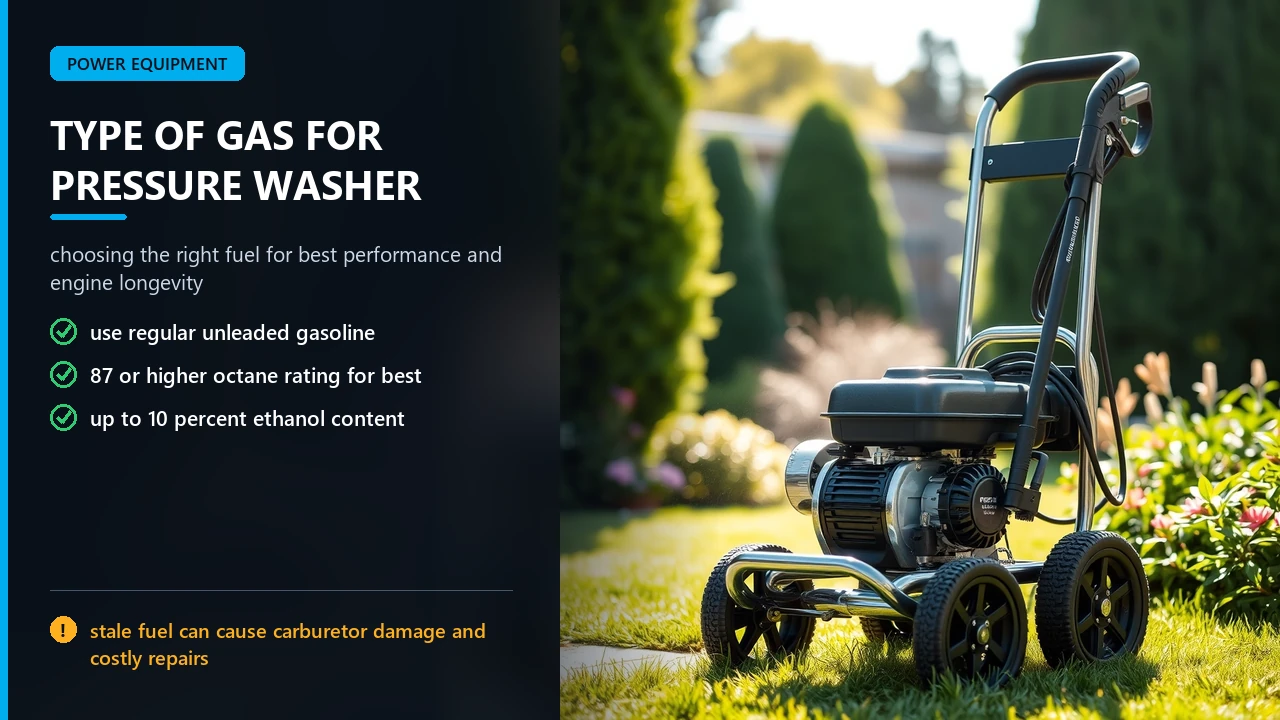
The Short Answer
For the overwhelming majority of gas pressure washers:
- Fuel: Regular unleaded gasoline
- Octane: 87 or higher (pump rating)
- Ethanol: Up to 10 percent (E10) is safe for most modern engines
- Age: Use within 30 days; treat for longer storage
- Never: Diesel, E15 or higher, two-stroke mix, or stale fuel
That is the whole answer for most people. The nuance lives in the details, particularly ethanol and fuel aging, which cause the vast majority of small engine problems.
Octane: What Actually Matters
Small engines are low-compression and simple. They do not benefit from premium fuel the way a high-compression performance car might. The manufacturer’s recommendation is typically 87 octane, and using 91 or 93 offers no measurable cleaning or performance benefit in a pressure washer engine.
Higher octane can even be counterproductive in stored fuel if it contains less stabilizer, though the difference is minor. The important thing is to meet the minimum, which regular pump gas does.
| Octane Level | Recommended? | Notes |
|---|---|---|
| 87 (regular) | Yes – the standard choice | Meets requirements for nearly all pressure washer engines |
| 89-90 (mid-grade) | Acceptable | No advantage in a low-compression engine |
| 91-93 (premium) | Acceptable but unnecessary | Extra cost, no cleaning benefit in most small engines |
| Below 87 | No | Invites knocking and hard starting |
If your engine is turbocharged or high-compression – rare in pressure washers but present in some commercial engines – the manual may specify premium. Otherwise, regular is correct.
Ethanol: The Real Issue
Ethanol is the additive that causes most modern fuel problems in small engines. It is alcohol, and alcohol absorbs water from the air. In a pressure washer that sits for weeks, that absorbed moisture separates from the gasoline, sinks to the bottom of the tank and carburetor, and causes corrosion. The phase-separated fuel then leaves varnish and gel deposits when it dries.
Ethanol tolerance varies by engine and by the components used:
| Fuel Blend | Ethanol Content | Safe for Most Pressure Washers? | Details |
|---|---|---|---|
| E0 | 0% | Yes – best for storage | Pure gasoline; ideal but not always available |
| E10 | Up to 10% | Yes – for most modern engines | The most common pump fuel in the U.S. |
| E15 | Up to 15% | No – not recommended | Can damage seals, fuel lines, and carburetors |
| E85 | Up to 85% | No – never | Flex-fuel vehicles only; destroys small engines |
The U.S. Environmental Protection Agency restricts E15 sales to flexible-fuel vehicles and mandates warning labels at the pump precisely because small engines, boats, and older equipment are not designed for it. Read the pump label before you fill your can.
For a machine used regularly through the season, E10 works fine. For one stored for long periods, ethanol-free fuel (often sold as "recreational" or "marine" gas) is worth the extra cost because it resists phase separation and does not attract moisture.
Fuel Age: The Silent Killer
Gasoline is not shelf-stable. The lighter components evaporate over time, leaving heavier compounds that turn to varnish. Depending on conditions, pump gas can begin degrading in as little as 30 days, and by 90 days a stored machine is at real risk.
Two storage habits prevent this almost entirely:
- For short-term storage (under a month): Add fuel stabilizer at the recommended ratio, run the engine briefly so treated fuel reaches the carburetor, and store as normal.
- For long-term storage (winter, months of idleness): Either run the engine until it stops from fuel starvation (letting the carburetor run dry), or add stabilizer and run briefly. Many manufacturers prefer running the carb dry for extended storage.
The carburetor is the vulnerable point. The fuel sitting in that small bowl is what turns to gel. Running the engine dry empties the bowl and removes the fuel that would otherwise varnish.
What Never Goes in the Tank
- Diesel. A gasoline engine will not run on diesel, and diesel contaminates the fuel system. Never mix them up, especially if you also operate a diesel truck.
- Two-stroke premix. Oil-mixed fuel is for two-cycle engines. In a four-stroke pressure washer it fouls the plug and coats the valves and combustion chamber.
- E15, E85, or flex fuel. Higher ethanol content attacks seals and fuel lines and causes lean running.
- Old gas from other equipment. Fuel that already sat in a lawnmower for a year is already degraded. Do not transfer the problem to your washer.
- Fuel additives not meant for small engines. Some automotive treatments contain solvents that harm small carburetors.
How to Fuel Correctly
- Let the engine cool before refueling. Gasoline vapors plus hot exhaust is a fire risk.
- Work outdoors or in a well-ventilated area, away from ignition sources.
- Use a clean funnel to avoid spills and debris.
- Fill to about 90 percent of the tank, leaving room for expansion.
- Wipe up spills before starting.
- Add stabilizer if the fuel will sit for more than a few weeks.
Do Commercial or High-Performance Models Differ?
Most gas pressure washers use conventional four-stroke engines, but there is a range. Entry-level units often use engines that tolerate E10 fine. Some commercial engines – particularly larger Honda, Kohler, and Subaru units – have stricter fuel specifications and may recommend minimum octane or maximum ethanol content.
Always check the owner’s manual, which specifies fuel type, octane, and ethanol limit for your exact engine. Manufacturer guidance wins over general advice every time, and following it protects your warranty.
Fuel Storage Best Practices
- Buy fresh, buy small. Purchase fuel you will use within 30 to 60 days rather than storing large quantities.
- Seal the container. A tight cap slows evaporation and moisture absorption.
- Store cool and shaded. Heat accelerates breakdown; a hot shed is the worst place for a fuel can.
- Treat proactively. Add stabilizer at the pump or as you fill, not weeks later.
- Rotate stock. Use older fuel first and keep only one season’s worth on hand.
- Dispose properly. Old fuel is hazardous waste; take it to a collection site rather than dumping it.
Troubleshooting Fuel-Related Problems
| Symptom | Likely Fuel Cause | Fix |
|---|---|---|
| Won’t start after storage | Stale fuel / varnished carburetor | Drain fuel, clean or rebuild carburetor, refill fresh |
| Starts then dies | Water in fuel from ethanol separation | Drain tank and bowl, flush with fresh fuel |
| Runs rough or surges | Partially clogged jet from old fuel | Clean carburetor jets, use fresh treated fuel |
| Hard to start when cold | Low octane or wrong fuel | Switch to fresh 87 octane or higher |
| White smoke, fouled plug | Two-stroke fuel or wrong oil added | Drain, refill with straight gasoline, replace plug |
Frequently Asked Questions
What type of gas does a pressure washer use?
Regular unleaded gasoline with an octane rating of 87 or higher, containing no more than 10 percent ethanol (E10). Never use diesel, E15/E85, two-stroke pre-mix, or old fuel. Check your owner’s manual for the exact specification.
Can I use premium gas in my pressure washer?
You can, but there is no benefit for most low-compression small engines. Premium costs more without improving cleaning or performance, unless the manufacturer specifically requires higher octane. Regular 87 meets the requirement.
Is ethanol-free gas better for a pressure washer?
For machinery stored for long periods, yes. Ethanol-free fuel resists moisture absorption and phase separation, so it stores far better than E10. If you use the machine regularly, E10 with stabilizer is fine.
How long can gas sit in a pressure washer?
Untreated pump gas begins degrading in about 30 days. For storage longer than a month, add fuel stabilizer and run the engine briefly, or run the carburetor dry. Never leave untreated fuel in the machine for a full season.
What happens if I put diesel in my pressure washer?
It will not run, and diesel contaminates the entire fuel system. You must drain the tank, lines, and carburetor, flush with fresh gasoline, and possibly clean the carburetor before the engine will start correctly.
Do I mix oil with the gas?
No. Gas pressure washers use four-stroke engines, which have a separate oil sump and take straight gasoline. Oil-mixed fuel is only for two-stroke engines like chainsaws and some trimmers.
The Bottom Line
The right type of gas for a pressure washer is uncomplicated: fresh regular unleaded, 87 octane or higher, no more than 10 percent ethanol, and never diesel, E15, E85, or two-stroke mix. The complication lives in fuel age and ethanol, which together cause most starting and carburetor problems.
Buy fresh fuel in small quantities, use a fuel stabilizer through the season, switch to ethanol-free gas or run the carburetor dry for long-term storage, and keep a dedicated, labeled fuel can. Follow those habits and the machine starts on the first pull every spring, the carburetor stays clean, and you avoid a repair bill that was entirely preventable.