The Water Driver series is a line of pressure washers from DeVilbiss and Excell, brands known for outdoor power equipment and pressure washers sold through various retailers over the years. These machines, with model designations like WG and WVR followed by numbers indicating pressure, include gas and electric units ranging from around 1,400 to 2,400 PSI, and many are still in use today, which is why owners search for Water Driver series pressure washer information and parts. Understanding what these machines are, the common models, and how to find parts and maintain them helps keep an older Water Driver pressure washer running. This guide covers the series, its models, parts, maintenance, and troubleshooting.
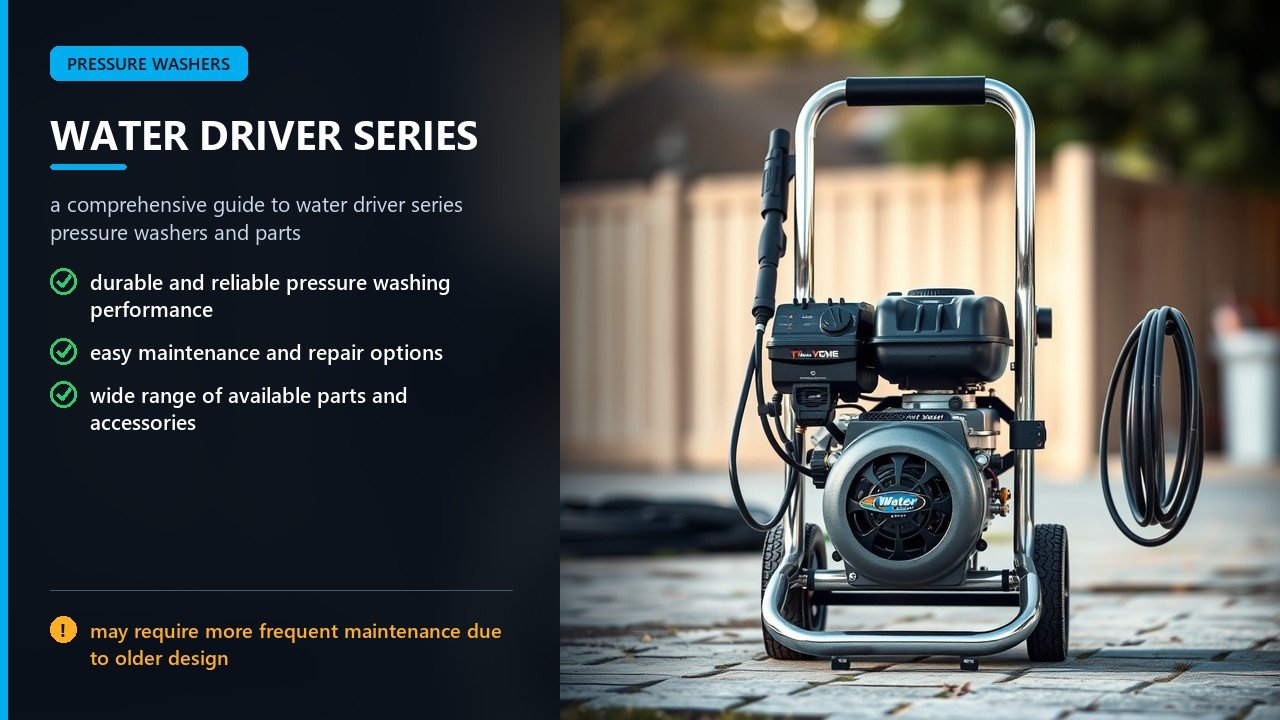
What the Water Driver Series Is
The series is an older line of pressure washers.
The Water Driver series is a range of pressure washers marketed under the DeVilbiss and Excell brands, names associated with outdoor power equipment, including pressure washers, that were sold through retailers and are now commonly encountered as used or older machines. The series includes gas-engine pressure washers, often paired with Honda or other engines, and electric models, with model designations that indicate the pressure, such as WG for gas and WVR for other units. These machines were aimed at homeowner and light commercial use, and many remain in service, creating demand for parts and information.
Because the series is older and the brand has changed hands and discontinued some lines, the machines are not as widely supported as current models, so owners often rely on parts suppliers, documentation, and their own resourcefulness to keep them running. The machines themselves are generally conventional pressure washers, using standard components like a pump, engine or motor, hose, gun, wand, and nozzles, which means many parts can be found or substituted. Understanding the series helps owners identify their machine and find what they need.
Understanding the Water Driver series sets the foundation. Because it is an older line from DeVilbiss and Excell with gas and electric models, and because support is now mostly through parts suppliers and documentation, knowing the series helps owners identify their machine and approach parts and maintenance realistically. This context is valuable for anyone with a Water Driver pressure washer or considering an older machine. With this understanding, the models, parts, and care become clearer. Our guide to pressure washer components explains the parts these machines use.
Common Water Driver Models
The model numbers indicate pressure.
The Water Driver series includes models whose numbers often reflect their pressure rating. Gas models like the WG1420 (around 1,400 PSI), WG1518 and WG1522 (around 1,500 PSI), WG1621 (around 1,600 PSI), WG2020 and WG2021 (around 2,000 PSI), WG2120 and WG2122 (around 2,100 PSI), WG2322 (around 2,300 PSI), and WG2424 (around 2,400 PSI) cover a range from light homeowner use to heavier residential cleaning. These gas machines were typically paired with engines such as Honda or other small engines, and they used pumps matched to their pressure and flow.
Electric and other models, such as the WVR2120 (around 2,400 PSI), provide similar capability without an engine, plugging into an outlet. The models vary in their exact specifications, and the series spans homeowner and light commercial classes, with pressure and flow suited to tasks like cleaning driveways, siding, decks, and vehicles. The model number, designating pressure, helps owners understand their machine’s capability, and the specific configuration, gas or electric, determines its components and parts.
The common models show the series’ range. Because the numbers indicate pressure and the series covers gas and electric machines from light to moderate duty, the model tells you about the machine’s capability and its likely parts. This helps owners identify their machine and match parts, whether gas or electric, and it provides a reference for the series. Understanding the models is the first step to maintaining or repairing a Water Driver pressure washer. Our guide to pump for power washer covers the pump that determines performance.
| Model | Approx. Pressure | Type |
|---|---|---|
| WG1420 | ~1,400 PSI | Gas |
| WG1518 / WG1522 | ~1,500 PSI | Gas |
| WG1621 | ~1,600 PSI | Gas |
| WG2020 / WG2021 | ~2,000 PSI | Gas |
| WG2322 / WG2424 | ~2,300 – 2,400 PSI | Gas |
| WVR2120 | ~2,400 PSI | Electric |
This table lists several common Water Driver models and their approximate pressures and types, illustrating the series’ range from lighter gas machines to higher-pressure gas and electric units. The model numbers help identify a machine’s capability and guide parts selection. Owners can use the model designation to find documentation and parts, and the type, gas or electric, indicates the components involved. Understanding the models is essential to maintaining these older machines.
Parts for Water Driver Pressure Washers
The machines use largely standard components.
A Water Driver pressure washer uses the same types of parts as other machines: a pump, which on gas models is often an axial or triplex pump matched to the engine, and on electric models an integrated pump; an engine or motor; a high-pressure hose; a spray gun and wand; nozzles; and small parts like O-rings, seals, and connectors. Because these are conventional components, many can be sourced from pressure washer parts suppliers, and some can be substituted with compatible generic parts, which is helpful for an older, discontinued line.
Model-specific parts, such as a particular pump, a panel, or a branded component, may be harder to find and often come from specialty parts suppliers that stock older machines, or from aftermarket sources. The engine on gas models, if it is a common brand like Honda, has widely available parts, while the pump and machine-specific components require matching to the model. So sourcing parts for a Water Driver machine usually means identifying the specific part, checking parts suppliers for the model, and using compatible generic parts where possible.
Parts for Water Driver machines are a mix of standard and model-specific. Because the machines use conventional components but are older and less supported, sourcing involves parts suppliers, aftermarket options, and generic parts where specifications match. This makes repair possible, though it may take research. Understanding the parts and where to find them helps owners keep these machines running, and it sets realistic expectations about availability. Our guide to pressure washer repair kit covers kits that help with common repairs.
Where to Find Water Driver Parts
Parts suppliers are the main resource.
For Water Driver series pressure washer parts, the best resources are pressure washer parts suppliers and websites that specialize in older and discontinued machines, which often stock or list parts by model, along with diagrams and manuals. These suppliers can provide model-specific components, and their breakdowns help owners identify parts. Online marketplaces and aftermarket sellers offer additional options, including generic parts that match the machine’s specifications, and small engine shops can service the engine on gas models.
Documentation is valuable, so searching for the model’s owner’s manual or parts breakdown, often available from parts suppliers or online, helps identify components and part numbers, which aids in ordering. For a machine where a part is unavailable, a compatible substitute with the same specifications, such as a generic pump, hose, or nozzle, may work, though matching pressure, flow, and fittings is essential. Consulting other owners through forums can also yield sourcing tips, since these older machines have a community of users who keep them running.
Finding parts for a Water Driver machine relies on specialized suppliers and resourcefulness. Because the line is older and less directly supported, parts suppliers, manuals, aftermarket options, and community knowledge are the main avenues, and matching specifications allows generic parts to fill gaps. This makes repair feasible with effort, and it helps owners maintain their machines. With the right resources, you can source the parts to keep a Water Driver pressure washer working. Our guide to paxcess pressure washer parts covers parts sourcing for another brand.
Maintaining a Water Driver Pressure Washer
Care keeps an older machine running.
Maintaining a Water Driver pressure washer follows the same principles as any machine, with extra attention given to its age. Change the pump oil if the pump is serviceable, using the correct non-detergent oil, since the pump is critical, and keep the water inlet filter clean and the supply adequate to avoid cavitation. On gas models, maintain the engine with oil changes, air filter and spark plug service, and fresh fuel, and inspect the hose, gun, wand, and nozzles for wear, replacing O-rings and seals when leaks appear.
For an older machine, inspect components more carefully, since parts may be worn or brittle, and address issues before they cause failure. Winterize the machine by draining water and protecting the pump from freezing, and store it properly. Because parts for the series can be harder to find, preventive maintenance is especially valuable, keeping the machine reliable and avoiding the need for scarce parts. This care extends the life of a Water Driver pressure washer and keeps it working.
Maintenance is especially important for an older machine like a Water Driver. Because parts can be hard to source, preventing failures through regular pump and engine care, inspection, and winterizing is valuable, and it keeps the machine running without needing difficult-to-find components. This care is the same as for any pressure washer, applied with attention to age. With good maintenance, a Water Driver pressure washer continues to serve, and its reliability is preserved. Our guide to changing oil in pressure washer pump covers pump service.
Gas Versus Electric Water Driver Models
The two types differ in use and parts.
Water Driver machines come in gas and electric versions, and the difference affects how they are used and maintained. Gas models, like the WG-series, use a gasoline engine, typically offering more pressure and flow and independence from an outlet, which suits outdoor cleaning of driveways, siding, and larger areas, but they require engine maintenance, fuel care, and produce noise and exhaust. They are suited to heavier tasks and locations without convenient power.
Electric models, like the WVR2120, plug into an outlet, offering quieter, cleaner operation with less maintenance and no fuel, and they suit home use on cars, patios, decks, and siding where an outlet is available. They generally have somewhat lower flow and are tethered to a cord, but they are convenient and easy to maintain. The type determines the parts involved, with gas models having an engine and electric models a motor and switchgear, so knowing whether a machine is gas or electric guides parts sourcing and maintenance.
The gas-versus-electric distinction shapes ownership. Because gas models deliver more power and independence but need engine care, while electric models offer convenience and lower maintenance within cord range, the choice depends on the tasks and setting, and it determines the parts and care required. Understanding this helps owners of Water Driver machines maintain and source parts appropriately, whether their unit is gas or electric. With this knowledge, the rest of the machine’s care falls into place. Our guide to pressure washer components explains the parts of both types.
Troubleshooting Water Driver Problems
Many issues trace to identifiable parts.
Troubleshooting a Water Driver pressure washer starts with the symptom. If the machine loses pressure or surges, a clogged inlet filter, a worn pump, a damaged nozzle, or air in the line is a likely cause, so check the filter, nozzle, and water supply, and inspect the pump. If the spray is weak or uneven, a clogged or worn nozzle is common, and if the machine leaks, worn O-rings, seals, or connectors are usually responsible. On gas models, starting and running problems often stem from stale fuel, a dirty air filter, or a fouled spark plug.
For an older machine, worn components are common, so inspecting the pump, seals, hose, and fittings is worthwhile, and addressing small leaks and worn parts before they worsen prevents bigger failures. If the pump or motor has failed and the part is unavailable, a compatible replacement or a substitute may be needed, which is where a parts supplier’s guidance helps. Working through the symptoms systematically and checking the likely parts lets you diagnose and fix many problems, or identify when a part must be replaced.
Troubleshooting directs repair and parts needs. Because pressure loss, weak spray, leaks, and starting issues trace to specific components, identifying the symptom and checking the corresponding part solves many problems, and for older machines, staying ahead of worn parts prevents failures. This makes troubleshooting valuable for keeping a Water Driver machine running, and it clarifies which parts to source. With a methodical approach, you can diagnose issues and address them, whether by cleaning, adjusting, or replacing a part. Our guide to pressure washer inlet water filter covers a part that often causes pressure problems.
| Symptom | Likely Cause |
|---|---|
| Loss of pressure / surging | Clogged filter, air, worn pump, nozzle |
| Weak or uneven spray | Clogged or worn nozzle |
| Leaks | O-rings, seals, connectors |
| Won’t start (gas) | Stale fuel, air filter, spark plug |
| No output, motor dead | Pump or motor failure |
This table maps common Water Driver problems to likely causes, giving a starting point for diagnosis. Since many symptoms trace to replaceable or serviceable parts, checking these first often restores the machine, and it guides which parts to source if replacement is needed. For owners of these older machines, this reference makes troubleshooting manageable and helps avoid unnecessary replacement.
Repair or Replace a Water Driver Machine
Age and parts availability affect the decision.
Deciding whether to repair or replace a Water Driver pressure washer depends on which part failed, the cost and availability of the replacement, and the machine’s overall condition. If the issue is a clogged nozzle, a worn O-ring, a dirty filter, a hose, or a small part, the fix is inexpensive and easy, so repair is clearly worthwhile. If the pump or motor has failed, the cost and the difficulty of finding a compatible part weigh in, and if the machine is otherwise worn, replacement may be more sensible than investing in an older unit.
Because Water Driver parts can be harder to source than for current models, a major failure may tip the decision toward replacement, especially if a comparable new machine is affordable and the old one has other worn components. On the other hand, if the engine is a common brand with available parts and the machine is otherwise sound, repairing the pump can extend its life. Weighing the cost, the availability of parts, and the machine’s remaining usefulness determines whether to repair or replace.
The repair-or-replace decision is practical for an older machine. Because small fixes are worthwhile while major failures with scarce parts may not be, and because the machine’s overall condition matters, weighing these factors guides the choice. This helps owners avoid spending more than the machine is worth while salvaging units that are sound. With this judgment, you keep a Water Driver machine running when it makes sense and replace it when it does not. Our guide to pressure washer repair kit covers kits that make minor repairs easy.
Frequently Asked Questions About a Water Driver Series Pressure Washer
What is a Water Driver series pressure washer? A line of pressure washers from DeVilbiss and Excell, including gas and electric models like the WG1420, WG1522, WG2021, WG2424, and WVR2120, ranging from about 1,400 to 2,400 PSI.
Where can I find Water Driver pressure washer parts? Pressure washer parts suppliers that specialize in older and discontinued machines, along with online marketplaces and aftermarket sellers. Manuals and parts breakdowns help identify components and part numbers.
Are Water Driver pressure washer parts still available? Many parts are, through specialty suppliers, aftermarket sources, and generic equivalents that match specifications. Some model-specific parts may be harder to find, requiring research.
What pump does a Water Driver pressure washer use? Gas models typically use an axial or triplex pump matched to the engine; electric models use an integrated pump. When replacing, match pressure, flow, shaft, and mounting.
How do I maintain an older Water Driver pressure washer? Change the pump oil if serviceable, keep the inlet filter clean, maintain the engine, inspect hoses, seals, and nozzles, and winterize to prevent freezing. Preventive care matters more with age.
Can I use generic parts on a Water Driver pressure washer? Yes, for many components like O-rings, hoses, nozzles, and even pumps, as long as the specifications, such as pressure, flow, and fittings, match the machine.
Final Verdict on a Water Driver Series Pressure Washer
The Water Driver series is a line of pressure washers from DeVilbiss and Excell, offering gas and electric models from around 1,400 to 2,400 PSI, with model numbers that indicate their pressure. These older machines use conventional components, so many parts can be sourced through specialty suppliers, aftermarket sellers, and generic equivalents, even though the line is no longer widely supported.
With careful maintenance to prevent failures and resourceful sourcing when parts are needed, a Water Driver pressure washer can keep running well beyond its original expectations. Identify your model, find a good parts supplier, match specifications when substituting components, and care for the pump and engine. For owners of these machines, understanding the series and its parts is the key to keeping them working, and a little effort rewards you with a functional pressure washer.