One of the biggest limitations of a pressure washer is that it needs water, and not every place you want to clean has a convenient faucet. Remote properties, construction sites, car detailing in parking lots, and mobile cleaning businesses all face the same problem: no water supply where the work is. The solution is a water tank and pressure washer combination, which carries the water with you and lets the machine run anywhere. But pairing a tank with a pressure washer involves more than setting a jug next to the machine, with decisions about tank size, how the machine is fed, and how to prevent the pump from being starved or damaged. This guide explains water tanks for pressure washers, how to set them up, and how to run water-independently without harming your machine.
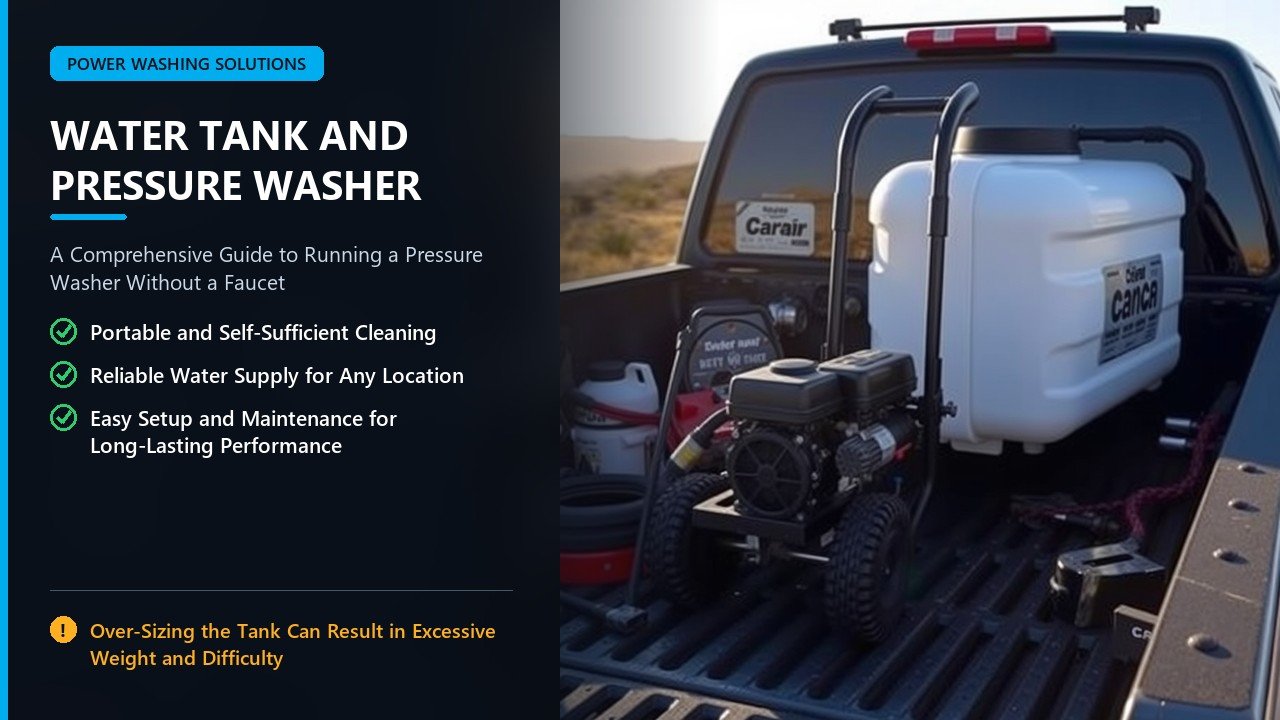
Why Pair a Water Tank with a Pressure Washer
A water tank removes the dependence on a nearby water source.
Most pressure washers draw water from a faucet or spigot, which means you can only clean where there is a supply. This is fine at home, but it becomes a serious limitation when you need to clean a remote property, a work site, a fleet of vehicles in a lot, or any location without water. A tank solves this by carrying the water with you, so the machine can run anywhere you can take the tank, whether on a trailer, a truck bed, a cart, or beside the machine.
A tank also provides control over the water supply. You know how much water you have, you can add a filter to protect the machine, and you are not at the mercy of a weak or dirty faucet. For mobile cleaning businesses, a tank is fundamental, since it turns a pressure washer into a truly portable tool. For homeowners with remote property or no convenient water, a tank can also help. In short, a water tank expands where and when you can use the pressure washer, which is often the difference between being able to do a job and not.
Because water is essential and not always available, pairing a tank with the pressure washer unlocks the machine’s full portability. Whether for business or remote home use, a tank transforms the machine from a stationary tool into a mobile one. Understanding the reasons for adding a tank clarifies what to look for and how to set it up. The goal is a reliable, clean water supply that feeds the machine properly wherever the work takes you. Our guide to pressure washer components helps identify how the machine connects to a water supply.
Types of Water Tanks
Water tanks come in several types, each suited to different setups.
Vertical tanks. Tall and narrow, vertical tanks save floor space and are common on trailers and in tight spots. They are often made of polyethylene and come in various capacities, with fittings for connection to the machine.
Horizontal tanks. Low and wide, horizontal tanks fit under beds or in spaces where height is limited, and they are also common in mobile setups. They may include features like baffles to reduce water sloshing during transport.
Cart and portable tanks. Smaller tanks, sometimes on their own carts, suit lighter or occasional use, letting you bring water to the machine or move the setup easily.
Built-in tanks. Some pressure washers and portable units have integrated water tanks, designed for self-contained use, often on portable electric machines for light tasks.
Choosing a tank depends on the setup and the space available. Vertical tanks suit trailers where floor space is tight; horizontal tanks suit lower spaces or beds; portable tanks suit occasional or light use; and built-in tanks suit self-contained portable machines. The tank’s material, fittings, and features, such as baffles for transport, also matter. For a dedicated mobile setup, a large vertical or horizontal tank with proper fittings is typical, while for occasional use, a smaller or portable tank may suffice. Understanding the options helps you choose a tank that fits your setup and needs. Our guide to a portable power washer with water tank covers self-contained machines that include a tank.
Sizing the Tank
Tank size determines how long you can clean before refilling.
Tank size is a balance between cleaning time, weight, and cost. Water is heavy, at roughly eight pounds per gallon, so a large tank adds significant weight to a vehicle or trailer, affecting load capacity and towing. A larger tank lets you clean longer without refilling, which is valuable for jobs away from water, while a smaller tank is lighter and cheaper but requires more frequent refilling. The right size depends on your typical job: how much cleaning you do before you can refill, and how much weight and space you can accommodate.
To estimate, consider the machine’s flow rate and how long you plan to run it. A machine flowing a few gallons per minute can empty a tank surprisingly quickly, so a job that takes an hour may consume a substantial volume. Many mobile setups use tanks ranging from small portable units to large tanks of dozens of gallons, with the size chosen to match the workload. If you can refill on site, a smaller tank may do; if not, you need enough for the job. Baffled tanks help control sloshing in a moving vehicle.
| Use Case | Typical Tank Size |
|---|---|
| Light, occasional use | Small portable tank |
| Home or light mobile | Small to medium tank |
| Mobile business, cars | Medium to large tank |
| Mobile business, driveways | Large tank, matched to workload |
Sizing the tank thoughtfully avoids running out of water mid-job and avoids carrying unnecessary weight. Because water is heavy and the tank affects the vehicle, the size should match the workload and the vehicle’s capacity. Considering flow rate, job duration, refill options, and weight leads to the right size. A well-sized tank keeps the machine running for the job without overloading the setup, which is essential for both performance and safety. Our guide to pressure washer on a trailer covers the mobile setups where tank sizing is most important.
Feeding the Pressure Washer from a Tank
How the machine is fed from the tank is critical to its performance and health.
Gravity feed. Some setups rely on gravity, positioning the tank above the machine so water flows down to the inlet. Gravity feed is simple but can be unreliable, since the pressure washer’s pump draws water at a certain rate, and gravity alone may not supply enough flow, especially with a large machine or a low tank. Starving the pump of water causes cavitation and damage, so gravity feed works only if it delivers adequate, unrestricted flow.
Transfer pump. The reliable solution is a transfer pump that moves water from the tank to the machine’s inlet at adequate pressure and flow, ensuring the machine is properly fed. A transfer pump provides consistent supply regardless of tank height and prevents the machine’s pump from being starved. This is the standard approach in mobile setups, and it protects the pump.
Inlet filter. An inlet filter between the tank and the machine protects the pump from debris and sediment that can be present in tank water, and it should be cleaned regularly.
Feeding the machine properly is the most important technical consideration when using a tank. The machine’s pump needs a steady, adequate supply of water at its inlet, and inadequate supply causes cavitation, overheating, and damage. Gravity may suffice in some setups, but a transfer pump is more reliable and is the norm for serious use. Combined with an inlet filter, a proper feed system keeps the pump healthy and the machine performing. This is what separates a working tank setup from one that damages the machine. Our guide to a pressure washer inlet covers the inlet and feed requirements of a pressure washer.
Plumbing and Setup
A reliable setup involves proper plumbing and secure mounting.
Connect the tank outlet to the transfer pump if used, then to the inlet filter, then to the machine’s inlet, using fittings that do not leak and that allow adequate flow without kinks or restrictions. Use hoses and fittings rated for the flow, and keep the path from tank to machine as unrestricted as possible. Provide a way to shut off and drain the system, and vent the tank as needed. Secure the tank to the vehicle or trailer, since a full tank of water is heavy and moves, and baffle it if the vehicle is in motion.
Arrange the components for convenient use: the tank and feed system positioned to supply the machine, the machine accessible, and the connections leak free. Include an inlet filter to protect the pump, and consider quick-connects for convenience. Test the setup by running the machine and checking for adequate flow and any leaks, and confirm the pump is receiving enough water at all times. A well-plumbed, secure setup is reliable and safe, while a careless one leaks, starves the pump, or shifts dangerously.
Proper plumbing and mounting turn the tank and machine into a dependable system. Because water supply and pump protection are essential, and because a moving vehicle adds demands, the plumbing and securing deserve attention. Taking the time to build the feed system correctly prevents the pump damage and performance problems that poor setups cause. With sound plumbing and secure mounting, the tank and pressure washer work together reliably, delivering water-independent cleaning wherever you go. Our guide to a pressure washer inlet water filter covers the filter that protects the pump in tank-fed setups.
Benefits and Limitations
A tank setup has clear benefits and some limitations to understand.
The main benefit is independence: you can clean where there is no water supply, which expands the jobs you can take and the places you can work. For mobile businesses, this is transformative, enabling work at customer locations, remote sites, and anywhere else. The tank also lets you control the water supply, adding a filter and knowing your available volume. For homeowners, a tank helps with remote property or inconvenient water access.
The limitations are weight, space, and refill needs. A full tank is heavy, affecting vehicle capacity and handling, and it takes up space. You can only clean as long as your water lasts, so you may need to refill or size the tank generously, and refilling requires a water source at some point. The feed system, especially a transfer pump, adds complexity and cost. These limitations mean the tank must be sized and the setup designed to balance independence against weight and convenience, and that refill logistics must be planned.
Understanding the benefits and limits helps you decide whether and how to use a tank. For many mobile and remote cleaning situations, the benefits far outweigh the limits, making a tank essential. The key is matching tank size, feed system, and vehicle capacity to your needs, so the setup delivers independence without overloading or inconveniencing you. With proper planning, the limitations are manageable, and the independence the tank provides is well worth it. Our guide to a for sale pressure washer trailer covers trailers often built with tanks for this purpose.
Maintaining a Tank Setup
A tank and feed system need modest maintenance.
Keep the tank clean, since sediment and debris can accumulate and clog the filter or reach the machine, and flush it periodically. Clean the inlet filter regularly, replacing it when worn, since a clogged filter restricts flow and starves the pump. Check the transfer pump and the plumbing for leaks and proper operation, and inspect hoses and fittings for wear. Secure the tank and recheck its mounting periodically, since a full tank is heavy and vibration can loosen fasteners. In cold weather, drain the tank, pump, and lines to prevent freezing damage, and winterize the machine as usual.
Because the tank setup involves stored water and a feed system, cleanliness and freeze protection are the main concerns. A clean tank and filter protect the pump, a sound feed system ensures reliable operation, and draining prevents freeze damage. These simple practices keep the setup working and the machine protected. Given that the pump is the machine’s most expensive component and depends on a clean, steady water supply, maintaining the tank and feed system is both easy and important. With basic care, a water tank and pressure washer remain reliable for years. Our guide to winterizing a pressure washer covers draining the machine and water system for cold storage.
Common Mistakes to Avoid
Several mistakes undermine a tank setup or harm the machine.
Sizing the tank too small. Running out of water mid-job is frustrating. Size the tank to the workload and refill options.
Relying on inadequate gravity feed. Insufficient flow starves and damages the pump. Use a transfer pump for reliable feeding.
Omitting the inlet filter. Without a filter, debris reaches and damages the pump. Always use an inlet filter.
Ignoring flow requirements. The feed system must supply the machine’s flow. Undersized pumps or lines restrict flow and harm the pump.
Overlooking weight and securing. A full tank is heavy; inadequate securing is a safety hazard. Secure and baffle the tank.
Neglecting cleanliness and winterizing. Dirty tanks and frozen lines cause problems. Clean and drain regularly.
Avoiding these mistakes keeps the tank setup reliable and the machine healthy. The themes are proper sizing, reliable feeding, pump protection, safe securing, and maintenance. Because the setup’s purpose is to provide water anywhere without harming the machine, these fundamentals are essential. Done right, a water tank and pressure washer deliver the freedom to clean anywhere, which is the whole point. Our guide to a pressure washer repair kit is a reminder that pump damage from poor water supply is a common and preventable repair.
Home Versus Business Tank Setups
The right tank setup differs for home and business use.
For a homeowner who occasionally needs to clean somewhere without water, a simple setup suffices. A small to medium portable tank, or even a built-in tank on a portable electric machine, fed by gravity or a modest transfer pump, handles light tasks like washing a car or cleaning a remote patio. The goal is convenience for occasional jobs, not maximum capacity, so a lightweight, affordable setup is ideal. There is no need to overbuild for occasional use.
For a mobile business, the setup is more demanding. It must support frequent, sustained work, often all day, with enough water for multiple jobs or a refill strategy. This calls for a larger tank sized to the workload, a reliable transfer pump, proper plumbing with a filter, and secure mounting on a trailer or vehicle. Capacity, reliability, and efficiency matter, since downtime and running out of water cost money. Features like baffled tanks and organized plumbing become important. The business setup is built for daily, professional use, which justifies the greater investment.
Matching the setup to the use prevents both underbuilding, which frustrates a business, and overbuilding, which wastes money for a homeowner. The principles are the same, but the scale and reliability requirements differ. Understanding this helps you design a setup that fits, whether you clean occasionally at home or run a mobile operation. With the right sizing and components for the use, the tank and pressure washer serve reliably, delivering water independence appropriate to the task. Our guide to pressure washer on a trailer covers the business-oriented mobile setups where tanks are central.
Alternatives to a Water Tank
A tank is not the only option, and alternatives suit some situations better.
If a water source exists on site, even a weak one, feeding the machine directly through a supply hose may suffice, avoiding the weight and space of a tank. This requires the source to provide adequate flow, and it depends on availability, which is why tanks exist, but where water is present, direct feeding is simplest. Some operators carry a feed hose and adapters to connect to various sources, using a tank only when no source is available, combining the two approaches.
Another alternative is a portable water bladder or container, lighter and more flexible than a rigid tank for small jobs, though with less capacity and durability. For very light tasks, a bucket or small container can feed a low-flow machine with gravity, though the pump must receive adequate water. Larger operations may use multiple tanks or a water trailer. Each alternative trades capacity, weight, and convenience differently, and the best choice depends on the situation.
Understanding the alternatives helps you choose the right water strategy. A tank is the most self-contained and reliable option where water is absent, but where a source exists, simpler feeding may work, and portable containers or bladders suit light use. Many operators combine approaches, using site water when available and a tank when not. The key is matching the water strategy to the job, ensuring the pump always receives adequate, clean water regardless of the method. Whether by tank, direct feed, or container, the goal is reliable water where the work happens. Our guide to a pressure washer inlet covers how the machine draws water, which underlies all these approaches.
Getting the Most From a Tank Setup
A few practices maximize the usefulness of a water tank setup.
Plan refill logistics, identifying where you can refill between jobs so the tank does not run dry at an inconvenient time. Use detergents and pre-treatment to clean more effectively with less water, since surface cleaners and chemicals reduce the water needed and the time spent, stretching each tank. Clean with the surface cleaner for flat areas to cover ground efficiently, and use a hose reel to manage the hose. Keep the machine well maintained, since an efficient machine uses water productively and avoids waste.
Conserve water where possible: avoid leaving the machine running unnecessarily, use appropriate nozzles, and combine cleaning tasks to make the most of each tank. For businesses, route jobs to minimize refill stops, and consider the water available at each site. Monitoring the tank level during work avoids the surprise of running out mid-job. These habits make the available water go further and keep the operation smooth.
Getting the most from a tank setup comes down to planning and efficiency, since the tank sets a limit on how much you can clean before refilling. By refilling strategically, cleaning effectively, and conserving water, you maximize the value of each tank and keep the operation running. Because water independence is the whole point, managing the water supply well is central to the setup’s success, and the practices are simple. With good planning and efficient cleaning, a water tank and pressure washer deliver maximum capability and independence. Our guide to surface cleaner washer is a reminder that an efficient attachment stretches your water further. Combined with good habits, a tank setup becomes a dependable, capable mobile operation.
Frequently Asked Questions About a Water Tank and Pressure Washer
Can I run a pressure washer from a water tank? Yes, using a tank to supply the machine, ideally with a transfer pump to provide adequate flow and an inlet filter to protect the pump. Gravity feed works only if it delivers enough flow.
How do I feed a pressure washer from a tank? Connect the tank to a transfer pump, then to an inlet filter, then to the machine’s inlet, ensuring adequate, unrestricted flow. Gravity feed may work for small machines if it supplies enough water.
What size water tank do I need? Size it to your workload, the machine’s flow rate, your refill options, and the weight your vehicle can carry. Larger tanks clean longer but weigh more.
Do I need a transfer pump? For reliable performance, usually yes, since gravity alone may not supply enough flow and can starve and damage the pump. A transfer pump ensures a proper supply.
How do I prevent pump damage with a tank? Provide adequate flow, use a transfer pump and inlet filter, keep the feed path unrestricted, and never let the pump run dry or starved.
Can I use a water tank for a mobile cleaning business? Yes, tanks are fundamental to mobile setups, providing water independence. Size the tank and feed system to your jobs and vehicle capacity.
Final Verdict on a Water Tank and Pressure Washer
Pairing a water tank with a pressure washer removes the machine’s biggest limitation, the need for a nearby water source, and unlocks true portability. With a tank, you can clean remote properties, work sites, parking lots, and any location without water, making it essential for mobile cleaning businesses and valuable for homeowners with remote or inconvenient water access. The keys are sizing the tank to your workload and vehicle capacity, feeding the machine reliably, usually with a transfer pump, and protecting the pump with an inlet filter and adequate flow.
Choose a tank that fits your setup and jobs, plumb it properly with a sound feed system, secure it for safety, and maintain cleanliness and freeze protection. A well-designed tank setup lets the pressure washer run anywhere without starving or damaging the pump, and it turns a stationary machine into a mobile one. Whether for business or remote home use, a water tank and pressure washer combination delivers the freedom to clean wherever the work is, which is exactly the capability that makes the setup worthwhile.