A landscaper named Marcus bought a Westinghouse 3200 PSI pressure washer because it hit the sweet spot he needed: enough power for driveways and siding, but light enough for one person to roll around a job site. Three seasons in, a small rubber O-ring on the spray gun failed, and water sprayed everywhere but through the nozzle. He almost bought a whole new machine before realizing the fix was a two-dollar part and a five-minute swap. Learning which components wear and how they are organized saved him hundreds of dollars.
The Westinghouse 3200 PSI pressure washer, most often the WPX3200, is a popular gas-powered unit built on a 212cc engine and a three-piston axial cam pump. Knowing its replacement parts helps you maintain it, repair common failures, and avoid buying a new machine for a small problem. This guide covers the main part groups, what fails most often, and how to find the right part numbers.
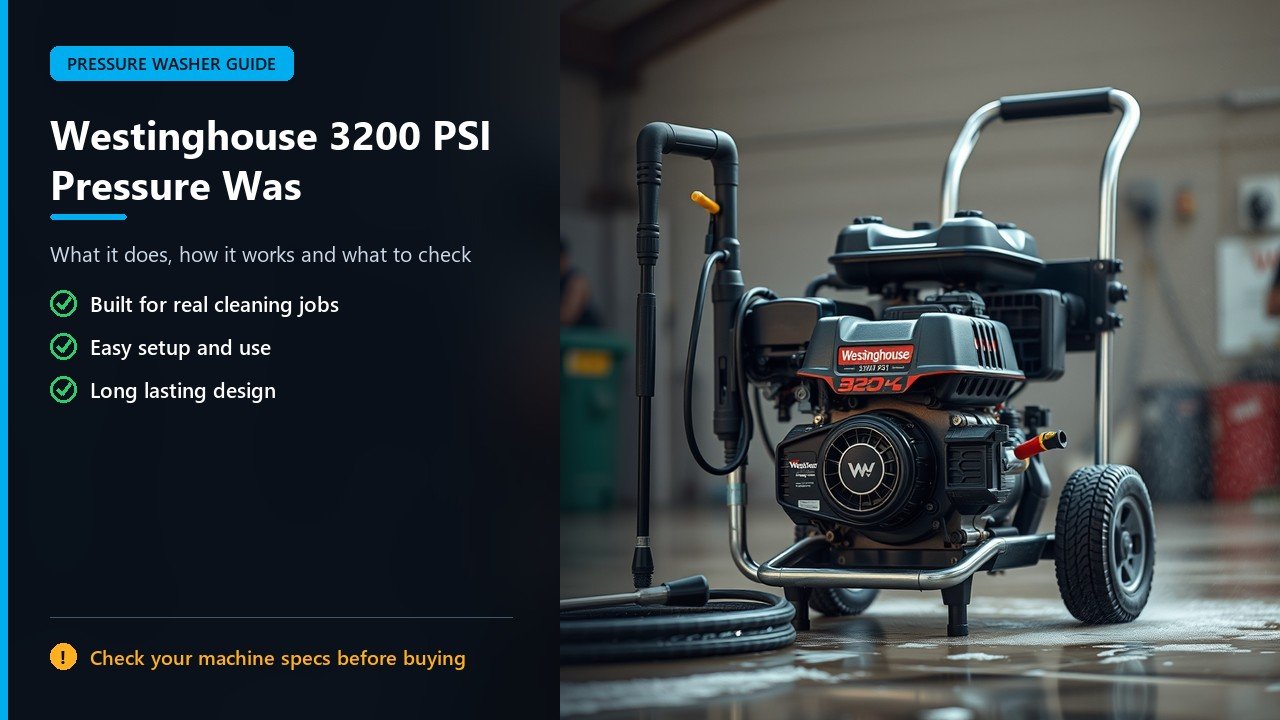
Westinghouse WPX3200 Specs at a Glance
Understanding the machine helps you understand its parts.
| Spec | Value |
|---|---|
| Rated pressure | 3200 PSI |
| Flow rate | 2.5 GPM |
| Engine | 212cc OHV 4-stroke |
| Pump type | 3-piston axial cam, brass head |
| Nozzles | 0, 15, 25, 40, soap |
| Hose | 25 ft, 5/16 in |
| Hose fittings | M22 quick connect |
| Warranty | 3 year residential, 1 year commercial |
What that means for parts. The axial cam pump and 212cc engine dominate the machine, so most repairs fall into two families: engine components and water-end components. The spray gun, wand, hose, and nozzles make up the rest and are the most frequently replaced items because they take the most abuse.
The Main Part Groups
The Westinghouse parts breakdown organizes the machine into clear assemblies.
Engine assembly. The 212cc engine includes the crankcase, cylinder head, carburetor, air filter, fuel tank, muffler, recoil starter, and ignition components. These are standard small-engine parts, and many are shared across the Westinghouse engine line.
Water pump assembly. The pump kit includes the pump itself, mounting bolts, and the crankshaft key that mates the pump to the engine. On the WPX3200 the pump is typically listed as part 810449-3200 or a similar assembly number depending on the parts catalog version.
Spray gun and wand. The trigger gun, often part 817088-219, and the spray rod or wand, commonly 817110, handle the water at the point of use. These wear with heavy trigger cycling and take hits when dropped.
Hose and fittings. The high-pressure hose, listed as 811557 in some catalogs, uses M22 quick-connect fittings to join the pump outlet to the gun. The liquid suction hose for detergent is a separate part, 811002.
Nozzles. The five quick-connect nozzles carry individual part numbers such as 817008 through 817011 and 817085. They are small, cheap, and easy to lose, so they top most replacement lists.
Frame and accessories. Wheels, gun holders, the soap tank and its cap, and the nozzle cleaning tool round out the machine. These rarely fail but are easy to order when lost or damaged.
The Parts That Fail Most Often
Knowing the common failures helps you stock the right spares.
O-rings and seals. The tiny O-rings in quick connects, the gun, and the wand are the number-one leak source. They crack with age and heat, and replacements cost pennies. Keeping a few spares prevents a job-stopping drip.
Nozzles. Nozzles clog, wear, and get lost. A worn nozzle loses its spray pattern, and a clogged one drops pressure. Cleaning them regularly with the supplied tool extends life, but replacements are inexpensive and worth keeping on hand.
Spray gun. The trigger valve and internal seals wear out after heavy use, causing leaks or a gun that will not shut off cleanly. A replacement gun restores full control and seals the system.
High-pressure hose. Hoses fail from kinking, abrasion, and burnt outer jackets near the engine. Once a hose bubbles or bursts, it must be replaced. Upgrading to a longer or more durable hose is a common improvement, and our guides to pressure washer 100 ft hose and pressure washer hose length explain the trade-offs.
Carburetor. Ethanol fuel and stale gas gum up the carburetor, causing hard starting and rough running. Cleaning or replacing the carburetor is one of the most common engine repairs on any gas pressure washer.
Air filter and spark plug. Consumable items that should be serviced on schedule. A dirty air filter and worn spark plug cause starting and performance problems out of all proportion to their cost.
How to Find the Right Part Number
Ordering the correct part takes a couple of steps.
Identify your exact model. Confirm you have the WPX3200 rather than the WPX2700 or another variant. The model number appears on the machine’s label, and it determines which parts list applies.
Use the exploded view. The owner’s manual includes exploded views and parts lists with item numbers and part numbers. Find the assembly, then the numbered callout for your part, and read across to the part number.
Buy from authorized sources. Ordering from Westinghouse’s parts channel or a recognized pressure washer parts dealer ensures the part is genuine and fits. Third-party listings can be fine for universal items like nozzles, but critical engine and pump parts are safer sourced correctly.
Match by function when numbers change. Part numbers occasionally update between catalog versions. If a number no longer exists, search by description and model, and confirm the current number covers your machine.
Check the warranty first. The WPX3200 carries a three-year residential warranty. If your machine is within that window, contact Westinghouse service before buying parts, since a covered failure should be repaired at no cost.
Maintenance That Prevents Part Failures
Most parts last longer with simple care.
Change the pump oil. The axial cam pump needs its oil changed on schedule. Neglecting it is the fastest way to destroy a pump that costs far more than oil. Our guide to pump oil for a power washer covers the right type and interval.
Winterize every season. Trapped water freezes and cracks the pump, gun, and hose. Run the machine dry or pull antifreeze through it before the first freeze to protect the whole water end.
Use fresh, stabilized fuel. Ethanol-free fuel or a stabilizer prevents the carburetor gumming that causes most hard-start complaints. Drain fuel before long storage.
Service the air filter and plug. Replace the air filter element when dirty and check the spark plug gap, commonly 0.024 to 0.032 inches on this engine, at the start of each season.
Protect quick connects. Keep O-rings clean and lightly lubricated, and avoid dragging fittings across concrete, to prevent the leaks that lead to premature replacement.
Upgrading Rather Than Repairing
Sometimes an upgrade makes more sense than a like-for-like replacement.
Longer hose. If the 25-foot hose keeps you moving the machine, a longer hose extends your reach. Keep in mind that added length costs some pressure, so size it correctly and match the diameter to your machine’s GPM.
Better spray gun. An upgraded gun with a swivel inlet and comfortable grip reduces fatigue and improves control, and it uses the same M22 or quick-connect fittings.
Additional nozzles. A turbo nozzle adds cleaning power for concrete, and extra angle tips give you more options. Nozzles are the cheapest way to expand what the machine can do, and their color codes are explained in our guide to power washer spray nozzles.
Fittings and adaptors. If you add accessories with different threads, a set of adaptors bridges the gap. Our guide to pressure washer adaptors explains the common conversions.
The Engine Parts in Detail
The engine side of the machine has its own set of common replacements.
Carburetor assembly. The carburetor meters fuel and air into the engine, and it is the component most often blamed when a gas pressure washer will not start or runs poorly. Ethanol fuel leaves deposits that clog the small passages, so a rebuild or replacement carburetor is a frequent repair.
Air filter. The air cleaner element traps dust before it reaches the engine. A clogged filter chokes the engine and causes rich running or hard starting. It is a cheap, quick replacement that should be part of routine service.
Spark plug. The WPX3200 uses a plug with a gap of about 0.024 to 0.032 inches. A fouled or worn plug causes misfires and starting trouble, and a fresh plug is the simplest tune-up step.
Recoil starter. The pull-start assembly includes the rope, handle, and rewind mechanism. Ropes break and springs unwind, and the whole starter assembly is replaceable when it will not retract or engage.
Fuel tank and cap. The tank, cap, and internal strainer are serviceable parts. A leaking cap or clogged strainer leads to fuel delivery problems that mimic carburetor faults.
Ignition coil. The ignition module provides spark. When it fails, the engine cranks or pulls but will not fire at all, and replacement restores spark.
Muffler and gaskets. The exhaust system and its gaskets can crack or leak over time, increasing noise and risking exhaust exposure. Replace worn gaskets when servicing the muffler.
Oil seals and dipstick. The crankcase oil seal and dipstick assembly handle lubrication and sealing. Oil leaks around the seal should be addressed before they starve the engine.
The Water End in Detail
The pump and its connections do the actual cleaning work.
Pump assembly. The three-piston axial cam pump generates the pressure. When it fails, the machine may lose pressure, pulsate, leak from the heads, or seize. Because it is the most expensive common part, keeping the oil changed and winterizing properly protects your investment.
Unloader valve. The unloader controls pressure output and allows water to bypass when the trigger is released. A sticking unloader causes pressure spikes, surging, or a machine that will not build pressure, and it is often a serviceable or replaceable part.
Thermal relief valve. This valve releases warm water when the pump overheats, typically near 125 degrees Fahrenheit, protecting internal seals. If it leaks constantly, it may need replacement.
Inlet filter and garden hose connection. The inlet screen keeps debris out of the pump. A clogged or missing screen allows grit to damage the pump valves, so keeping it clean and in place is vital.
Detergent system. The soap tank, cap, and suction hose feed detergent into the low-pressure stream. Leaks or blockages here stop the soap from drawing, and the parts are simple to replace.
High-pressure outlet and hose. The outlet fitting and hose carry the pressurized water to the gun. Leaks at the outlet usually mean a bad O-ring rather than a failed pump.
Troubleshooting Problems by Part
Matching symptoms to components speeds up diagnosis.
| Symptom | Likely Part |
|---|---|
| No start, no spark | Spark plug, ignition coil |
| Hard start, rough running | Carburetor, air filter |
| Low or surging pressure | Nozzle, inlet filter, unloader |
| Water dripping from gun | O-rings, spray gun seals |
| Water leaking at pump | Seals, thermal relief valve |
| Pump seizing or noisy | Pump oil, pump assembly |
| Soap not drawing | Detergent hose, soap tank |
| Hose bulging or leaking | High-pressure hose |
Starting problems. Work from simple to complex. Check fuel and spark first, then the air filter and carburetor. Most no-start complaints trace to stale fuel and a gummed carburetor rather than an electrical fault.
Pressure problems. Low pressure is usually a clogged nozzle, a dirty inlet screen, or a worn unloader before it is a failing pump. Rule those out before condemning the pump.
Leaks. Trace every drip to its source. Leaks at connections are almost always O-rings, while leaks from the pump body point to seals or the thermal relief valve.
Performance loss over time. A machine that gradually loses power may simply need a new air filter, spark plug, and oil change. Routine service restores performance more often than major repairs do.
Repair or Replace
Knowing when to fix and when to walk away saves money.
Repair simple wear items. O-rings, nozzles, plugs, filters, and fuel lines are cheap and easy. Fixing these yourself keeps the machine running for very little cost.
Weigh a new gun or hose. These are moderate-cost items that are simple to swap. Replacing them is nearly always worthwhile compared to buying a new machine.
Consider the pump carefully. A pump replacement costs a meaningful fraction of a new machine. If the engine is healthy, a pump swap can be economic, but if the engine is also tired, a new unit may be the better choice.
Check the engine’s condition. A worn engine with poor compression, oil burning, and hard starting rarely justifies a new pump and carburetor on top. At that point, replacement makes more sense.
Factor in the warranty. A machine still under the three-year residential warranty should go through Westinghouse service for covered failures rather than being repaired at your own cost.
Where to Buy Westinghouse 3200 Parts
A few reliable channels exist for these parts.
The manufacturer. Westinghouse’s service and parts channel is the safest source for genuine components, especially engine and pump assemblies, and it can confirm current part numbers.
Authorized parts dealers. Established pressure washer parts retailers stock Westinghouse components and publish illustrated parts lists to help you match the number.
General retailers for universal items. Nozzles, O-rings, quick connects, and hoses are often cheaper from general suppliers, provided the size and fitting match, which is where understanding your pressure washer connector types pays off.
Local small-engine shops. Many engine parts, including air filters, spark plugs, and carburetors, are shared with other Westinghouse engines and are stocked locally for quick pickup.
Warranty service first. If the machine is under warranty, contact service before buying anything, since a covered issue should be resolved without cost.
Replacement Tips and Safe Practices
Swapping parts safely protects both you and the machine.
Shut down and depressurize. Always stop the engine and squeeze the trigger to release residual pressure before disconnecting anything. Trapped pressure can cause a sudden, dangerous spray.
Let the machine cool. The engine, muffler, and pump get hot during use. Allow at least fifteen or twenty minutes to cool before handling parts near the exhaust or pump.
Disconnect the spark plug. For any engine work, pull the spark plug boot to prevent an accidental start while you have your hands in the machinery.
Keep parts organized. Lay out fasteners and pieces in order as you disassemble, or take photos at each step. Reassembly is far easier when you can see how it came apart.
Use the right fittings for your machine. Common connections are M22 and quarter-inch quick connect, but mixing standards causes leaks. Understanding high pressure water hose connectors prevents cross-threading and mismatched parts.
Do not overtighten. The manual repeatedly warns against overtightening the gun collar, hose, and nozzle. Hand-tight is enough, and forcing fittings cracks housings and strips threads.
Building a Spare Parts Kit
A small stock of spares keeps jobs moving.
O-ring assortment. A handful of correctly sized O-rings for the quick connects, gun, and wand solves the most common leak on the spot.
Spare nozzles. Keep a replacement set, including the angles you use most and a spare turbo tip, so a lost or clogged nozzle never ends the day.
Spark plug and air filter. These cheap consumables restore performance and are easy to swap in the field when the engine misbehaves.
Fuel stabilizer. Keeping stabilizer on hand protects the carburetor from ethanol damage during storage and prevents the most common repair of all.
Pump oil. The correct pump oil lets you service the pump when due, protecting the most expensive common component. The right grade is covered in our guide to pump oil for a power washer.
A basic tool kit. A few wrenches, a spark plug socket, and the supplied nozzle cleaning tool handle most roadside fixes.
Extending the Life of Every Part
Care multiplies the life of the whole machine.
Flush after detergent. Run clean water through the system after using soap to prevent residue from clogging the detergent line and gumming the pump.
Drain before storage. Water left in the pump, hose, and gun freezes and cracks them. Drain thoroughly, or run antifreeze through, before cold weather.
Store the right way. Keep the machine indoors, upright, and free of fuel if it will sit for months. Proper storage prevents the carburetor and pump problems that dominate repair lists.
Use the correct fuel. Fresh regular unleaded with no more than ten percent ethanol, or ethanol-free fuel, keeps the fuel system clean. Avoid E15 and E85 entirely.
Do not idle for long. Extended idling without spraying overheats the water and stresses the pump. Trigger the gun periodically to circulate cool water.
Check connections often. A quick glance at O-rings and fittings before each job catches small problems before they become leaks that reach the pump.
Frequently Asked Questions
What engine is in the Westinghouse 3200 PSI pressure washer? The WPX3200 uses a 212cc OHV four-stroke Westinghouse engine with a recoil starter, a 0.9 gallon fuel tank, and a 20-ounce oil capacity filled with SAE 10W-30.
Where can I find a Westinghouse WPX3200 parts diagram? The owner’s manual includes exploded views and parts lists for both the engine and the pressure washer. It is available from Westinghouse and listed by several authorized parts dealers.
What part number is the Westinghouse WPX3200 spray gun? It is commonly listed as 817088-219. Confirm against your machine’s parts list, since numbers can vary by production version.
How often should I replace the nozzles? Replace them when the spray pattern becomes uneven or the nozzle will not clear after cleaning. With regular cleaning they last a long time, but worn or damaged tips should be swapped promptly.
Why is my Westinghouse pressure washer losing pressure? Common causes include a clogged or worn nozzle, a dirty inlet filter, air in the line, worn seals, or a failing pump. Start with the cheap checks, nozzle and filter, before suspecting the pump.
Are Westinghouse 3200 parts covered by warranty? The WPX3200 carries a three-year limited residential warranty and a one-year commercial warranty. Covered failures should be handled through Westinghouse service before you buy parts.
Can I use generic parts on a Westinghouse pressure washer? Universal items like nozzles, O-rings, and quick-connect fittings work fine when sized correctly. Critical engine and pump parts are best sourced as genuine replacements to ensure fit and durability.
What size hose does the WPX3200 use? It ships with a 25-foot, 5/16 inch high-pressure hose using M22 quick-connect fittings, and it can be replaced or upgraded with a compatible hose.
What oil does the Westinghouse WPX3200 engine take? The engine uses SAE 10W-30 oil with a capacity of about 20 ounces, while the pump uses its own dedicated pump oil that should be changed on schedule.
Can I replace the pump on a Westinghouse 3200 myself? Yes. The pump bolts to the engine and mates with a crankshaft key, so it can be swapped with basic tools. Just confirm the replacement matches your model and reassemble the key correctly.
Why does my Westinghouse pressure washer surge or pulsate? Surging usually points to air in the water line, a partially clogged inlet screen, or a sticking unloader valve. Check the inlet supply and screen first, then inspect the unloader.
Final Thoughts on Westinghouse 3200 PSI Pressure Washer Parts
The Westinghouse 3200 PSI pressure washer is a capable machine whose parts are well documented and widely available. Most failures come down to a handful of wear items: O-rings, nozzles, the spray gun, the hose, and the carburetor. Learning the part groups and using the exploded view to find part numbers turns a mystery into a simple lookup.
Marcus fixed his gun with a spare O-ring and kept a small box of spares on the truck, and he never lost a job to a leak again. Keep your machine maintained, stock the common wear items, and order the correct part when something fails, and a Westinghouse 3200 will keep earning its place for years.
The pattern is always the same: simple care prevents most failures, and most failures that do happen come down to a few inexpensive wear items. Know the part groups, keep a small spares kit, and consult the exploded view whenever you need a number. With the WPX3200’s three-year residential warranty behind you and a clear parts map in front of you, there is no reason a minor repair should ever sideline the machine for long.