A 2400 psi electric pressure washer sits right in the sweet spot for most homes. It has enough muscle to strip grime off concrete, siding, and cars, yet it plugs into a standard outlet and does not demand the fuel, noise, and maintenance of a gas machine. If you have been wondering whether 2400 PSI is enough, or too much, for the jobs around your property, this guide answers it in plain terms. As a class, an electric pressure washer 2400 psi rated hits a balance that suits almost every home.
We will break down what the numbers mean, what this class of washer can and cannot clean, how power and plumbing affect performance, which accessories make it better, and how to keep it running for years.
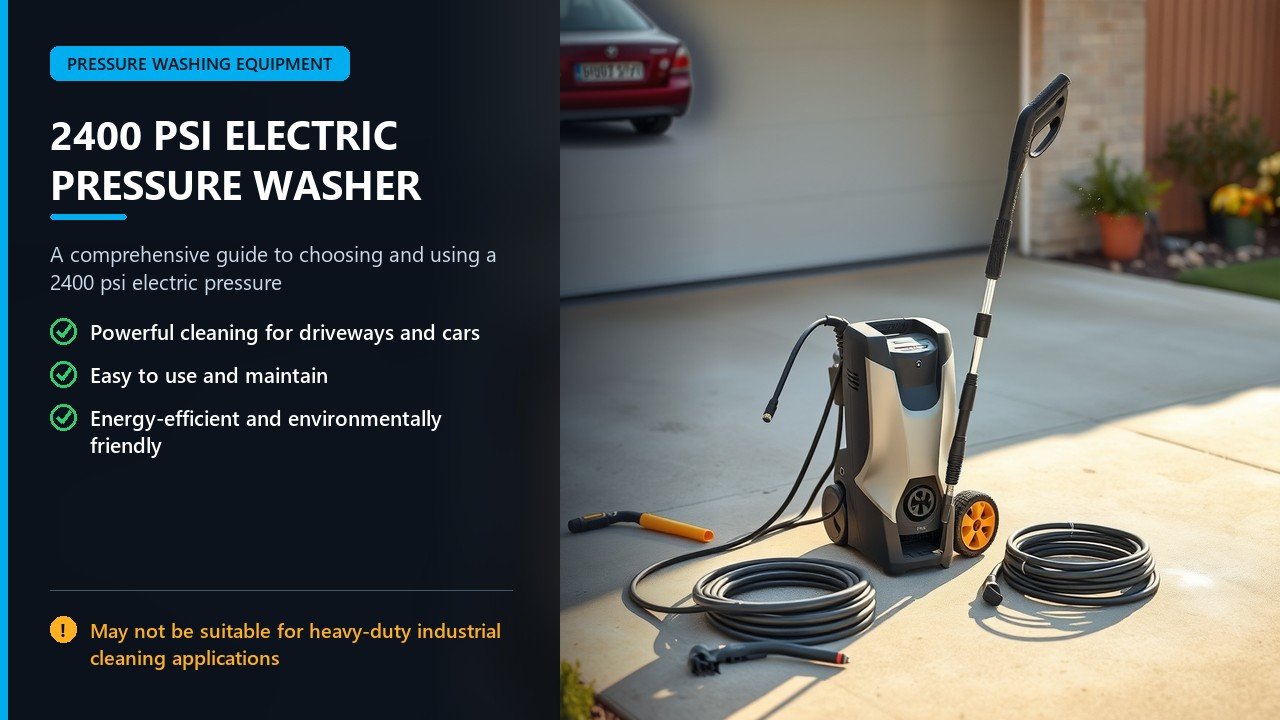
What a 2400 PSI Electric Pressure Washer Is
At its core, a 2400 psi electric pressure washer is a mains powered pump that raises water pressure to 2400 pounds per square inch and pushes it out through a wand or accessory. It stores no fuel, produces no exhaust, and starts with a switch and a trigger.
It runs on household current. Most units in this class are a corded electric pressure washer that plugs into a standard 120 volt outlet, so a 120v pressure washer like this draws roughly 13 amps, making a 13 amp pressure washer the norm. That means you can use one from a normal garage or patio socket, which is the main reason electric washers dominate the homeowner market.
The pump is usually axial or triplex. Light axial pumps are compact and affordable, while triplex pumps last longer and handle harder use. At 2400 PSI you will find both, and the pump type is one of the biggest clues to how long the machine will last.
It is quiet enough for the neighborhood. Compared with a gas engine, an electric washer is far quieter, so you can clean early or late without annoying everyone within a block. For many people this alone justifies choosing electric.
Maintenance is minimal. No oil changes in an engine, no spark plugs, no fuel to go stale. Aside from pump oil on some models and routine checks, an electric washer mostly just works.
It is sized for real homeowner jobs. Driveways, decks, patios, fences, siding, vehicles, and outdoor furniture all fall within its range. Whether you need an electric pressure washer for home chores, an electric pressure washer for cars, or an electric pressure washer for driveway work, a 2400 psi pressure washer covers it. It is not a commercial machine, but for a house and a couple of cars an electric washer 2400 psi strong is exactly the right tool.
The 2400 PSI figure is a rating at the pump, and real cleaning power at the nozzle will be a little lower. Still, this class delivers genuinely useful pressure for the overwhelming majority of residential cleaning tasks.
How it compares to a gas machine. A comparable gas washer might push 3000 PSI and more gallons per minute, giving it a speed advantage on big jobs. An electric 2400 PSI unit trades some of that raw power for convenience: no fuel, no pull cord, no engine noise, and far less maintenance. For someone who cleans a driveway and a couple of vehicles, the convenience usually wins easily.
Why electric is the sensible default for homes. The average homeowner does not need commercial firepower. They need a machine that starts every time, plugs into the wall, and is small enough to store. A 2400 PSI electric pressure washer meets that brief almost perfectly, which is why it outsells heavier machines in the residential market year after year.
PSI and GPM: What 2400 PSI Really Means
Two numbers define a pressure washer, and understanding them stops you from buying the wrong machine.
PSI is striking force. Pounds per square inch describes how hard the water hits a surface. Higher PSI removes stubborn grime, but it also risks damage on soft materials. 2400 PSI is a strong residential figure, more than a light-duty unit and less than a heavy gas model.
GPM is how much water flows. Gallons per minute describes volume. Flow is what rinses dirt away once the spray loosens it. A machine with decent GPM feels fast because it carries debris off the surface rather than just blasting a spot.
Cleaning units combine both. Multiply PSI by GPM to get cleaning units, a rough score of overall cleaning power. A 2400 PSI, 1.4 GPM machine scores differently from a 2400 PSI, 1.1 GPM machine, and the difference shows up as speed on the driveway.
Pressure at the nozzle is lower than at the pump. Some pressure is lost through the hose and fittings, so the advertised number is always a best case. This is normal and expected, not a defect.
Nozzle choice changes everything. The same 2400 PSI machine can clean gently with a wide fan tip or aggressively with a narrow one. The rated pressure is a ceiling, and the operator controls how much of it reaches the surface.
| Class | Typical PSI | Good For |
|---|---|---|
| Light electric | 1200-1800 | Cars, furniture, small patios |
| Mid electric | 2000-2600 | Driveways, decks, siding |
| Heavy electric | 2700-3200 | Tough stains, larger areas |
| Gas | 3000+ | Commercial, heavy stripping |
Seen this way, 2400 PSI lands in the mid electric range, which is precisely why it is so popular. It is the point where a machine becomes genuinely capable without becoming fussy.
Why flow can matter more than pressure. Two machines rated at 2400 PSI can clean very differently if their gallons per minute differ. The one moving more water rinses a driveway faster because it carries the loosened dirt away instead of leaving it streaked. When you compare models, treat GPM as a headline number, not a footnote.
How to read a spec sheet without being fooled. Advertised pressure is often a peak figure measured at the pump, while real working pressure at the nozzle is lower. The most honest spec sheets list both pressure and flow together and avoid inflated claims. If a listing shouts a huge PSI but hides the GPM, that is a signal to look elsewhere. On any electric pressure washer gpm is the figure that tells you how quickly it will actually rinse a surface clean.
What a 2400 PSI Electric Washer Can Clean
This is where the class earns its reputation. For a typical property, the list of jobs is long.
Driveways and walkways. Concrete holds dirt, tire marks, and mildew. A 2400 PSI washer with a surface cleaner attachment strips these away and leaves an even finish, without the wand marks that come from a slow, aimless pass.
Decks and fences. Wood and composite surfaces clean up well at reduced pressure with a wide fan tip. Use a fan tip, keep the nozzle moving, and follow the grain, and the wood comes back to life without raising the grain badly.
House siding. Vinyl, brick, and painted siding clean nicely when you work top to bottom and keep the spray angled down. This class has plenty of power for exterior walls while staying controllable.
Vehicles. Cars, trucks, and boats are ideal for a 2400 PSI electric washer, especially with a foam cannon. You rinse, foam, agitate, and rinse again without the risk that a heavier gas machine can pose to paint and trim.
Patios, walkways, and outdoor furniture. Grill grates, patio sets, and steps all lift clean. A wide tip keeps delicate finishes safe while the flow carries the mess away.
Fences, sheds, and gutters. With the right attachment, this washer handles fence panels, shed walls, and gutter fronts from the ground.
The pattern is clear: 2400 PSI handles the everyday exterior cleaning that makes up the bulk of residential work, and it does so with a light footprint that is easy to live with.
Materials it handles beautifully. Concrete, brick, stucco, vinyl siding, metal, composite decking, and clear coated vehicles are all comfortable territory for this class. The machine is strong enough to lift embedded grime yet gentle enough, with the right tip, to protect finishes that a heavier washer would risk.
How technique changes results. On concrete, a surface cleaner gives even, stripe free results. On siding, working top to bottom with a downward angle keeps water out of seams. On vehicles, foaming first and rinsing with a wide tip protects the paint. The same machine produces very different outcomes depending on how you use it, which is why technique is worth learning early.
What a 2400 PSI Electric Washer Cannot Do
Knowing the limits matters as much as knowing the strengths, because expectations drive satisfaction.
It is not a gas replacement for heavy commercial work. Large flatwork jobs, stripping thick coatings, and all-day professional use call for more pressure and flow than a 2400 PSI electric machine delivers. It will do the job slowly rather than efficiently at that scale.
Soft surfaces need caution. Wood, painted finishes, and vehicle paint can be damaged if you hold a narrow tip too close. The machine has the power to scar soft material, so technique matters.
Water supply must keep up. An electric washer at this level wants roughly 1.2 to 1.5 gallons per minute from the tap. A weak or shared spigot can starve the pump, which causes surging and can damage it.
Power and cord length are limits. Standard outlets have current limits, and long extension cords cause voltage drop that strains the motor. Plan to work near the power source.
It will not remove everything. Oil stains, rust, and deep set mold may need detergent, dwell time, and repeat passes. Pressure alone rarely wins those battles.
None of these are flaws in the machine. They are simply the boundaries of the class. Work within them and the washer performs beautifully, push past them and you will be frustrated.
Where a gas machine is truly needed. Large commercial flatwork, stripping heavy coatings, and continuous all day professional use are jobs that justify a gas machine. If your work is measured in acres rather than a driveway, no electric unit in this class will keep up, and pretending otherwise only wastes your time.
How to stretch the limits. Within its class, the right habits add real capability. Pre soaking tough stains, using the correct detergent, letting dwell time do the work, and adding a surface cleaner or turbo nozzle all let a 2400 PSI machine punch above its weight. Pressure is only one tool; chemistry, patience, and the right accessory often matter more.
When to simply call a professional. Roofs, high reach areas, and delicate historic surfaces are sometimes best left to someone with the right insurance and equipment. Knowing when your 2400 PSI machine is the right tool, and when it is not, protects both your property and your time.
Power, Amps, and Your Outlet
Electric pressure washers live or die by the quality of their power supply, and this is where many owners get into trouble.
Understand the amp draw. A 2400 PSI electric model often draws around 13 amps. A standard 15 amp household circuit has room, but only if little else is running on it. A dedicated 20 amp circuit is comfortable and preferable.
Avoid long or thin extension cords. If you must use one, choose a heavy gauge, short cord rated for the load. A light household cord on a high demand motor causes voltage drop, heat, and tripped breakers.
Use a GFCI outlet. Water and electricity demand respect, so plug into a ground fault protected outlet, and never run the machine with damaged cords or wet hands.
Match the machine to the circuit. If your garage shares a circuit with freezers or tools, expect nuisance trips. Know which outlet you can use alone.
Keep the inlet water flowing. The pump starves easily if supply is weak. Check that your tap delivers enough GPM and that the inlet filter is clean before every session.
Sorting out power and water before you buy prevents the most common complaints, weak spray, surging, and tripped breakers, and lets the machine deliver its rated performance.
Extension cord rules worth remembering. If you cannot avoid an extension cord, keep it short and thick, rated for the amperage the machine draws. A light 50 foot cord on a high demand motor causes voltage drop and heat, which trips breakers and shortens motor life. Whenever possible, work within reach of a dedicated outlet instead.
Confirm your water supply first. Fill a bucket and time it to estimate your tap’s flow. If a spigot cannot deliver roughly 1.2 to 1.5 gallons per minute while other taps run, the pump will surge. Cleaning the inlet screen, using a dedicated spigot, or letting a shared line run free first all help keep the pump properly fed.
Keep the cord and the water line tidy. Loose cords and hoses trip people and tangle underfoot. Run the power cord away from standing water, keep the water hose off pathways where possible, and store both properly after use. A tidy setup is a safe setup, and it makes the machine easier to use every time.
Best Uses for Homeowners
For a typical household, a 2400 PSI electric washer earns its place quickly. Here is where it shines.
Seasonal deep cleans. Spring and fall cleanups of driveways, siding, decks, and furniture turn a weekend of scrubbing into a few hours.
Car and boat care. With a foam cannon and a wide tip, this class is gentle enough for paint and strong enough to strip road film, and the quiet operation means you can wash in your driveway without disturbing the street.
Quick spot jobs. Because it starts instantly and needs no fuel, you can grab it for a single dirty patio table or a muddy set of steps without a big setup.
Rental friendly cleaning. If you clean a rental property or a small business entry, the portability and ease of an electric machine fit the job without commercial overhead.
Fence and shed upkeep. Regular cleaning extends the life of wood and metal, and this washer makes it easy to do often.
Most homeowners find that a 2400 PSI electric pressure washer covers everything they own and then some, which is why it remains one of the most recommended power levels for residential use.
A typical weekend with this washer. Saturday morning might be the driveway and walkway with a surface cleaner, the afternoon the deck and patio furniture, and Sunday the cars with a foam cannon. One machine, one outlet, no fuel runs, and the whole property looks reset by Sunday evening. That range is exactly what this class was designed for.
Why small businesses and landlords like it too. A coffee shop cleaning its entry, a landlord refreshing a rental between tenants, or a detailer working from home all benefit from a quiet electric machine that starts instantly. It is small enough to store easily and powerful enough to make a real difference in the areas that matter.
Making the most of a single session. Because setup is quick and there is no fuel to burn through, it pays to batch tasks. Knock out the driveway, then the walkway, then the patio while the machine is out and the water is connected. Planning the order from dirtiest to cleanest, and from highest to lowest, keeps rinse water from dirtying areas you have already cleaned.
Storing it so it is always ready. Coil the hose loosely, hang the wand and nozzles, and keep the unit on a shelf or in a cabinet out of the sun. A machine that is easy to reach and quick to set up gets used more often, and regular light use keeps the pump healthy far better than long idle periods.
Accessories That Pair With 2400 PSI
The right accessories multiply what a 2400 PSI machine can do, often more than upgrading the machine itself.
Surface cleaner. This spinning attachment cleans flat concrete evenly and fast, eliminating the zebra stripes a wand leaves behind. A good surface cleaner for electric pressure washer units in this class is the single best add-on for driveways. Electric pressure washer nozzles also matter, so keep a full set of color coded tips on hand.
Foam cannon. For cars, a foam cannon lays down thick detergent that lifts grime before you touch the paint. A foam cannon electric pressure washer owners rely on works well at this pressure level, turning a simple rinse into a proper wash.
Turbo nozzle. A rotating zero degree tip concentrates power for stubborn spots, giving a bit of extra bite without changing the machine.
Extension wand. An extension wand reaches second story siding, gutters, and the roof edge while keeping you safely on the ground.
Nozzle set. A quality set of color coded tips lets you match pressure to the surface, from a gentle rinse to a focused blast.
Hose and reel. A longer pressure hose and a reel extend your reach and keep the setup tidy.
Match tips to the task. A gentle wide fan tip belongs on siding, decks, and car paint, while a turbo or narrow tip is reserved for concrete and stubborn stains. Keeping a full set of color coded nozzles on hand means you can adjust instantly instead of using one tip for everything and risking damage or wasting time.
Why accessories often beat upgrading. For most homeowners, a surface cleaner and a foam cannon improve results more than moving up to a bigger machine would. They change the way water and detergent reach the surface, which is where cleaning actually happens. Before spending on a larger washer, spend a little on the attachments that make the one you own perform at its best.
Do not forget detergent. The right pressure washer detergent, applied through a foam cannon or downstream injector, does much of the cleaning work. Foaming a car or soaking a concrete pad before you rinse lets the chemistry break down grime, so the water has less to do and the finish comes out cleaner with less effort.
Keep spares of the small parts. O rings, quick connect fittings, and a spare nozzle set cost little and save a session when something wears out mid job. Building a small spares box pays for itself the first time a fitting starts leaking on a Saturday afternoon.
Buying Tips: Choosing the Best 2400 PSI Electric Pressure Washer
You have decided on the class. Now choose the right machine within it.
Check PSI and GPM together. Favor a model with a good flow rate at 2400 PSI over one with a big pressure number and a weak GPM. Cleaning units, PSI times GPM, is the honest comparison.
Know the pump type. A triplex pump generally outlasts a light axial pump, which matters if you plan years of regular use. Read what the manufacturer states rather than assuming.
Look at build and handling. Metal fittings, sturdy wheels, a comfortable handle, and an onboard nozzle storage all make the machine nicer to live with. Cheap plastic fittings crack under pressure.
Prefer a machine with good parts support. A repairable washer with available seals and hoses outlives a sealed unit that becomes a throwaway. Check that consumables are easy to find.
Weigh the cord and hose length. A longer hose means fewer moves, and a proper cord length keeps you from reaching for a dangerous extension cord.
Read real reviews for the pump, not the marketing. What matters is how the machine behaves after a season, not how impressive the box looks.
Buying within the 2400 PSI class is about honest specifications and durable parts, not the biggest number on the shelf.
Check parts availability before you buy. A machine with widely available seals, hoses, and nozzles can be kept alive for years, while a sealed unit with no spare parts becomes landfill after one failure. Look for a brand that sells replacement parts and publishes clear support information.
Do not chase the biggest number. A model advertising a little more pressure but a weaker flow rate is rarely the better tool. Compare cleaning units, check the pump type, and read what owners say after a full season of use. Honest performance and repairability matter far more than a bold figure on the box.
Hold the machine before you buy. Whenever possible, lift the unit and roll it in the store. A washer that feels balanced and moves easily will be used more, while a heavy, awkward machine becomes a chore. Look closely at the handle, the wheels, and the onboard storage, because these details decide how pleasant the tool is to live with.
Buy from a source that supports you. A responsive seller with clear warranty terms and accessible parts makes a difference if something fails. A slightly higher price from a dependable source is often the smarter purchase than the cheapest listing with no support behind it.
Read the specs and reviews carefully. Compare electric pressure washer specs side by side, then look for electric pressure washer reviews that describe the machine after months of real use, not just the unboxing. A model that offers an electric pressure washer with hose reel already included saves you a purchase and keeps the setup tidy from day one.
Maintenance and Care
Good electric pressure washer maintenance is simple, and a little attention keeps this machine healthy for years at almost no cost.
Flush the system. Run clean water through the pump and hose after each use so detergent and grit do not dry inside. This alone prevents many problems.
Protect the pump from freezing. Water left in the pump or hose can freeze and crack it. Drain the machine before the first frost and store it indoors.
Clean the inlet filter. The tiny screen where the garden hose connects traps grit that would damage the pump. Rinse it regularly.
Check hoses and fittings. Inspect the high pressure hose for cracks and the quick connects for wear. Replace weak parts before they burst.
Change pump oil where applicable. Some electric washers have a serviceable crankcase. If yours does, use the recommended oil on schedule.
Store the wand and nozzles clean. Rinse and dry them so mineral buildup does not clog the tips.
These habits take minutes and protect the parts that are expensive to replace, keeping a good washer in service far longer than average.
Winterize before the first freeze. Run the machine briefly with the water supply shut off to push remaining water out, drain the hose and wand, and store the unit inside. Water trapped in a pump or hose expands when it freezes and cracks metal and plastic alike, so this single step prevents one of the most common seasonal failures.
A quick pre job checklist. Before each use, confirm strong flow at the tap, a clean inlet screen, tightly connected hoses, the right nozzle for the surface, and an undamaged cord on a protected outlet. Running through these five checks takes under a minute and heads off almost every problem an electric washer has during a session.
Watch the oil and the seals. If your model has a serviceable pump crankcase, check the oil level and condition as the manual instructs, and replace milky oil immediately. Inspect the hoses and the swivel for weeping, and tighten or replace fittings that weep, because small leaks left alone invite water into places it should never reach.
Treat the machine as a tool, not a toy. Avoid dragging it by the hose, yanking the wand, or leaving it running with the trigger released for long stretches, which heats the pump needlessly. Handle it with a little respect and it will reward you with smooth, dependable performance every time you reach for it.
Common Mistakes to Avoid
Most disappointment with a 2400 PSI electric washer comes from a short list of avoidable errors.
Running it without enough water. Starving the pump causes surging and damage. Confirm strong flow at the tap and a clean inlet filter every time.
Using a weak extension cord. Long, thin cords cause voltage drop, tripped breakers, and motor strain. Use a short heavy cord or none at all.
Holding a narrow tip too close. Even at 2400 PSI, a concentrated stream scars wood, paint, and trim. Keep the tip moving and start wide.
Skipping the rinse step. Detergent left to dry leaves streaks and dulls finishes. Rinse thoroughly before moving on.
Letting it freeze. A frozen pump is a dead pump. Drain and store it properly in cold weather.
Ignoring the manual. Every machine has quirks and limits the manual explains. Ten minutes of reading prevents a lot of damage.
Expecting gas performance. Judging an electric washer by commercial standards sets you up to be unhappy. It is a different, lighter tool with different strengths.
Avoid these and the machine does exactly what it promises, quietly and reliably, job after job.
Assuming pressure alone cleans everything. Oil, rust, and deep mold often need detergent and dwell time before pressure helps. Spraying harder rarely solves a problem that chemistry would fix in half the time, and leaning on pressure risks damaging the surface you are trying to clean.
Neglecting the connection points. A loose garden hose fitting, a worn quick connect, or a clogged inlet screen causes a weak, sputtering spray that owners often blame on the machine. Checking and tightening the simple connections first solves a surprising share of performance complaints before any repair is considered.
Underestimating the value of a surface cleaner. Many owners fight zebra stripes and slow progress with a wand when a spinning surface cleaner would finish the concrete evenly and far faster. Buying the cheap option that forces you to work harder is a false economy, and the fix is usually a modest add on rather than a new machine.
Running the washer dry or short of water. Letting the inlet starve, even briefly, can damage the pump. Always confirm the tap is fully open and flowing before you switch on, and stop immediately if the spray sputters or the motor strains. These small attentions keep an inexpensive machine running like a much more expensive one.
Frequently Asked Questions
Is 2400 PSI good for a pressure washer? Yes. For residential work, 2400 PSI is a strong, versatile level that handles driveways, siding, decks, and vehicles well without the bulk of a gas machine.
Is a 2400 PSI electric pressure washer enough for a driveway? Yes, especially with a surface cleaner attachment. It cleans concrete thoroughly and evenly, just more slowly than a high flow gas unit on very large areas.
Can a 2400 PSI electric washer damage a car? It can if you hold a narrow tip too close. Used with a wide tip and a foam cannon, it is a safe and effective car washing tool.
What outlet does it need? Most run on a standard 120 volt outlet drawing around 13 amps. A dedicated 20 amp circuit is ideal, and a GFCI outlet should always be used.
How many GPM should it have? Look for roughly 1.2 to 1.5 GPM at 2400 PSI. Flow determines how fast it rinses, so a healthy GPM matters as much as the pressure.
Can I use it for a two story house? Yes, with an extension wand. The washer has enough pressure to reach upper siding when you add a long wand or a telescoping extension, keeping you safely on the ground.
Does it need a special outlet? No special outlet is required, but a dedicated circuit is best. A standard 120 volt outlet works, provided little else is drawing power on the same circuit, and a GFCI outlet should always be used.
How long will a 2400 PSI electric washer last? With clean water, proper winter storage, and light maintenance, a well built unit can serve a household for many years. Pump type and parts availability are the biggest factors in how long it lasts.
Can it be used indoors or in a garage? It should only run where it has ventilation and a safe water supply, and never in a fully enclosed space where exhaust from any nearby source or moisture could build up. Outdoors or a well ventilated garage is always the right place for a pressure washer.
Is it worth buying refurbished or used? A well kept used unit can be good value, but check the pump for leaks, the cord for damage, and the fittings for wear. Confirm spare parts are still available, since a bargain machine that cannot be repaired is not a bargain at all.
Final Thoughts
A 2400 psi electric pressure washer is one of the most sensible tools a homeowner can own. It brings real cleaning power to the jobs that actually come up around a house, and it does so on ordinary household current with almost no maintenance.
Match the machine to your power and water supply, choose honest PSI and GPM, and respect the limits of soft surfaces. Follow those three rules and a good 2400 PSI electric power washer will handle your driveways, decks, siding, and vehicles for years, quietly and dependably.
If you value quiet operation, instant starts, and zero fuel fuss, this is the class to buy. Choose a well built model, add a surface cleaner and a foam cannon, keep the pump fed and drained, and you will wonder why you waited so long to stop scrubbing by hand.
For families, renters, and anyone who wants reliable cleaning without a workshop of tools, a 2400 PSI electric pressure washer is the practical answer. It is light enough to carry, simple enough to run on a moment’s notice, and capable enough that the driveway, the deck, and the family cars all stay presentable with a single machine.
Buy for honest specifications and durable parts, learn the few habits that protect the pump, and this class of washer will quietly do its job season after season. It is one of the few purchases around the home that rewards you with both time saved and a better looking property.
Start with honest expectations, add the right accessories, and treat the pump with a little care. A good 2400 PSI electric pressure washer will then handle everything from a muddy winter driveway to a springtime car wash without drama. That quiet, dependable service is exactly what makes this class such a popular choice among homeowners who simply want the job done well.
If you have been weighing electric against gas, consider how you actually clean. For a driveway, a deck, some siding, and the family vehicles, a 2400 PSI electric power washer is more than enough, and it removes the fuel, noise, and upkeep that make gas machines a commitment. For most households, that trade is easy to make and hard to regret.