What a Pressure Washer Plate Does on Your Cleaning Setup
When people talk about a pressure washer plate, they usually mean the flat deck plate on a surface cleaner, or one of the mounting plates that holds a spray gun, wand, or nozzle in place. These plain-looking pieces of metal and plastic do more than sit there. They control how water hits the surface, how well your machine stays organized, and how safely the whole setup handles pressure and torque. Understanding what a pressure washer plate is, what it is made of, and how to pick or replace the right one will save you time, money, and frustration. This guide walks through every common type of plate, what they do, how to install and maintain them, and how to avoid the mistakes that shorten their life.
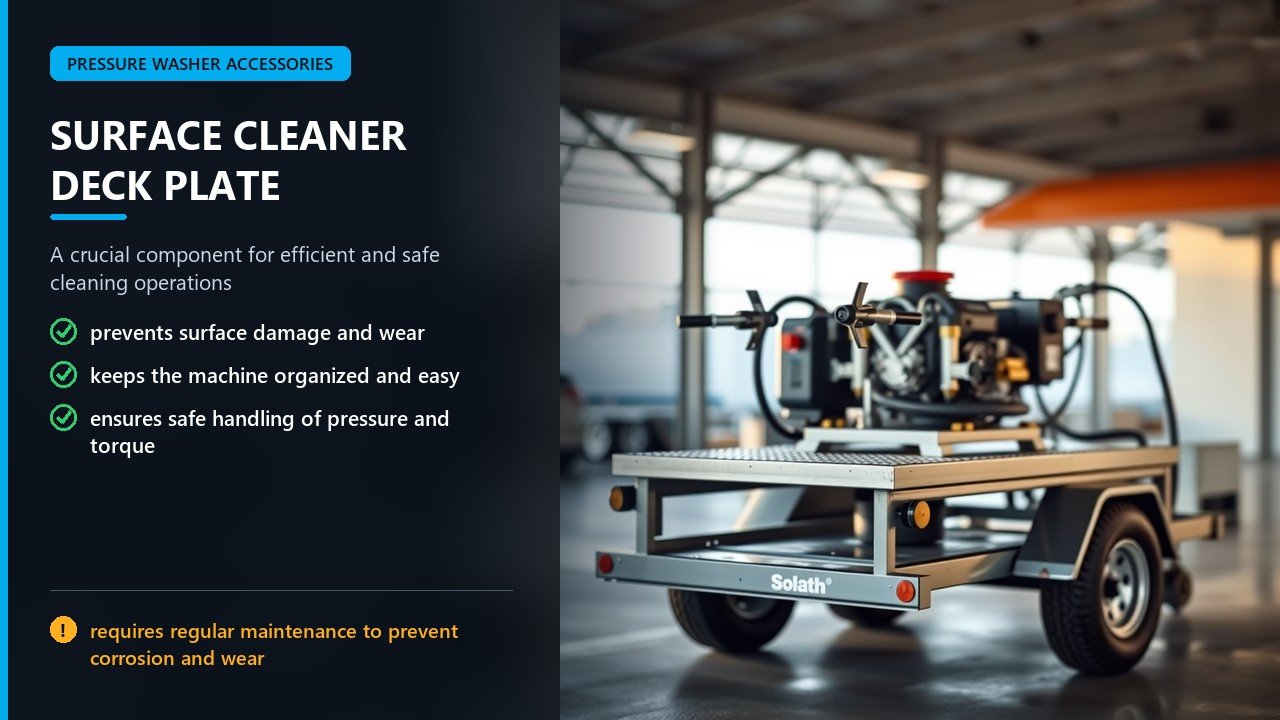
What a Pressure Washer Plate Actually Is
Before you can buy the right part, you need a clear picture of what the term covers.
A surface cleaner deck plate. On a rotary surface cleaner, the plate is the round or rectangular deck that houses the spinning bar and nozzles and rides just above the concrete or decking.
Mounting plates. These are flat brackets that attach a spray gun, wand, pump, or accessory to a cart, trailer, or wall.
Nozzle and tip plates. Some machines use a small plate or holder to keep nozzles organized and ready.
Pump base plates. A base plate often mounts the pump and engine to the frame, absorbing vibration.
Cover and guard plates. A plate can also act as a guard that shields a hot engine or a moving belt.
The exact meaning depends on the machine and the maker, but in every case the plate is a structural or organizing part that keeps the tool working as intended.
Why the Deck Plate on a Surface Cleaner Matters
The surface cleaner is the most common place a “plate” plays a starring role.
It contains a spinning bar. Inside the deck, the bar spins at high speed, and the plate keeps that motion controlled and safe.
It sets nozzle height. The deck holds the nozzles at a fixed distance from the surface, which is what produces even cleaning.
It prevents striping. Without a plate to keep the nozzles at a consistent height, you get streaks and zebra patterns.
It traps the spray. The plate and skirt contain the spray and splash, protecting nearby surfaces and the operator.
It distributes weight. Riders and brushes on the plate spread the weight of the machine and keep it level.
A surface cleaner is only as good as its plate. A bent, warped, or poorly made plate produces uneven results no matter how strong the pressure washer is.
Mounting Plates: Keeping the Machine Organized
The second big family of plates is the mounting hardware.
Gun and wand holsters. Plates and brackets keep the spray gun and wand within reach and off the ground.
Hose guides. A plate with a radius or roller guides the high-pressure hose and prevents kinks and wear.
Accessory plates. These hold foam cannons, brushes, or nozzle tips right on the cart.
Trailer plates. On a mobile rig, mounting plates bolt the machine down so it does not shift in transit.
Swivel plates. A swivel plate lets a boom or reel rotate, improving reach and reducing hose strain.
Good mounting plates turn a loose pile of equipment into a professional, efficient work station.
Materials: Steel, Stainless, and Polymer
The material a plate is made from decides how long it lasts and how it performs.
Powder-coated steel. Strong and affordable, but the coating can chip and expose rust if it is damaged.
Stainless steel. Resistant to rust and chemicals, ideal for wet environments, at a higher price.
Aluminum. Light and reasonably corrosion-resistant, popular where weight matters.
Polymer and plastic. Light, rustproof, and cheap, but less rigid and prone to cracking under heavy load.
Cast metal. Used in some deck plates for strength and stability, though it adds weight.
Match the material to how often the machine gets wet, what chemicals you use, and how hard it works.
| Material | Strength | Rust Resistance | Best For |
|---|---|---|---|
| Powder-coated steel | High | Moderate | Home and light commercial |
| Stainless steel | High | Excellent | Heavy wet and chemical use |
| Aluminum | Moderate | Good | Portable rigs |
| Polymer | Low | Excellent | Light duty and storage |
How a Surface Cleaner Plate Works
Walking through the internals shows why the plate is designed the way it is.
Water path. High-pressure water enters through the center, feeds the rotating bar, and exits through the nozzles.
Rotation. The reaction force of the water spins the bar, or a bearing and belt drive it.
Bearing and swivel. A bearing or swivel at the center lets the bar spin without leaking.
Nozzle angle. The nozzles point slightly down and inward, and the plate fixes their height and angle.
Skirt and casters. A skirt contains splash, and casters or brushes let the plate glide.
Handle and swivel. A handle and a swivel joint connect the plate to the wand, letting you steer.
Every one of these parts depends on the plate being flat and rigid. A warped plate throws off the geometry and the cleaning quality drops fast.
Sizing a Deck Plate to Your Machine
Bigger is not always better when it comes to surface cleaner plates.
Match flow, not just pressure. A plate sized too large for your machine’s flow will spin slowly and clean poorly.
Nozzle count matters. More nozzles need more flow, so a plate with extra tips can starve a small machine.
Rule of thumb. Smaller machines suit smaller plates, while large flow machines handle bigger decks.
Radius vs. rectangle. Round plates suit open areas, while rectangular or specialty plates reach edges and corners.
Connection type. Make sure the plate’s inlet matches your wand, whether that is a quick connect or a threaded fitting.
Choosing a plate that fits your flow rate is the single most important decision for clean, even results.
| Machine Flow | Suggested Plate Size | Notes |
|---|---|---|
| Around 2 GPM | 12 to 14 inch | Small electric machines |
| Around 3 GPM | 15 to 16 inch | Mid-range electric and small gas |
| 4 GPM and up | 18 to 24 inch | Commercial gas machines |
Installing a Deck Plate Safely
Fitting a plate correctly protects you and the machine.
Release pressure first. Shut off the machine and release all pressure before you touch the plate or fittings.
Match the fittings. Use the right quick connect or thread, and avoid cross-threading.
Check the o-rings. Fresh o-rings prevent leaks at the swivel and inlet.
Level the casters. Set casters or brushes level so the plate rides evenly.
Test at low pressure. Start gently and watch for leaks and wobble before going full pressure.
Check the height. Adjust the skirt or wheels so the nozzles sit at the correct distance.
A careful first setup pays off with even cleaning and long plate life.
Replacing a Worn or Bent Plate
Plates wear out, and knowing when to replace them keeps results consistent.
Warping. Heat and impact can warp a plate, changing nozzle height and causing stripes.
Cracks. Cracks in polymer plates spread under pressure and can fail suddenly.
Rust. Rust on steel plates weakens the structure and stains the surface being cleaned.
Worn casters and skirts. These are often replaceable separately, saving the cost of a whole new plate.
Worn swivel. A leaking or stiff swivel is a sign the assembly is tired and may need service.
Matching a replacement. Buy a plate that matches the machine’s flow and connection, not just its size.
Replacing a tired plate restores the even, streak-free finish that makes a surface cleaner worth owning.
Caring for Your Plate
Simple habits extend the life of any plate.
Rinse after use. Wash off chemicals and grit that corrode or abrade the plate.
Dry before storage. Moisture leads to rust, especially on steel.
Inspect the casters. Worn casters make the plate ride unevenly, so replace them early.
Check for bends. Lay the plate on a flat surface and look for rocking that signals warping.
Store flat. Do not stack heavy items on a plate, since that can bend it.
Protect the finish. Touch up chipped powder coat to keep rust away.
These few habits keep a plate flat, rigid, and reliable for years.
Choosing a Quality Plate
Not all plates are built the same, and the differences show up under use.
Thickness. Thicker metal resists warping and lasts longer.
Welds. Clean, full welds hold up better than spot welds that crack.
Bearing quality. A good swivel bearing spins freely and seals well.
Finish. A durable coating resists rust and chemicals.
Replacement parts. Brands that sell o-rings, casters, and skirts separately are easier to maintain.
Reviews and reputation. Real-world feedback reveals how a plate holds up over time.
Paying a little more for a well-made plate almost always beats replacing a cheap one twice.
Safety Around Plates and Moving Parts
A plate often sits next to fast-moving water and spinning metal, so safety habits matter.
Never reach under a running deck. The bar spins fast and the spray can cut, so keep hands, feet, and clothing clear.
Beware of stored pressure. Release pressure before removing or adjusting any plate or fitting.
Check fasteners. Loose bolts on a mounting plate can let heavy equipment fall.
Watch for kickback. A sudden pressure change or a caught hose can jerk the wand and the plate.
Wear protection. Eye and hearing protection are basic when you run high pressure near a spinning deck.
Keep bystanders back. The spray and debris from a surface cleaner reach farther than people expect.
Good habits around the plate keep a routine job from becoming an injury.
Plate Versus Cleaning Without One
Why use a plate at all when a wand alone can clean?
Speed. A surface cleaner with a plate covers a large area in a fraction of the time a wand needs.
Evenness. The fixed nozzle height of a plate prevents the zebra striping a hand wand tends to leave.
Containment. The plate and skirt trap water and debris, keeping the mess contained.
Less fatigue. Gliding a plate across a slab is easier than sweeping a wand back and forth.
Where a wand wins. For vertical surfaces, tight corners, and delicate areas, a wand without a plate is still the right tool.
Most professionals use both, switching to the plate for flatwork and the wand for everything else.
Compatibility and Adapters
A plate only helps if it fits your machine.
Inlet size. Match the plate inlet to your wand, commonly 1/4-inch quick connect.
Thread types. Metric and imperial threads differ, so use the correct adapter rather than forcing a connection.
Swivel joints. The swivel connecting the plate to the wand must handle your machine’s pressure and temperature.
Flow rating. Confirm the plate’s rated flow and pressure exceed or match your machine.
Adapters. A quality adapter lets one plate fit several machines, which is handy on a mixed fleet.
Checking compatibility before you buy avoids the frustration of a plate that will not connect or perform.
Extending the Life of a Plate
Simple upgrades and habits make a plate last far longer.
Add a quality skirt. A full skirt keeps water and grit off the plate and bearings.
Use the right nozzles. Correctly sized nozzles spin the bar properly and reduce strain.
Avoid dry running. Never spin the plate without water, which destroys the bearing and seals.
Flush after chemicals. Rinse the plate thoroughly to stop chemical corrosion.
Store properly. Hang or rest the plate flat so it does not warp under its own weight.
Rebuild instead of replace. Bearings, o-rings, and casters are cheap to swap and keep the plate going.
These habits cost little and add years of even, reliable cleaning to any surface cleaner.
Common Mistakes to Avoid
These missteps cost people time and money.
Oversized deck. Buying a plate too large for the machine’s flow, which causes slow spinning and poor cleaning.
Ignoring the fittings. A mismatched inlet means leaks and downtime.
Running over debris. Rocks and debris can dent a plate and chip the coating.
Dropping the plate. Impact bends plates and ruins the nozzle geometry.
Skipping maintenance. Neglected casters and o-rings cause uneven rides and leaks.
Using the wrong chemicals. Harsh chemicals can eat coatings and corrode aluminum or steel.
Avoiding these mistakes keeps the plate doing its job and protects the rest of your setup.
Troubleshooting Plate Problems
Most plate issues have clear causes.
Stripes and swirls. Usually a bent plate or clogged nozzles changing the spray pattern.
A plate that will not spin. Often a worn bearing or debris in the swivel.
Leaks at the center. Worn o-rings or a loose swivel are the usual culprits.
Excessive splashing. A missing or worn skirt lets water escape.
Uneven ride. A bent plate or misaligned casters cause wobble.
Slow rotation. A plate too large for the machine’s flow starves the nozzles.
Fixing the underlying cause restores even performance far better than just pressing harder.
Plate Maintenance Schedule
A simple schedule keeps the part reliable.
Every use. Rinse off dirt and chemical residue.
Weekly. Inspect for bends, loose fittings, and worn casters.
Monthly. Check the swivel and bearing, and replace o-rings if they leak.
Seasonally. Touch up the finish and check welds for cracks.
As needed. Replace casters, skirts, and bearings before they fail.
Consistent care costs little and prevents the surprise failures that cost the most.
Plate Upgrades Worth Considering
A few upgrades turn a basic plate into a better tool.
Caster upgrade. Smooth, larger casters glide over cracks and reduce operator effort.
Swivel upgrade. A sealed swivel that handles higher pressure improves reliability and reach.
Reinforced skirt. A heavier skirt contains splash better and protects the bearing from grit.
Quick connect inlet. Swapping to a matched quick connect speeds setup and teardown.
Larger wheels for rough slabs. Bigger wheels roll over expansion joints that stop small casters.
Replaceable wear parts. Choosing a plate with serviceable o-rings and casters lowers long-term cost.
| Upgrade | Benefit | Effort |
|---|---|---|
| Caster upgrade | Smoother gliding | Low |
| Sealed swivel | Reliable reach | Medium |
| Reinforced skirt | Less splash | Low |
| Quick connect inlet | Faster setup | Low |
None of these upgrades is expensive, but together they make a plate feel like a much more capable tool.
Frequently Asked Questions
What is a pressure washer plate? It is usually the deck plate on a surface cleaner or a mounting plate that holds a gun, wand, or accessory on a machine or cart.
Why does my surface cleaner leave stripes? Most often a bent or warped plate changes nozzle height. Clogged nozzles and worn casters can also cause stripes.
What size surface cleaner plate do I need? Match it to your machine’s flow rate. Roughly 2 GPM suits 12 to 14 inch plates, 3 GPM suits 15 to 16 inch, and 4 GPM and up handle 18 to 24 inch plates.
Can I fix a bent plate? Minor bends are sometimes straightened, but warped or cracked plates should be replaced for even results and safety.
Do I need a mounting plate for my gun? A holster or mounting plate is not required, but it keeps the gun and wand organized, protected, and within reach.
What material is best for a plate? Stainless steel resists rust best, powder-coated steel offers strength for less money, and polymer suits light duty and storage.
How do I stop splashing from my surface cleaner? Replace or reattach the skirt and make sure the plate rides at the correct height so the spray is contained.
Is a bigger surface cleaner always better? No. A plate that is too large for your machine’s flow spins slowly and cleans poorly, so match the size to the flow.
How often should I replace the plate? Replace it when it warps, cracks, or rusts badly. Casters, skirts, and o-rings can often be replaced on their own first.
Practical Examples
Real setups show the plate at work.
A homeowner with a 3 GPM electric machine. A 15 inch plate with a matched inlet spins steadily and cleans a driveway evenly in one pass.
A contractor with a 4.5 GPM gas rig. A 20 inch stainless plate with quality casters covers large commercial slabs fast and survives daily use.
A mobile trailer setup. Mounting plates bolt the machine and reels to the trailer so nothing shifts on the road.
A detailer. A small plate and a nozzle plate keep tips organized and reach tight spots where a big deck cannot go.
In every case, the plate quietly decides how consistent, safe, and efficient the work turns out.
Final Thoughts
A pressure washer plate is easy to overlook because it just sits there, but it shapes the quality of every job. On a surface cleaner, the deck plate controls nozzle height, contains spray, and produces even, stripe-free results. As a mounting plate, it turns scattered gear into an organized, safe work station. By choosing the right size, material, and connection, then keeping it flat and clean, you get years of reliable service from a small, inexpensive part. Look after the plate, and the rest of your pressure washing setup will reward you with cleaner surfaces and fewer headaches.