Every pressure washer owner eventually asks the same question: can I just use my garden hose to pressure wash? The answer depends on what you mean, because “pressure washing with a garden hose” describes two very different things. One is a genuine function: a garden hose delivers the water supply that feeds a pressure washer’s pump. The other is a common misunderstanding, that a garden hose alone can replace a pressure washer. Confusing the two leads to disappointing results and, sometimes, damaged equipment. This guide clears up the pressure washing garden hose question, explaining the real role of a garden hose, when it is enough, and when you need real pressure.
Garden hoses and pressure washers both move water, but at wildly different pressures. A garden hose delivers water at the pressure of your plumbing, typically 40 to 80 PSI. A pressure washer multiplies that to 1,500 PSI or more. Understanding that gap is the key to knowing when a hose is enough and when it is only the beginning of the job.
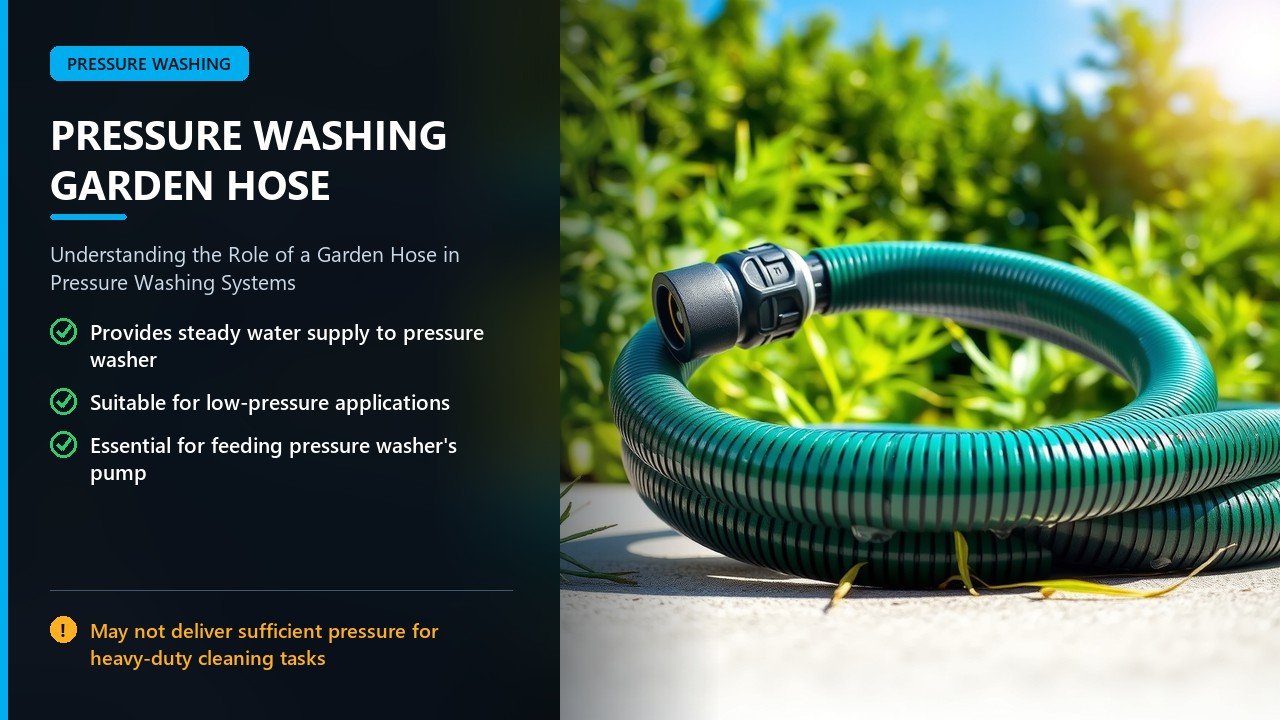
Two Very Different Jobs
The confusion about garden hoses in pressure washing comes from mixing up two entirely separate roles.
The garden hose as a supply line. A pressure washer needs a steady flow of water at low pressure. A garden hose is the standard way to deliver that water from a tap to the machine’s inlet. In this role, the garden hose is essential and completely appropriate.
The garden hose as a pressure washer. This is where misunderstanding creeps in. A garden hose provides only the pressure of your household water supply, which is nowhere near enough for the tough cleaning that pressure washers perform. You can wash a car or rinse a patio with a garden hose, but you cannot strip grime or clean concrete the way a pressure washer does.
So the honest answer to “can you pressure wash with a garden hose” is no, not in the true sense. What a garden hose can do is feed the machine that does the pressure washing. That distinction shapes everything about how to use them together.
Can a Garden Hose Pressure Wash
To understand why a garden hose cannot pressure wash, compare the pressure each delivers.
A garden hose delivers water at whatever pressure your plumbing provides, usually around 40 to 80 PSI, through a nozzle that spreads it into a gentle spray. That is fine for rinsing, watering, and light washing, but it will not lift embedded dirt, oil, or grime.
A pressure washer takes that same low-pressure water and, using its pump, raises it to hundreds or thousands of PSI. At 1,500 to 4,000 PSI, the stream can strip paint, clean deep concrete stains, and remove grease. The difference is not incremental; it is orders of magnitude.
Attaching a fancy nozzle to a garden hose does not change this. A nozzle can concentrate the spray and improve reach, but it cannot create pressure the water supply does not provide. At best, a garden hose nozzle increases the stream’s speed slightly, but it remains a low-pressure tool.
The practical conclusion is simple: a garden hose is for gentle rinsing and watering, while a pressure washer is for serious cleaning. If your job needs real pressure, no garden hose attachment will substitute for a machine.
The Garden Hose as a Supply Line
Where a garden hose truly matters in pressure washing is as the supply line to the machine.
A pressure washer’s pump cannot draw water with strong suction; it needs water delivered to its inlet under at least minimal pressure. A garden hose connected to a tap provides exactly that, feeding the pump a steady flow it can pressurize.
The garden hose’s role is therefore critical, and its performance affects the machine. If the hose is too long, too narrow, or kinked, it restricts the flow reaching the pump. A starved pump cavitates, which means vapor bubbles form and collapse inside it, damaging internal parts and reducing performance. This is why the supply hose matters as much as any other part of the setup.
The best supply hoses for pressure washers are short, wide, and unobstructed. A common recommendation is a reinforced hose of at least 5/8-inch diameter, kept as short as practical, with no kinks. This ensures the pump receives an ample, steady supply, which protects it and keeps pressure and flow consistent.
Adapters to Connect Garden Hose to Pressure Washer
Pressure washers do not connect directly to a standard garden hose thread, so an adapter is usually required at the machine’s inlet.
Garden hose thread. Garden hoses use a standard thread (often called GHT or GH), which is different from the metric threads used on pressure washer inlets.
Inlet adapters. Pressure washers commonly have an M22 threaded inlet, so you need an adapter that converts garden hose thread to the machine’s inlet type. Many machines include this adapter, but replacements are inexpensive.
Quick connect adapters. For convenience, some users add a quick connect at the inlet, so the garden hose connects and disconnects in a second.
Filter screens. Many inlet adapters include or accept a small screen filter that traps debris before it reaches the pump. Keeping this clean protects the machine.
Getting the adapter right is a common stumbling block. Confirm your machine’s inlet thread and your garden hose’s thread, and choose an adapter that bridges them. Once connected properly, the supply flows reliably, and the machine works as intended.
| Item | Purpose |
|---|---|
| Garden hose | Supplies water from tap to machine |
| Garden hose thread | Standard hose connection |
| Inlet adapter | Connects hose to machine inlet |
| Inlet filter | Traps debris before the pump |
Supply Hose vs Pressure Hose
People sometimes confuse the supply hose with the high-pressure hose, so it helps to compare them clearly.
The supply hose (garden hose). Carries water into the machine at low pressure. It is a standard garden hose, not built for high pressure, and it connects to the tap, not the pump’s outlet.
The high-pressure hose. Carries water from the machine’s outlet to the gun, at full pressure. It is a reinforced, high-pressure hose with strong fittings, and it is a completely different piece of equipment from a garden hose.
Using a garden hose where a high-pressure hose belongs would be dangerous; it would burst immediately. Using a high-pressure hose as a supply line is unnecessary but not harmful. Keeping the two roles straight prevents both confusion and safety problems.
| Attribute | Supply (Garden) Hose | High-Pressure Hose |
|---|---|---|
| Purpose | Feed water to machine | Deliver pressurized water to gun |
| Pressure | Low (household) | High (machine output) |
| Construction | Standard garden hose | Reinforced, high-pressure rated |
| Connection | Tap to inlet | Outlet to gun |
What a Garden Hose Can Do Well
While a garden hose cannot pressure wash, it is genuinely useful for many cleaning tasks at household pressure.
Rinsing. Rinsing off soap, dust, and loose debris is a garden hose’s main cleaning role. It is perfect for cars, patios, and outdoor surfaces before or after a wash.
Light washing. With a brush or mitt, a garden hose handles gentle washing of cars, outdoor furniture, and siding that is only lightly soiled.
Watering. Its original purpose, obviously, remains valuable for gardens and lawns.
Reach and convenience. A garden hose with a spray nozzle offers quick reach without setting up a machine, ideal for small, light jobs.
Feeding the pressure washer. And, most relevantly here, it supplies the water a pressure washer needs.
A garden hose covers the light end of cleaning comfortably. It is when dirt, grease, and grime require real force that a pressure washer becomes necessary, and the garden hose steps back into its role as the supply line, feeding the machine rather than doing the cleaning itself. Recognizing which role you need at any moment is the whole trick to using both tools well.
When to Step Up to a Pressure Washer
Knowing when a garden hose is not enough saves time and frustration. Step up to a pressure washer when the job involves any of the following.
Embedded grime. Dirt pressed into concrete, brick, or grout will not come out with a garden hose. Pressure is required to blast it free.
Grease and oil. Driveways, engines, and kitchen areas have grease that household pressure cannot remove.
Stripping and preparation. Removing paint, preparing a surface for staining, or cleaning masonry deeply all require pressure.
Large areas. Cleaning a long driveway or a full wall is far faster with a pressure washer, even for moderate dirt.
Stubborn stains. Mildew, algae, and weathering marks lift with pressure and the right nozzle, where a hose only wet them.
The reverse is also worth remembering: for light rinsing, no pressure washer is needed, and hauling one out is overkill. Matching the tool to the job is the practical skill, and a garden hose occupies the light end while a pressure washer handles everything heavier.
Flow and Pressure Requirements for Supply
Because the garden hose supplies the machine, its flow capacity directly affects performance.
Flow must exceed machine demand. If the machine’s pump draws more water than the hose supplies, the pump starves and cavitates. A common guideline is that the supply must comfortably exceed the machine’s GPM.
Diameter matters. A wider hose flows more water at the same pressure. A 5/8-inch hose is a common minimum, and larger is better for high-flow machines.
Length adds resistance. Longer hoses lose pressure to friction and reduce flow at the machine. Use the shortest hose that reaches, and avoid daisy-chaining.
Kinks kill flow. A kinked hose restricts supply severely. Use a kink-resistant hose and check for kinks before and during use.
Tap capacity matters too. The spigot and plumbing must supply enough water. A weak supply at the tap cannot be fixed by the hose alone.
These factors explain why a machine can perform perfectly one day and poorly the next: the difference is often the supply. Ensuring an ample, steady, unobstructed flow protects the pump and keeps pressure and cleaning performance consistent.
Types of Garden Hoses for Supply
Not all garden hoses suit pressure washer supply equally, and the type matters for reliable flow.
Standard reinforced hose. A rubber or reinforced vinyl hose of 5/8-inch diameter or larger is the traditional and reliable choice. It resists kinking, handles household pressure well, and flows adequately for most machines.
Kink-resistant/hybrid hoses. These combine rubber and polymer for flexibility and kink resistance, offering good flow with easier handling. They are a popular upgrade for supply duty.
Expandable hoses. These expand when filled with water and contract when drained, making them compact to store. Their drawback is that they can restrict flow and are less durable under constant use, so they are generally a poor choice for feeding a pressure washer.
Flat/soaker hoses. Designed for watering, not supply. They flow too little and are unsuitable for a pressure washer inlet.
For feeding a pressure washer, the best choice is a sturdy, wide, reinforced hose that resists kinking and delivers a steady flow. Save the lightweight and expandable hoses for watering and rinsing, where their low flow does not matter.
| Hose Type | Supply Suitability | Notes |
|---|---|---|
| Reinforced rubber/vinyl | Excellent | Steady flow, kink-resistant |
| Kink-resistant hybrid | Very good | Flexible, easy to handle |
| Expandable | Poor | Restricts flow, less durable |
| Soaker/flat | Unsuitable | Too little flow |
Pressure Washer Inlet Requirements
The machine’s inlet has specific requirements that the supply hose and water source must satisfy.
Inlet pressure. Most machines require a minimum inlet pressure, commonly around 20 PSI, to feed the pump. Household water pressure usually exceeds this comfortably, but gravity-fed sources might not.
Inlet flow. The supply must deliver more water than the machine’s GPM rating, so the pump never outdraws the supply.
Inlet temperature. Most machines accept cold water; some accept warm. Check the limit, especially if using a heated supply.
Inlet filtration. A filter at the inlet traps debris. Keeping it clean protects the pump’s valves and pistons.
Inlet connection. The inlet usually connects via a standard thread, requiring an adapter from garden hose thread, or a quick connect conversion.
Meeting these requirements ensures the pump is fed properly. When any is unmet, especially flow, the machine performs poorly and risks damage, which is why the humble garden hose’s size and condition matter.
Water Source Options
The water source feeding the garden hose also affects performance, and some sources need special handling.
Municipal tap. The simplest and most reliable source, providing steady pressure and flow. This is the normal setup for home use.
Well water. A well can work well if its pump and pressure tank provide adequate flow. Low-yield wells may struggle to feed a high-flow machine, so check the flow rate.
Gravity-fed tanks. Water stored in a tank and fed by gravity may lack enough inlet pressure for some machines, which can require a pump or a machine rated for low inlet pressure.
Water tanks with pumps. For portable or remote work, a tank and transfer pump can supply the machine, though the pump must provide adequate flow and pressure.
Recycled water. Where water reuse is needed, ensure it is filtered well before reaching the pump, as debris can damage it.
Understanding the source helps diagnose supply problems. A machine that performs poorly may simply be under-supplied by its water source, not by a fault in the machine itself.
Accessories That Help
Several small accessories make the garden-hose-to-pressure-washer connection easier and more reliable.
Inlet adapter. Converts garden hose thread to the machine’s inlet, essential for the connection.
Quick connects. Allow fast attachment and removal of the supply hose, speeding setup and preventing thread wear.
Inlet filter. Traps debris to protect the pump, often built into the adapter or a separate fitting.
Hose strain relief and angled adapters. Reduce strain at the connection and prevent kinking near the machine, where the hose bends sharply.
A dedicated supply hose. Keeping a short, wide hose specifically for the machine avoids the wear and flow limitations of a long, general-purpose garden hose.
These inexpensive accessories smooth the connection, protect the pump, and make setup quicker. For frequent users, a dedicated supply hose and quick connects transform the routine of starting a job.
Cost and Practical Value
Getting the garden hose side of pressure washing right costs little and delivers real value.
Supply hose cost. A good reinforced hose costs a modest amount and lasts far longer than a cheap expandable one. For a machine fed regularly, a dedicated supply hose is a small investment that protects the pump.
Adapter and filter cost. An inlet adapter and a filter cost very little and prevent pump damage from debris and connection leaks. They are among the cheapest protective accessories available.
The real value: protecting the pump. A pump is the most expensive part of a pressure washer. An adequate, clean, unobstructed supply protects it from cavitation and debris, which is worth far more than the hose costs.
Avoiding overkill. Conversely, do not haul out a pressure washer for jobs a garden hose handles fine. Matching the tool to the task saves setup time and wear on the machine.
The garden hose’s role is unglamorous but essential: it feeds the machine that does the hard work. Spending a little on the right hose, adapter, and filter is money well spent, and knowing when a hose alone suffices keeps you from overusing the expensive equipment.
Common Mistakes to Avoid
Expecting a garden hose to pressure wash. Household pressure cannot match a machine. Use a pressure washer for real cleaning and a hose for rinsing.
Using a thin, long supply hose. A narrow or overly long hose restricts flow and starves the pump. Use a short, wide hose.
Ignoring kinks. A kinked supply hose causes cavitation and poor performance. Check the hose for kinks before running the machine.
Forgetting the inlet filter. Debris entering the pump causes damage. Ensure the inlet filter is present and clean.
Skipping the adapter. Pressure washers need an adapter to connect to garden hose threads. Missing or mismatched adapters cause leaks and slow setup.
Confusing supply and pressure hoses. A garden hose is a low-pressure supply line, not a high-pressure hose. Never use it in the high-pressure part of the system.
Running the machine with a weak tap. Insufficient supply starves the pump. Ensure the tap and plumbing deliver adequate flow.
Using an expandable hose as supply. Expandable hoses restrict flow and are not durable enough for feeding a pressure washer. Use a reinforced hose instead.
Overlooking inlet pressure. Gravity-fed or weak sources may not meet the machine’s minimum inlet pressure. Check the requirement and the source before running the machine.
Frequently Asked Questions
Can I pressure wash with just a garden hose? No. A garden hose provides only household pressure, which cannot clean embedded dirt, grease, or stains. It can rinse and lightly wash, but real pressure washing needs a machine.
Can I connect a pressure washer to a garden hose? Yes, that is its normal role. The garden hose supplies water to the machine’s inlet, usually through an adapter, while the machine creates the pressure.
What size garden hose do I need for a pressure washer? A reinforced hose of at least 5/8 inch, kept as short as practical, is a common recommendation to ensure adequate flow to the pump.
What happens if my supply hose is too small? The pump draws water faster than the hose supplies it, causing cavitation, poor performance, and eventual pump damage. Use a wider, shorter hose.
Can I run a pressure washer from a barrel or bucket? Generally no. Most pressure washers need water delivered under at least a small inlet pressure, so a gravity-fed barrel may not suffice without a transfer pump. Check your machine’s inlet requirement.
How do I stop my supply hose from kinking? Use a kink-resistant hose, keep it short, route it without sharp bends, and use an angled adapter near the machine where the hose tends to bend sharply.
Can I use an expandable hose to feed my pressure washer? It is not recommended. Expandable hoses restrict flow and are not durable enough for continuous supply duty, so the pump may starve or the hose may fail.
What happens if my supply hose is too small? The pump draws water faster than the hose supplies it, causing cavitation, poor performance, and eventual pump damage. Use a wider, shorter hose.
What adapter connects a garden hose to a pressure washer? An adapter that converts garden hose thread to the machine’s inlet connection, often M22. Many machines include one, and replacements are inexpensive.
Why does my pressure washer lose power with a long hose? A long or narrow supply hose restricts flow and reduces the water reaching the pump, which lowers performance and can cause cavitation. Shorten the hose or use a wider one.
Can a garden hose damage a pressure washer? Not directly, but a poor supply from a thin, long, or kinked hose can cause cavitation that damages the pump. A good supply protects the machine.
Is a garden hose enough to wash a car? For gentle washing with soap and a mitt, yes. For removing heavy grime or cleaning the underside and wheels thoroughly, a pressure washer helps.
Final Thoughts
The pressure washing garden hose relationship is best understood as two distinct roles. As a supply line, a garden hose is essential, feeding the machine the low-pressure water its pump turns into cleaning power, and its size, length, and condition directly affect performance. As a cleaning tool, a garden hose handles only light rinsing and washing, limited by household pressure.
Keep the two roles straight and everything makes sense. Use a short, wide, kink-free garden hose to feed your machine, with the right adapter and a clean inlet filter, and it will protect the pump and support strong, consistent pressure. For anything beyond light rinsing, reach for the pressure washer, because no garden hose can match the force that turns a grimy surface clean. Match the tool to the job, and both the hose and the machine will serve you well. A reliable supply hose may never be the star of a cleaning job, but without it, even the strongest pressure washer simply cannot perform.