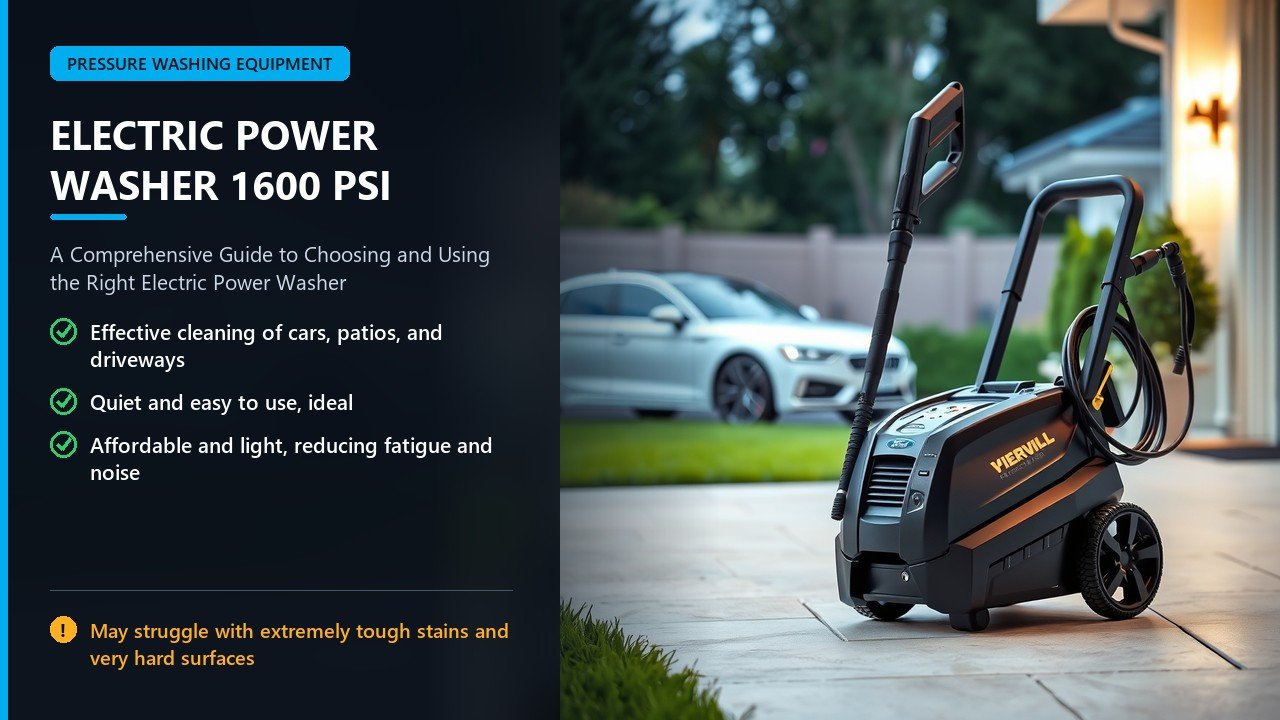
A 1600 PSI electric power washer occupies a sweet spot in the world of home cleaning. It is light, affordable, quiet, and easy to use, yet it delivers enough pressure to handle a surprising range of jobs, from washing a car to cleaning a patio. For homeowners who want effective cleaning without the weight, noise, and upkeep of a gas machine, a 1600 PSI electric unit is often exactly right. This guide explains what an electric power washer 1600 psi can actually do, where it excels, where it struggles, and how to get the most from one.
The key to understanding any pressure washer is that pressure alone does not tell the whole story. PSI, or pounds per square inch, measures the force of the water, while GPM, or gallons per minute, measures its volume. Together they determine cleaning power. A 1600 PSI electric unit paired with a reasonable flow can clean far more than its modest number suggests, especially when used with good technique and the right nozzle.
What 1600 PSI Actually Means
To judge a 1600 PSI machine, it helps to understand the relationship between pressure and flow.
PSI is force. Pressure determines how hard the water strikes a surface and how well it lifts dirt. Higher PSI is better for tough stains and hard surfaces.
GPM is volume. Flow determines how much water passes over the surface and how quickly the dirt is carried away. Higher GPM cleans faster and rinses better.
Cleaning units. Multiplying PSI by GPM gives a rough measure of cleaning power. A 1600 PSI machine with good flow can outperform a higher-PSI machine with very low flow on many jobs.
Electric flow. Most 1600 PSI electric washers deliver moderate flow suited to home cleaning. This balance is what makes them effective yet gentle enough for vehicles and painted surfaces.
So 1600 PSI is not just a modest number; combined with decent flow and the right nozzle, it provides ample force for everyday home cleaning tasks.
Where 1600 PSI Shines
A 1600 PSI electric unit handles a wide range of home cleaning jobs well.
Cars and vehicles. This is where electric washers shine. The moderate pressure removes dirt and grime without stripping wax or risking paint damage, and the light, quiet machine is convenient for frequent washes.
Patios and walkways. Light to moderate dirt on concrete, pavers, and stone lifts readily, especially with a surface cleaner or a focused nozzle.
Decks and fences. Wood and composite surfaces clean well at moderate pressure, which is gentle enough to avoid the deep gouging that high pressure can cause.
Siding and walls. Vinyl and painted siding clean up nicely, and with an extension wand, upper stories are reachable from the ground.
Outdoor furniture and grills. Patio furniture, grills, and play equipment clean quickly, and the lower pressure suits their materials.
Bikes, tools, and equipment. Garden tools, bikes, and outdoor equipment benefit from a fast, thorough rinse and wash.
Where 1600 PSI Struggles
Honesty about limits helps set expectations and avoid frustration.
Heavy oil and grease. Deeply embedded oil stains on concrete or driveways may resist 1600 PSI, which lacks the force of higher-PSI or hot-water machines.
Stripping and heavy paint removal. Removing paint, heavy coatings, or decades of grime is slow or impractical at this pressure.
Large commercial areas. Cleaning very large surfaces takes longer with a lower-flow machine, so commercial work favors stronger units.
Deep-set mildew and stains. Stains embedded deep in porous surfaces may need higher pressure, chemicals, or a hot-water machine.
The practical answer to these limits is often technique and chemistry: a pre-treatment with detergent, a longer dwell time, and the right nozzle extend what a 1600 PSI machine can do considerably.
Power, Amps, and the Electric Advantage
Electric 1600 PSI washers run on household power, and understanding the electrical side helps you use them well.
Amp draw. Electric pressure washers draw significant current, often needing a dedicated circuit or at least an outlet not shared with other heavy loads. A long, thin extension cord can cause voltage drop and poor performance, so use a heavy-duty, short cord.
Quiet operation. Electric motors are far quieter than gas engines, making them suitable for residential areas and early or late use.
No fuel or exhaust. There is no gas to store, no oil to mix, and no exhaust, so they can run in garages and near the house without fumes.
Low maintenance. Electric units need little beyond basic care, and they start instantly with a switch.
Light weight. Most 1600 PSI electric units are light and portable, easy to carry and store.
| Feature | 1600 PSI Electric |
|---|---|
| Noise | Quiet |
| Weight | Light, portable |
| Maintenance | Low |
| Fuel | None |
| Best use | Home, cars, patios, siding |
Nozzles and Technique
On a 1600 PSI machine, nozzle choice and technique make a large difference.
Use the right color. A white 40-degree nozzle is gentle and suits vehicles and siding, green 25-degree works for general cleaning, yellow 15-degree handles tougher spots, and a red 0-degree tip should be used sparingly for stubborn marks. A black soap nozzle applies detergent at low pressure.
Avoid the turbo on delicate surfaces. A turbo nozzle adds cleaning power but is too aggressive for paint, wood, and soft materials.
Keep a consistent distance. Move the nozzle steadily and keep an even distance, usually several inches to a foot from the surface, adjusting as you see results.
Work in overlaps. Overlap each pass and work top to bottom so dirt runs downward and rinse carries it away.
Pre-treat with detergent. Letting detergent dwell softens dirt and lets a modest machine clean like a stronger one.
Best Jobs for a 1600 PSI Washer
The following tasks are well matched to a 1600 PSI electric machine.
| Job | Suitability |
|---|---|
| Car washing | Excellent |
| Patio and sidewalk | Very good |
| Siding | Very good |
| Decks and fences | Good |
| Grills and furniture | Excellent |
| Heavy oil stains | Limited |
| Paint stripping | Poor |
Cleaning Cars With 1600 PSI
Car washing is where a 1600 PSI electric washer shines brightest, because the pressure is strong enough to blast away road grime yet gentle enough to protect paint.
Pre-rinse. Use a white nozzle to rinse loose dirt and soften grime before touching the car.
Foam and dwell. A foam cannon applies thick suds that lift dirt, letting you clean with fewer passes and less risk of scratching.
Wash and rinse. Work top to bottom, then rinse from the top down, keeping the nozzle at a safe distance.
Avoid the seams and paint edges. Keep the spray away from seals, and never use a concentrated stream on one spot for long.
With care, a 1600 PSI machine leaves a car spotless without the risk that high-PSI machines pose to paint and trim.
Choosing a 1600 PSI Electric Washer
When shopping, look beyond the PSI number to the features that determine how well the machine works and how long it lasts.
Real flow. Check the GPM, not just the PSI, since flow drives cleaning speed and rinsing.
Pump type. An axial cam pump is common and adequate for occasional use, while a wobble-plate or triplex pump lasts longer under frequent use. For frequent cleaning, favor better pumps.
Build quality. Look for sturdy construction, metal connections where it matters, and comfortable grips. Cheap plastic fittings crack and leak.
Onboard storage. Onboard storage for the gun, wand, and nozzles keeps accessories together and handy.
Quick connect fittings. Quick connects make nozzle and accessory changes fast and easy.
Accessories included. A set of nozzles, a foam cannon, or a surface cleaner add value and usefulness.
Warranty and support. A good warranty and available parts indicate a machine worth owning.
Maintenance for Electric Units
Electric pressure washers are low maintenance, but a few habits keep them running.
Use the inlet filter. Keep the water inlet filter clean to protect the pump from debris.
Check and change pump oil. Some electric pumps have oil reservoirs; check and change the oil as the manual specifies.
Inspect o-rings and hoses. Replace worn o-rings and inspect the high-pressure hose for cracks and leaks.
Clean nozzles. Clear debris from nozzles to maintain spray patterns and performance.
Winterize. Drain the machine and pump before freezing weather, and use pump saver fluid to prevent cracked components.
Store properly. Keep the unit clean, dry, and covered when not in use, away from freezing and dust.
Cleaning Patios, Driveways, and Concrete
Flat concrete is a common job for a 1600 PSI washer, and technique decides the result.
Pre-treat with detergent. For grimy concrete, apply detergent and let it dwell to soften dirt before rinsing.
Use a surface cleaner. A surface cleaner covers ground faster and more evenly than a wand, and a small one suits a 1600 PSI, moderate-flow machine.
Work in sections. Clean in overlapping passes, and rinse as you go to prevent dirty water from drying on the surface.
Mind the limits. Very stubborn stains may need repeated passes, higher pressure, or hot water. A 1600 PSI unit does well on everyday dirt but may not erase deep oil.
For typical patios and sidewalks with normal grime, a 1600 PSI machine delivers a satisfying clean, especially with a surface cleaner and a little detergent.
Siding, Decks, and Fences
Exterior surfaces reward a gentle touch, which suits a moderate-pressure machine.
Siding. Use a wide nozzle and work top to bottom, letting detergent loosen dirt. Avoid forcing water behind siding, and keep pressure gentle to protect finishes.
Decks. Wood needs care: too much pressure raises the grain and etches soft wood. Use a wide nozzle, keep your distance, and follow the grain, letting detergent do the work.
Fences. Cleaning a fence with a 1600 PSI washer is effective on both wood and vinyl, but keep pressure moderate on wood to avoid damage.
For these jobs, the moderate pressure of a 1600 PSI unit is actually an advantage, because it cleans without the risk of gouging that a stronger machine poses to softer materials.
Grills, Furniture, and Equipment
Some of the best uses for a 1600 PSI washer are the small, satisfying ones.
Grills. A pressure washer strips grease and residue from grill grates and bodies quickly, though care is needed around burners, valves, and electrical parts.
Patio furniture. Plastic, metal, and resin furniture clean fast, and the moderate pressure will not damage them.
Play equipment. Swing sets and playhouses benefit from a thorough wash, refreshing them before the season.
Garden tools and equipment. Shovels, wheelbarrows, and lawn equipment clean up quickly with a rinse and wash.
Bikes and toys. Bikes, scooters, and outdoor toys clean easily, though bearings and sensitive parts should be avoided or treated gently.
1600 PSI vs Higher-Pressure Machines
Deciding whether 1600 PSI is enough starts with comparing it to stronger units.
vs mid-range (2000-2800 PSI). Mid-range electric and light gas units offer more force for tough concrete and grime. A 1600 PSI machine is lighter, quieter, and gentler, and preferable for cars and delicate surfaces.
vs high-end (3000+ PSI). High-PSI gas machines handle paint stripping, heavy commercial cleaning, and deep stains, at the cost of weight, noise, fuel, and money.
vs hot water. Hot-water machines clean grease far better than any cold-water unit of similar pressure, but they are far larger and costlier.
The right choice depends on the job. For home cleaning, cars, and most outdoor surfaces, 1600 PSI is enough. For heavy or commercial work, a stronger or hot-water machine is worth it.
| Machine | Best For |
|---|---|
| 1600 PSI electric | Cars, patios, siding, furniture |
| 2000-2800 PSI | Tougher concrete, larger jobs |
| 3000+ PSI gas | Stripping, commercial, deep stains |
| Hot water | Grease, sanitation, industrial |
Accessories Worth Adding
A few accessories make a 1600 PSI electric washer far more capable.
Foam cannon. Applies thick detergent foam, ideal for car washing and softening dirt before rinsing.
Surface cleaner. Speeds up flatwork and improves evenness, matched to the machine’s flow.
Extension wand. Extends reach for siding, gutters, and vehicles without a ladder.
Extra nozzle set. Spares and specialty tips keep the machine versatile and replace lost nozzles.
Quick connect set. Makes setup and accessory swaps fast and simple.
Hose reel and longer hose. Improve reach and storage, and reduce cord and hose tangles.
Inlet filter and pump saver. Protect the pump from debris and freezing, extending the machine’s life.
Water Supply and Setup
A 1600 PSI electric washer needs a good water supply to perform well.
Adequate flow at the tap. The machine draws water faster than many realize, so ensure the tap supplies enough flow. A weak tap starves the pump.
A short, wide supply hose. Use a reinforced garden hose of at least 5/8 inch, kept short, so flow stays strong.
A clean inlet filter. The filter at the inlet traps debris that would otherwise damage the pump. Check and clean it regularly.
A proper outlet and cord. Use a heavy-duty, short extension cord and an outlet capable of the machine’s draw to avoid voltage drop.
Good drainage. Plan where the water will run so you do not flood a low area or wash dirt onto clean surfaces.
Getting the supply and setup right is often the difference between a machine that cleans impressively and one that sputters and disappoints.
Safety Tips
Even at moderate pressure, safety matters.
Never aim at people or pets. High-pressure water can injure, even at 1600 PSI.
Protect eyes and skin. Wear eye protection, and avoid spraying into the wind.
Watch for electrical hazards. Keep the machine and its cord away from standing water, and never spray near outlets or fixtures.
Avoid close-range spraying. Even moderate pressure can cut skin, damage seals, and etch surfaces at close range.
Be careful on ladders. The kickback of the spray can unbalance you. Keep both feet planted.
Common Mistakes to Avoid
Assuming low PSI means weak cleaning. Combined with good flow and technique, 1600 PSI cleans far more than many expect.
Using an under-sized extension cord. A thin or long cord causes voltage drop and poor performance. Use a heavy-duty, short cord.
Pointing the nozzle too close. Even 1600 PSI can damage paint, wood, and seals at close range. Keep a steady distance.
Ignoring detergent. Chemistry lets a modest machine clean like a stronger one. Pre-treat and let detergent dwell.
Using a turbo nozzle on everything. Turbo tips are aggressive and can damage soft surfaces. Reserve them for concrete and masonry.
Skipping winterizing. Freezing water cracks pumps and fittings. Always drain and protect the machine before winter.
Setting expectations too high. Expecting a 1600 PSI electric unit to strip paint or remove deep oil leads to disappointment. Match the machine to the job.
Real-World Examples
Seeing a 1600 PSI washer in action clarifies what to expect.
Weekend car wash. A homeowner pre-rinses with a wide nozzle, foams the car with a cannon, washes with a mitt, and rinses clean. The car shines, and the paint is never at risk, all with a machine that fits in a corner of the garage.
Spring patio refresh. A patio covered in winter grime gets a detergent pre-treatment, then a surface cleaner pass. The concrete brightens noticeably in a short time.
Siding cleanup. Mildew-streaked siding is treated with detergent and rinsed from the ground with an extension wand, restoring its appearance without a ladder.
Grill and furniture day. The grill, patio chairs, and a bike all get washed in one session, with a wide nozzle that protects the finishes.
In each case, the job suits the machine’s pressure and flow, and the results are satisfying. This is what a 1600 PSI electric washer is built for: the everyday cleaning that fills most of the year.
Frequently Asked Questions
What can a 1600 PSI electric pressure washer clean? Cars, patios, sidewalks, siding, decks, grills, furniture, bikes, and tools. It handles everyday home cleaning well, though heavy oil and paint stripping are beyond it.
Is 1600 PSI enough for cleaning a driveway? For light to moderate dirt, yes, especially with a surface cleaner. For heavy stains and deep grime, a higher-PSI or hot-water machine works better.
Is 1600 PSI too strong for a car? No, it is well suited to cars when used with a wider nozzle and a safe distance. Avoid close-range use and turbo tips on paint.
What amp circuit does a 1600 PSI electric washer need? Many draw enough current to need a dedicated outlet, and some higher-powered models need a 20-amp circuit. Check the manual and use a heavy-duty cord.
How does 1600 PSI compare to a gas washer? Gas units generally offer higher PSI and GPM and never-ending runtime, but they are louder, heavier, and need fuel and more maintenance. A 1600 PSI electric unit suits most home jobs.
Can I use a foam cannon with a 1600 PSI washer? Yes, and it works well for car washing. Choose the correct orifice for the machine’s flow to get thick foam.
How long will a 1600 PSI electric washer last? With basic maintenance, a quality unit can last years of regular home use. Durability depends on pump type and build quality.
Is a 1600 PSI washer good for cleaning gutters? With an extension wand and a gutter attachment, yes, it can flush gutters from the ground, provided the pressure and reach suit the height.
Can I clean a wooden deck with 1600 PSI? Yes, but use a wide nozzle, keep your distance, and follow the grain to avoid etching. Detergent helps reduce the pressure needed.
Does a 1600 PSI washer use a lot of water? It uses less than a garden hose running continuously, because the high-pressure spray cleans faster and rinses with a focused stream rather than a wide flow.
What size extension cord should I use? Use a heavy-duty, grounded cord rated for the machine’s amperage, and keep it as short as practical to avoid voltage drop and performance loss.
Final Thoughts
An electric power washer 1600 psi is one of the most practical tools a homeowner can own. It is light, quiet, and easy to use, and it delivers enough cleaning for cars, patios, siding, decks, and countless other jobs. It will not strip paint or erase decades of oil, but for the cleaning most people actually do, 1600 PSI is plenty.
Understanding the balance of pressure and flow, using the correct nozzle and technique, and applying detergent wisely will help you get results far beyond the modest number on the box. Choose a well-built machine, maintain it as the seasons change, and a 1600 PSI electric power washer will serve you reliably for years of clean cars, tidy patios, and fresh-looking siding.