When people picture a commercial pressure washer, they usually imagine a loud gas machine rolling across a parking lot. But a growing share of serious cleaning happens indoors, in places where exhaust fumes are unacceptable and noise is a problem. That is the world of the commercial electric pressure washer 3000 psi, a machine that delivers genuine cleaning power without a gas engine. From food plants to garages and industrial floors, electric commercial washers fill a role gas machines cannot.
A 3000 PSI electric unit is not a toy or a light home model. It is a heavy-duty machine built for professional use, with a durable pump, a substantial motor, and the components to run for long stretches. The trade-off is that it needs substantial electrical power, often more than a household outlet provides. This guide explains what these machines are, where they fit, and how to choose and use one.
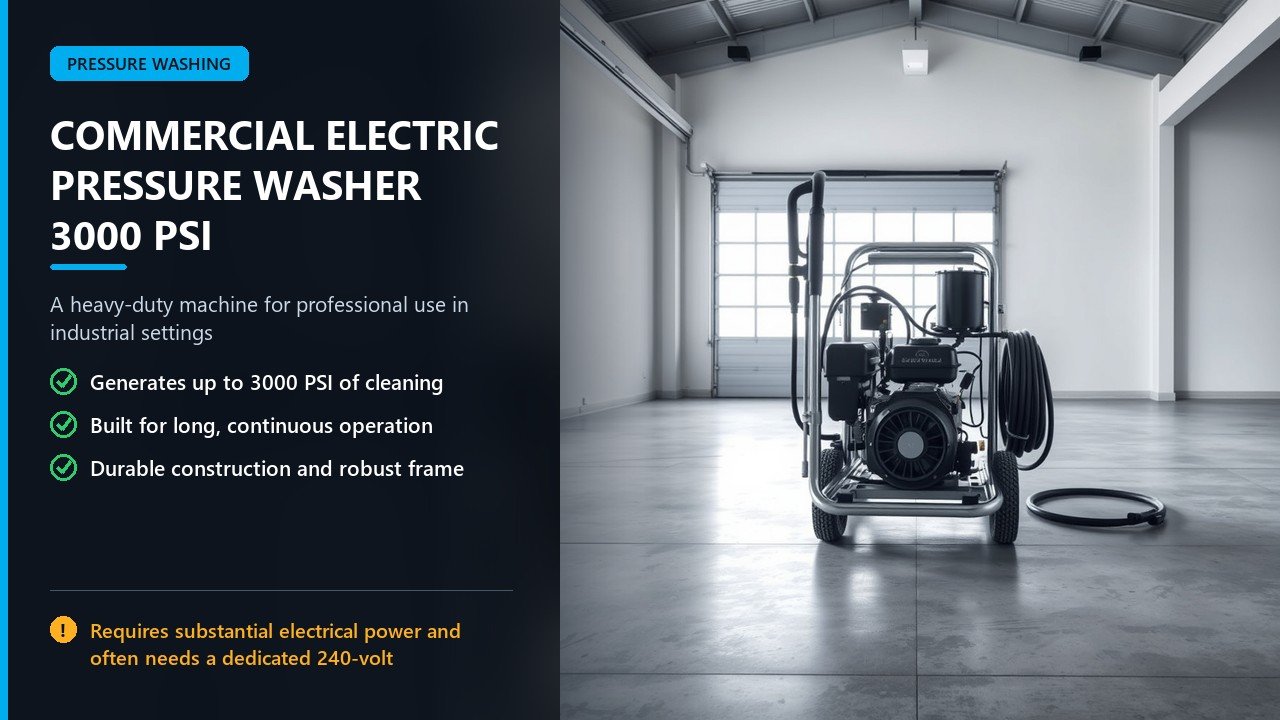
What a Commercial Electric 3000 PSI Washer Is
A commercial electric pressure washer is a machine built for professional use with an electric motor instead of a gas engine.
Power source. Instead of gasoline, it runs on electricity, often 240 volts, drawing enough current to drive a powerful motor and pump.
Pressure. At 3000 PSI, it generates serious cleaning force, rivaling many gas machines of similar class.
Duty cycle. Commercial electric machines are built for long, continuous operation, unlike light home units designed for short bursts.
Build quality. Commercial units use durable pumps, often triplex, heavy-duty motors, and robust frames suited to daily use.
Intended settings. They suit indoor and noise-sensitive environments, and places where exhaust cannot be vented.
Why Choose Electric Over Gas
Commercial electric machines offer distinct advantages in the right settings.
No exhaust. With no engine, there are no fumes, so the machine can run indoors or in enclosed areas without ventilation concerns.
Quieter operation. Electric motors run far quieter than gas engines, suiting settings where noise is restricted, like residential areas or indoor facilities.
No fuel handling. No gasoline to store, and no fuel costs or refueling downtime.
Less maintenance. No engine means no oil changes, spark plugs, or air filters on the power side, reducing upkeep.
Consistent power. Electric motors deliver steady performance without the fluctuations of an engine under load.
Instant start. A switch starts the machine, with no pull cords or warm-up.
Where indoor use, quiet operation, and low maintenance matter, electric commercial washers win decisively. Where mobility and independence from power are essential, gas remains the choice.
Where They Are Used
Commercial electric 3000 PSI washers suit specific, often indoor, environments.
Food processing plants. These facilities need sanitation and frequent washing of floors and equipment, often with hot water, and cannot tolerate exhaust indoors.
Commercial kitchens. Hoods, floors, and equipment are cleaned regularly, and the electric machine suits indoor use.
Industrial floors. Factories and warehouses clean concrete floors and machinery, often with a surface cleaner attached.
Automotive shops. Garages clean bays, lifts, and equipment indoors, where a gas engine would be a hazard.
Supermarkets and retail. Loading docks, back rooms, and entryways benefit from quiet, exhaust-free cleaning.
Car wash interiors and detail bays. Enclosed detailing areas favor electric machines.
| Setting | Why Electric |
|---|---|
| Food plants | Indoor sanitation, no exhaust |
| Commercial kitchens | Indoor, quiet |
| Industrial floors | Large indoor areas |
| Automotive shops | Indoor, safety |
| Retail/docks | Quiet, exhaust-free |
Power Requirements
The electrical demands of a 3000 PSI electric machine are significant and must be planned.
Voltage. Many commercial units run on 240 volts or higher, not standard 120-volt household power, to support the motor’s draw.
Amperage. Higher power means significant current draw, often requiring a dedicated circuit rated for the load.
Hardwiring. Some units are hardwired rather than plugged in, needing an electrician to install.
Circuit protection. Proper breakers and grounding are essential, and a qualified electrician should handle installation.
Extension cords. If a cord is used, it must be heavy-duty and short to avoid voltage drop and overheating.
Generator use. Running a 240-volt electric machine from a generator requires a generator sized to meet the demand.
Duty Cycle and Durability
Commercial use demands machines built to run hard.
Duty cycle. Commercial electric washers are designed for continuous or near-continuous operation, unlike light machines that need rest periods.
Pump quality. Commercial units typically use triplex pumps with ceramic plungers and quality seals, built for pressure and hours of use.
Motor quality. Industrial motors, often with better cooling and thermal protection, withstand long runs.
Frame and components. Sturdy frames, quality hoses, and durable guns suit daily commercial work.
Serviceability. Commercial machines are designed to be serviced, with replaceable parts that keep them running for years.
A machine meant for occasional home use will not survive commercial duty. When buying for business, prioritize duty cycle and build quality over a lower price.
Pressure and Flow Ratings
As with any pressure washer, PSI and GPM together define capability.
PSI for force. 3000 PSI provides strong cleaning force for tough soil and hard surfaces.
GPM for speed. Commercial work values high flow for faster cleaning and driving accessories like surface cleaners.
Balancing both. A commercial machine with 3000 PSI and high GPM cleans quickly and effectively, making it efficient for large areas.
Accessory matching. Surface cleaners and other accessories must be sized to the machine’s flow to perform well.
Cold vs Hot Water
Some commercial electric washers offer hot water, which is important for certain jobs.
Cold water. Adequate for many cleaning tasks and simpler to build and run.
Electric-heated hot water. Electric elements heat the water without exhaust, allowing indoor use, which is ideal for food and sanitation cleaning.
Heat and grease. Hot water removes grease and oil far better, which is often the reason a commercial electric machine is chosen.
Power demand. Heating water electrically requires substantial power, so heated units demand even more from the electrical supply.
Choosing. Choose hot water if grease and sanitation matter; otherwise, cold water is simpler and cheaper.
Features to Look For
Commercial electric machines offer features that improve reliability and convenience.
Auto start/stop. The motor starts with the trigger and stops when released, saving power and reducing wear.
Thermal protection. Thermal overload protection protects the motor during heavy use.
Total stop system. Some units cut power when the trigger is released, further extending motor life.
Adjustable pressure or temperature. Some machines allow tuning to the surface and task.
Chemical injection. Built-in detergent systems simplify cleaning.
Surface cleaner compatibility. Higher flow supports surface cleaners for fast flatwork.
Hose reels and storage. Reels and onboard storage keep hoses and accessories organized.
Choosing the Right Machine
Selecting a commercial electric 3000 PSI washer starts with the application.
Confirm the power available. Ensure your site has the voltage and amperage the machine needs, and plan installation.
Match duty cycle. Choose a machine rated for your workload, whether intermittent or continuous.
Decide on hot water. If grease and sanitation are central, choose a heated unit; otherwise, cold water suffices.
Match pressure and flow. Balance PSI and GPM to your tasks, favoring flow for large areas.
Consider accessories. Surface cleaners, foamers, and reels add value and speed work.
Choose a serviceable machine. Repairable, supported models last longer and cost less over time.
Electric vs Gas: A Direct Comparison
Comparing the two clarifies when electric is the better choice.
| Factor | Commercial Electric | Gas |
|---|---|---|
| Exhaust | None | Yes, needs ventilation |
| Noise | Quiet | Loud |
| Power source | Outlet, often 240V | Gasoline |
| Mobility | Limited by cord | Fully portable |
| Maintenance | Lower (no engine) | Higher (engine service) |
| Indoor use | Excellent | Unsafe |
| Best for | Indoor, quiet settings | Outdoor, remote work |
The pattern is clear. Gas machines win on portability and independence from power, while electric machines win on indoor suitability, quietness, and lower maintenance. For an indoor facility with adequate power, the electric machine is usually the practical answer.
Hot Water in Detail
Hot water deserves attention, because it often justifies the electric choice.
Why hot water helps. Heat dissolves grease and oil far better than cold water, speeds cleaning, reduces the need for chemicals, and supports sanitation.
Electric heating. Electric elements heat the water without combustion or exhaust, which is why hot-water electric machines suit indoor use.
Power cost. Electric heating draws substantial power, so a heated unit requires a strong electrical supply and adds operating cost.
Temperature control. Many units allow adjusting temperature to match the surface and the soil.
When to choose it. If your cleaning involves grease, oil, or sanitation, hot water pays off. For general dirt on hard surfaces, cold water may suffice.
In food and industrial settings, hot water is often the main reason for choosing an electric machine in the first place, since the alternative, a fuel-fired heater, brings exhaust back into the picture.
Accessories for Commercial Electric Cleaning
Accessories extend a commercial machine’s capability.
Surface cleaners. Speed up large flatwork and improve evenness, matched to the machine’s flow.
Foam cannons and injectors. Apply detergent evenly for faster, more thorough cleaning.
Hose reels. Keep high-pressure hoses organized, protected, and quick to deploy.
Extension wands. Extend reach for walls, ceilings, and equipment.
Rotating nozzles. Add cleaning power on hard surfaces, used with care.
Water treatment. Filters and softeners protect pumps and heaters from scale and debris, which matters especially with hard water.
Floor cleaning tools. Specialized attachments for floors suit industrial and food-plant cleaning.
A well-chosen accessory set turns the machine into a complete cleaning system suited to the facility’s specific needs.
Installation and Setup
Because power and water are fixed, installation deserves planning.
Electrical installation. Have a qualified electrician install the circuit or hardwiring, sized for the machine’s draw, with proper grounding and protection.
Water supply. Plumb an adequate supply with good flow and a clean inlet filter, and consider a shutoff valve nearby.
Location. Place the machine where it is protected, accessible for service, and convenient to the work area.
Drainage. Plan for wastewater, which in commercial settings may require containment, treatment, or permits.
Hose and reel placement. Mount reels and route hoses to reach the work area efficiently.
Testing. After installation, run the machine, check for leaks, and confirm the electrical supply holds under load.
A properly planned installation lets the machine deliver reliable performance for years, while a rushed one invites electrical and performance problems.
Operating Tips for Best Results
A few habits get the most from a commercial electric machine.
Maintain a strong supply. Ensure the water supply exceeds the machine’s flow, and keep the inlet filter clean.
Use the right nozzle. Match the nozzle to the surface, and reserve turbo nozzles for hard materials.
Pre-treat with detergent. Letting detergent dwell softens soil and speeds the job.
Work in sections. Clean methodically to avoid missed spots and uneven results.
Respect the duty cycle. Even a commercial machine benefits from following the manufacturer’s duty rating.
Rinse after detergent. A clean-water rinse avoids residue on surfaces.
Watch for warnings. Thermal protection and other safeguards signal when the machine needs a break or service.
Cost and Return
A commercial electric washer costs more than a home unit, so weighing the investment matters.
Up-front cost. The machine, electrical installation, and any plumbing add to the initial expense.
Operating cost. Electricity for the motor, and heating if applicable, plus detergent and maintenance.
Lower maintenance. No engine service means lower routine maintenance than a gas machine.
Labor savings. Faster, more consistent cleaning and no exhaust-management hassles save labor time.
Compliance value. Being able to clean indoors safely and legally is itself a major benefit in many facilities.
For facilities that must clean indoors or quietly, the return is often clear: the electric machine enables work that a gas machine simply cannot do, while its lower maintenance and strong performance pay back over time.
Common Mistakes to Avoid
Underestimating power needs. A commercial electric machine often needs 240 volts and a dedicated circuit. Plan the electrical supply.
Using a thin extension cord. An undersized or long cord causes voltage drop and overheating. Use a heavy-duty, short cord, if any.
Choosing a home-duty machine for commercial work. Light machines fail quickly under constant use. Match duty cycle to the workload.
Ignoring hot water needs. If grease and sanitation matter, a cold-water unit may disappoint. Choose heating deliberately.
Neglecting maintenance. Pumps, seals, and electrical components need care. Follow the service schedule.
Disregarding water supply. An inadequate supply starves the pump. Ensure ample flow and a clean inlet filter.
Overlooking drainage and compliance. Commercial washing often requires wastewater control. Plan for it.
Real-World Examples
Seeing the machine in context shows where it fits.
A food processing plant. A hot-water electric unit cleans floors and equipment during sanitation shifts, using hot water to cut grease and sanitize without introducing exhaust into a clean environment.
An automotive service center. An electric 3000 PSI machine cleans bays, lifts, and floors indoors, quietly and safely, with a surface cleaner for the concrete.
A warehouse. A cold-water electric unit with a surface cleaner keeps large concrete floors clean, running for long stretches without refueling.
A commercial kitchen. Grease-covered floors and equipment are cleaned with hot water indoors, with no fumes to worry about in an enclosed space.
In each case, the electric machine enables indoor, quiet, exhaust-free cleaning with the power to finish serious jobs, which is exactly why commercial electric washers exist.
Water Supply and Drainage
Commercial electric machines depend on a strong supply and thoughtful drainage.
Flow matters. The supply must exceed the machine’s GPM. An inadequate supply starves the pump and reduces performance.
Supply lines. Use adequately sized plumbing and a short, wide supply hose, and keep the inlet filter clean.
Water quality. Filters and softeners protect the pump and any heater, especially with hard water that causes scale.
Drainage. Plan where wash water goes, and in commercial settings, provide containment, separation, or treatment as required.
Compliance. Local rules may govern wash water discharge, so check requirements and design accordingly.
Because commercial cleaning happens repeatedly in one place, getting the supply and drainage right is a permanent part of the setup, not an afterthought.
Frequently Asked Questions
What is a commercial electric pressure washer 3000 PSI used for? Indoor and noise-sensitive cleaning in food plants, kitchens, industrial floors, automotive shops, and retail settings, including sanitation and grease removal.
Can a 3000 PSI electric machine match a gas washer? It can match or approach gas performance in cleaning power, while offering quieter, exhaust-free operation, though it needs a strong power supply.
What power does a 3000 PSI electric machine need? Many require 240 volts on a dedicated circuit, and some are hardwired. Check the machine’s specs and consult an electrician.
Are commercial electric pressure washers good for hot water? Some are made for hot water, often with electric heating, which suits indoor sanitation and grease cleaning without exhaust.
How long can a commercial electric washer run? Commercial machines are built for long duty cycles, unlike home units, though you should follow the manufacturer’s duty rating.
Can I use a surface cleaner with a 3000 PSI electric washer? Yes, if the machine’s flow drives the cleaner. Match the cleaner size to the machine’s GPM for best results.
Do they need much maintenance? Less than gas machines on the power side, since there is no engine, but pumps, seals, and electrical parts still need regular service.
Can I run a commercial electric washer from a generator? Yes, if the generator supplies the required voltage and amperage. Undersized generators cause poor performance or damage.
Is 3000 PSI enough for commercial cleaning? For most indoor commercial tasks, yes, especially with good flow and hot water where grease is involved. Very heavy jobs may call for higher pressure or a different machine.
What flow rate should I look for? Higher flow cleans faster and drives surface cleaners, so choose a GPM that suits your largest jobs and supports the accessories you plan to use.
Can a commercial electric washer be used outdoors? Yes, with proper electrical safety and weather protection, though its main advantage is indoor use.
How long do these machines last? With proper maintenance and a suitable workload, a commercial electric washer can last many years of regular use.
Why is my electric washer tripping the breaker? It may be on an inadequate circuit or sharing a load with other equipment. Use a dedicated circuit sized for the machine, installed by an electrician.
Final Thoughts
A commercial electric pressure washer 3000 psi fills a role gas machines cannot: powerful cleaning without exhaust, indoors and in noise-sensitive settings. For food plants, industrial floors, automotive shops, and any enclosed space, it delivers serious performance with less maintenance and no fumes.
Choose a machine whose voltage and duty cycle match your operation, decide whether you need hot water, and plan the electrical supply with a professional. Maintain it well and match the water supply properly, and a commercial electric 3000 PSI washer will deliver reliable, powerful cleaning for years where a gas engine simply would not be welcome.