On a cattle ranch forty minutes from the nearest electrical outlet, a hired hand faced a fleet of mud-caked tractors, a greasy service bay, and a deadline before the equipment moved out. A cold water machine would have taken all day and left the oil film behind. An electric unit was useless without a power source. The rig that solved the problem was a diesel hot pressure washer — a self-contained skid that fired its own burner, drove its own pump, and heated water to nearly 200°F using the same fuel already sitting in the ranch’s tanks. No cord, no gas station run, no compromise. That is the promise of diesel hot water cleaning: massive capability, total independence, and performance that does not care how remote the job is.
Diesel hot pressure washers occupy the top tier of portable cleaning equipment. They are built for oil fields, farms, construction sites, fleets, factories, and any place where grease, oil, and grime meet the reality of no dependable power and no room for downtime. This guide explains how they work, what separates a genuine diesel hot water machine from its cousins, where they earn their keep, and how to choose, run, and maintain one without wrecking it or hurting anyone.
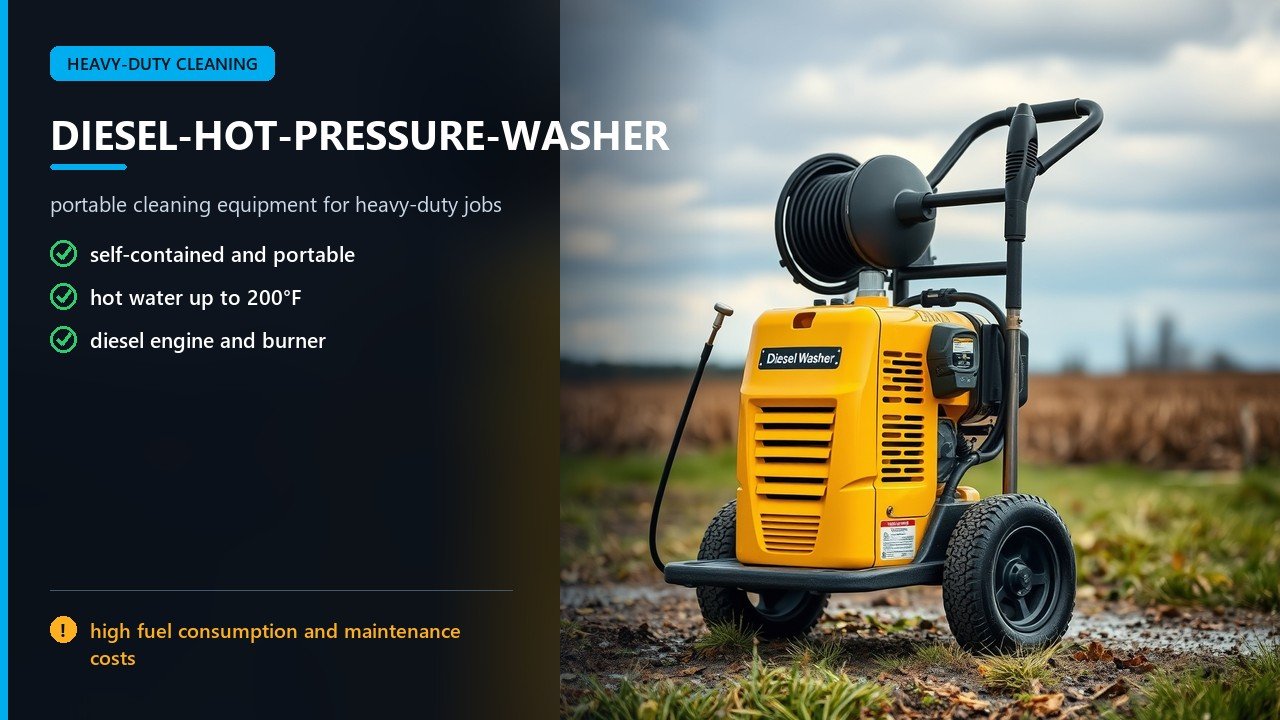
What “Diesel Hot Pressure Washer” Actually Means
The phrase contains two separate diesel systems, and confusing them is the first mistake buyers make. On many heavy-duty units, diesel does double duty: a diesel engine drives the pump, and a diesel-fired burner heats the water. Those are two different fuel systems sharing the same fuel.
The first system is the engine. A diesel engine turns the pump, which pressurizes the water. This replaces an electric motor, which is why the machine needs no wall outlet.
The second system is the burner. A diesel-fired burner ignites fuel inside a combustion chamber and heats a coil of steel tubing — the heat exchanger — through which the pressurized water flows. This is what turns cold water into hot water at temperatures commonly reaching 195°F to 250°F depending on the model.
How the Machine Works, Step by Step
Understanding the flow of water, fuel, and heat makes the machine easy to operate and diagnose.
Step 1 — The engine starts. A diesel engine is started by a key or button, drawing fuel from an onboard tank. Unlike a small gas engine, a diesel workhorse typically has a water-cooled, multi-cylinder design with oil filtration, built for long, hard hours.
Step 2 — The pump builds pressure. The engine drives a triplex plunger pump — the same premium pump type used on the best machines — building pressure and flow. Belt drive is common on heavy units because it runs cooler, quieter, and lasts longer under continuous duty.
Step 3 — The burner fires. Once water is flowing, the burner ignites diesel fuel inside the combustion chamber. The flame wraps around the coil, transferring intense heat to the water inside the tubing.
Step 4 — Water heats in the coil. The pressurized water travels through the heat exchanger coil and exits at the target temperature. The coil is usually Schedule 80 or 160 steel, elliptically wound and sealed with a ceramic blanket to hold heat and resist wear.
Step 5 — Control and protection. An adjustable thermostat sets the temperature, and safety systems — such as a flame-out control and high-temperature limit switch — shut the burner down if something goes wrong. An unloader valve manages pressure when the trigger is released.
Step 6 — The spray does the work. Hot, pressurized water leaves the nozzle and melts grease and oil that cold water would only push around. A downstream soap injector adds detergent when the job calls for it.
Why Hot Water Changes the Job
The entire reason to pay for a diesel hot water machine is the physics of heat. Cold water removes dirt through force and detergent alone. Hot water adds thermal energy that breaks the chemical bonds holding grease, oil, and baked-on residue to a surface. It lowers the surface tension of the water so it creeps into the pores of concrete and metal, lifts contamination out, and emulsifies fats into droplets that rinse cleanly away.
The practical difference is enormous. A greasy engine block, an oily shop floor, or a dumpster pad that would take an hour with cold water can come clean in minutes with hot water and less detergent. Heat also helps sanitize surfaces, which matters in food processing and agricultural settings. And because diesel burners deliver intense, sustained heat, they can handle the very toughest soils — gum, tree sap, hydraulic fluid, and caked-on mud — that no cold water machine can touch efficiently.
Diesel vs Propane vs Gas vs Electric
No single fuel wins everywhere. The right choice depends on where you work, what fuel is available, and how much heat and independence you need. The table below lays out the trade-offs.
| Fuel Type | Heat / Output | Best For | Watch Out For |
|---|---|---|---|
| Diesel hot water | Up to 195–250°F, powerful | Remote sites, oil fields, farms, fleets, heavy industry | Exhaust odor, fuel handling, ventilation |
| Propane hot water | 150–200°F, clean burn | Food plants, indoor-friendly, mobile rigs | Cylinder storage, cold-weather pressure drop |
| Gas (petrol) engine, cold | Cold water only | Home, light commercial, portability | No heat, so grease is a struggle |
| Electric (120/240V) | Cold or moderate heat | Indoor, quiet sites with reliable power | Tethered to an outlet |
| Natural gas | 180–200°F, steady | Fixed installations with a gas line | Not portable |
Diesel’s defining advantage is independence. It brings its own fuel, generates its own power, and goes anywhere. That is why it dominates the operations where a failure to clean costs real money and a power outlet is a fantasy.
The Diesel Advantage in Detail
Complete self-containment. No power cord, no generator, no extension cord, no compromise. A diesel hot water skid runs off its own battery, alternator, and fuel tank. That makes it the only option at many remote job sites.
Serious pressure and flow. Diesel units commonly run 3,000 to 4,000+ PSI with 4 to 8 GPM, moving large volumes of hot water to clean big surfaces fast. A wider nozzle pattern plus high flow equals rapid area coverage on fleets and equipment.
Sustained high heat. Diesel burners reach very high temperatures and maintain them, which is essential for the toughest degreasing and for steam cleaning on capable models. Some combination units produce saturated steam for the hardest cleaning challenges.
Built for continuous duty. These machines are engineered to run all day. Engineers often rate pumps, engines, coils, and drives at a margin below their maximum so they survive endless hours of work.
Fuel is already on site. Farms, fleets, and industrial sites usually have diesel on hand. That removes the logistics headache that propane cylinders or gasoline runs create.
Long run time. Large onboard tanks — sometimes 20 to 100 gallons — let crews work for hours between refuels, so the job never stops for fuel.
Temperature, Recovery, and Why Both Matter
A diesel hot water machine can do two things that define its real-world power: reach a high temperature, and recover that temperature quickly after a burst of cold water enters the system. Both matter, and they are not the same thing.
Reaching temperature is about the burner and coil. A well-designed diesel burner can push water toward 195°F to 250°F. But that peak number tells only part of the story. When the trigger is released, cold replacement water floods the coil, and the burner has to heat it back up. The speed of that recovery — how fast the outlet temperature climbs back to target — decides how continuously you can clean without watching the temperature gauge dip.
High BTU burners recover fast. Larger coils hold more heat and smooth out temperature swings. This is why industrial units pair big burners with heavy Schedule 80 or 160 coils. The result is hot water that stays hot through an entire pass, instead of fading whenever you pause. On a big job, that consistency is the difference between uniform, fast cleaning and a frustrating cycle of waiting for heat.
There is a technique that squeezes more from any hot water machine: give the water a moment to heat fully before you pull the trigger. That brief dwell lets the burner bring the coil to temperature, so the first blast is actually hot rather than lukewarm. Combine that with a steady, overlapping pass and you clean a greasy surface in one smooth motion instead of repeated attempts.
Where Diesel Hot Water Machines Earn Their Keep
These rigs are specialists, and they shine in demanding environments.
Oil fields and refineries. Heavy hydrocarbon soils, remote locations, and no tolerance for failure make diesel hot water the standard. Continuous stripping and cleaning are part of daily life in these operations.
Farms and ranches. Tractors, implements, milking equipment, and service bays all collect grease, mud, and oil. A diesel hot water machine cleans equipment in the field and sanitizes where needed.
Fleet washing and trucking. A rig that returns coated in road film, grease, and grime needs hot water and flow. Diesel units wash trailers and vehicles quickly and independently.
Construction and heavy equipment. Hydraulic fluid, caked mud, and diesel residue come off far faster with heat. The machine travels with the crew to wherever the equipment sits.
Industrial plants and mills. Factory floors, machinery, and process equipment need hot water degreasing at scale. Diesel skids fit right into an industrial environment already running on diesel.
Food processing and agriculture. Sanitation is critical, and hot water both cleans and helps kill bacteria. Diesel units handle heavy organic residue with heat and detergent.
Industrial painting and surface prep. Cleaning and degreasing before coatings demands thorough removal of oils and contaminants. Hot water delivers a surface ready for paint or sealant.
A Day in the Life of a Diesel Hot Water Rig
Picture a municipal fleet yard on a Monday morning. Ten dump trucks, two street sweepers, and a row of pickup trucks all came back Friday coated in road grime, diesel film, and hydraulic residue. The crew has one diesel hot water skid and a trailer-mounted water tank, positioned in the middle of the yard with no power cord in sight.
The operator checks the engine oil, the pump oil, and the fuel filter, then hits the key. The diesel engine settles into a steady idle. Water from the onboard tank flows to the pump, and the trigger is squeezed to purge the lines. The burner lights with a low roar, and within a minute the outlet water is near 190°F. The crew starts on the first truck: hot water and a downstream soap injection strip the road film in one pass, then a clean hot rinse finishes the panel. A turbo nozzle handles the baked-on grime on the undercarriage and the concrete pad underneath.
By mid-morning the first three trucks shine, the dumpster pad is spotless, and the machine has run without a single pause for power, fuel, or cooldown. That continuity — fuel on board, power on board, water on board — is the whole point. A cold water unit would have needed detergent and scrubbing; an electric unit would have needed an outlet it did not have. The diesel hot water rig simply works until the job is done.
Now replay that scene on a farm at dusk, where a single tractor and a greasy service bay need cleaning before harvest. Same machine, same independence, same result. This is why diesel hot water equipment is the backbone of operations that cannot wait for ideal conditions.
Key Specifications to Compare
When you shop, these numbers tell you almost everything about capability. Compare them rather than a single marketing headline.
| Specification | What It Means | Typical Range |
|---|---|---|
| PSI | Cleaning force at the tip | 3,000–4,000+ |
| GPM | Water volume for fast area coverage | 3.5–8 |
| Engine HP | Power to drive the pump continuously | 10–60 HP |
| Burner output | Heat added and recovery speed | Varies by model |
| Max temperature | How hot the water can get | 195–250°F |
| Fuel tanks | Run time between refuels | 20–100 gal |
| Drive type | Cooler, longer-lasting pump drive | Belt or gearbox |
How to Choose the Right Diesel Hot Water Unit
PSI and GPM balance. Pressure bites into stubborn soils; flow cleans area quickly. For fleet and flat-surface work, favor higher GPM with solid pressure. For tough spots, favor pressure.
Engine and pump quality. Look for a heavy-duty multi-cylinder diesel engine with oil filtration and a triplex plunger pump with an oil bath crankcase, stainless valves, and a brass manifold. These are the components that decide lifespan.
Coil construction. A Schedule 80 or 160 steel coil, elliptically wound and ceramic-blanketed, resists vibration and heat failure far better than a thin coil. A stainless housing protects it further.
Burner control and safety. Insist on an adjustable thermostat, a flame-out safety control, and a high-temperature limit switch. These protect the coil and the operator.
Self-containment. Decide whether you need a skid, a trailer with a water tank, or a portable cart. If you work where there is no water supply either, a tank makes the system truly self-sufficient. Browse pressure washing trailers and equipment to see how complete mobile rigs are configured.
Fuel and tank capacity. Size the tanks to your longest uninterrupted job so you are not refueling mid-clean. A water-separating fuel filter protects the burner and engine from contaminated fuel.
Setting Up and Operating Safely
These are powerful machines, and disciplined operation keeps them running and everyone safe. Follow a consistent startup and shutdown routine.
Before you start: Check pump oil and engine oil, inspect hoses and fittings, confirm the burner switch is off, and place the unit on flat, stable ground with the brake set. Verify fuel and water supplies.
Purge air: Turn on the water supply and squeeze the trigger to flush air from the system before starting. Running the pump dry destroys it in seconds.
Start the engine: Start the engine and let it run at operating speed. Confirm steady pressure at the gun and no leaks.
Fire the burner: With water flowing, switch on the burner and set the thermostat to your target temperature. Give the water a moment to heat before cleaning.
Clean methodically: Keep a steady distance from the surface, use the right nozzle, and work top to bottom. Match heat and pressure to the surface — hot water plus high pressure can damage soft materials.
Shut down in order: Turn off the burner first, then the engine, then relieve pressure and shut off the water. Drain the system and add pump protector if freezing weather is coming.
Fuel Handling, Ventilation, and Safety
Diesel brings real hazards, and the rules are non-negotiable.
Ventilate the exhaust. All fuel-burning pressure washers — diesel, propane, or gasoline — must be operated outdoors or in a properly ventilated area. Carbon monoxide from the engine and burner is invisible and lethal. Never run one in a closed space.
Store fuel safely. Keep diesel in approved containers, away from heat and flame, in a well-ventilated area. Never refuel a hot machine.
Watch the flame. A steady, controlled flame is normal. A flame-out triggers the safety control to shut the burner down, which is by design. Repeated flame-outs point to a fuel or air problem that needs service.
Respect high temperatures. The coil, burner, and hot water can cause severe burns. Do not touch hot components, and keep the stream away from skin and from anything heat-sensitive.
Handle high pressure with care. Never point the gun at people or animals, never grab a hose that is under pressure, and always relieve pressure before disconnecting anything.
Maintenance That Protects Your Investment
Change pump oil on schedule. Use the correct non-detergent pump oil, and watch for milky oil, which signals a failing seal. Our guide to the right pressure washer pump oil explains the types and intervals.
Service the engine. Follow the diesel engine’s schedule for oil, filters, coolant, and fuel filters. Use a water-separating fuel filter to keep contamination out.
Descale the coil. Minerals in hard water build up inside the heat exchanger and steal heat. Periodic descaling restores efficiency and protects the coil.
Inspect the burner. Keep the fuel nozzle and air settings clean and correct. A dirty burner wastes fuel and underperforms.
Winterize thoroughly. Drain all water from the pump, hose, and coil, or use pump antifreeze before cold weather. A frozen coil or pump cracks and fails. Never use automotive antifreeze in a machine that cleans food surfaces.
Check the battery and charging system. Many diesel units use a 12-volt battery to power the burner and start the engine. Keep it charged and the terminals clean.
Common Mistakes to Avoid
Running the burner without water flow. This is the fastest way to destroy a coil. Always confirm water is moving first.
Operating indoors without ventilation. Carbon monoxide kills. Run fuel-burning machines outside or in properly ventilated areas only.
Neglecting the fuel filter. Contaminated diesel fouls the burner and engine. Change filters on schedule.
Skipping descaling. A scaled coil quietly loses heat until it fails. Descale regularly.
Running the pump dry. Even a moment without water can ruin seals and plungers.
Using the wrong oil. Detergent engine oil in the pump foams and starves it. Use non-detergent pump oil.
Ignoring warning signs. Smoke, odd smells, or a rough-running burner are early warnings. Fix them before they become breakdowns.
Storing it wet in winter. Trapped water freezes and cracks components. Winterize every time.
Frequently Asked Questions
What is a diesel hot pressure washer used for? Heavy-duty cleaning where grease, oil, and grime meet no dependable power: oil fields, farms, fleets, construction, industrial plants, and food facilities.
Does a diesel pressure washer run the pump on diesel? It depends on the model. Some use a diesel engine to drive the pump and a diesel burner to heat water; others use a gasoline engine with a diesel-fired burner. Check the specs.
How hot does the water get? Most diesel hot water machines reach 195°F to 250°F, with some combination units producing steam for the hardest jobs.
Can I use it indoors? Only in a properly ventilated area. Fuel-burning machines produce carbon monoxide and must never run in a sealed space.
Can I run it cold? Yes. Most units let you run the pump without firing the burner, so you can use cold water for lighter jobs and save fuel.
Is diesel or propane better? Diesel wins on heat output and remote independence; propane wins on clean burning and indoor-friendly use. Match the fuel to the site and the sensitivity of the environment.
Final Thoughts
A diesel hot pressure washer is the machine you buy when the job is too tough, too dirty, and too remote for anything less. It carries its own fuel, drives its own pump with a rugged diesel engine, and fires its own burner to deliver hot water that dissolves grease and oil that cold water cannot touch. It is self-contained, continuous-duty, and built to survive environments that chew up lesser machines.
Choose it by matching PSI, GPM, heat, and tank capacity to your real work, insist on quality pumps, coils, and safety controls, and run it with a disciplined routine. Respect the exhaust, the heat, and the pressure, and keep the pump oil, filters, and coil in good shape. Do that, and a diesel hot water machine becomes the hardest-working asset in your operation — one that cleans faster, deeper, and farther from a power outlet than anything else on the market. Explore dependable pressure washing equipment and accessories to build a rig that never has to back down.