Most pressure washers are tethered, to a cord, a hose, or a fuel supply. That tether is exactly what a backpack pressure washer removes. Worn on your back, a power washer backpack frees you to spray water wherever you walk, with no dragging machine and no trailing hose to snag. For washing bikes, cars, gear, and remote jobsites, it is a tool that solves problems ordinary washers cannot. This guide explains what a backpack pressure washer is, how it works, and where it makes sense.
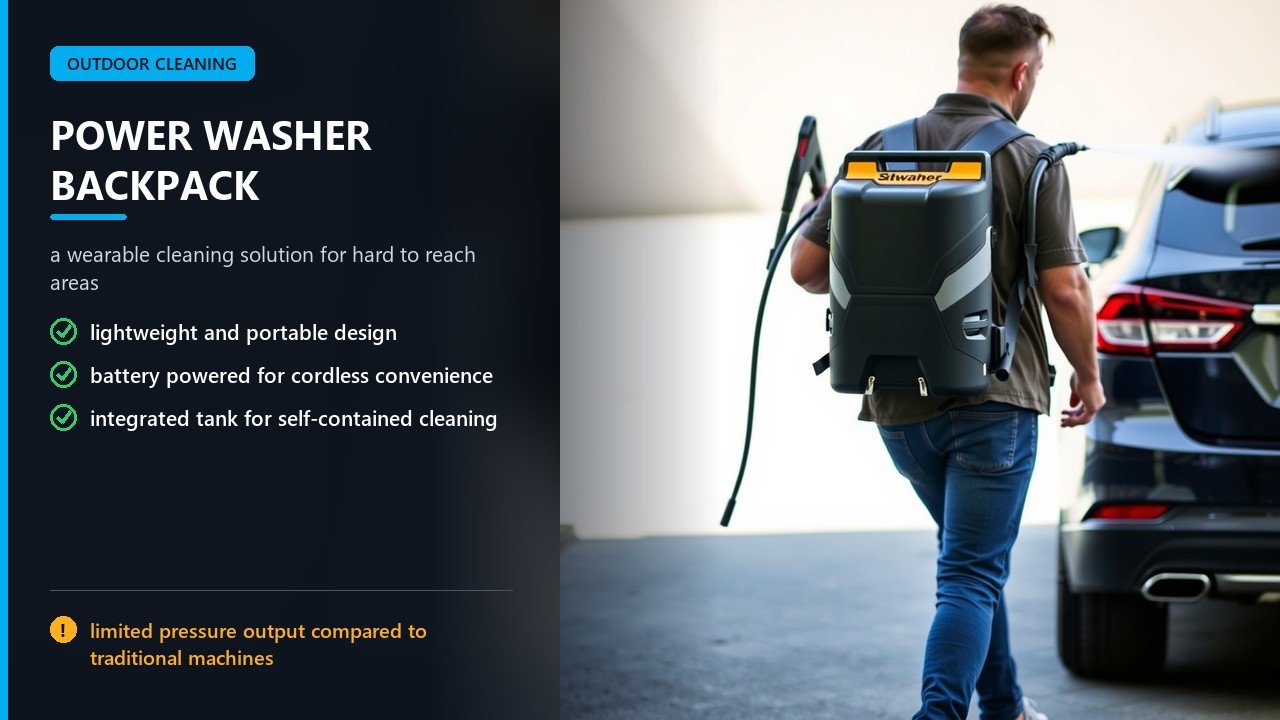
The concept is a pressure washer designed to be carried rather than pushed. A lightweight unit, usually battery powered, sits in a backpack or shoulder harness and feeds a small wand or sprayer through a short hose. You carry the water and the power, which means you clean in places a conventional machine cannot easily go.
What a Power Washer Backpack Is
A backpack pressure washer is a portable, wearable cleaning unit.
Wearable format. The machine or its tank is carried on the back, leaving your hands free to aim the spray.
Power source. Most are battery powered and cordless, though some use a small tank with a manual or electric pump.
Water supply. Some units have an integrated tank you fill and carry, while others draw from any water source through a hose.
Output. Output is lower than a full pressure washer, typically in the range of a garden hose boosted to light pressure, suited to washing rather than heavy-duty blasting.
Purpose. The point is mobility and convenience, not raw power.
How It Works
Understanding the design clarifies what these units can and cannot do.
Battery and pump. A rechargeable battery powers a small pump that pressurizes the water, feeding it to a wand.
Tank or hose feed. Units either carry a water tank in the pack or connect to an external source, so you can refill or draw from any tap, bucket, or stream.
Short hose. A short hose runs from the pack to the wand, keeping the spray within reach without tangling.
Adjustable spray. Most have adjustable nozzles or tips, letting you switch from a gentle rinse to a firmer spray.
Lower pressure. Because the pump is small and battery powered, output is modest, which is fine for washing but not for heavy cleaning.
Runtime. Battery runtime varies by unit, and larger batteries or spares extend it.
Types of Backpack Washers
Several designs fall under the backpack category.
Battery backpack sprayer-pressure washer. A cordless unit with a rechargeable battery and pump, the most common type, offering true freedom from cords and hoses.
Tank backpack washer. Carries its own water tank, ideal where no water source is nearby, though the water weight must be carried.
Hose-fed backpack. Draws from an external source through a hose, which keeps the pack lighter but tethers you to the water.
Pump sprayer hybrid. Simpler units that pressurize water or cleaning solution for light washing and spraying, less powerful than true pressure washers.
Professional sprayer backpacks. Larger tank units used for spraying chemicals or rinsing in agriculture and pest control, sometimes adapted for washing.
| Type | Water Source | Best Use |
|---|---|---|
| Battery backpack | Tank or hose | Cordless washing anywhere |
| Tank backpack | Integrated tank | No water source nearby |
| Hose-fed backpack | External source | Light pack, water available |
| Pump sprayer hybrid | Integrated tank | Light rinsing, spraying |
Who They Are For
Backpack washers suit users who value mobility over power.
Detailers and mobile cleaners. Washing vehicles, bikes, and equipment on the move is easier with a wearable unit.
Cyclists and outdoor enthusiasts. Rinsing bikes, gear, and muddy equipment after a ride is a natural fit.
Farmers and gardeners. Rinsing tools, equipment, and animals, or spraying in fields and gardens, benefits from hands-free mobility.
Campers and travelers. Washing dishes, gear, and vehicles off-grid is possible with a tank-fed unit.
Homeowners with light needs. For rinsing patio furniture, fences, or cars without hauling a big machine, a backpack unit is convenient.
Trades and maintenance. Cleaning equipment on rooftops, in tight spaces, or on remote sites is easier without a tethered machine.
Benefits of a Backpack Washer
The advantages are all about freedom and convenience.
Total mobility. No cord, no dragging machine, and often no hose, so you clean wherever you stand.
Hands-free carry. The pack leaves both hands free to aim the spray and manage the wand.
Quick setup. Fill or connect, switch on, and go, with no assembly or fuel.
Compact storage. Small and light, they store easily in a closet, vehicle, or garage.
Quiet and clean. Battery power means no exhaust and little noise.
Versatility. With adjustable spray, they handle rinsing, washing, and light cleaning tasks.
Remote capability. With a tank, they work where no tap exists, which ordinary washers cannot.
Limitations to Understand
Honesty about limits prevents disappointment.
Lower pressure. Backpack units cannot match a full pressure washer, so heavy grime, oil, and stripping are beyond them.
Limited runtime. Battery models run for a limited time before needing a charge or battery swap.
Water capacity. Tank units carry only so much water, requiring refills for larger jobs.
Weight when full. A full water tank is heavy, which can tire the user on long jobs.
Small output. The narrow spray and modest flow make large areas slow to clean.
Battery cost and care. Batteries add cost and require proper care to last.
Understanding these limits helps match the tool to the job, which is the key to satisfaction with any backpack unit.
Pressure and Flow Expectations
Backpack washers deliver modest pressure and flow compared to full machines.
Pressure range. Output is typically far below a pressure washer, more akin to boosted household pressure than high-pressure blasting.
Flow. Flow is limited by the small pump and battery, which is fine for rinsing and washing but slow for large areas.
Spray control. Adjustable nozzles let you choose a gentle mist or a firmer jet, maximizing the useful range of the limited output.
Realistic jobs. They shine at rinsing, washing vehicles and gear, and light cleaning, and struggle with baked-on grime or stripping.
| Task | Suitability |
|---|---|
| Rinsing bikes and gear | Excellent |
| Washing cars lightly | Good |
| Patio furniture | Good |
| Heavy grime and oil | Poor |
| Driveway stripping | Not suitable |
Choosing a Backpack Washer
Selecting the right unit depends on your needs.
Power source. Battery models offer cordless freedom, while tank pump units suit off-grid use.
Water supply. Choose a tank if no source is nearby, or a hose-fed unit if water is available and you prefer a lighter pack.
Battery and runtime. Consider battery capacity and whether spares are available for longer jobs.
Tank size. A larger tank means fewer refills but more weight to carry.
Comfort. Padded straps and a well-balanced pack reduce fatigue, which matters when carrying water.
Spray control. Adjustable nozzles expand the range of tasks the unit can handle.
Build quality. Durable pumps and fittings last longer and leak less.
Battery and Runtime Guide
For cordless units, the battery is the heart of the experience.
Voltage and capacity. Higher voltage and capacity generally mean more power and longer runtime, though the pump’s demands matter too.
Runtime. Expect runtime measured in a working session, not all day. Larger batteries and efficient pumps stretch it.
Spare batteries. Carrying a spare battery doubles working time, and is essential for longer jobs or remote sites.
Charge time. Charging takes time, so plan around it, or use multiple batteries and charge between uses.
Battery care. Charge as recommended, avoid extreme temperatures, and store batteries properly to extend their life.
Common systems. Some units use standard tool battery platforms, which is convenient if you already own compatible batteries and chargers.
Understanding the battery system before buying prevents the frustration of a unit that quits halfway through a job.
Backpack Washer vs Traditional Pressure Washer
| Factor | Backpack Washer | Traditional Washer |
|---|---|---|
| Mobility | Carried, cordless | Tethered, pushed |
| Power | Light pressure | High pressure |
| Water source | Tank or hose | Hose required |
| Runtime | Battery limited | Continuous with supply |
| Best for | Washing on the go | Heavy cleaning |
The two tools are complementary rather than competing. A backpack washer reaches places and situations a traditional machine cannot, while a traditional machine delivers the power a backpack cannot. Many owners keep both, using each for what it does best.
Accessories and Add-ons
Accessories make a backpack washer more useful.
Spare batteries. Extend runtime, essential for longer jobs.
Adjustable nozzles and tips. Expand the range from gentle mist to firmer spray.
Extension wands. Add reach for high or awkward spots.
Soft brushes and mitts. Combine with the spray for gentle washing of vehicles and gear.
Filtered intake. A filter keeps debris out of the pump when drawing from streams or buckets.
Replacement hoses and fittings. Durable spares keep the unit working if a hose wears or leaks.
Carry bags. Protect and organize the unit and its accessories between uses.
Real-World Uses in Detail
Seeing the unit in action shows where it fits.
Mountain bikers. After a muddy ride, a backpack washer with a tank rinses bikes on the spot, removing grit before it damages components, with no need for a tap nearby.
Mobile detailers. A cordless backpack lets a detailer move around a vehicle freely, pre-rinsing and rinsing without dragging a machine or hose.
Farmers. Rinsing tools, boots, and equipment around the property is easier with a wearable unit, and it can also spray plants and chemicals.
Campers. Off-grid, a tank-fed unit washes dishes, gear, and vehicles where no plumbing exists.
Homeowners. Quick rinses of patio furniture, fences, and cars become easy without setting up a full pressure washer.
In each case, the freedom from cords and hoses is the deciding advantage, making the backpack washer the right tool for the situation.
Care and Storage
Proper care keeps a backpack washer ready and extends its life.
Rinse after use. Flush the tank, pump, and nozzle with clean water to prevent clogs and corrosion.
Drain the tank. Empty and dry the tank before storage to prevent mold and stale water.
Care for the battery. Charge as directed, avoid extreme temperatures, and store batteries at a suitable level.
Check hoses and fittings. Inspect for wear or leaks, and replace damaged parts.
Store clean and dry. Keep the unit in a dry place, protected from dust and freezing.
Winterize. Drain all water before freezing weather to prevent cracked components.
Water Sources and Setup
How a backpack washer gets water shapes how you use it.
Tank filling. Fill from a tap, bucket, or stream, filtering the water if it contains debris. A full tank is heavy, so fill only what the job needs.
Hose feed. A hose-fed unit connects to a tap, keeping the pack lighter but limiting range to the hose length.
Drawing from barrels or drums. Some units can draw from a large container, useful where a tap is far away but water is stored nearby.
Water quality. Debris and minerals can clog pumps and nozzles, so filtering and clean water extend the unit’s life.
Refill planning. For larger jobs, know where you can refill, or carry extra water, balancing capacity against weight.
Planning the water supply is as important with a backpack washer as with any pressure washer, since a starved or dirty pump fails quickly.
Getting the Most From a Backpack Washer
A few habits improve results and comfort.
Match the spray to the task. Start gentle and increase only as needed, protecting delicate surfaces.
Work top to bottom. Let water and dirt run downward for faster, cleaner results.
Pre-treat when needed. A little detergent loosens dirt and reduces the water and effort required.
Manage weight. Fill the tank to the level the job needs, and take breaks on long jobs.
Use both hands. A steady, two-handed grip on the wand improves control and safety.
Keep spare batteries. For longer jobs, a spare battery prevents running out halfway through.
Used thoughtfully, a backpack washer delivers satisfying results on the jobs it is built for, despite its modest power.
Cost and Value
Weighing cost against value helps decide whether a backpack washer is right for you.
Up-front cost. Backpack washers range from affordable pump sprayers to pricier battery units, depending on power and build.
Battery investment. Cordless units add battery and charger costs, though standard tool platforms can reduce this if you already own compatible batteries.
Ongoing cost. Electricity for charging, occasional replacement batteries, and wear parts are the main ongoing expenses.
Value of mobility. For mobile, off-grid, or detail cleaning, the freedom the unit provides is worth more than its modest power suggests.
Complement, not replacement. Most owners pair a backpack washer with a traditional machine, using each where it fits.
For the right user, a backpack washer earns its cost through convenience and access, even though it cannot replace a full pressure washer.
Common Mistakes to Avoid
Expecting pressure-washer power. Backpack units are for washing and rinsing, not heavy cleaning. Match expectations to the tool.
Overfilling the tank. A full tank is heavy. Fill only what you need for the job to avoid fatigue.
Ignoring battery care. Batteries need proper charging and storage to last. Follow the manufacturer’s guidance.
Using the wrong spray setting. A jet setting on delicate surfaces can damage them. Adjust the nozzle to the task.
Neglecting cleaning. Rinse the unit and nozzles after use to prevent clogs and wear.
Choosing a cheap unit for frequent use. Inexpensive pumps and fittings fail quickly under regular use. Buy quality for regular jobs.
Forgetting water quality. Debris in unfiltered water can clog the pump and nozzle. Filter or strain water where possible.
Frequently Asked Questions
What is a backpack pressure washer used for? Light washing and rinsing where mobility matters, such as cleaning bikes, cars, gear, patio furniture, and equipment on the go or off-grid.
Are backpack pressure washers as powerful as regular ones? No. They deliver modest pressure and flow suited to washing and rinsing, not heavy-duty cleaning or stripping.
Do backpack washers need a water source? Some have an integrated tank and need no source, while others connect to any tap or bucket through a hose.
How long do batteries last? Runtime varies by unit and battery size, typically enough for a washing job. Spare batteries extend the work time.
Can a backpack washer clean a car? Yes, for light washing and rinsing. For heavy grime or a full clean, a conventional pressure washer does a better job.
Are they good for camping? Yes. Tank-fed units are useful for washing gear, dishes, and vehicles off-grid, within their water and battery limits.
How do I maintain a backpack washer? Rinse the tank, pump, and nozzle after use, care for the battery, and store the unit clean and dry.
Can a backpack washer draw from a bucket or barrel? Many can, provided the unit has a suction hose and filter and the water is clean. This suits situations where a tap is far away.
Are backpack washers heavy to carry? The unit itself is light, but a full water tank adds significant weight. Fill only what the job needs to stay comfortable.
What pressure do backpack washers produce? Modest pressure, far below a traditional pressure washer. They are built for washing and rinsing, not heavy blasting.
Can I use detergent with a backpack washer? Many accept detergent or can be used with a foam attachment. Check the unit’s guidance and use appropriate, surface-safe cleaners.
Are they worth it for occasional use? If your main need is washing on the go, off-grid, or in tight spots, yes. For heavy cleaning, spend the money on a traditional pressure washer instead.
Final Thoughts
A power washer backpack solves a specific problem: how to clean where a tethered machine cannot go. By making the washer wearable, it frees you to wash bikes, cars, gear, and equipment anywhere, with or without a water source, at the cost of raw power.
Choose a unit that matches your water situation, battery needs, and comfort, and use it for the washing and rinsing tasks it does well. Understood and used correctly, a backpack pressure washer becomes a handy companion for cleaning on the move, filling a gap that no conventional machine can.