A landscaper named Ray bought a used pressure washer for cheap. The frame was scratched and the hose was worn, but the engine badge read GX200, and that single detail told him the machine was worth rescuing. Three years and hundreds of driveways later, that engine still fires on the first or second pull. Ray did not get lucky. He recognized a commercial-grade engine and treated it well. The pressure washer GX200 is one of the most trusted engines in the industry, and understanding what it is and how to care for it is the difference between a machine that last a season and one that lasts a decade.
The GX200 is a Honda engine that powers a large family of gas pressure washers, typically in the 3,000 to 3,600 PSI range. It is famous for its cast iron cylinder sleeve, its overhead valve design, and its ability to run hard for years with basic maintenance. This guide covers what the GX200 is, the specs that matter, which pressure washers use it, how it compares to cheaper engines, and exactly how to maintain one so it keeps starting on the first pull for years to come.
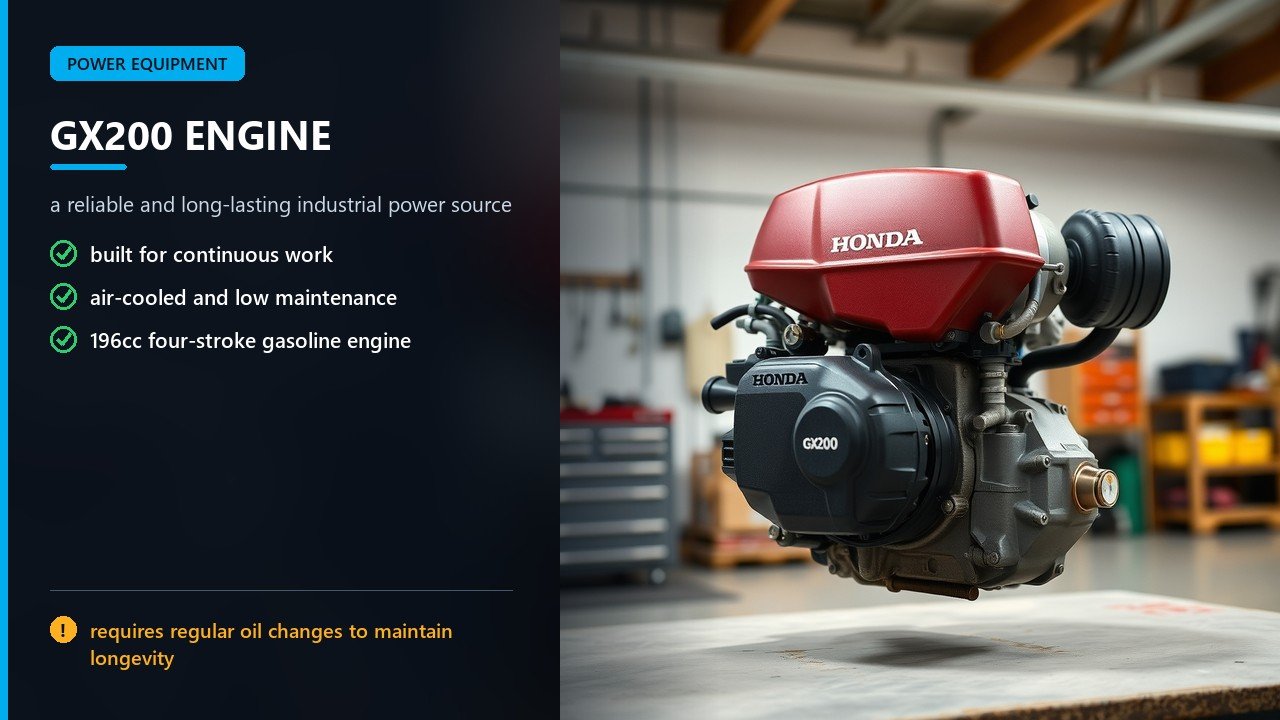
What the Honda GX200 Actually Is
It is a small industrial engine built for continuous work.
The basics. A 196cc, air-cooled, four-stroke, single-cylinder OHV gasoline engine. It is a horizontal-shaft design, which is what makes it suitable for direct-driving a pressure washer pump.
Cast iron sleeve. Unlike many residential engines with an aluminum cylinder bore, the GX200 uses a cast iron cylinder sleeve that resists wear far better under heavy, hot loads.
Overhead valve. The OHV design runs cooler and more efficiently than older flathead engines, with better fuel economy and cleaner combustion.
Commercial intent. Honda markets the GX line for construction equipment, pumps, tillers, generators, and similar machines, which is exactly why it holds up on a pressure washer.
The GX versus GCV distinction. Honda also sells the GCV series, a residential engine with an aluminum bore. The GX200 is the sturdier commercial design, and washers with it usually cost more for good reason.
GX200 Specs That Matter
These are the numbers to know when comparing machines.
Displacement. 196cc, a bore and stroke of 68 by 54mm, and a compression ratio of 8.5 to 1.
Power. A net output around 5.8 to 6.5 horsepower at 3,600 rpm, with a continuous rating near 5.0 horsepower at the same speed.
Torque. Peak torque of roughly 12.4 to 13.2 newton-meters at 2,500 rpm, which gives strong pull under load.
Fuel tank. About 0.82 to 0.95 gallons, good for a couple of hours of hard running.
Fuel use. Around 1.7 liters per hour at continuous rated power, so a full tank does not last all day.
Oil capacity. About 0.6 liters, or 0.63 U.S. quarts of engine oil.
Ignition and start. A transistorized magneto ignition with a recoil starter standard, and an electric-start option on some variants.
Weight. Roughly 35 pounds dry, which is part of why these machines are heavy but stable.
| Spec | GX200 |
|---|---|
| Displacement | 196cc |
| Power (net) | ~5.8-6.5 HP @ 3,600 rpm |
| Cylinder | Cast iron sleeve |
| Fuel tank | ~0.82-0.95 gal |
| Oil capacity | ~0.63 U.S. qt |
| Starter | Recoil (electric optional) |
Which Pressure Washers Use the GX200
It powers a wide range of gas machines.
Simpson PowerShot models. The PS3228 delivers 3,300 PSI at 2.5 GPM, and the PS61002-S reaches 3,500 PSI at 2.5 GPM, both with the GX200.
DeWalt machines. A common 3,400 PSI, 2.5 GPM DeWalt gas washer runs the GX200 with a triplex pump.
Hot water units. Some commercial hot water washers pair the GX200 with a diesel-fired burner and a Centurion triplex pump to reach 3,600 PSI at 2.5 GPM.
Pump brands. Depending on the machine, you will see AAA, CAT, AR, Comet, General, or Centurion triplex pumps bolted to the GX200.
The pattern. The engine sets a reliable power baseline, and the brand builds the washer, pump, and frame around it. Our look at the Honda 4000 PSI pressure washer shows how the same engine family scales across machines.
Why This Engine Is So Well Liked
The reputation is earned, not marketing.
Durability. The cast iron sleeve shrugs off the heat and friction of long jobs, which is why used GX200 machines are still worth buying.
Easy starting. A well-maintained GX200 often starts on the first or second pull, even after sitting for months.
Parts availability. Honda dealers and aftermarket suppliers stock GX200 parts widely, so repairs are straightforward and affordable, and you are never stuck waiting weeks for a single small component.
Resale value. Buyers recognize the badge, so machines with the GX200 hold value better than units with generic or off-brand engines of similar power.
Fuel tolerance. It runs on regular 86-octane gasoline with up to 10 percent ethanol, which is convenient at almost any pump.
How It Compares to Cheaper Engines
The differences show up over years, not days.
Cast iron versus aluminum bore. A cast iron sleeve resists wear far better, so a commercial engine outlasts a residential one under heavy use.
Parts and service. Common engines have broad parts networks, while off-brand engines can be hard to repair.
Consistency. The GX200 holds its RPM and pressure steadier under load, which protects the pump from surges and gives more even, predictable cleaning results.
Upfront cost. A GX200 machine costs more, but the longer service life usually pays that back.
When the cheaper engine makes sense. For occasional light use, a residential engine may be fine, but for regular or commercial work, the GX200 is the safer investment.
Engine Oil: The Most Important Habit
Oil care keeps the GX200 alive.
The right oil. Most GX200 pressure washers call for SAE 10W-30 engine oil, with the manual giving the recommended grade for your climate.
Check before every use. With the engine off and level, pull the dipstick, wipe it, reinsert without threading, and confirm the level sits at the upper mark.
First change at 20 hours. Honda recommends changing the engine oil after the first 20 hours of operation, which flushes break-in debris.
Then follow the schedule. After break-in, change the oil at the intervals in the manual, and more often in dusty or high-heat conditions.
Our oil guide. For the full breakdown, see pump oil for power washer, which separates engine oil from pump oil, a distinction that trips up many owners.
Pump Oil Is Separate From Engine Oil
Confusing the two damages the pump.
Two separate reservoirs. The engine oil lubricates the Honda, and the pump oil lubricates the pump. They never mix and use different fluids.
Pump oil type. Many triplex pumps use a dedicated pressure washer pump oil, and some accept SAE 15W-40, while CAT pumps often specify a non-detergent ISO68 hydraulic oil.
Pump change interval. Change pump oil after the first 50 hours and then roughly every 100 hours or three months.
Check the sight glass. The pump oil level should reach the dot in the middle of the sight glass on level ground.
Maintenance-free pumps. Some sealed pumps have no drain or fill plugs and need no pump oil changes, so check your manual before assuming.
Routine Maintenance Schedule
Stay ahead of wear with simple checks.
Before each use. Check engine and pump oil, inspect the air filter, and confirm the water inlet filter screen is clean and installed with its convex side out.
First 20 hours. Change the engine oil.
First 50 hours. Change the pump oil.
Every 100 hours or 3 months. Change pump oil thereafter, and service the air filter.
Spark plug. Inspect and replace as the manual directs, and gap it to the specified setting.
Fuel. Use fresh regular gasoline of 86 octane or higher with no more than 10 percent ethanol, and add a stabilizer if fuel will sit. Our guide to the type of gas for a power washer explains why ethanol matters.
| Interval | Task |
|---|---|
| Before each use | Check engine and pump oil, air and water filters |
| First 20 hours | Change engine oil |
| First 50 hours | Change pump oil |
| Every 100 hours | Change pump oil, service air filter |
Common GX200 Pressure Washer Problems
Most issues trace back to simple causes.
Will not start. Usually stale fuel, a fouled spark plug, a dirty air filter, or low oil triggering the Oil Alert. Start with fresh fuel and the plug.
Hunts or surges. A clogged carburetor jet or dirty fuel is the usual culprit. Stabilizer and fresh gas prevent it.
Loses pressure. Often a pump or unloader issue rather than the engine, along with a worn nozzle or a clogged inlet screen. The engine usually is not the fault.
Overheating. Low oil, a blocked cooling fin, or running without water flow. Keep the engine fins clean and never run dry.
Excess vibration. Loose mounting bolts or a worn pump coupling. Check that the engine and pump bolts are snug.
Smoking. Usually overfilled oil or a bad grade. Check the level on level ground, not on a slope.
Storage and Winter Care
Proper storage prevents spring starting problems.
Stabilize the fuel. Add a fuel stabilizer to fresh gasoline before storage so the carburetor does not gum up. Ethanol-blended fuel goes stale in about 30 days.
Run it through. After adding stabilizer, run the engine a couple of minutes so treated fuel reaches the carburetor.
Guard the pump. Use a pump protector or pump guard when storing more than 30 days or facing freezing temperatures, since freeze damage is not covered by warranty. Our article on the best pressure washer pump protector covers the options.
Drain and dry. Disconnect water, drain the hose and gun, and store the unit off the ground and covered. Our guide to how to store a pressure washer for winter walks through the whole routine.
Battery and plug. On electric-start models, disconnect or maintain the battery, and fog the cylinder with a teaspoon of oil through the spark plug hole for long storage.
How to Buy a GX200 Pressure Washer
Judge the whole machine, not just the badge.
Check PSI and GPM together. A GX200 typically drives 3,000 to 3,600 PSI at 2.5 GPM. Higher flow cleans faster, so both numbers matter for your work.
Look at the pump. A triplex pump lasts longer than an axial cam pump, so a machine with a quality triplex is a better long-term buy even at a higher price.
Inspect the frame. A welded steel frame with large flat-free tires handles rough ground and protects the engine and pump.
Check the hours and oil. On a used machine, ask how many hours it has run and check that the oil is clean, since maintenance tells you how it was treated.
Confirm the GX, not the GCV. Sellers sometimes blur the two, so read the engine badge carefully.
Verify the accessories. A complete set of nozzles, a quality hose, and a solid spray gun add real value.
GX200 Versus Other Honda Engines
Knowing the family helps you compare.
GX160. A 163cc sibling with slightly less power, common on smaller washers.
GX200. The 196cc middleweight, the most common commercial choice for gas pressure washers in the 3,000 to 3,600 PSI range.
GX270 and GX390. Larger commercial engines for high-flow, high-pressure machines, often paired with belt-drive pumps.
GCV series. Residential engines with an aluminum bore, fine for light use but not built for daily commercial work.
The takeaway. Bigger engines drive bigger pumps, so match the engine to the cleaning job rather than buying the largest available.
Getting the Most From the Engine
Small habits protect the powerplant.
Warm it up. Let the engine idle briefly before applying full load, and avoid hammering a cold engine.
Do not run dry. Always connect water and purge air before starting, because a dry pump overheats and fails fast.
Ease off the trigger. Releasing the trigger when not actively cleaning reduces wear on the engine and pump and lets the unloader bypass water properly.
Keep the air filter clean. A dirty filter chokes the engine, robs power, and wastes fuel, so inspect the foam element often in dusty conditions.
Mind the cooling fins. Dust and grass clippings clog the fins and cause overheating, so brush them off regularly during heavy use.
Use fresh fuel. Old ethanol fuel is the number one cause of hard starting on these engines, so buy small amounts and stabilize what you store.
Accessories That Pair Well
The right add-ons raise the value of the machine.
Nozzle set. A full set of quick-connect tips, from a red zero-degree to a black soap nozzle, covers every job. Our guide to power washer spray nozzles explains each color.
Surface cleaner. For driveways and patios, a surface cleaner delivers even, fast results with the GX200’s pressure.
Foam cannon and soap. A cannon with the correct soap lets you pre-treat before rinsing, which is far more effective than water alone.
Longer hose. A quality 50-foot hose improves reach, and our guide to the best hose for pressure washing covers what to look for.
Pump protector. An inexpensive safeguard for storage that prevents the most common off-season failure.
Pressure gauge. A gauge between the gun and hose lets you verify the machine is performing as rated.
Safety Around a GX200 Washer
Gas pressure washers demand respect.
Carbon monoxide. Run the engine only outdoors, never in a garage or enclosed space, because exhaust gas is deadly and odorless.
High-pressure spray. Never point the wand at people, pets, or yourself. The stream can cause serious injury.
Fuel handling. Refuel only when the engine is off and cool, and never near a flame or spark.
Hot surfaces. The engine and muffler get very hot, so let the unit cool before touching or servicing it.
Eye and ear protection. Wear safety glasses and hearing protection, since the engine and spray are both loud and fast.
Stable footing. Keep the machine on level ground and mind the recoil start, which can kick.
Carburetor and Fuel System Basics
The fuel system causes most starting complaints.
How it works. The GX200 uses a float-type carburetor that mixes fuel and air. The idle and main jets meter the mixture at different speeds.
Stale fuel is the enemy. Ethanol-blended gas absorbs water and leaves varnish that clogs the tiny jets. Fresh fuel and a stabilizer prevent most problems.
Cleaning the carburetor. If the engine hunts or stalls, remove and clean the bowl and jets, or rebuild it with a kit. A clogged jet is the usual cause.
The fuel valve. Always close the fuel valve before storing, and open it fully before starting so the bowl refills.
Air and fuel filters. A foam air filter protects the engine from dust, and a fuel filter keeps debris out of the carburetor. Check both regularly.
Choke and throttle. Start with the choke on when cold, then open it as the engine warms. A stuck choke causes rich running and black exhaust.
When to see a shop. If a rebuild does not fix surging or stalling after fresh fuel and a clean carburetor, have a dealer inspect it.
Frequently Asked Questions
Is the Honda GX200 a good pressure washer engine? Yes. It is a commercial-grade 196cc OHV engine with a cast iron cylinder sleeve, known for durability, easy starting, and wide parts availability, and it powers many of the most trusted gas pressure washers on the market today.
What is the difference between GX200 and GCV200? The GX series is the commercial line with a cast iron cylinder sleeve for heavy, continuous use, while the GCV series is a residential design with an aluminum bore built for lighter, occasional work around the home.
What oil does a GX200 pressure washer take? Most units specify SAE 10W-30 engine oil for the engine, checked on level ground before each use, with the first change at about 20 hours and regular changes after that.
How much horsepower is the GX200? About 5.8 to 6.5 net horsepower at 3,600 rpm, with a continuous rating near 5.0 horsepower, which is plenty to drive a 2.5 GPM triplex pump at 3,000 to 3,600 PSI.
What gas does the GX200 use? Regular unleaded gasoline of 86 octane or higher, with no more than 10 percent ethanol, and a stabilizer if the fuel will sit for long periods between uses.
How often should I change the pump oil? After the first 50 hours, then roughly every 100 hours or three months, unless the pump is a sealed maintenance-free design that has no drain or fill plugs at all.
Why does my GX200 not start after sitting? Usually stale ethanol fuel, a fouled spark plug, or a dirty air filter. Drain the old fuel, add fresh gas with a stabilizer, and clean or replace the plug before assuming anything worse.
Can I use the GX200 for commercial pressure washing? Yes, it is a commercial engine, and with proper maintenance it handles frequent, heavy use far better than a residential engine.
How long does a Honda GX200 last? With regular oil changes and clean fuel, these engines commonly run well past 1,000 hours and often for many years, which is why they hold their value on the used market.
What octane fuel does the GX200 need? A pump octane rating of 86 or higher, or a research octane rating of 91 or higher, with no more than 10 percent ethanol.
Should I use premium gas in a pressure washer? No. The GX200 is designed for regular 86-octane fuel, and premium offers no benefit unless the fuel is ethanol-free, which mainly helps during storage.
Why does my GX200 engine smoke? Usually too much oil in the crankcase or a poor oil grade. Check the level on level ground, since an overfill is the most common cause.
Can I convert a GX200 to electric start? Some variants come with electric start from the factory, and a recoil model can often be retrofitted with the correct starter kit, though it is a job best confirmed against your engine’s serial number.
Does the GX200 have an oil filter? Many GX200 configurations rely on regular oil changes rather than a spin-on filter, so follow the manual’s interval and use the recommended SAE 10W-30 oil.
How do I know if my washer has a GX engine? Read the engine badge or the model code on the recoil housing, and check the manual or Honda’s serial number range to confirm the exact variant.
Final Thoughts on the Pressure Washer GX200
The Honda GX200 has earned its place as a benchmark engine for gas pressure washers. With its cast iron sleeve, overhead valve design, and broad parts support, it delivers the kind of durability that keeps a machine running for years. The engine alone does not make a great pressure washer, since the pump, frame, and accessories matter too, but a GX200 under the hood is a strong sign of quality.
Ray’s cheap used machine taught him a lesson worth sharing: respect the engine and it will respect you back. Check the oil every time, change it on schedule, keep the fuel fresh, guard the pump, and store the unit properly through winter. Do those simple things, and a pressure washer GX200 will start on the first or second pull season after season, long after cheaper engines have quit.
The GX200 is not magic, and it is not the only good engine on the market. What sets it apart is a combination of durable design, honest power ratings, and a service network that keeps parts on shelves for years. When you pair that engine with a quality triplex pump and a solid steel frame, you get a machine that earns its keep and keeps its value. Whether you are cleaning driveways on weekends or running a small business, the engine at the center of the machine is one of the smartest things to study before you spend your money.